세리니 최고의 라이딩 경로
4.1
(19)
301
자전거 타는 사람
119
라이딩
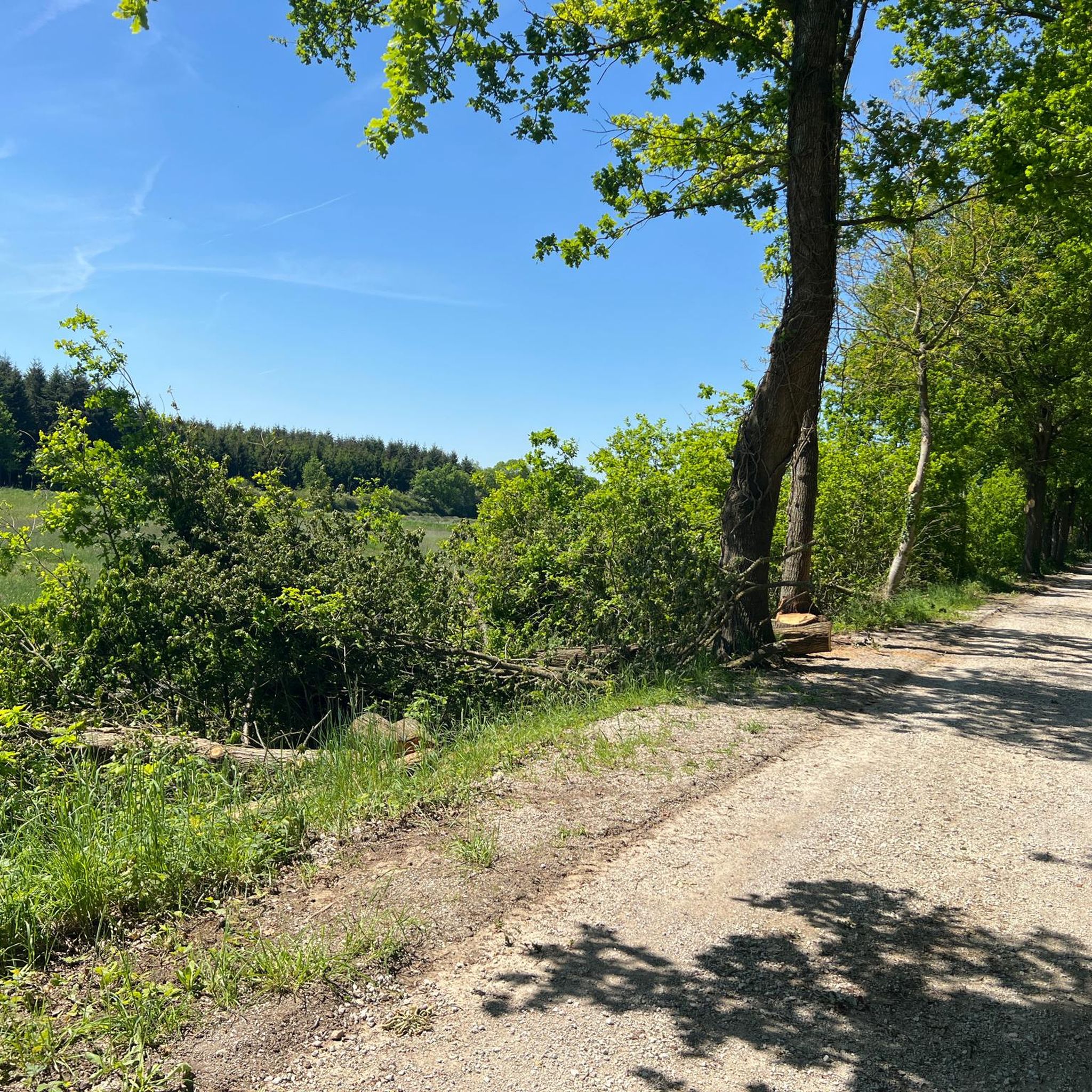
세리니 주변의 로드 사이클링 코스는 완만한 구릉, 광활한 삼림 지대, 작은 마을을 연결하는 시골길로 특징지어지는 풍경을 가로지릅니다. 이 지역은 벨렘 국유림(Forêt Domaniale de Bellême)을 통과하는 완만한 오르막부터 농경지를 가로지르는 더 탁 트인 구간까지 다양한 지형을 제공합니다. 로드 사이클리스트는 한적한 시골길과 역사적인 교회 및 자연 경관을 지나는 코스의 조합을 기대할 수 있습니다. 이 지형은 경치 좋은 여유로운 라이딩과 더 힘든 오르막 모두를 제공합니다.
세리니 주변 최고의 로드 사이클링 코스
- 가장 인기 있는 로드 사이클링 코스는 세리니 출발 벨렘 국유림 – 생투앙드라쿠르(Saint-Ouen-de-la-Cour)…
마지막 업데이트: 10월 5, 2026
4.0
(3)
9
자전거 타는 사람
42.0km
01:46
320m
320m
보통 도로 자전거 타기. 좋은 체력 필요. 지면 대부분이 잘 포장되어 있고 라이딩하기 쉬움.
3
자전거 타는 사람
41.7km
01:50
350m
350m
보통 도로 자전거 타기. 좋은 체력 필요. 지면 대부분이 잘 포장되어 있고 라이딩하기 쉬움.

6
자전거 타는 사람
20.4km
01:08
290m
290m
초급용 로드 라이딩. 모든 체력 수준에 적합. 지면 대부분이 잘 포장되어 있고 라이딩하기 쉬움.
3
자전거 타는 사람
52.2km
02:15
470m
470m
보통 도로 자전거 타기. 좋은 체력 필요. 지면 대부분이 잘 포장되어 있고 라이딩하기 쉬움.
2
자전거 타는 사람
57.5km
02:31
530m
530m
보통 도로 자전거 타기. 좋은 체력 필요. 지면 대부분이 잘 포장되어 있고 라이딩하기 쉬움.
더 다양한 경로와 다른 탐험가들의 추천을 살펴보세요.
이미 komoot 계정이 있나요?
투어 추천은 다른 사람들이 komoot에서 완료한 수천 개의 활동을 바탕으로 구성되어 있습니다.
오늘 무료 계정으로 시작하세요
다음 모험이 기다리고 있어요.


커뮤니티 팁


The priory was founded at the beginning of the 11th century and is dedicated to Saint Gauburge (or Walburge), abbess of a large Bavarian monastery in the 8th century. Originally owned by the lords of Bellême, it passed, from the 12th century, to the Royal Abbey of Saint-Denis-en-France. From the end of the 15th century, it was directly dependent on royal power until the Revolution. An important rural estate, its buildings bear witness to its special status and the magnitude of its revenues. Since 1972, it has housed the headquarters of the Perche Ecomuseum, which bears witness to the peasant life of the Perche and develops a diverse cultural program.
0
0


The nave is covered with a wooden vault with exposed beams. The archivolts of the Romanesque door are decorated with saw teeth. The west gable wall is topped with a slender bell tower. The interior contains three classical altars whose designs were apparently made by Mansard at the request of Louvois, owner of the Prairie de Marcilly.
0
0
A male yew* was planted near the entrance to the church, once surrounded by the cemetery. Its double trunk supports a crown that hides part of the building. This funerary tree is the only significant plant in the crossing of the town, whose name evokes another species that has become rare: the field elm. The church is accessed through a porch (heavily restored) recalling the Romanesque origins of the building, confirmed by the narrow and high semicircular bay above it. During the Renaissance, the nave was enlarged by two chapels lit by windows with flamboyant tracery. The flat chevet was pierced by three bays in a pointed arch forming a "triplet", from the 13th century, probably walled up at the beginning of the 18th century when the high altar was installed. In the choir: high altar (early 18th century - Cl. MH) with armorial medium-relief** in terracotta, "The Transfiguration", after Raphael; gilded wooden statues of Saint Godegrand and Saint Opportune On the gable wall of the south chapel, between a corner buttress and a Gothic window, a sundial was painted in 1991, on the site of an old one. * The yew is a dioecious species: the male and female plants grow separately. Only the female flowers will give rise to the arils, a kind of fleshy bright red berry containing a single, toxic seed. ** Offered by the abbess of Saint-Julien du Pré, in Le Mans, Catherine d'Aumont, who died in 1708, whose coat of arms was: "argent with a chevron gules accompanied by seven martlets of the same, four in chief 2 and 2, three in base 1 and 2".
0
0

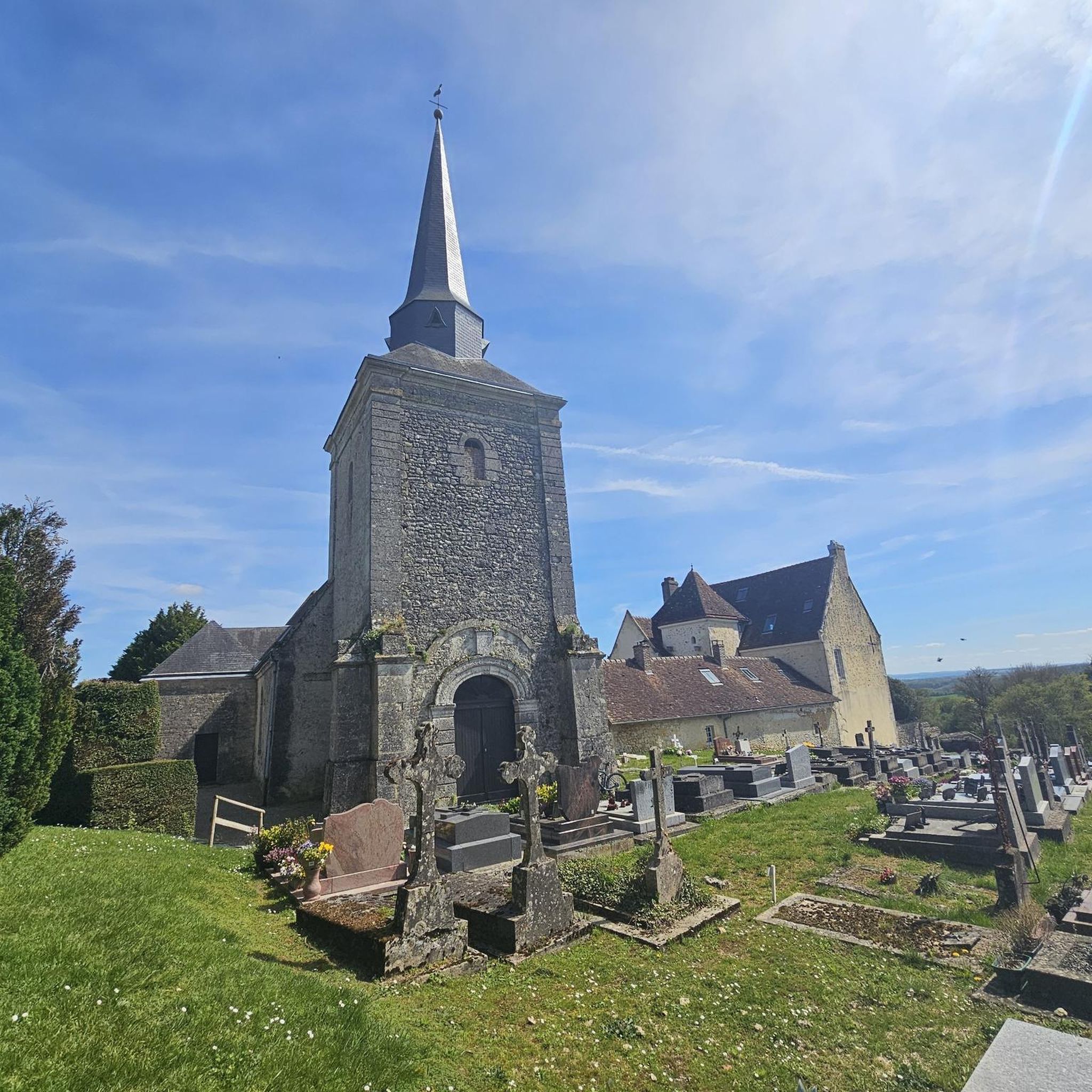
The Saint-Rémy church is one of these churches surrounded by their cemetery and a surrounding wall forming a parish enclosure. In the cemetery, a cut boxwood path leads to the entrance to the church which is via a bell tower-porch. The latter, square and low, is topped with a spire covered in slate, like the rest of the church. The sacristy, at the rear of the apse, is covered in tiles. The church consists of a single nave onto which two small chapels open, dedicated respectively to the Sacred Heart and the Virgin. Unpretentious from the outside, the Saint-Rémy church is however not without surprises. The choir, slightly narrower than the nave, is decorated with monumental paintings evoking the Passion of Christ (19th century). The choir vault is also painted. The altarpiece, with black marble columns, has in its center a beautiful high-relief panel representing the Baptism of Christ (limestone, early 18th century). The altars (Main altar and altars in the side chapels) are in pink and black marble (18th century). A choir enclosure, decorated with two angels, separates the choir from the nave (19th century). Two beautiful wooden confessionals with carved pediments (17th century), set into the wall, frame the entrance to the interior of the nave. At the entrance to the bell tower-porch, you can admire the coat of arms of François Bohier, dated 1553. He was the dean of the chapter of Tours on which the cure of Sérigny then depended. These stones were found in 1972, in the gable of the church, during the renovation of the sacristy. The four historic stained glass windows are from the 20th century (one is dated 1939) and obviously come from the same workshop but are not signed.
0
0
세리니 주변에서 가장 인기 있는 명소


더 살펴보기
다른 지역의 최고의 로드 사이클링 경로를 살펴보세요.
