생레미 데몽 최고의 라이딩 경로
4.4
(14)
257
자전거 타는 사람
123
라이딩
생레미 데몽의 로드 사이클링 경로를 찾으시나요? 그렇다면 생레미 데몽 로드 라이딩 컬렉션 중에서 가장 멋진 라이딩 장소를 아래에서 살펴보세요.
마지막 업데이트: 10월 18, 2026
6
자전거 타는 사람
49.4km
02:08
430m
430m
보통 도로 자전거 타기. 좋은 체력 필요. 지면 대부분이 잘 포장되어 있고 라이딩하기 쉬움.
11
자전거 타는 사람
40.3km
01:41
250m
250m
초급용 로드 라이딩. 지면 대부분이 잘 포장되어 있고 라이딩하기 쉬움.

6
자전거 타는 사람
62.0km
02:39
520m
520m
보통 도로 자전거 타기. 좋은 체력 필요. 지면 대부분이 잘 포장되어 있고 라이딩하기 쉬움.
5
자전거 타는 사람
67.2km
02:55
530m
530m
보통 도로 자전거 타기. 좋은 체력 필요. 지면 대부분이 잘 포장되어 있고 라이딩하기 쉬움.
6
자전거 타는 사람
34.0km
01:34
240m
240m
초급용 로드 라이딩. 지면 대부분이 잘 포장되어 있고 라이딩하기 쉬움.
더 다양한 경로와 다른 탐험가들의 추천을 살펴보세요.
이미 komoot 계정이 있나요?
투어 추천은 다른 사람들이 komoot에서 완료한 수천 개의 활동을 바탕으로 구성되어 있습니다.
오늘 무료 계정으로 시작하세요
다음 모험이 기다리고 있어요.




커뮤니티 팁


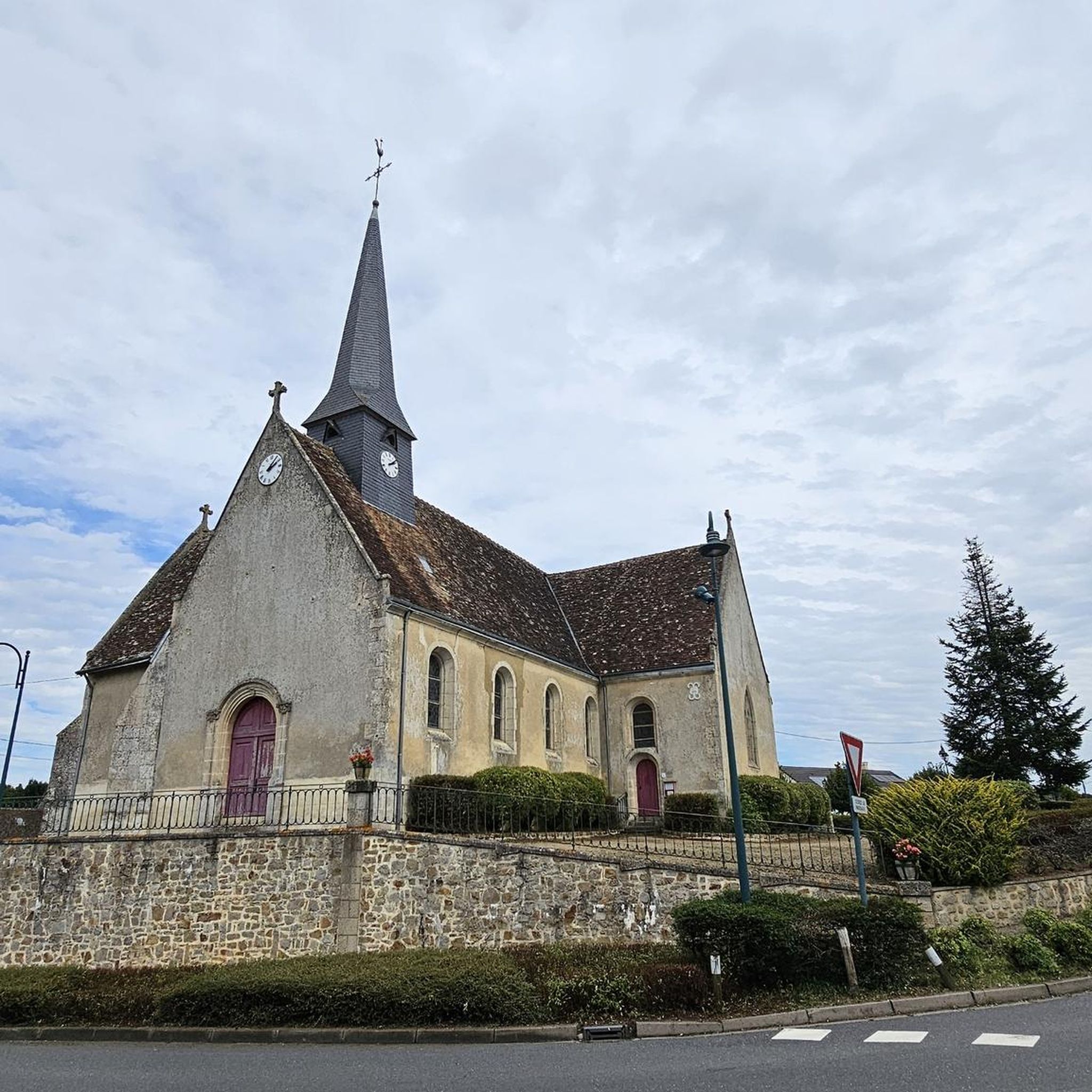
11th Century Church Worship was abolished in the parish of Chevain. The church was sold for 31,700 livres to the citizen of Villeray on 6 Vendémiaire, Year VII (September 27, 1799). The Chevain church, having been donated by Madame du Hameau de Villeray to the commune by notarial deed dated April 16, 1827, was restored to worship there on January 15, 1827. The parish was established as a branch parish.
0
0
A building constructed in the 11th and 12th centuries. It was then just a simple chapel built on a temple, which was subsequently remodeled numerous times over the centuries. The choir, narrower and higher than the rest, is believed to have been built on tombs from the old cemetery, from which a 10th-century Merovingian sarcophagus made of Roussard sandstone was extracted and is on display outside the church.
0
0

Nestled on hillsides painted with ochre, yellow, or pink sand, limestone, and lights, Mortagne-au-Perche is a must-see for anyone wanting to explore Le Perche. A favorite holiday resort of the Counts of Perche and their wives, Mortagne-au-Perche has managed to preserve its monuments and historical heritage. This medieval town brimming with character is recommended for exploring by bike or on foot.
0
0
Saint-Rémy Church from the 11th and 16th centuries. Stained glass windows from the 20th century. Altarpiece of the Saint-Julien chapel from the 17th century.
0
0
Of Romanesque origin, the church of Louvigny has undergone many transformations over time. Among other things, the altars and the altarpiece were donated in the 18th century by Mr. François Thébault, a wealthy donor born in Louvigny. A commemorative plaque was erected in his memory in the sacristy of the church after it was found at the end of the 19th century by Father Chartrain, then parish priest, on the roof of his presbytery, in place of a tile. It is likely that it was thus protected from the pillaging of the Revolution. The steeple dates from the 19th century. It replaced a campanile. It was also in the 19th century that the stained glass windows, the Stations of the Cross and the baptismal font were installed. Generally made of stone, these are very original, since decorated in the Napoleon III style, the period of their manufacture, they are made of cast iron and undoubtedly a fine example of the industrial production of this time. The portal, typically Romanesque, is preceded by two steps in which an eight-pointed star and a cross are drawn. This is perhaps a summary of the life of Christ, from the Star of the Nativity to the Crucifixion. Several elements classified as Historic Monuments have been restored over the last few years, thanks to subsidies from the State and the Department of Sarthe, as well as the generosity of subscribers to the Fondation du Patrimoine. Thus, the remarkable tabernacle of the high altar in gilded wood. Painted in faux marble in the 18th century, it is one of the largest tabernacles preserved in Sarthe. The painting located just above, also superbly restored, and attributed to François Mongendre (1644-1690), represents Saint Germain d’Auxerre meeting Saint Geneviève as a child.
0
0
The Church of Saint Pierre and Saint Paul in Ancinnes is in its original part from the 11th and 12th centuries. It was modified in the middle of the 19th century by the addition of a transept which gives it the shape of a Latin cross. The Organ of the Church of Saint Pierre and Saint Paul in Ancinnes was built by the Damiens brothers in the middle of the 19th century (1863) following the late 18th century. It was the work of Abbé Dubois, priest of Ancinnes from 1843 to 1865. This organ, built by the brothers Louis and Robert Damiens, organ builders in Gaillon (Eure) remains, today, one of the only survivors in the region in working order. It is a unique instrument due to its size, which can be heard as the Damiens brothers would have wished. They built 85 instruments, including 3 in Sarthe. The others were abandoned, looted or burned. Previously the Damiens brothers were wheelwrights, which explains the robustness and solidity of their organs. These organs were built to last. The Ancinnes Organ has about fifteen stops divided between two manual keyboards and a pedal keyboard of 13 notes and 850 pipes. The 12th century openings of the nave, alternating limestone and roussard, remain in the state of vestiges being walled up or enlarged in the 19th century. In the 12th/14th century, a door was opened in the gable while the bell tower and the choir rose, which retain pointed arches and trefoil tracery. Boucher built the North chapel in 1854. Chadaigne, from Alençon, repainted the entire interior around 1860 representing the Eucharist and the story of Saint Peter. A staircase tower was built against the bell tower in 1895.
0
0
생레미 데몽 주변에서 가장 인기 있는 명소


더 살펴보기
다른 지역의 최고의 로드 사이클링 경로를 살펴보세요.
