경로

플래너

기능

업데이트

App

로그인 또는 가입

앱 다운로드

로그인 또는 가입

로그인 또는 가입

경로
Places to see
이탈리아
롬바르디아
파비아

랜드리아노

20의 랜드리아노가지 명소 & 주요 장소


랜드리아노에는 둘러볼 만한 장소가 많답니다. 하이킹 또는 사이클링을 좋아한다면 랜드리아노에 숨겨진 20
가지 보석을 만날 수 있을 거예요. 이 지역의 주요 명소를 살펴보면서 다음 모험을 계획해보세요.

마지막 업데이트: 4월 7, 2026

키아라발레 수도원

하이라이트 • 종교적 장소

One of the most beautiful churches in Lombardy, the Chiaravalle Abbey is a Cistercian monastic complex located in the South Milan Agricultural Park. Founded in the 12th century by Saint …

번역자 Google •

에 의해

라이딩 보기

휴대폰으로 전송

저장

체르토사 디 파비아

하이라이트 • 종교적 장소

The Certosa di Pavia is a treasure located in the heart of Lombardy, along the Naviglio Pavese. This historical monumental complex, which includes a monastery and a sanctuary, is an …

번역자 Google •

에 의해

저장

이런 장소를 발견하려면 지금 가입하세요

최고의 싱글 트랙, 봉우리 및 다양한 흥미로운 야외 장소에 대한 추천을 받아보세요.

무료 회원 가입

미라솔레 수도원

하이라이트 • 종교적 장소

Place of worship and prayer, located inside a large courtyard, in a peaceful and relaxing setting

Str. Consortile Mirasole, 7, 20090 Opera MI
abbaziamirasole.org
02576103

번역자 Google •

에 의해

저장

산타 마리아 아드 폰템 성지

하이라이트 • 종교적 장소

Here, already in the 13th century, a tabernacle dedicated to the Virgin Mary stood next to a source that was said to be miraculous. Even if no miracle is known, …

번역자 Google •

에 의해

저장

로카 브리비오

하이라이트 • 역사적 장소

Spectacular period residence on the edge of a beautiful singletrack

번역자 Google •

에 의해

저장

무료로 가입하여 랜드리아노 주변의 더 많은 명소를 발견하세요.

무료 회원 가입

이미 komoot 계정이 있나요?

오늘 무료 계정으로 시작하세요

다음 모험이 기다리고 있어요.
로그인 또는 가입하기

닫기

Loading

랜드리아노 주변 인기 장소

랜드리아노 로드 사이클링 경로

랜드리아노 주변 그래블 라이딩

랜드리아노 사이클링

랜드리아노 러닝 트레일

랜드리아노 MTB 트레일

랜드리아노 하이킹

커뮤니티 팁

Carlo Salera
10월 27, 2024, Abbazia di Mirasole

The name of the Abbey derives from the name of the village – vicus – Mirasole, in which it was located. Certainly, due to the presence of a religiously significant place such as an Abbey, the name Mirasole also takes on a different allusion, evoking the tension of the ascetic life to keep one’s gaze fixed on Christ, the sun of life. The grange of Mirasole (the granges were rural units dependent on an Abbey, around which a group of buildings used for agricultural and residential purposes was composed) was born between the 12th century and the early 13th century by the Umiliati brothers, with a community of lay people only. The Umiliati, recognized in 1201 by Pope Innocent III as a true order, spread throughout Lombardy, founding numerous houses – including Mirasole – and becoming part of the agricultural and spiritual reclamation project that led to Milan being surrounded by a crown of Abbeys. The rule of the Umiliati was an absolute novelty, as it adapted the Benedictine and Augustinian precepts to the intense work activity of its members, particularly in the field of wool processing. The Umiliati were the first in the history of the church to have a third order, the so-called tertiaries, that is, lay people recognized as an integral part of the religious order, while living in their own homes. In the 13th and 14th centuries, the Humiliated Abbey of Mirasole was a thriving center of religious life and agricultural activity. Suffice it to say that in 1344 the community was made up of 44 members: 29 friars, 11 nuns and 4 servants; and that the annals of the Fabbrica del Duomo report, between 1387 and 1398, an intense collaboration with Mirasole for the annual supply of fine wood to the Veneranda Fabbrica. Probably for defensive purposes, the entrance tower dates back to the 14th century, which configures the Abbey as a fortified grange with a quadrangular plan, originally surrounded by a defensive moat with two entrances equipped with a drawbridge. Starting from the second half of the 14th century, as a result of the demographic and economic crisis caused by the black plague epidemic, the tertiaries no longer exist and the number of wage earners is insufficient to work. The friars then decide, as was usual for religious orders of the time, to grant exponents of the Milanese bourgeoisie and nobility the lease of increasingly larger lands to recover liquidity. The friars limited themselves to collecting negligible rents and, in addition to this, the tenants benefited from all the productive activities. In 1482 Mirasole was reduced to a commendation, that ecclesiastical provision by which the Pope grants a vacant office, for example that of abbot, to a religious or lay person who enjoys the income of the Abbey without becoming its owner and being able to administer the property through his representative. Following the failed attack on San Carlo Borromeo, by a member of the Humiliati family of the Brera, in 1571 Pope Pius V abolished the order of the Humiliati. In 1582 the ownership of the Abbey of Mirasole passed to the Collegio Elvetico of Milan, established by Pope Gregory XIII for the education of the Swiss clergy. Here, after more than three centuries, the monastic life of Mirasole ended and, except for the church and the cloister, all the Abbey buildings were destined to tenant farmers and wage earners. The subsequent historical and architectural events of Mirasole were influenced by Napoleon. After the Italian campaign, in 1797 Napoleon suppressed the Swiss College and donated the Abbey, complete with funds and farm, to the Ospedale Maggiore in Milan, to reward it for the care provided to his sick and wounded soldiers. In the early 19th century, the tenant farmer occupied the entire manor house, built the neoclassical portico with terrace and even transformed the cloister into the courtyard of his home. In 1876, the Hospital obtained a reduction in Masses from the Archbishop's Curia of Milan, due to the insufficiency of alms; in 1903, the Church was declared closed to religious services and, from this moment, began a long period in which Mirasole was inhabited exclusively by peasant families. The last ones date back to the 1950s. The Hospital promoted a first restoration project in 1930 and, in 1964, another of greater scope. The final works took place in the 1980s, thanks to the work of Franca Chiappa, a benefactor of the Hospital.

번역: Google

1

0

This monumental complex was born as a defensive bulwark. Towards the end of 1300, it lost its military function to become a manor house within the land purchased by the Brivios, nobles of Germanic origin whose wealth came from agricultural activities. The name of Rocca derives from the fact that originally the building was one of the defensive bulwarks erected along the Milan - Lodi road in the early Middle Ages, at the time of the wars that pitted the Municipality of Milan against the Municipality of Lodi. The current building was built in 1600 by the Brivio marquises on the ruins of the pre-existing castle. It was at the center of important war episodes, such as the Battle of Marignano in 1515 and in 1859, when on 8 June Napoleon III and Vittorio Emanuele II entered Milan victorious, defeating the Austrians. From an architectural point of view it is a baroque palace built with a rather elaborate scheme: the north-west part houses a noble chapel, rich in typically seventeenth-century stucco and gilding. The entrance has a large portal with a beautifully crafted wrought iron gate, the work of a craftsman from Melegnano from the 1700s, rich in scrolls and arabesques. Since 1996 it has been public property and hosts painting exhibitions, classical music concerts and conferences of national importance in its halls with frescoed ceilings and large fireplaces.

번역: Google

1

0

This monumental complex was born as a defensive bulwark. Towards the end of 1300, it lost its military function to become a manor house within the land purchased by the Brivios, nobles of Germanic origin whose wealth came from agricultural activities. The name of Rocca derives from the fact that originally the building was one of the defensive bulwarks erected along the Milan - Lodi road in the early Middle Ages, at the time of the wars that pitted the Municipality of Milan against the Municipality of Lodi. The current building was built in 1600 by the Brivio marquises on the ruins of the pre-existing castle. It was at the center of important war episodes, such as the Battle of Marignano in 1515 and in 1859, when on 8 June Napoleon III and Vittorio Emanuele II entered Milan victorious, defeating the Austrians. From an architectural point of view it is a baroque palace built with a rather elaborate scheme: the north-west part houses a noble chapel, rich in typically seventeenth-century stucco and gilding. The entrance has a large portal with a beautifully crafted wrought iron gate, the work of a craftsman from Melegnano from the 1700s, rich in scrolls and arabesques. Since 1996 it has been public property and hosts painting exhibitions, classical music concerts and conferences of national importance in its halls with frescoed ceilings and large fireplaces.

번역: Google

1

0

The church inside the abbey complex is beautiful

번역: Google

0

0

Stunning fortified abbey with a beautiful cloister that can be visited for free, don't miss it

번역: Google

0

0

Here, already in the 13th century, a tabernacle dedicated to the Virgin Mary stood next to a source that was said to be miraculous. Even if no miracle is known, over time the fame of this place grew so much that it led the Trivulzio family to build a chapel in 1470 and a real sanctuary a hundred years later. During the plague of 1630 many reported having been saved by the miraculous waters which are still collected today in tubs located at the back of the lower church.

번역: Google

3

0

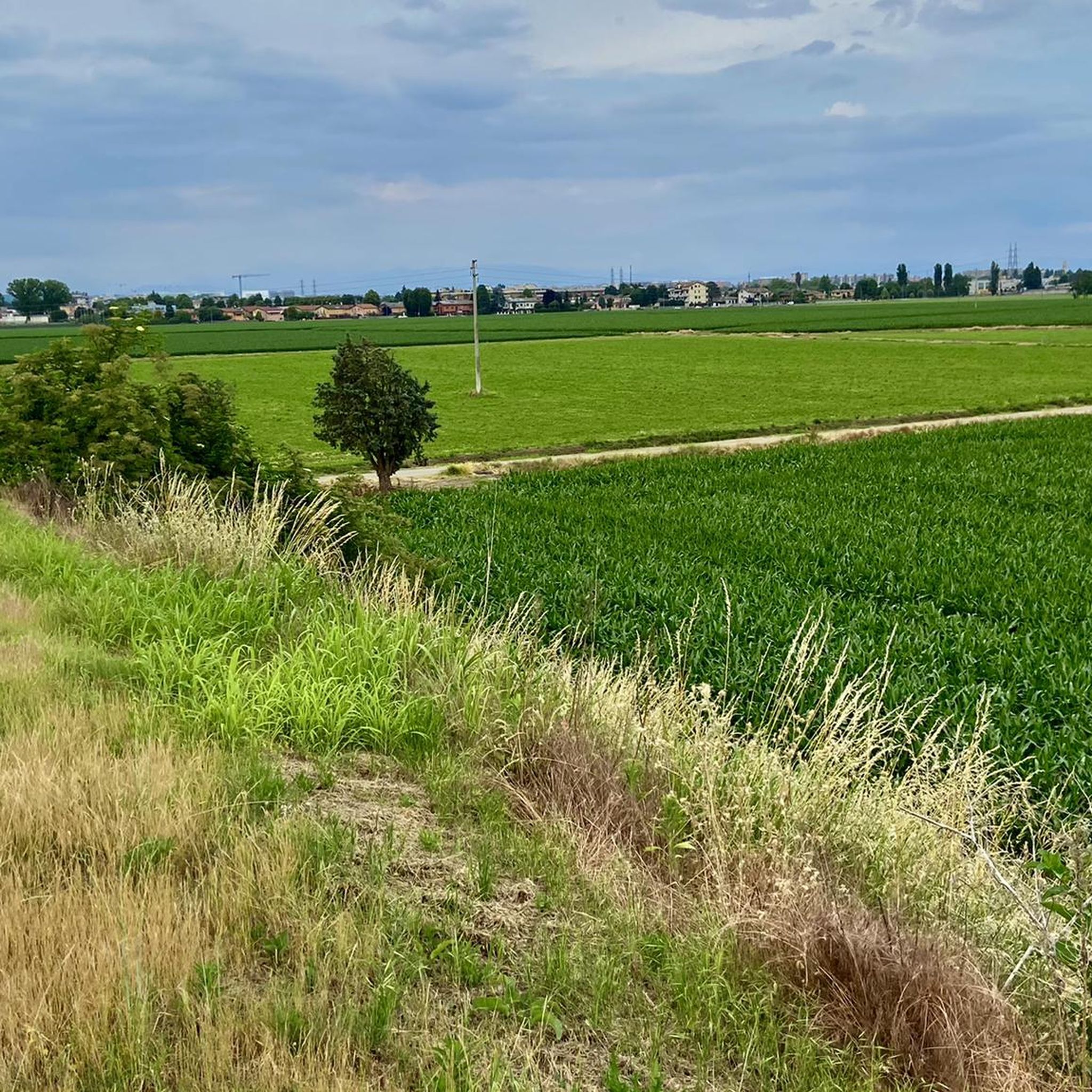
Sixteenth-century fortress immersed in the countryside between San Giuliano and Melegnano. It can be reached either by taking a pleasant dirt road through the fields or by a more comfortable asphalt road. It is not always open so don't be disappointed if the gate is closed

번역: Google

1

0

The Certosa di Pavia is a treasure located in the heart of Lombardy, along the Naviglio Pavese. This historic monumental complex, which includes a monastery and a sanctuary, is an unforgettable experience for anyone who loves art and history. Open from Tuesday to Sunday, with a break from 11.30am to 2.30pm, the Certosa offers visitors the opportunity to admire the beauty and majesty of this place.

번역: Google

3

0

랜드리아노 주변에서 가장 인기 있는 경로

랜드리아노 교통량 없는 자전거 라이딩

komoot 모바일 앱으로 영감을 받아보세요

무료 komoot 계정로 끝없는 야외 모험을 손쉽게 찾고, 맞춤 설정하며 길안내할 수 있어요.

또는

지금 komoot에 가입하세요

더 살펴보기

찾고 있는 하이라이트를 아직 못 찾으셨나요? 다른 지역의 주요 명소 가이드를 확인해보세요:

카소라테 프리모카솔노보보르고 프리올로시지아노지우사고로그나노티치네토비제바노로카 데 조르지바투다포르투나고보고라토 모르모롤로벨레조 벨리니비디굴포마르시나고보르나스코트리볼치오체르토사 디 파비아로마네즈몬탈토 파베세토레 디솔라트로보골페렌조몬테칼보 베르시지아발 디 니차카네비노제르볼로볼파라보르가렐로리리오산타 마리아 델라 베르사피에트라 데 조르지바스카페까르보나라 알 티치노루이노바르비아넬로칼비냐노발베르데카스테지오올리바 제시토라짜 코스테모르니코 로사나피나롤로 포베레구아르도로카 수셀라세라노바산 제네시오 에드 유니티몬테벨로 델라 바탈리아감볼로토리첼라 베르자테파브리카 쿠로네제코네산 마르티노 시코마리오멘코니코브랄로 디 프레골라몬테시갈큐라 카르피냐노로베코 파베세코르비노 산 퀴리코브레사나 보타론벨지오이오소몬투 베카리아몽지아르디노 리구레론카로코드빌라빌라노바 다르뎅기산타레시오 콘 비알로네그레미아스코카스텔누오보 보르미다카스텔레토 디 브란두조시고뇰라보르고 산 시로로베스칼라레토르비도베레토카사노바 로나티빌라노바 몬페라토라디라고빌란테리오카스타나몬테스카노카스텔스피나코스타 데 노빌리카사티스마지나스코그로펠로 카이롤리카네토 파베세메자니노산타 줄레타레다발레알바레도 아르나볼디치뇰로 포도르노바디아 파베세로비오미라도로 테르메피에베 포르투 모로네가르라스코지아롤트라바코 시코마리오토레베키아 피아제르보게렌자고그라벨로나 로멜리나브로니베루아 포인베르노 E 몬테레오네몬티첼리 파베세필리게라바스티다 판카라나산 치프리아노 포트로멜로알부자노리나롤로산타 크리스티나 E 비손발레 살림벤스페사니코르보레아솜모캄포스피노소산 제논 알 포코르테올로나 E 젠존코피아노카바 마나라실라베냐아레나 포스타자노스트라델라모르타라비스타리노토레 데 네그리알라냐컨피엔자세르베시나파로나룽가빌라제네브레도마르자노알본스팔레스트로오토비아노산 다미아노 알 콜레발레지오포탈베라산 조르지오 디 로멜리나보게라피자보스나스코로지냐노 몬페라토피에베 알비뇰라마게르노피오베라로멜로메자나 라바톤사티라나 로멜리나세르냐고메데폰테 니차브레메카스텔노베토페레라 에르보뇽발레 로멜리나베르가마스코캄페르토뇨체레토 로멜리나스칼다솔올레바노 디 로멜리나코조제메카스텔로 다고냐빌라 비스코시갈리아볼라산탄젤로 로멜리나가말레로벨레조 로멜리나실바노 피에트라보치올레토세미아나바살루초산나자로 데 부르곤디그레지오판카라나코라나토레 다레즈

근처 어드벤처 가이드

Parco Delle Cascine Di Pioltello 즐길거리

새로운 정복을 위한 준비를 하세요

무료로 가입하기

탐험하기
경로경로 플래너기능하이킹MTB 트레일로드 사이클링 경로바이크패킹사이트맵
앱 다운로드
소셜 미디어에서 팔로우하기

© komoot GmbH

개인 정보 보호 정책