생 조르주 쉬르 외르 최고의 라이딩 경로
4.4
(157)
3,237
자전거 타는 사람
44
라이딩
생 조르주 쉬르 외르의 로드 사이클링 경로를 찾으시나요? 그렇다면 생 조르주 쉬르 외르 로드 라이딩 컬렉션 중에서 가장 멋진 라이딩 장소를 아래에서 살펴보세요.
마지막 업데이트: 8월 26, 2026
5.0
(2)
16
자전거 타는 사람
61.1km
02:22
200m
200m
보통 도로 자전거 타기. 좋은 체력 필요. 지면 대부분이 잘 포장되어 있고 라이딩하기 쉬움.
12
자전거 타는 사람
71.4km
02:48
290m
290m
보통 도로 자전거 타기. 좋은 체력 필요. 지면 대부분이 잘 포장되어 있고 라이딩하기 쉬움.

무료 회원 가입
5.0
(1)
6
자전거 타는 사람
56.6km
02:13
180m
180m
보통 도로 자전거 타기. 좋은 체력 필요. 지면 대부분이 잘 포장되어 있고 라이딩하기 쉬움.
10
자전거 타는 사람
43.0km
01:47
180m
180m
보통 도로 자전거 타기. 모든 체력 수준에 적합. 투어 중 라이딩하기 어려운 비포장 구간이 있을 수 있음.
6
자전거 타는 사람
53.5km
02:06
170m
170m
보통 도로 자전거 타기. 좋은 체력 필요. 지면 대부분이 잘 포장되어 있고 라이딩하기 쉬움.
더 다양한 경로와 다른 탐험가들의 추천을 살펴보세요.
무료 회원 가입
이미 komoot 계정이 있나요?
투어 추천은 다른 사람들이 komoot에서 완료한 수천 개의 활동을 바탕으로 구성되어 있습니다.
오늘 무료 계정으로 시작하세요
다음 모험이 기다리고 있어요.
로그인 또는 가입하기


커뮤니티 팁

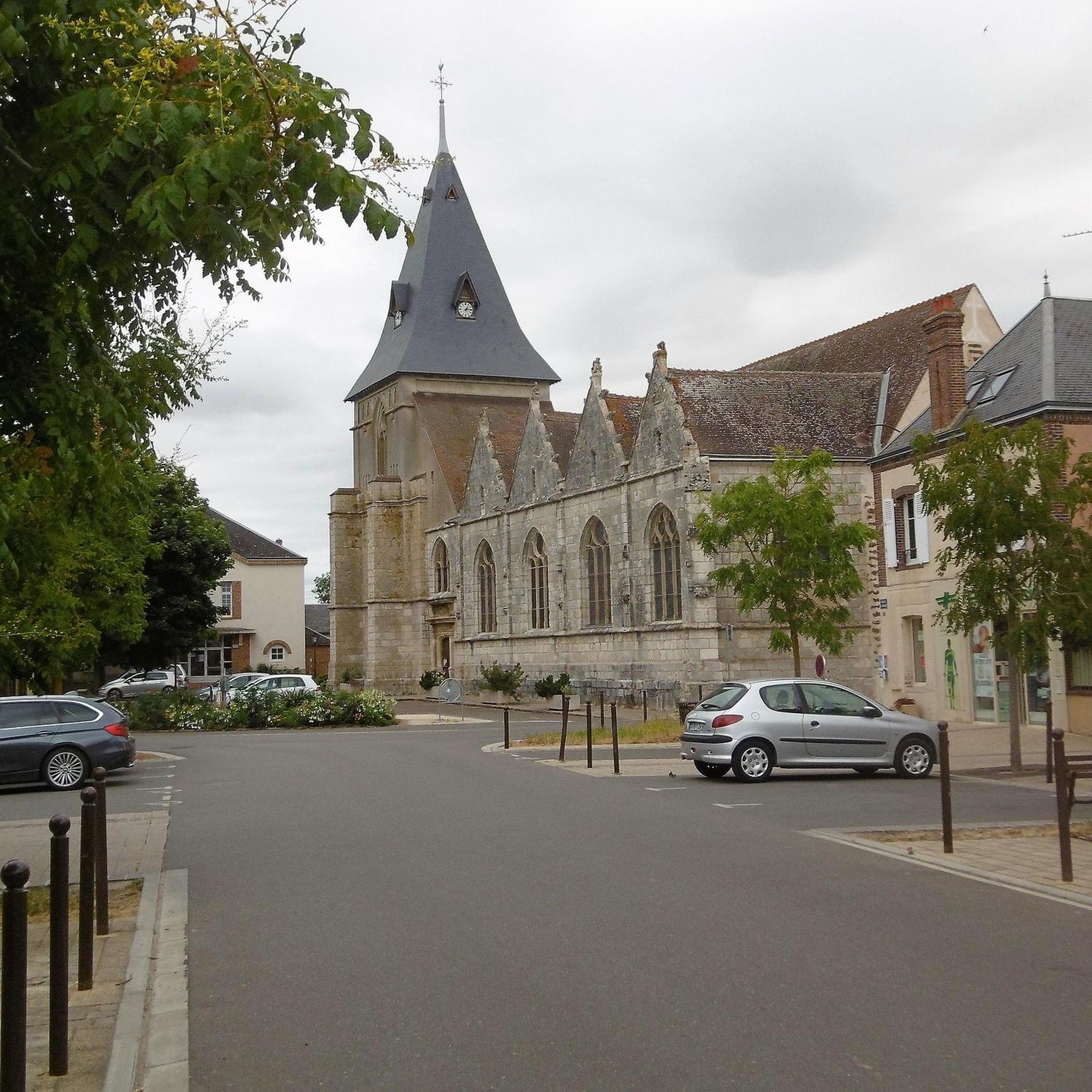
Of Romanesque origin, the church, surrounded by a cemetery, has a curious bell tower supported by machicolations and uprights of sandstone, making it one of the most unique in the region. Perhaps it was originally a bell gable, later augmented by a platform supported by these machicolations? In front of the entrance, a small building called a "caquetoire" (a small meeting place) allows the faithful to gather and converse. Inside the church, the furnishings date from the 18th and 19th centuries: a marble high altar and its gray-painted wooden altarpiece (18th century) – a painted wooden altarpiece of St. Joseph (late 18th or early 19th century) an altarpiece for the altar of the Virgin Mary (19th century) a baptismal font in red-veined marble (19th century) a waxed wooden pew (18th century) a waxed wooden choir stall upholstered in velvet paintings: the Assumption of the Virgin Mary by Octave Hauser (1839) and the Annunciation (18th century) The stained-glass windows date from 1874. The church and the eclipse A bit of history: The parish, established in the 13th century, was part of the deanery of Courville. The church's patron saint, Luperche or Luperchius, gave his name to the village. We must go back to the 4th century to find the first trace of this saint: At that time, Dacius, governor of the part of Spain that included Catalonia, Aragon, and the Kingdom of Valencia, was one of the most cruel ministers of persecution. Incited by the emperors Diocletian and Maximilian, he had eighteen confessors of Jesus Christ executed in the city of Zaragoza. In their honor, the poet Prudentius wrote hymns, and among these confessors, a certain martyr named Luperche became the patron saint of our church.
0
0
The Romanesque church of Saint George was rebuilt in 1540 after a fire destroyed it during the conflicts between the French, English, and Burgundians. It is said that the villagers took refuge in the church, especially in the tower, and that the English did not hesitate to set it ablaze. The two bells, dating from 1816, and a beam bearing the carpenters' names are listed as historical monuments. Exploring the village, you will discover several ponds and old water pumps, a Caesar's Way (Chemin d'Arcé), and a wood.
0
0


Unfortunately, the church was not accessible when I visited (mid-September 2024). You could only look in through a gate and the dance of death depictions on the left side were not really visible. In front of them were transparencies with skeleton drawings. Maybe those were the depictions...
0
0
Historically, our small medieval Romanesque church, dedicated to Saint Silvanus, was an integral part of a lordship. We can, still today, guess the vestiges of the seigniorial coat of arms on the liter (the banner) located just below the windows on the north face. Located near the old castle moat, the cemetery flanked it, on the north side in place of the current car park and the multi-purpose room, on the south side at the level of the green space currently planted with lime trees. Originally only the central building existed and the bell tower topped it in its center. This is the reason why at the beginning of the 1980s, the framework began to collapse, weakened by the weight and the marks of time left by the old bell tower. This renovation proved, if necessary, through the design of the framework, the existence of the central bell tower. The time when the bell tower was moved off-center is at the end of the 16th century, beginning of the 17th century. Concerning the creation of the sacristy and the side chapels, the departmental archives hold a plan of the church, dated August 19, 1853 which clearly indicates the existence of the sacristy and only the north chapel, the construction of the South chapel was therefore not concomitant. In the masonry, the small Romanesque windows can still be seen, the only one remaining, unwalled, opens to the east and still today offers a light entrance into the apse. Around the church we notice two types of buttresses, the first, the narrower ones date from the creation of the building, the more massive ones date from the 18th century, placed as reinforcements Neo-classicism at the end of the 18th century and the beginning of the 19th century left its mark on this building. Outside, as we have seen, by the addition of the sacristy as well as the small side chapels now forming a transept.
0
0

Porte de Boisville Its ogival portal opens into a thick quadrangular massif where there was a room for operating the portcullis. We can still see the groove in the thickness of the walls. On the left and right two small funnel-shaped spaces allowed the defenders to observe and repel the enemies who appeared on the bridge. The gate was topped by a building serving as a guardhouse which was demolished in 1761. The guarding of these doors and their keys was in the troubled times of the Hundred Years' War the subject of concern for the inhabitants and also a source of quarrels and trials between the city and the abbey. This gate is preceded by a bridge of 5 stone arches, the one adjoining the gate was built in 1774 and replaced a drawbridge which defended the entrance.
0
0

Very beautiful church and the public toilets next to it are perfect, even for filling water bottles too large for the classic sinks.
0
0
Composed of a Romanesque nave with flat buttresses placed symmetrically on each side (typical of the end of the 11th century or the first half of the 12th century), it was completely remodeled in the 16th century and the end of the 20th century. The bays of the nave are from the 15th century, in flamboyant Gothic style, as is the rose window. The span of the bell tower and the choir, with ribbed vaults, date from the end of the 15th or beginning of the 16th century. As early as the 16th century, the bell tower had a clock, quite rare and expensive for the time. The pillars of the central bay are richly molded and crowned with thin bands of foliage serving as capitals. The windows are decorated with flamboyant tracery of varied designs. The Romanesque portal was also remodeled in the 16th century. The powerful central bell tower with buttresses [formerly had three bells named PIC DAN JON. There will only be one left after the Revolution, the other two having been melted down to make cannons and ammunition.
0
0
생 조르주 쉬르 외르 주변에서 가장 인기 있는 명소


더 살펴보기
다른 지역의 최고의 로드 사이클링 경로를 살펴보세요.
