티바르 최고의 라이딩 경로
4.5
(198)
4,847
자전거 타는 사람
670
라이딩
티바르의 로드 사이클링 경로를 찾으시나요? 그렇다면 티바르 로드 라이딩 컬렉션 중에서 가장 멋진 라이딩 장소를 아래에서 살펴보세요.
마지막 업데이트: 10월 19, 2026
4.0
(1)
10
자전거 타는 사람
35.7km
01:23
110m
110m
초급용 로드 라이딩. 모든 체력 수준에 적합. 지면 대부분이 잘 포장되어 있고 라이딩하기 쉬움.
5.0
(1)
11
자전거 타는 사람
34.1km
01:19
110m
110m
초급용 로드 라이딩. 모든 체력 수준에 적합. 지면 대부분이 잘 포장되어 있고 라이딩하기 쉬움.

5.0
(1)
7
자전거 타는 사람
61.8km
02:23
190m
190m
보통 도로 자전거 타기. 좋은 체력 필요. 지면 대부분이 잘 포장되어 있고 라이딩하기 쉬움.
7
자전거 타는 사람
47.4km
01:55
200m
200m
초급용 로드 라이딩. 모든 체력 수준에 적합. 지면 대부분이 잘 포장되어 있고 라이딩하기 쉬움.
6
자전거 타는 사람
50.1km
01:55
140m
140m
초급용 로드 라이딩. 모든 체력 수준에 적합. 지면 대부분이 잘 포장되어 있고 라이딩하기 쉬움.
더 다양한 경로와 다른 탐험가들의 추천을 살펴보세요.
이미 komoot 계정이 있나요?
투어 추천은 다른 사람들이 komoot에서 완료한 수천 개의 활동을 바탕으로 구성되어 있습니다.
오늘 무료 계정으로 시작하세요
다음 모험이 기다리고 있어요.

커뮤니티 팁


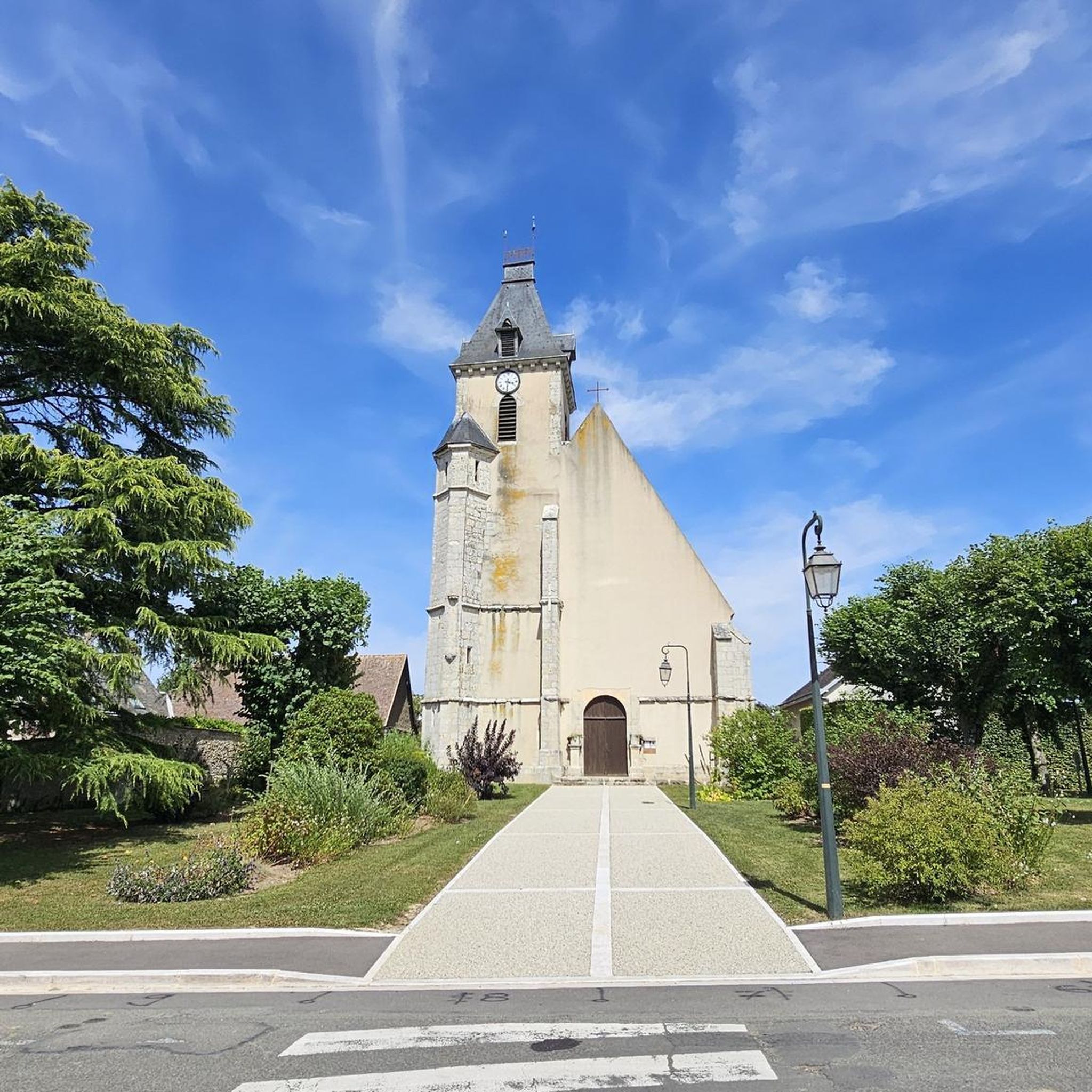
The oldest document mentioning the Church of Saint-Martin in Fresnay-le-Comte is the charter of Renaud de Mouçon, Bishop of Chartres, confirming the possessions of the Abbey of Marmoutier, near Tours. This charter dates only from the last years of the 12th century, but the church's foundation may have already existed at that time. The building comprises two parts of roughly equal size and from different periods. The older part, roughly corresponding to the nave, is of a rather undefined style. The west portal, with its pointed arch devoid of any decoration, may date back to the 12th or 13th century, as may the first window of the nave, on the right. In the north wall, there is a small, walled-up doorway, whose lintel, adorned with an accolade, is no earlier than the 15th century, but the relieving arch above it appears older, perhaps from the 12th century. Half of the church, including almost the entire chancel, is from a more recent period and easily recognizable. The polygonal apse and the windows with their flamboyant tracery of late design indicate the very end of the 15th century. An inscription on one of the chancel's tie beams gives a precise date: In the year 1529, this chancel was completely rebuilt. The statue of the Virgin Mary was baptized during the Mass of October 30, 2021, by Father Pierre Paul. This statue, moved from the Chapel of the Three Marys in Mignières, was restored by Mr. Martial Moulin, a sculptor from Chartres.
0
0

This church in Meslay-Le-Vidame, whose architecture reflects the formal language of antiquity, was dedicated to the patron saint of Saint Etienne. He was one of the first seven deacons of the original Jerusalem church and, according to the biblical accounts in the New Testament, the first martyr (martyr) of early Christianity. The church commemorates his death on Boxing Day, December 26th. As the Acts of the Apostles recounts: When Stephen recounted his vision of the open heavens, "And he, full of the Holy Spirit, looked up into heaven and saw the glory of God, and Jesus standing at the right hand of God" (Chapter 7, Verse 55), the people were so outraged that they drove him out of the city and stoned him.
0
0
On the night of April 2-3, 1903, a terrible fire completely destroyed the church of Saint-Sulpice. The spire, the roof, and all the furnishings—pews, pulpit, woodwork, altars—were consumed; only the walls remained standing. This church, 23.80 m long and 6.90 m wide, built in the shape of a perfect parallelogram with a straight chevet, formerly lit by a triple lancet window, was flanked on the right by a groin-vaulted chapel 6.10 m wide and 5.55 m deep, and on the left by the bell tower, beneath which was once a chapel, also groin-vaulted, but transformed into a sacristy a few years ago. This tower, reached by a stone staircase, was topped by an octagonal timber-framed spire, elegantly crafted and the tallest in the entire region. This church has been remodeled several times, most recently during the reconstruction of the Chapel of the Blessed Virgin in 1764. However, this dates back to the 16th century, as evidenced by the flamboyant ogival window with two mullions, only the top of which was visible, the lower part having been walled up to accommodate the altarpiece. The second window, on the south side, is semicircular with a mullion, adorned with stained-glass windows with figures of the Blessed Virgin, Saint Anne, and Saint Joachim framed in small medallions painted by Mr. Lorin in 1895. The nave wall received windows of the same style at the same time, but the enormous buttresses and the freestone stringcourse with dripstone were erected in the 16th century. The rest of the church, the gable of the façade with its Romanesque window flanked by two barely protruding pillars, the gable of the chevet with its triple lancet arch, protected by a semicircular arch of dressed stone, the entire north wall, also supported by slightly protruding buttresses and adorned with semicircular windows, and the bell tower, date from the late 12th century. The exterior entablature of the chevet was formed of carved corbels with foliage and strange, crude figures (alternating human heads and rams' heads), irrefutable evidence of this ancient origin. The church was consecrated after the 16th-century restoration, and a beautiful consecration stone with trefoiled ends can still be seen. The church's benefactor had his coat of arms carved on a projecting shield on the corner buttress of the façade gable, and inside the seigneurial tier. The destruction of the woodwork revealed two double oval shields on either side of the high altar, surmounted by a marquis's crown and supported by two greyhounds. The dexter shield bears a gules chevron, accompanied at the top by two roses of the same color and at the base by a cross of Lorraine; the sinister shield reveals a wild boar at the base and two flames or thunderbolts at the top. Could these be the arms of Mre Loup de Cosne? These same shields are found in the Chapel of the Blessed Virgin in four places and in the sacristy. In the Chapel of the Blessed Virgin, a third shield is also found bearing a standing lion, attached to a shield bearing a wild boar and two flames. In 1623, Loup de Cosne, Lord of Vovelle, had a daughter named Francoyse, baptized in Dammarie; in 1653, Charles de Cosne was lord of Loiville and Mre Mangot, lord of Boncé.
0
0


Unfortunately, the church was not accessible when I visited (mid-September 2024). You could only look in through a gate and the dance of death depictions on the left side were not really visible. In front of them were transparencies with skeleton drawings. Maybe those were the depictions...
0
0
The Saint-Germain de Morancez church could date from the 10th century. Its cut stone facade is punctuated by four buttresses framing a portal. This is composed of three concentric arches resting on engaged columns, decorated with capitals. The zigzag decoration of the arches confirms a dating before the 12th century. The occulus surmounting the porch illuminates a semi-circular vaulted nave. This was enlarged with an aisle built much later and where there is an altar dedicated to the Virgin. The furniture remains simple but not without interest with its benches enclosed in painted wood. However, it is worth mentioning a sculpted pulpit from the 18th century. In 1707, the prior-parish priest of Morancez was Nicolas Courvoisier, religious of the Saint-Jean-en-Vallée abbey. A poet, he is notably the author of a Latin ode addressed to the people of Chartres on the death of Paul de Godet des Marais1. He died on May 14, 1742 in Morancez and was buried in the church. (his tombstone remains to be identified.) Although Morancez was a modest parish, in 1851 it benefited from a prestigious gift from Jérôme Bonaparte, brother of Napoleon I, governor of Les Invalides, then in residence at the Château de Gourdez. He offered the church a painting, Moses makes water flow from the rock, painted by Giovanni Francesco Romanelli between 1657 and 1660. This Italian artist had been called to decorate the cabinet called "At the water's edge" of the apartment of Queen Anne of Austria at the Louvre. He created a decor, now dismembered, composed of a set of six paintings devoted to the story of Moses, including the work, classified as a Historic Monument, preserved in our church. Another interesting work which could be attributed to the school of Philippe de Champaigne represents Jesus among the doctors. These two paintings benefited from a restoration in 1998
0
0

Porte de Boisville Its ogival portal opens into a thick quadrangular massif where there was a room for operating the portcullis. We can still see the groove in the thickness of the walls. On the left and right two small funnel-shaped spaces allowed the defenders to observe and repel the enemies who appeared on the bridge. The gate was topped by a building serving as a guardhouse which was demolished in 1761. The guarding of these doors and their keys was in the troubled times of the Hundred Years' War the subject of concern for the inhabitants and also a source of quarrels and trials between the city and the abbey. This gate is preceded by a bridge of 5 stone arches, the one adjoining the gate was built in 1774 and replaced a drawbridge which defended the entrance.
0
0
티바르 주변에서 가장 인기 있는 명소


더 살펴보기
다른 지역의 최고의 로드 사이클링 경로를 살펴보세요.
