The 18 Most Amazing Peaks around Coustouges
Best mountain peaks around Coustouges are found in the Pyrénées-Orientales department, a region characterized by elevations ranging from 411 to 1,120 meters. The village of Coustouges itself is situated at an altitude of 832 meters. This area offers access to notable mountain peaks and passes, providing diverse natural landscapes. The terrain includes various features, from accessible hiking routes to more challenging climbs.
Best mountain peaks around Coustouges
- The most popular mountain peaks is Mare de Déu del Mont Summit,…
Last updated: October 4, 2026
Mare de Déu del Mont Summit
Highlight • Summit
Tip by

Puig de Bassegoda
Highlight • Summit
Translated by Google •
Tip by

Sign up now to discover places like this
Get recommendations on the best single tracks, peaks, & plenty of other exciting outdoor places.
Santa Bàrbara de Pruneres
Highlight • Religious Site
Translated by Google •
Tip by

Puig de les Salines (Salines Peak)
Highlight • Summit
Translated by Google •
Tip by

Panoramic View of the Canigou
Highlight • Viewpoint
Translated by Google •
Tip by

Sign up for free to discover even more peaks around Coustouges.
Already have an account?
Start today with a free account
Your next adventure awaits.

Tips from the Community

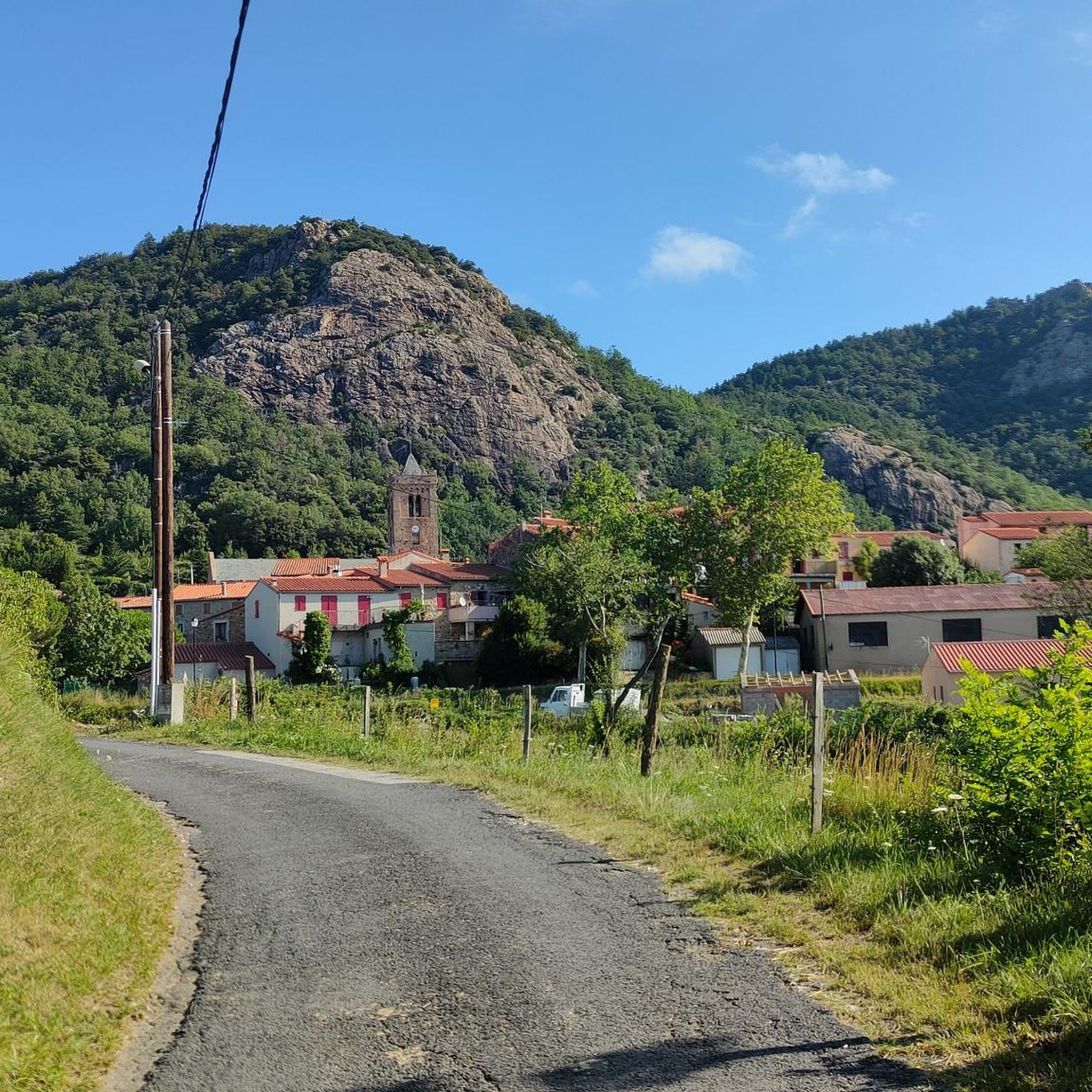
From here, you can see the summit of Canigou. The panorama is breathtaking! This giant of the Pyrénées-Orientales, culminating at 2,784 meters. You can also enjoy a breathtaking view of Arles-sur-Tech.
1
0

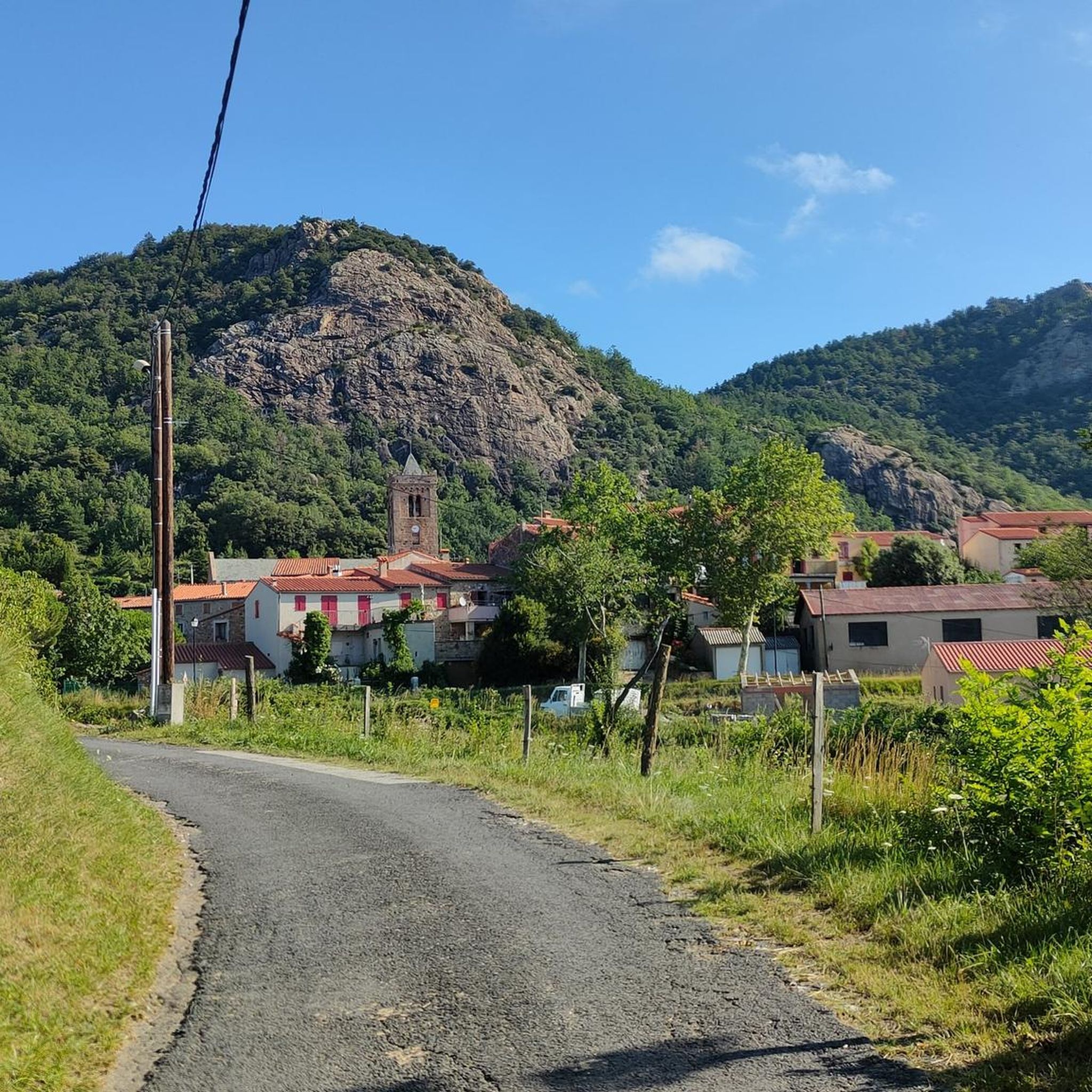
At 1,373 meters high, the Puig de Bassegoda is located on the border between the regions of La Garrotxa and Alt Empordà. The climb accumulates a lot of positive unevenness in a short distance. For this reason, in the last section it has staples and chains to help itself.
2
1

the views upon arrival pay for all the effort of the climb
3
0

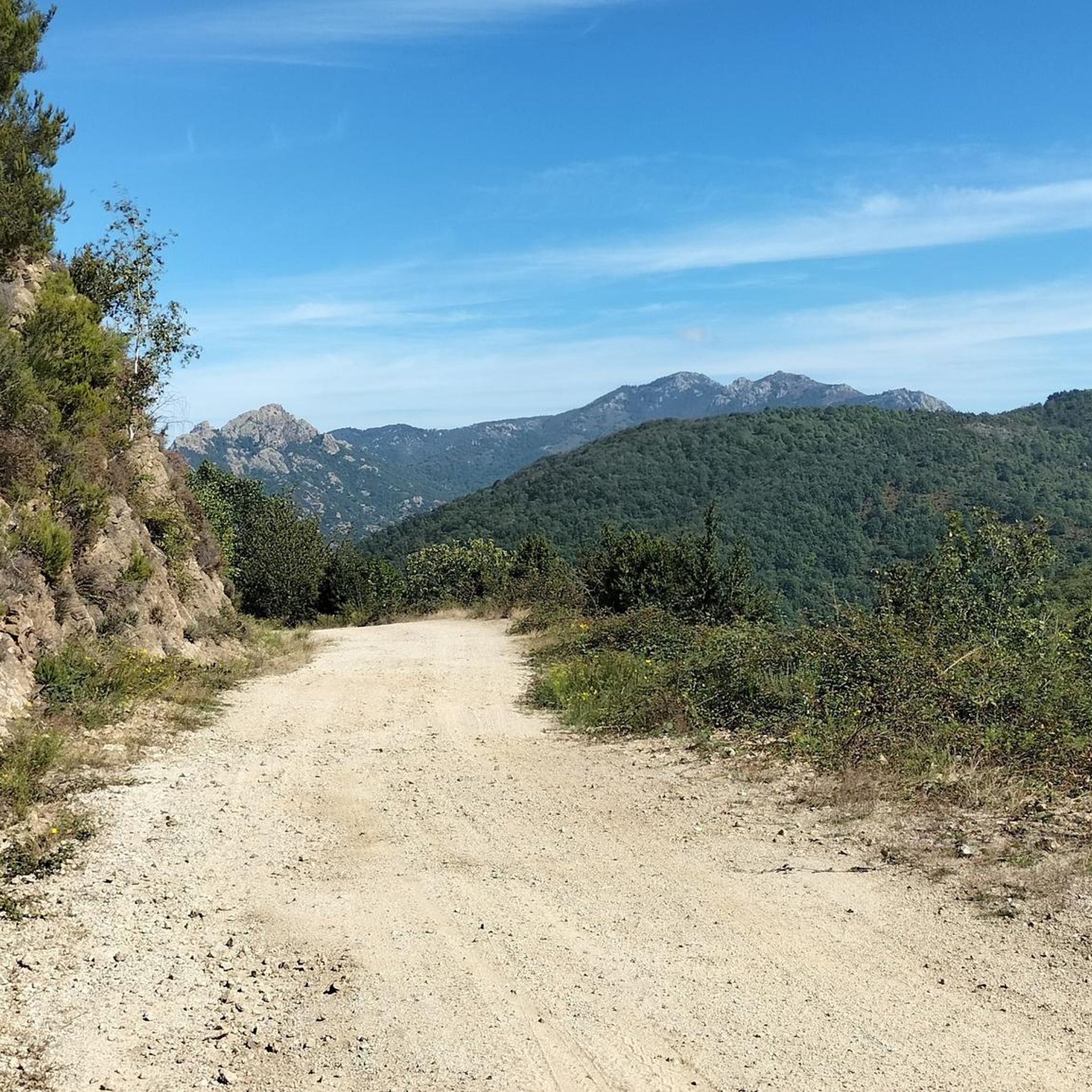
It is a building dating from the twelfth or early thirteenth century, although it probably existed before an earlier church. The word Prunarias appears in a document from the year 966 as belonging to Sant Pere de Camprodon. The building is mentioned again in 1017. It seems that from shortly after 966 it belonged to the priory of Santa Maria del Coll de Panissars, a situation that must have been maintained until the beginning of the 17th century. In 1617 the church was joined to that of Sant Llorenç d'Oix. In 1661 there were 3 altars: the one of Santa Bàrbara, the one of Santa Caterina and the one of Sant Bartomeu. The church was damaged during the Civil War of 1936-39. The whole complex was completely restored between 1972-1979 by the Friends of Alta Garrotxa. Inside, different artistic pieces were kept, such as a tombstone representing the burial of a lady from the castle of Bestracà, which was damaged during the riots of 1936. Some of the fragments were deposited in the Museum of Olot by Dr. Joaquim Danès. Until the end of the 19th century, a Romanesque carving was venerated there, today deposited in the Museu d'Art de Catalunya, from the Plandiura collection. The fragments of an altarpiece representing the life of the saint are kept in the Parish Museum of Olot. From 1972 to 1981, restoration work was carried out, which meant that the building built on the nave during the 17th and 18th centuries was abandoned, as well as the one that turned the old belfry into a tower, rebuilt after a lightning strike. destroyed it in September 1978.
0
1
Its characteristic pointed shape, its height and the fact that it is isolated from other nearby peaks make it easily identifiable. At the foot of the Bassegoda hill on its north-eastern slope, the Borró river, a tributary of the Fluvià, is born. It is actually two peaks separated by a gap. The western one (1363m) is called Taula d'en Gustí and the eastern one (1373m), Taula d'en Sala and is what is properly considered the summit. It seems that the toponym Bassegoda comes from two Basque words: basa, which means 'wilderness, desert', and goiti, which means 'summit, height'; thus Basagoiti would mean 'barren peak', referring to being an absolutely rocky lookout but with excellent 360º views from the Gulf of Roses to Canigó.
2
2

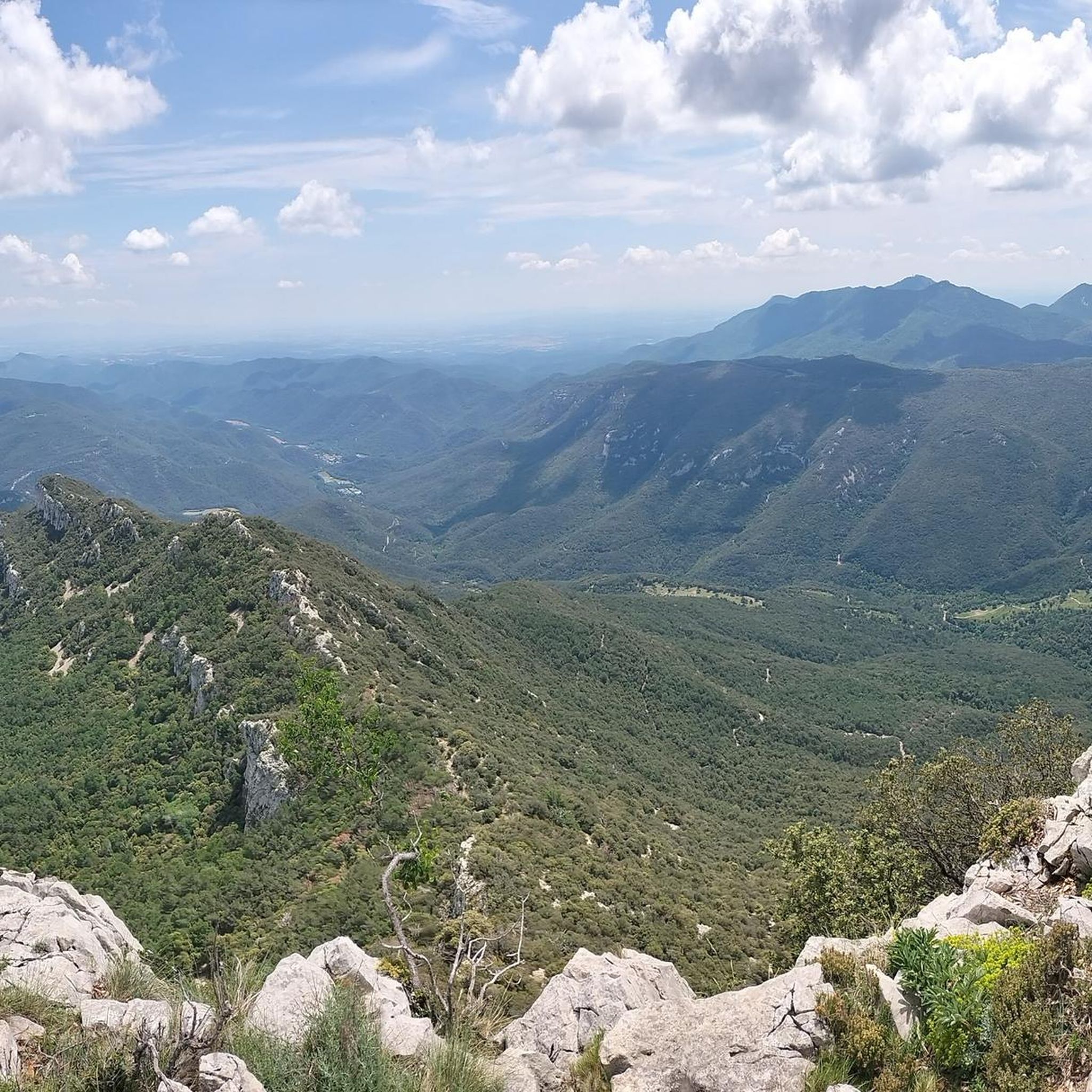
The Puig de les Salines is one of the obligatory hiking trails. The Pic des Salines or Pic de les Salines (in Catalan: puig de les Salines or puig de les Pedrisses) is a peak in the eastern Pyrenees, reaching an altitude of 1,333 m. It marks the border between Spain and France, between Maureillas-las-Illas, Céret and Maçanet de Cabrenys.
12
0

This is a tough 18km climb thats starts out easy and then gets a lot steeper with about 10km to go. Persist and you'll be rewarded with one of the most incredible views of the region, and a cafe that feels like it is in the sky.
4
0

Great mountain, very lonely, but also unrhythmic ....
3
0
Frequently Asked Questions
What are some of the most notable mountain peaks and passes to explore around Coustouges?
The region around Coustouges offers several notable peaks and passes. You can explore Mare de Déu del Mont Summit, known for its long and rewarding climb with a restaurant at the top. Another significant peak is Puig de Bassegoda, offering excellent 360º views due to its isolated position. Other options include Roc del Bau, Puig de la Gavarra, Puig del Boixer, and the scenic Col de Coustouges pass.
Are there any easy or family-friendly mountain walks near Coustouges?
Yes, for an accessible and family-friendly option, consider the 'Puig Petit' hike from Coustouges. It's a gentle 4.6 km loop with a modest 90-meter elevation gain, taking approximately 1 hour and 40 minutes. This trail offers panoramas of the Pyrenees, glimpses of the 10th-century Saint-Michel church, and unique red rock formations.
Which mountain peaks offer the best panoramic views around Coustouges?
For expansive views, Puig de Bassegoda provides excellent 360º vistas. Puig de la Gavarra also offers broad views of the Salines, Tapis, Maçanet de Cabrenys, Serra del Mont, and Bassegoda. Additionally, the Panoramic View of the Canigou offers a breathtaking panorama of the giant Canigou and Arles-sur-Tech.
Are there challenging mountain climbs for experienced hikers near Coustouges?
Yes, for a challenging experience, Puig de Bassegoda is a demanding climb with significant elevation gain over a short distance, featuring staples and chains in its final section. The Mare de Déu del Mont Summit also presents a long and rewarding, albeit challenging, ascent.
What historical or religious sites can be found on mountain peaks in the Coustouges area?
The Mare de Déu del Mont Summit is home to a shrine, which is the origin of its name, meaning 'mother of God of the mountain'. Another significant site is Santa Bàrbara de Pruneres, a well-restored Romanesque hermitage dating from the 12th or early 13th century, offering great views of the Alta Garrotxa.
Can I find mountain peaks that mark the border between Spain and France near Coustouges?
Yes, Puig de les Salines (Salines Peak), reaching an altitude of 1,333 m, distinctly marks the border between Spain and France, specifically between Maureillas-las-Illas, Céret, and Maçanet de Cabrenys. It is considered an obligatory hiking trail.
What kind of outdoor activities, besides hiking, can I do near the mountain peaks around Coustouges?
Beyond hiking, the region offers various outdoor activities. Cyclists can enjoy the gentle gradients of the Col de Coustouges. For rock climbing enthusiasts, Roc de la Creu provides a beautiful granite wall with sport climbing routes of varying difficulties. You can also find numerous running and road cycling routes in the area. For more details on running trails, visit the Running Trails around Coustouges guide, and for road cycling, check out the Road Cycling Routes around Coustouges guide.
Are there specific hiking trails that incorporate multiple peaks or offer diverse terrain?
Yes, for a varied hiking experience, the 'Roc del Bau – The chestnut mountain loop' from Saint-Laurent-de-Cerdans covers 15.4 km with a 580-meter elevation gain, offering diverse routes. The 'Puig de la Gavarra – Bac Grillera Castle loop' from Coustouges is another moderate option spanning almost 10 km, featuring a geodesic vertex at its summit. Longer routes originating from Coustouges, such as the 'Coustouges - la Creu del Canonge - Mas de la Nantilla - Puig del Boixer' trail, integrate Puig del Boixer and provide fantastic mountain views.
What do visitors particularly enjoy about the mountain peaks around Coustouges?
Visitors appreciate the diverse natural landscapes, from accessible hiking routes to more challenging climbs. The panoramic views from summits like Mare de Déu del Mont Summit and Puig de Bassegoda are highly praised. The presence of amenities like a restaurant at Mare de Déu del Mont also adds to the enjoyment, making for a rewarding experience after a long climb.
What is the best time to visit the mountain peaks around Coustouges?
The region's mountain peaks are generally enjoyable for hiking and outdoor activities throughout much of the year. Given the sunny aspect of some areas like Roc de la Creu, it can be appealing year-round. However, for the most comfortable hiking conditions, spring and autumn typically offer pleasant temperatures and stable weather. Always check local weather forecasts before heading out.
Are there any mountain passes suitable for cycling near Coustouges?
Yes, the Col de Coustouges (830 m) is a notable mountain pass highly praised by cyclists. It features a gentle average gradient of 3.3% over 13.9 km, making it an enjoyable climb. Along the way, you can appreciate views of waterfalls, chestnut forests, and mountains, serving as a scenic gateway to Southern Catalonia.
Where can I find more hiking routes near Coustouges?
You can find a variety of hiking routes around Coustouges, catering to different difficulty levels. For a comprehensive list and detailed information, please refer to the Hiking around Coustouges guide. It includes routes like the 'Puig de la Gavarra – Bac Grillera Castle loop' and the 'Roc del Bau – Rock of the Cross loop'.
Most popular routes around Coustouges
Most popular attractions around Coustouges

Get inspired with the komoot mobile app


Explore more
See even more amazing summits around Coustouges with these guides:
