러글스 주변 최고의 교통량 없는 자전거 라이딩 코스
4.6
(11)
241
자전거 타는 사람
36
라이딩
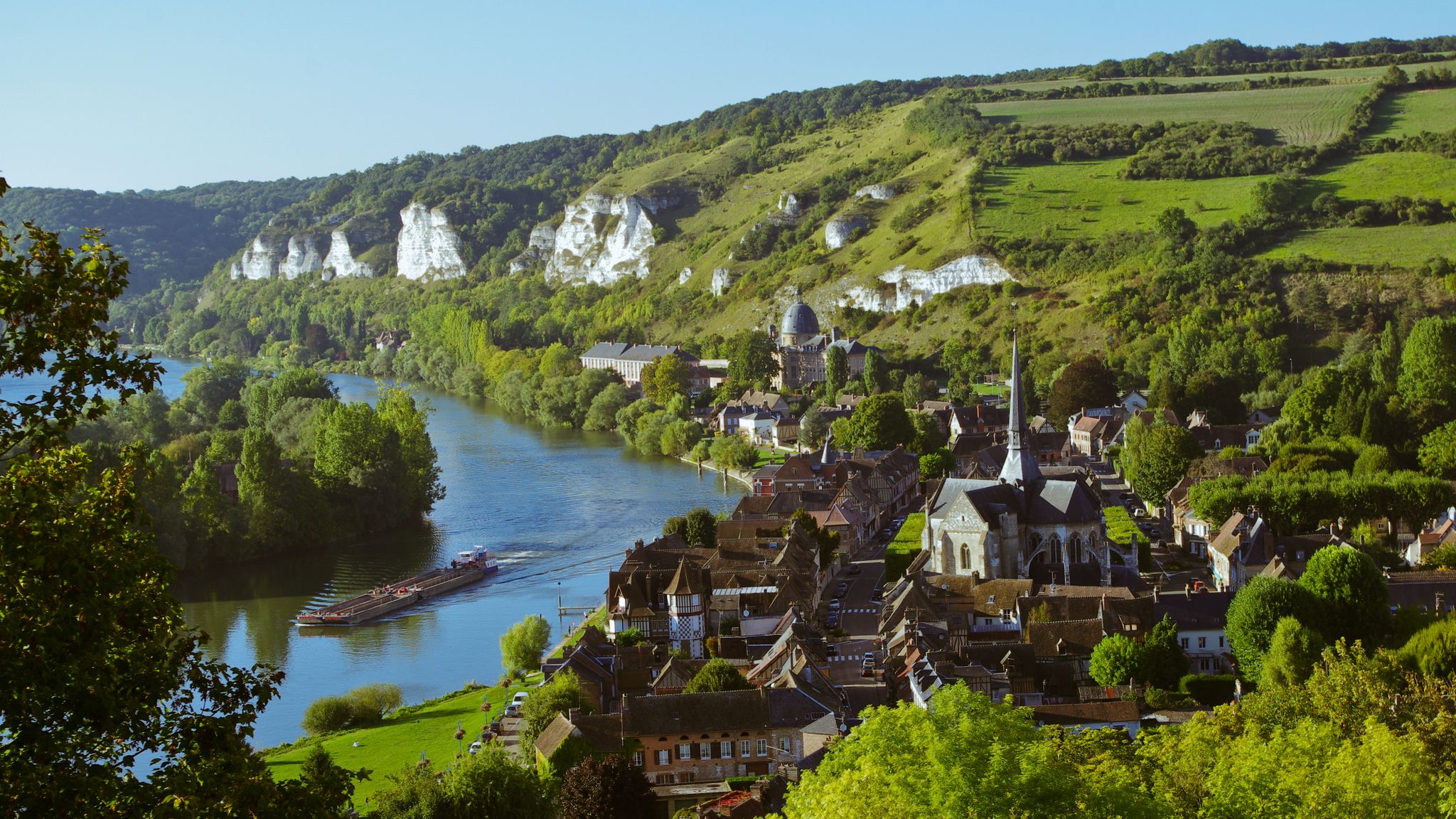
Rugles 주변의 교통량이 적은 로드 사이클링 코스는 노르망디의 외르(Eure) 지역을 가로지르며, 구불구불한 목초지, 넓은 삼림 지대, 강 계곡으로 특징지어지는 다양한 풍경을 선사합니다. 리슬 강(Risle River)이 마을을 흐르며 이 지역의 자연적인 매력을 더합니다. 지형은 평지와 완만한 오르막이 혼합되어 있어 다양한 사이클링 경험에 적합합니다. 이 지역은 자연의 아름다움과 역사적인 건축물이 조화를 이루고 있으며, 많은 코스가 조용한 시골길을 이용합니다.
Rugles 주변 최고의 교통량 없는 로드 사이클링 코스
- 가장 인기 있는 교통량 없는 로드 사이클링 코스는 부르(Bourth) 출발 콩투르비 연못 – 생피에르 교회 루프…
마지막 업데이트: 8월 30, 2026
12
자전거 타는 사람
76.2km
03:32
470m
470m
보통 도로 자전거 타기. 좋은 체력 필요. 지면 대부분이 잘 포장되어 있고 라이딩하기 쉬움.
5.0
(1)
11
자전거 타는 사람
53.9km
02:18
220m
220m
보통 도로 자전거 타기. 좋은 체력 필요. 지면 대부분이 잘 포장되어 있고 라이딩하기 쉬움.

무료 회원 가입
5.0
(2)
5
자전거 타는 사람
55.6km
02:26
380m
380m
보통 도로 자전거 타기. 좋은 체력 필요. 지면 대부분이 잘 포장되어 있고 라이딩하기 쉬움.
5
자전거 타는 사람
49.4km
02:17
320m
320m
보통 도로 자전거 타기. 좋은 체력 필요. 지면 대부분이 잘 포장되어 있고 라이딩하기 쉬움.
4
자전거 타는 사람
56.3km
02:37
220m
220m
보통 도로 자전거 타기. 좋은 체력 필요. 지면 대부분이 잘 포장되어 있고 라이딩하기 쉬움.
더 다양한 경로와 다른 탐험가들의 추천을 살펴보세요.
무료 회원 가입
이미 komoot 계정이 있나요?
투어 추천은 다른 사람들이 komoot에서 완료한 수천 개의 활동을 바탕으로 구성되어 있습니다.
오늘 무료 계정으로 시작하세요
다음 모험이 기다리고 있어요.
로그인 또는 가입하기
러글스 주변 인기 장소

러글스 주변의 다른 모험

커뮤니티 팁

In the center of Randonnai, the 16th-century Saint-Malo church, enlarged in 1836, houses several works classified as Historic Monuments, including a classical altarpiece with paintings of Saint Andrew and Saint Sebastian. Funeral slabs serve as threshold steps. Inside, a plaque commemorates the departure of Pierre Tremblay (whose birthplace is in La Filonnière) in 1647 for New France. He is the ancestor of the Tremblays of Quebec and North America.
0
0
This building was erected towards the end of the 15th century, on the former medieval fiefdom known since 1260 as the "Normandel Farm" and long owned by the Viron family. In the chapel dedicated to him, a beautiful 16th-century statue depicting Saint Firmin as a bishop and the magnificent white stone altarpiece, sculpted and ornamented in the purest Renaissance style, evoke the ardent faith of this evangelizer of Roman Gaul in the 3rd century. The current church, restored at the end of the 19th century in the style of the period after a long period of neglect, retains some traces of the old construction: the masonry of the rear wall overlooking the cemetery, with the remains of a small closed door and two buttresses of large rubble, and on the gable of the transept overlooking the road, a large Flamboyant Gothic window. The church of Normandel preserves other elements of great interest. In the chapel, on the right side, is a beautiful 16th-century polychrome stone Virgin and Child. Below the statue, a second stone altarpiece, finely carved and ornamented in the Renaissance style, shows, on one side, Mary seated near Jesus holding a chalice, and Joseph leaning on his cane, to whom the young John the Baptist appears to be bidding farewell before departing for the desert. In the nave, the large Christ on the cross, surrounded by Mary and Saint John, is moving in its sobriety: the outstretched arms of the crucified bear the full weight of our humanity, raising it to God. In the sacristy, an old fragment of an embroidered banner bears the image of Saint Firmin and the inscription "Charity of Normandel - 1513."
0
0
The church of Cintray has been listed as a historical monument since June 15, 1920. This building contributes to the beauty of the Eure landscapes and the richness of France's heritage. Over the centuries, the buildings that have been grafted or agglomerated in the surrounding area have been built within the framework of a social structure: the parish. These buildings constitute references in terms of local architecture, because they are often made with local materials: tiles or slates (from the 19th century), stones (flint, Grison, Seine Valley, sandstone, etc.), bricks or cob, lime plaster and nearby sand or earth. This gives colors that often range from beige to brown or red, and volumes perfectly suited to the Normandy climate (roof slopes, etc.). These churches have been the subject of specific analysis because their surroundings are not completely urbanized. The empty spaces or breathing spaces nearby help preserve their setting. The site of the church is very interesting because, located between the Iton and the very refined village square, it offers, to the south, large visual openings onto the monument. These spaces, little or not urbanized, must be preserved.
0
0

Right next to the town hall, the ideal place for a break
0
0

Located in the center of the village, it is dedicated to two twin brothers, Saint Gervais and Saint Protais, who were martyred in the 2nd century in Milan. Its construction dates from the 12th century. At that time, it included the flat-saddle nave and the choir. In the 15th and 16th centuries, it was completed by the south aisle and the ceiling covering. The south aisle was listed in July 1932, and the entire church has been listed since September 2011.
0
0
The church is located near a departmental road and is surrounded by a cemetery. Church oriented with a longitudinal plan composed of a single nave. The entrance to the building is via a porch body. An annex building is attached to the north side of the choir. The western facade of the porch body rises on two levels delimited by a projecting cornice. It is pierced by a low-arched door as well as a rose window in the upper part. The bell tower, of polygonal plan, is positioned on the ridge of the roof. It is covered with a polygonal spire surmounted by a ridge cross and has two roof eaves. The building is covered with a gable roof. That of the annex building ends in a hip. The side walls are pierced with arched bays and supported by buttresses. The annex building is pierced by a quadrangular window and door. The buttresses of the choir bear witness to the Romanesque origins of the church. The nave, built in the 16th century, was enlarged in the 19th century by a bay to the west. The bays of the building were re-pierced around 1822.
0
0
In the nearby park shaded by large trees, the ruins of fortifications recall the memory of the six towers of the old castle built in the 11th century……. In the nearby park shaded by large trees, the ruins of fortifications recall the memory of the six towers of the old castle built in the 11th century by Geoffroy IV, Count of Perche, in order to control this border region near the Chartres region, Normandy, and the possessions of the Lords of Bellême and Alençon which extended as far as Sées. During the Hundred Years' War, Charles, Count of Evreux and King of Navarre, allied with the English against the King of France, seized the fortress in 1364. It was then besieged and retaken on behalf of King Charles V by his younger brother Philip the Bold, Duke of Burgundy, using catapults that threw large stones to collapse sections of the walls. But after the English victory at Verneuil in 1424, they rushed to destroy Marchainville, setting fire to the town and the castle. The church, too, has experienced some vicissitudes. It occupies the site of a very old small monastery, given to the abbey of Saint-Evrouit by a certain Fulchierus of Chartres, who was chaplain to Baldwin I, King of Jerusalem and author of an account of the first crusade. The monks built the priory church in the 11th century, of which the thick right wall with its flat buttresses, the cornice in grison stone, and the support points of the descending roof, which housed a small adjoining cloister, still remain. The church was enlarged (end of the 15th or beginning of the 16th century) along its entire length by a side nave resting on stone arches, whose voussures connect without capitals to octagonal pillars. On the unfortunate initiative of Abbot Fleuriel, this side nave was knocked down in 1723, and the roof of the church lowered. It was not until 1810 that a new priest, Abbot Dubois, had the four arcades of the current chapel of the Virgin reopened. The three other old arcades, still visible, remain blocked in the left wall of the nave. Unfortunately, on March 15, 1820, the shock of an earthquake caused the old square bell tower of the priory, which was located above the entrance to the choir, to collapse, which caused considerable damage. Thanks to the generosity of the inhabitants and the personal contribution of the Bishop of Séez, the church was repaired and a new bell tower was erected next to the entrance porch in 1824. On the classical-style altarpiece, a painting, dated 1949, of the Holy Virgin surrounded by angels replaces the painting of the Assumption hanging in the nave. The 18th century tabernacle presents a pretty wooden statuette of the resurrected Christ, with on each side those of a holy bishop with a kneeling donor, and perhaps a Father of the Church. Two pretty statues of Saint Lawrence and Saint Peter adorn the altarpiece of the chapel of the Virgin, where in the center appears the traditional image of Our Lady of Victories presenting Jesus as a child on a starry sphere that symbolizes the world. Above, appear God the Father, his arms outstretched, and the Holy Spirit. Finally, let us not forget the curious statue of Saint Louis with his scepter, presenting the crown of thorns and the three nails of the crucifixion, nor the ancient painting, in the nave, of Saint Eloi as bishop, with his anvil of patron saint of blacksmiths.
0
0
Located in a green setting, this chapel of Romanesque origin has preserved all of its 16th century painted decor. An excellent overview of the artistic production of the period. Romanesque in origin and then remodeled in the 12th and 15th centuries, the chapel of Réveillon is one of the rare churches that have preserved their wall paintings. The richness of its treatment and themes is exceptional. We can still read on these walls a profusion of details such as a frieze of arabesques where birds, fruits and flowers are intertwined. Its varied themes represent, among others, The Dict of the Dead and the Three Living, the Passion, the Temptation, the Lives of the Saints and Martyrs, Saint Christopher, etc.
0
0
자주 묻는 질문
Rugles 주변에 차량 통행이 없는 로드 사이클링 코스는 몇 개나 있나요?
Rugles 주변에는 차량 통행이 없는 전용 로드 사이클링 코스가 약 40개 있으며, 다양한 거리와 고도를 제공합니다. 이 선택지는 편안한 라이딩을 원하시든 좀 더 도전적인 여정을 원하시든 적합한 코스를 찾으실 수 있도록 보장합니다.
Rugles에 초보자에게 적합한 쉽고 차량 통행이 없는 로드 사이클링 코스가 있나요?
네, Rugles는 초보자나 편안한 라이딩을 원하는 분들에게 완벽한, 쉽고 차량 통행이 없는 여러 로드 사이클링 코스를 제공합니다. 이 코스들은 일반적으로 고도 상승이 적고 포장 상태가 좋은 노면을 특징으로 하여, 노르망디의 시골 풍경을 편안한 속도로 즐길 수 있습니다.
Rugles 근처의 차량 통행 없는 로드 사이클링 코스에서는 어떤 풍경을 기대할 수 있나요?
Rugles 주변의 차량 통행 없는 로드 사이클링 코스는 그림 같은 노르망디의 시골 풍경을 가로지릅니다. 구불구불한 목초지, Forêt domaniale de Rugles와 같은 넓은 삼림 지대, 그리고 Risle 강을 따라 이어지는 매력적인 구간을 만나게 될 것입니다. 이 지역의 다양한 시골 풍경은 라이딩에 경치 좋은 배경을 제공합니다.
이 지역에서 차량 통행이 없는 로드 사이클링을 위한 순환 코스를 찾을 수 있나요?
물론입니다. Rugles 주변의 차량 통행 없는 로드 사이클링 코스 중 상당수는 순환 코스로 설계되어 시작점과 종료점이 동일합니다. 예를 들어, 다양한 지형을 통과하는 적당한 거리의 76km 라이딩을 제공하는 부르(Bourth) 출발 콩투르비 연못 – 생피에르 교회 순환 코스를 고려해 보세요.
차량 통행이 없는 사이클링 코스를 따라 어떤 주목할 만한 랜드마크나 명소를 볼 수 있나요?
차량 통행이 없는 코스를 사이클링하는 동안 역사적인 건축물과 자연 경관을 볼 수 있습니다. 독특한 14미터 높이의 기둥인 솔레로 등대나 수도탑에서 변형된 예술 성인 프레스코 샤토 데 아트 주차장 아토믹을 눈여겨보세요. 이 지역에는 매력적인 교회와 기념물도 있습니다.
경치 좋은 라이딩을 위해 강 계곡을 따라가는 코스가 있나요?
네, 일부 코스는 이 지역의 강 계곡을 포함하여 특히 경치 좋고 종종 평탄한 구간을 제공합니다. Risle 강은 Rugles를 따라 흐르며, 부르(Bourth) 출발 로슈 강 – 이통 강 순환 코스와 같은 코스는 이통 강을 따라 아름다운 경치를 제공하며 이 지역의 자연의 아름다움을 보여줍니다.
Rugles 주변에서 차량 통행이 없는 로드 사이클링을 즐기기에 가장 좋은 계절은 언제인가요?
Rugles 주변에서 차량 통행이 없는 로드 사이클링을 즐기기에 가장 좋은 계절은 일반적으로 봄부터 초가을까지입니다. 이 기간 동안 날씨는 온화하고 쾌적하며, 시골 풍경은 만개하거나 생생한 가을 색채를 띠게 됩니다. 여름은 더 긴 낮 시간을 제공하여 장거리 라이딩에 이상적입니다.
이 차량 통행 없는 로드 사이클링 코스를 위한 주차 공간은 어디에서 찾을 수 있나요?
주차는 일반적으로 Rugles와 주변 마을의 많은 코스 시작점 안팎에서 가능합니다. 시내 중심가나 인기 있는 트레일 시작점 근처의 지정된 공공 주차 구역을 찾아보세요. 특정 주차 정보는 코스마다 다를 수 있으므로 현지 표지판을 확인하는 것이 좋습니다.
Rugles의 차량 통행 없는 로드 사이클링에 대해 다른 사이클리스트들이 가장 즐기는 점은 무엇인가요?
komoot 커뮤니티는 Rugles의 차량 통행 없는 로드 사이클링 경험에 대해 매우 긍정적으로 평가하며 평균 점수는 4.7점입니다. 리뷰어들은 종종 코스의 고요함, 아름답고 다양한 노르망디 풍경, 그리고 차량 통행으로부터 벗어나 부드럽고 즐거운 라이딩을 가능하게 하는 잘 관리된 포장 노면을 칭찬합니다.
경험 많은 라이더를 위한 더 길고 도전적인 차량 통행 없는 로드 사이클링 코스가 있나요?
더 길고 도전적인 경험을 원하는 숙련된 라이더를 위해 Rugles는 여러 적당한 차량 통행 없는 코스를 제공합니다. 이러한 코스는 부르(Bourth) 출발 콩투르비 연못 – 생피에르 교회 순환 코스와 같이 최대 76km까지 연장될 수 있으며, 더 상당한 고도 상승과 긴 거리를 특징으로 하여 조용한 도로를 즐기면서도 지구력을 시험할 수 있습니다.
차량 통행 없는 코스를 따라 카페나 휴식할 만한 장소를 찾을 수 있나요?
많은 코스가 차량 통행이 없도록 설계되었지만, 종종 매력적인 마을을 통과하거나 근처를 지나가므로 현지 카페, 빵집 또는 작은 상점에서 에너지를 보충할 수 있습니다. 특히 장거리 라이딩의 경우, 현지 환대를 즐기기 위해 잠재적인 휴식 장소를 고려하여 코스를 계획하는 것이 좋습니다.
러글스 주변에서 가장 인기 있는 경로
러글스 주변에서 가장 인기 있는 명소


더 살펴보기
다른 지역의 최고의 로드 사이클링 경로를 살펴보세요.
