당고 최고의 라이딩 경로
4.7
(56)
428
자전거 타는 사람
207
라이딩
당고의 로드 사이클링 경로를 찾으시나요? 그렇다면 당고 로드 라이딩 컬렉션 중에서 가장 멋진 라이딩 장소를 아래에서 살펴보세요.
마지막 업데이트: 10월 19, 2026
17
자전거 타는 사람
67.0km
02:43
310m
310m
보통 도로 자전거 타기. 좋은 체력 필요. 지면 대부분이 잘 포장되어 있고 라이딩하기 쉬움.
11
자전거 타는 사람
27.5km
01:08
180m
180m
초급용 로드 라이딩. 모든 체력 수준에 적합. 지면 대부분이 잘 포장되어 있고 라이딩하기 쉬움.

6
자전거 타는 사람
51.1km
02:08
280m
280m
보통 도로 자전거 타기. 좋은 체력 필요. 지면 대부분이 잘 포장되어 있고 라이딩하기 쉬움.
4.0
(3)
5
자전거 타는 사람
46.2km
01:50
210m
210m
초급용 로드 라이딩. 모든 체력 수준에 적합. 지면 대부분이 잘 포장되어 있고 라이딩하기 쉬움.
4.5
(2)
4
자전거 타는 사람
39.4km
01:33
160m
160m
초급용 로드 라이딩. 모든 체력 수준에 적합. 지면 대부분이 잘 포장되어 있고 라이딩하기 쉬움.
더 다양한 경로와 다른 탐험가들의 추천을 살펴보세요.
이미 komoot 계정이 있나요?
투어 추천은 다른 사람들이 komoot에서 완료한 수천 개의 활동을 바탕으로 구성되어 있습니다.
오늘 무료 계정으로 시작하세요
다음 모험이 기다리고 있어요.
당고 주변 인기 장소

커뮤니티 팁

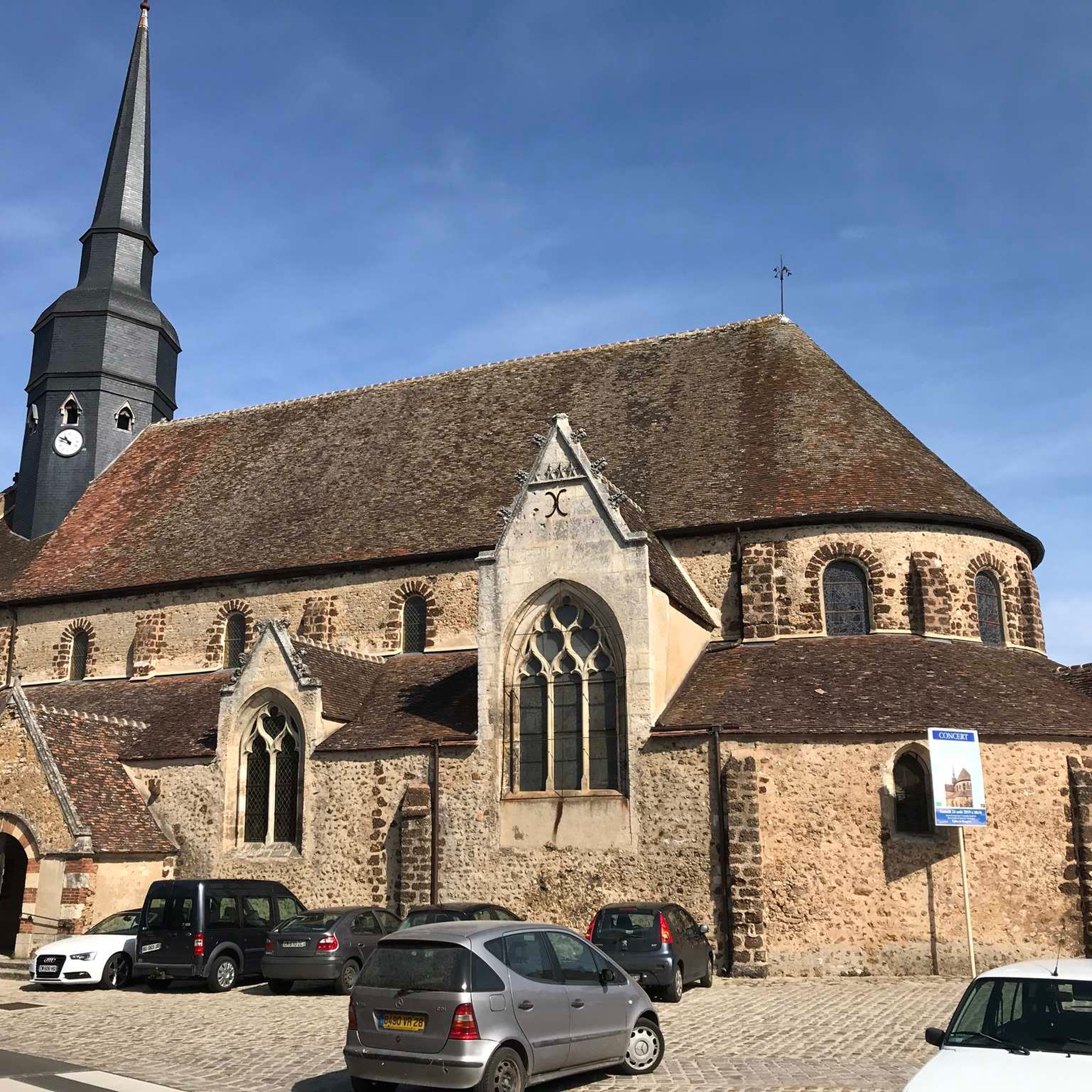
Placed under the patronage of Saint Hilaire, this parish was given by Gannelon de Montigny, lord of the place, to the abbey of Marmoutier around 1042. Its reconstruction probably dates from this period; it then became a priory. The church has a rectangular nave ending in a choir with a flat chevet. An examination of the masonry easily reveals two distinct periods of construction: the Romanesque period and the Renaissance. Built of flint rubble with rendering, the western part of the building appears to date from the 11th or 12th century. A limestone cornice supported by rather crude corbels underlines the base of the roof. To the south, two narrow Romanesque windows flared inwards light the nave. To the north, the bays were later reworked and enlarged. On this same side, a Romanesque doorway was walled up; It allowed the church to connect with a building whose traces of detachment remain. The bell tower was built to the north of the Romanesque nave, extending the western façade. The absence of a connection between the east and west walls of the bell tower and the north wall of the nave clearly indicates that it is an entirely later construction. However, its crowning is much later, as evidenced by its cornice, whose molding is in the classical style. Flanked by obliquely angled buttresses, it is covered with a saddleback roof. The eastern half of the church appears to be an extension built during the Renaissance period. Its ogee-shaped cornice and the decoration of the eastern gable, as well as the moldings of the buttress bands, attest to this dating. A vast rectangular choir then appears to have replaced a semicircular Romanesque apse; the eastern gable and the southern and northern façades were then pierced with networked bays. In the lower part of the north façade, projecting ashlars appear to have supported the roof of a lean-to building. To the south, a sacristy was built in the 19th century. Inside, the entire building is covered with a paneled vault with exposed tie beams and kingposts. The 18th-century high altar is surmounted by an Assumption of the Virgin inspired by Murillo's. For the restoration of the roofs and façades, the Sauvegarde de l'Art Français (French National Art Protection Agency) awarded a grant of €30,490 in 2001.
0
0
The Church of Saint Sauveur La Trinité, probably built in the 12th century, is notable for its Romanesque windows with columns and capitals. On its walls, alternating with the consecration crosses, one can admire a Stations of the Cross in blue enamel on earthenware. The choir is lit by five Romanesque windows decorated with stained glass depicting Our Lord and the four Evangelists.
0
0
Saint Mames was martyred in Cappadocia around 1274: local legend has it that a saint offers a helping hand to cross the Loir. On April 17, 1707, thunder struck the bell tower.
0
0

This small village (Wikipedia lists only 148 inhabitants at the beginning of 2022) has a truly grand name: Saint Christopher. The choice of this patron saint is very fitting for a place located on the banks of a river. According to tradition, Christopher was a giant who carried people across a river. One day, a child (who was Jesus, though he didn't know it) called to him, and he took the child on his shoulders and waded through the water. Hence his name, which means "Christ-bearer."
0
0
The Henri Ey Hospital Center is a departmental public health establishment, specialized in psychiatry, which provides a mission of prevention and reception, care, aftercare and reintegration in mental health in Eure-et-Loir. It provides care in adult, child and adolescent psychiatry, as well as a medico-social activity in the field of geriatrics and psychological and mental disabilities.
0
0

Porte de Boisville Its ogival portal opens into a thick quadrangular massif where there was a room for operating the portcullis. We can still see the groove in the thickness of the walls. On the left and right two small funnel-shaped spaces allowed the defenders to observe and repel the enemies who appeared on the bridge. The gate was topped by a building serving as a guardhouse which was demolished in 1761. The guarding of these doors and their keys was in the troubled times of the Hundred Years' War the subject of concern for the inhabitants and also a source of quarrels and trials between the city and the abbey. This gate is preceded by a bridge of 5 stone arches, the one adjoining the gate was built in 1774 and replaced a drawbridge which defended the entrance.
0
0

Building from the 12th, 15th and 17th centuries, remarkable from a distance with its bell tower whose spire soars 52 m high. The vault of the vast nave is paneled in Norwegian fir. The Renaissance entrance door is topped with a double pediment. The church has 17th century furniture of Breton inspiration, the sculptures of which are the work of the Breton Charles Roscouët. The baptismal font and the furniture of the sacristy are also worthy of interest. Relics of Saint-Constance, given to the church of Yèvres in 1678 by Lord Cyprien Besnard de Rezey, Advisor to the King and Intendant of Finances, with the approval of Mgr Ferdinand de Neufville de Villeroy, Bishop of Chartres, whose portrait is prominently placed in the nave of the church. The visit ends with the "chapier", a piece of furniture with semi-circular drawers, which contains, "flat", an exceptional collection of priestly vestments and accessories. Recent work on the south porch has revealed exterior fonts and attractive moldings on the pillars.
0
0
당고 주변에서 가장 인기 있는 경로
당고 주변에서 가장 인기 있는 명소


더 살펴보기
다른 지역의 최고의 로드 사이클링 경로를 살펴보세요.
