20의 쇼몽-데방-담빌러가지 명소 & 주요 장소
쇼몽-데방-담빌러에는 둘러볼 만한 장소가 많답니다. 하이킹 또는 사이클링을 좋아한다면 쇼몽-데방-담빌러에 숨겨진 20
가지 보석을 만날 수 있을 거예요. 이 지역의 주요 명소를 살펴보면서 다음 모험을 계획해보세요.
마지막 업데이트: 10월 18, 2026


이런 장소를 발견하려면 지금 가입하세요
최고의 싱글 트랙, 봉우리 및 다양한 흥미로운 야외 장소에 대한 추천을 받아보세요.

에글리즈 생미셸 유적지
하이라이트 • 역사적 장소
번역자 Google •
팁에 의해
무료로 가입하여 쇼몽-데방-담빌러 주변의 더 많은 명소를 발견하세요.
이미 komoot 계정이 있나요?
오늘 무료 계정으로 시작하세요
다음 모험이 기다리고 있어요.




커뮤니티 팁

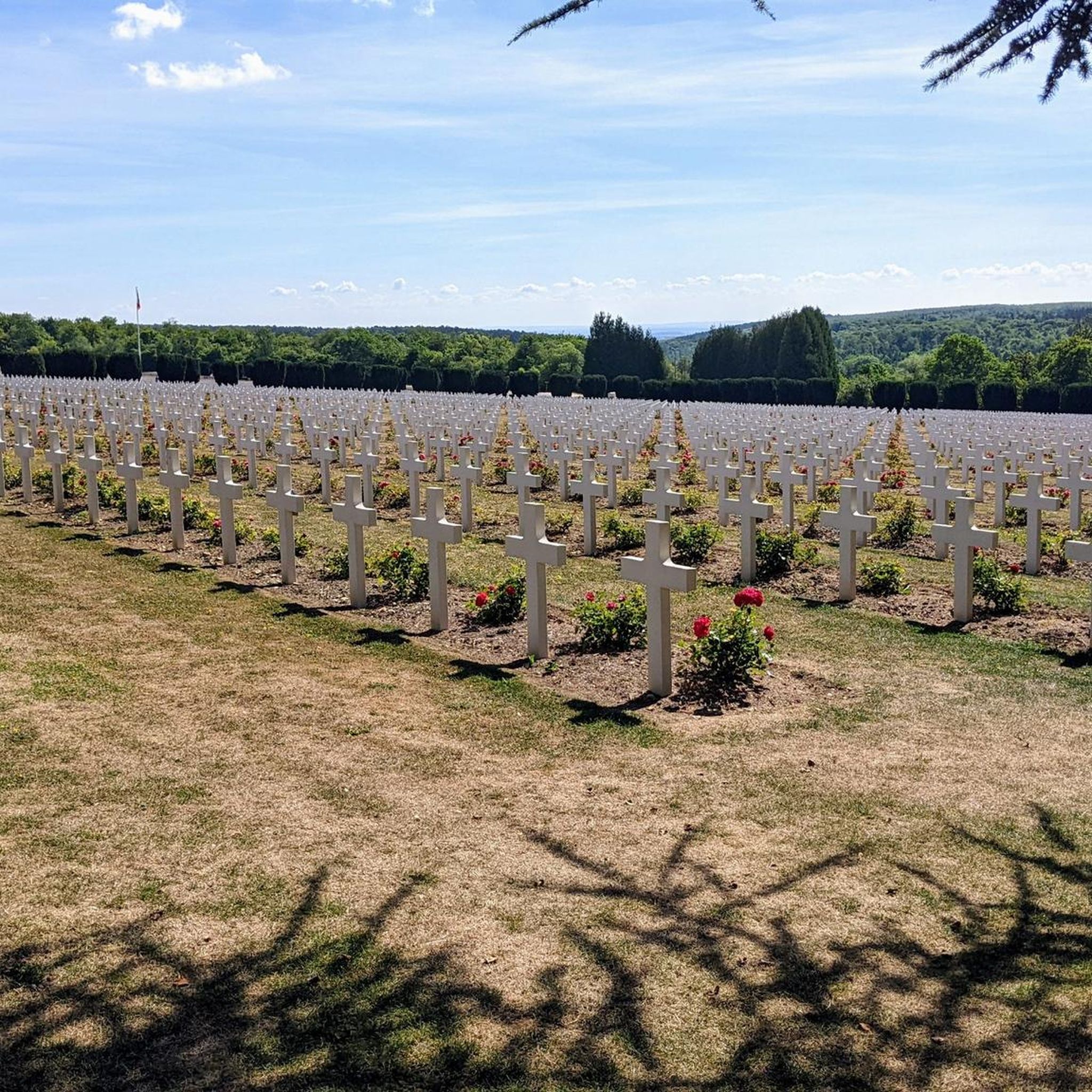
Fort Duomont is an interesting historical site. Here you can practically feel the claustrophobia the soldiers must have experienced while fighting here. It's also impressive to think how many died trying to capture this hill.
1
0

The weight of history and sacrifice. Not to be missed.
1
0

On 21 February 1916 at 07:15 (German time was 1 hour later) 1225 guns poured their fire over the French lines in front of Verdun. The gunfire was so intense that a subterranean rumbling and booming could be heard and felt up to 170 kilometres around Verdun. As far away as Trier, Saarbrücken and Paris the air vibrated and windows rattled. French pilots who flew over Verdun during the bombardment reported seeing gigantic columns of flames and smoke and that the front looked like a smoking industrial city. This is consistent with the comment of General Petain, who estimated that a million shells were fired on that first day alone. The bombardment lasted for almost 5 hours, until 12:00. Then a short pause in firing was called. The idea was to tempt the survivors to come out of their shelters to recover from the horrors of the drumfire. They would then be destroyed after 10 minutes by even heavier cannon fire. After the pause, the bombardment continued until about 16:30. Then it stopped. Then the infantry attack began. The German soldiers climbed out of the assault trenches and began to cross the bombed terrain. Nothing happened for the first few hundred meters. The cannon fire had completely destroyed the first French lines. But at the second defense line things were different. It turned out that there were still survivors, who were defending themselves furiously. The bombardment had not only killed and stunned the French. It had also filled the survivors with a rage and fury that made them fight to the end. At the end of the first day, the Germans had gained about two kilometers of ground. Yet they had encountered more resistance than they had expected. And the losses were also higher than originally thought. A tiny sign of what was to come. Triggered? Want to know more? Click through to https://www.cirkwi.com/fr/point-interet/1269507-monument-sommieres-paul
3
0
The Myth of the First World War “In memory of the French soldiers who sleep standing, rifle in hand, in this trench – their brothers in America.” This is the inscription in front of the Memorial of the Battle of Verdun in the ghost town of Douaumont. The monument was financed by a wealthy American banker, George T. Rand, who was moved by the famous legend surrounding the site. It is said that French soldiers buried standing, with weapons in hand, died from enemy shells. Bayonet Trench is one of the myths of the First World War. In 1922, it was classified as a historical monument and in 2014 it was considered a site of national importance. After the war, excavations uncovered 21 bodies of French soldiers. Fourteen were identified and buried in the Necropolis of Fleury, opposite Douaumont. The seven other bodies that remained unknown were reburied in the "Bayonet Trench". For many, the myth persists, while others question it. Especially since no body was found standing upright. In any case, the legend of the "Bayonet Trenches" shows above all how much the Great War left an almost indelible mark on the collective imagination. As the bloody conflict of the Battle of Verdun drew to a close, glorious stories quickly emerged in which the nation sacrificed itself for the fatherland. Source: https://www.landofmemory.eu/sites-historiques/tranchee-des-baionnettes/
7
0
Ornes was a real city, larger than the other destroyed villages, but which eventually found itself, after the First World War, on the same site, or almost, under their stones. In the course of its history, its lord's castle suffered the same fate, when it was taken in February 1653 and then destroyed by the Catholic troops of Lorraine, while he, like his ancestors since 1563, vigorously defended Protestantism. As early as 1587, a very bloody battle took place between his troops and the Catholic troops of the Duke of Lorraine. In the mid-19th century, the city had 1,367 inhabitants, but in 1914 the number of inhabitants fell again to 750. This was mainly due to the rural exodus, which provided labour for the large industrial centres that were growing rapidly at the end of the 19th century. However, this city has an industrial textile and processing factory that is well suited to local agricultural production and textiles from the neighbouring Woëvre plain. But its geographical location, close to the border with the annexed Moselle and then on the front that had been stabilised after the Battle of the Marne, was not favourable for the area. In the event of an enemy offensive, the area would quickly find itself on the front line. For this reason, on 25 August 1914, the population was asked to leave the village. But not everyone left, at their own risk, because the bombardments and German patrols in the village became increasingly intense. In September 1914, two children were killed by shrapnel. In October 1914, several villagers who were about to leave were taken prisoner by the Germans... In 1915 and until February 1916, French troops held the village where units were positioned, in the second line opposite the front, at the beginning of the great German offensive. But from 21 to 24 February, the German advance was so strong that the village of Ornes was taken by their infantry on 24 February 1916, after heavy bombardments that destroyed all the houses and buildings in the village. It was not until 23 August 1917 that the area was retaken by our soldiers. At the end of the war, the area was classified as a 'red zone' and could never be rebuilt. Source: Tourism Verdun
3
0
Back in time through the trenches named after London. Historical context: After the recapture of the forts of Vaux and Douaumont, the French command set up the essential connections to supply the new French positions. The London Trench connected the hills of Belleville with the fort and the destroyed village. To prevent landslides caused by bombardments, the sides of the tunnel were reinforced with a skeleton of reinforced concrete or cement slabs.
7
0


The fort was built between 1884 and 1886. After being modernized between 1901 and 1913, it became one of the emblematic sites of the Battle of Verdun in 1916: captured by German troops in February, it was retaken by the French in October of the same year. It has been a listed historical monument since 1970.
4
0


더 살펴보기
찾고 있는 하이라이트를 아직 못 찾으셨나요? 다른 지역의 주요 명소 가이드를 확인해보세요:
