콘스탄틴에서 가장 멋진 10개의 천연기념물
천연기념물을 방문하여 콘스탄틴의 아름다운 풍경을 만나보세요. 콘스탄틴에 있는 10
개의 천연기념물과 상세 정보를 살펴본 후에 방문하고 싶은 천연기념물을 다음 모험 계획에 추가해보세요!
마지막 업데이트: 8월 24, 2026


이런 장소를 발견하려면 지금 가입하세요
최고의 싱글 트랙, 봉우리 및 다양한 흥미로운 야외 장소에 대한 추천을 받아보세요.
무료 회원 가입

Gwennap Pit
하이라이트 • 자연 기념물
팁에 의해

무료로 가입하여 콘스탄틴 주변의 더 많은 자연 기념물을 발견하세요.
무료 회원 가입
이미 komoot 계정이 있나요?
오늘 무료 계정으로 시작하세요
다음 모험이 기다리고 있어요.
로그인 또는 가입하기

커뮤니티 팁


In prehistoric times when the sea was higher, this was a beach. Look north east from here and you can see the manacles, a hidden granite reef which has been the cause of hundreds of shipwrecks.
0
0

This is a nice combination. From Loe Baar you have a view of the sea on one side and a view of a freshwater lake on the other. This allows you to walk completely around the lake.
12
0
Loe Bar was originally the mouth of the River Cober which led to a harbor at Helston. However, by the 13th century the bar had cut Helston off from the sea and formed the lake. Loe Bar consists largely of chert deposits, although it is not certain where this comes from as the nearest source is more than 200 kilometers away. There is also a reasonable amount of sand. (Cornwall Beaches)
13
1
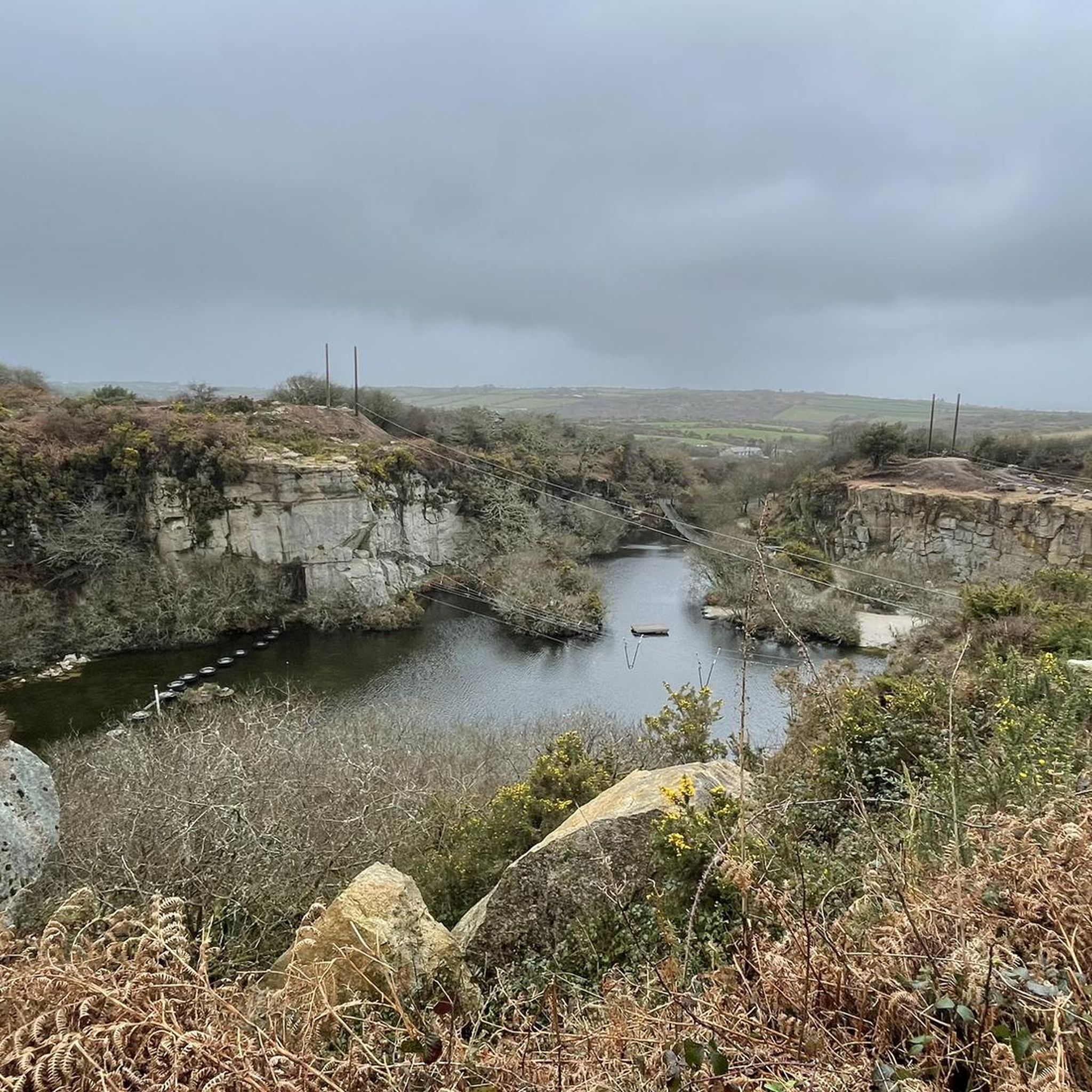
Gwennap Pit was used by the renowned cleric John Wesley to give preaches from 1762 until 1789. Its unusual form is thought to be caused to a collapsed abandoned mine dig. After Wesley's death, villagers continued to use the pit for religious gatherings, a tradition which is still on-going. Local miners cut the circular terraces to make seats at the beginning of the 19th century.
0
0

The monument includes a complex multi-period archaeological landscape of settlements, field systems and various manufacturing sites, situated on a wide band of sloping coastal cliffs between Lowland Point and Coverack. The archaeological remains survive as extensive standing rectilinear fields and enclosures; stone hut circles and other settlement sites; and their associated buried deposits and features which range in date from the Mesolithic to the early medieval periods. There have been numerous partial excavations, mainly from the first half of the 20th century, which have provided considerable information about the site. Chronologically, the earliest evidence for use of the area is a Mesolithic flint working site on a platform on the southwestern side of Carrick Crane Rocks. Excavated in 1933, it produced around 650 worked flints and some Iron Age pottery. Several chance finds of Neolithic pottery have been made, hinting at the occupation of the area during this period. Several of the hut circles, at least one of which had an annexe, have also been excavated with recorded finds from these including pottery (Bronze Age to Iron Age), stone rubbers and an iron blade. The settlements were associated with an extensive field system of rectilinear fields and enclosures covering over 4 hectares. A Romano-British salt working site of the 2nd century AD was also identified. Here salt was evaporated from sea water in two rectangular, superimposed stone-built ovens housed in an oval building and connected with a field system which extended for over a hectare. Large quantities of pottery were recovered from the salt works and its walls, as excavated, stand up to 1m high. An early medieval settlement of two dwellings with associated irregular enclosures was also excavated and found to contain an assemblage of at least 60 vessels from 500 - 900 AD, the majority of which came from one building identified as the site of a kiln. The various excavators, surveyors and specialists included: OP Serocold, G Maynard, FM Patchett, DPS Peacock, J Manehip White, V Favell, C Thomas, and H Quinnell. Further extensive archaeological remains survive in the vicinity and are not currently included in the scheduling because they have not been formally assessed. Sources: HER:- PastScape Monument No:-426434, 426440, 426449, 426452, 426443 and 426521,
0
0
You will find food and drink in Coverack. it is a pleasant place to relax.
8
0
Coverack is a pleasant fishing village with a fishing harbor and sandy beach. At the moment (2022) the beach is being worked on so that it is only partially accessible.
7
0
콘스탄틴 주변에서 가장 인기 있는 명소


더 살펴보기
콘스탄틴 주변의 최고의 동굴을 찾기 위해 이 가이드를 확인해보세요:
