소종 주변 최고의 그래블 라이딩 코스
4.2
(16)
155
자전거 타는 사람
10
라이딩
그래블 바이크를 타고 사죵(Saujon) 주변을 달리면 발 드 쉬드르(Val de Seudre) 지역의 포도밭, 습지, 숲 등 다양한 풍경을 감상할 수 있습니다. 이 지역은 쉬드르 강 하구에 위치하여 "탈레(taillees)"와 둑길을 따라 물가 자전거를 탈 수 있는 기회를 제공합니다. 곡물과 포도나무를 재배하는 농경지는 시골 풍경에 기여하며, 근처의 라 란드(La Lande) 습지는 평화로운 라이딩 환경을 제공합니다. 이 다채로운 지형은 그래블 바이크를 타기에 역동적인 배경이 됩니다.
사죵 주변 최고의 그래블 바이크 코스
- 가장 인기 있는 그래블 바이크 코스는 로이앙(Royan) 산책로 및 해변 – 로이앙에서…
마지막 업데이트: 9월 9, 2026
4.2
(6)
37
자전거 타는 사람
50.6km
03:05
360m
360m
보통 자갈길 타기. 좋은 체력 필요. 대부분 포장된 지면. 실력과 관계없이 누구나 갈 수 있음.
5.0
(3)
28
자전거 타는 사람
27.7km
01:39
180m
180m
보통 자갈길 타기. 좋은 체력 필요. 대부분 포장된 지면. 실력과 관계없이 누구나 갈 수 있음.

5.0
(3)
10
자전거 타는 사람
30.0km
01:44
190m
190m
보통 자갈길 타기. 좋은 체력 필요. 대부분 포장된 지면. 실력과 관계없이 누구나 갈 수 있음.
4
자전거 타는 사람
99.5km
06:37
840m
840m
어려운 자갈길 타기. 우수한 체력 필요. 대부분 포장된 지면. 실력과 관계없이 누구나 갈 수 있음.
9
자전거 타는 사람
64.8km
03:41
270m
270m
어려운 자갈길 타기. 좋은 체력 필요. 투어 중 자전거를 끌고 가야 하는 구간이 있을 수 있음.
더 다양한 경로와 다른 탐험가들의 추천을 살펴보세요.
이미 komoot 계정이 있나요?
투어 추천은 다른 사람들이 komoot에서 완료한 수천 개의 활동을 바탕으로 구성되어 있습니다.
오늘 무료 계정으로 시작하세요
다음 모험이 기다리고 있어요.
커뮤니티 팁

모르낙의 시장 건물은 중세 시대에 처음 등장했습니다. 1664년에야 비로소 그 존재를 증명하는 최초의 서면 증거가 나타났습니다. 이 건물들은 아마도 더 오래되었을 것이며 1550년대에 지어졌을 수 있습니다. 시장은 일반적으로 돌기둥으로 지지되고 타일로 덮인 목조 구조물입니다. 코즈와 피자니의 시장과 마찬가지로 종교 전쟁의 우여곡절을 겪고 손상되거나 파괴되었다가 평화가 회복된 후 재건되었을 것으로 추정할 수 있습니다. 모르낙 시장 건물의 위치는 유명한 박람회 장소였으며 주민들이 영주에게 지불하는 권리를 대가로 상품을 판매할 수 있도록 했습니다. 이는 영주에게 중요한 수입원이자 시장 건물을 완벽한 상태로 유지해야 하는 의무를 부과했습니다. 영주와 판매자를 구속하는 행위는 해당 시장 건물의 상품 판매 및 유지 보수 권리를 명시하는 계약을 봉인했습니다.
0
0

그것을 위해 자연과 그 교회
0
0

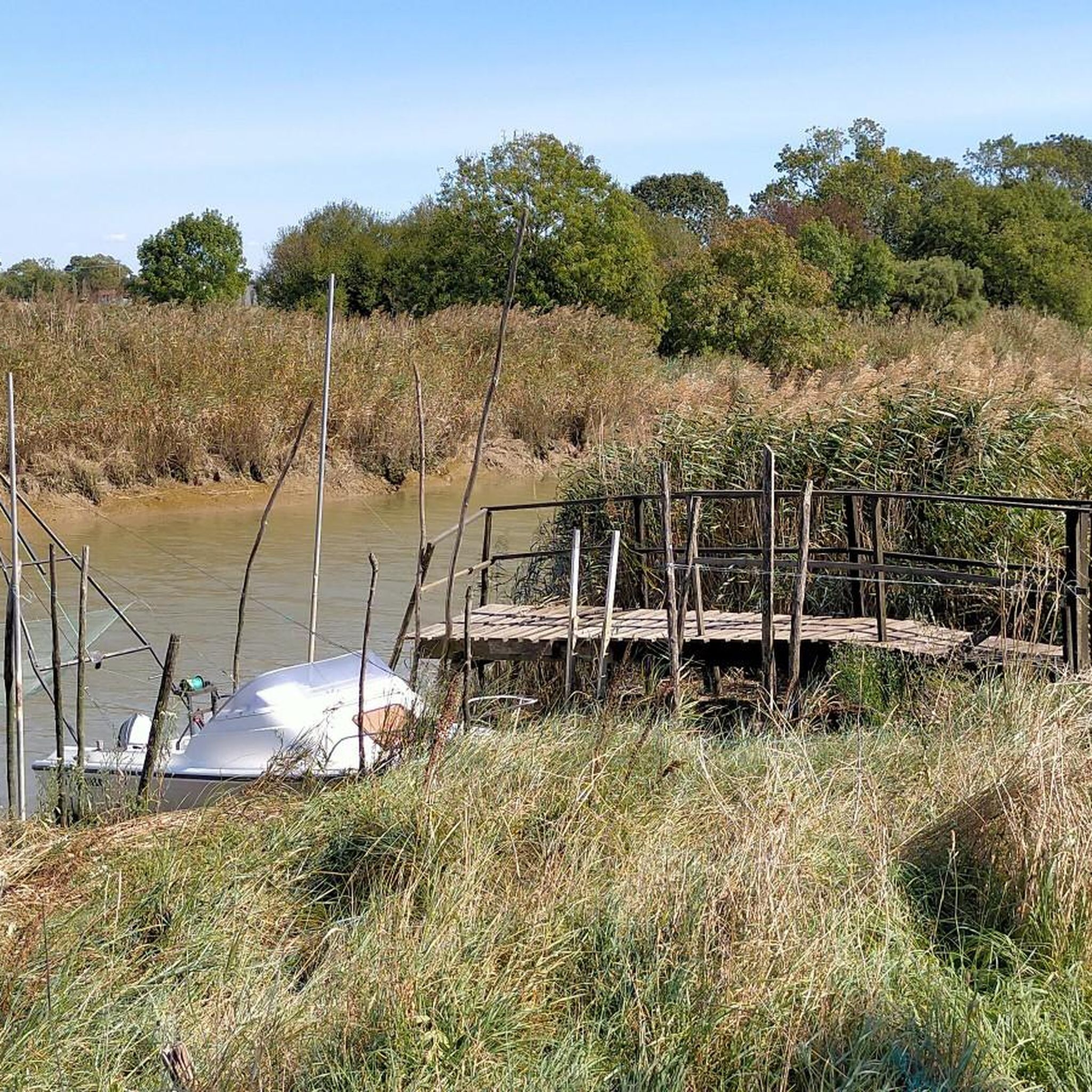
Cute little coastal village at the mouth of a small canal, with a recreational port and a few restaurants as well as picnic spots for a break.
0
0

The SAINT-PIERRE church dominates the village from its fortified bell tower. Original in many ways, the Romanesque building houses a holy water font made of a real shell. From the side, you reach the small garden of the chevet, well hidden. Stone sarcophagi (Merovingian or Carolingian depending on the source) bear witness to the archaeological excavations that the church has undergone. There are many stories in Mornac but that of the fire of August 2, 1943 marked the identity of the village. Indeed, the bell tower has not always had this appearance. It had the more traditional shape of a spire until lightning struck it. Many young students come to Mornac-sur-Seudre to participate in the clearing and the excavations that follow. Seduced by the local atmosphere, many of them stayed and opened the first craft workshops in the village, some of which are still present, such as pottery and leather.
0
0

Originally 75 million years ago, natural holes dug into the sea. Later, they were conditioned by man to serve as homes. They are restored and can be visited.
0
0
Succeeding a Merovingian church whose remains were discovered in 1951 (as well as a cemetery dating from the 6th century), the foundation of the current church could date back to the 10th or 11th century. with a modernization in the 12th century, where it takes more or less its current appearance. The bell tower was destroyed during the Hundred Years' War and then rebuilt with the facade in the 15th century. A fire due to a violent storm affected the bell tower in 1943. The upper part was reinterpreted by the addition of square bays giving it a defensive character. The slate spire has not gone up. The Saint-Pierre church is a Romanesque building with certain archaic features. The facade, of great severity, dates from the 15th century. Almost devoid of ornamentation, it consists of a broken arched portal with prismatic moldings, confined by a Gothic niche (on the right) and surmounted by a narrow bay. The nave, formerly divided into 5 bays, now has only 4, separated by columns backed by pilasters. The whole was originally covered with ribbed vaults, destroyed in 1837, replaced by an arched vault and subsequently dismantled in turn. The nave is covered with an exposed framework. Large transept arches delimit the square of the transept, covered with a barlong dome on squinches. The crosspieces are covered with a pointed barrel vault, and are extended by apsidioles. Semi-circular arcades, supported by fine columns with capitals decorated with plant or geometric motifs, punctuate the walls of the apse, covered with an oven bottom where traces of frescoes dating from the 12th century are visible, although degraded. century. The walls of the nave, the transept and part of the choir retain traces (from the 17th century) of the funeral liter of a lord of Mornac. The exterior offers, on the north wall, the remains of a Romanesque portal (11th century). The bedside, typical of the Saintongeais Romanesque, is made up of 3 horizontal registers, delimited by cords. The last level is made up of an arcade formed of arched arcades carried by columns with capitals decorated with plant, animal or geometric motifs. The whole is surmounted by a cornice with modillions where animals and human or demonic faces are represented. Buttress columns topped with capitals decorated with interlacing and stylized plants punctuate the walls
0
0

These rock dwellings were created by the sea 65 million years ago and then carved out and repeatedly inhabited by humans.
0
0
소종 주변에서 가장 인기 있는 명소


더 살펴보기
다른 지역의 최고의 그래블 라이딩를 살펴보세요.
