비온 최고의 라이딩 경로
4.3
(27)
1,273
자전거 타는 사람
270
라이딩
비옹 주변의 로드 사이클링 코스는 페이드라루아르 지역의 사르트 현의 전형적인 완만하게 구불구불한 풍경을 특징으로 합니다. 이 지역은 농경지, 작은 마을, 강 계곡이 혼합되어 있어 사이클리스트에게 다양한 지형을 제공합니다. 코스는 종종 조용한 시골길을 따라 이어져 프랑스 시골을 통과하는 평화로운 사이클링 경험을 선사합니다. 이 지역의 지형은 약간의 고도 변화를 포함하여 다양한 기술 수준의 사람들이 접근할 수 있습니다.
비옹 주변 최고의 로드 사이클링 코스
- 가장 인기 있는 로드 사이클링 코스는 사블 쉬르 사르트 출발 파르세 밀 – 솔렘 수도원 루프로, 17.5마일(28.2km) 길이이며…
마지막 업데이트: 8월 28, 2026
19
자전거 타는 사람
18.3km
00:50
130m
130m
초급용 로드 라이딩. 모든 체력 수준에 적합. 지면 대부분이 잘 포장되어 있고 라이딩하기 쉬움.
5.0
(1)
17
자전거 타는 사람
39.5km
01:41
280m
280m
초급용 로드 라이딩. 모든 체력 수준에 적합. 지면 대부분이 잘 포장되어 있고 라이딩하기 쉬움.

무료 회원 가입
20
자전거 타는 사람
52.9km
02:27
320m
320m
보통 도로 자전거 타기. 좋은 체력 필요. 지면 대부분이 잘 포장되어 있고 라이딩하기 쉬움.
5.0
(1)
13
자전거 타는 사람
42.0km
01:51
260m
260m
초급용 로드 라이딩. 모든 체력 수준에 적합. 지면 대부분이 잘 포장되어 있고 라이딩하기 쉬움.
12
자전거 타는 사람
48.9km
02:29
220m
220m
보통 도로 자전거 타기. 좋은 체력 필요. 지면 대부분이 잘 포장되어 있고 라이딩하기 쉬움.
더 다양한 경로와 다른 탐험가들의 추천을 살펴보세요.
무료 회원 가입
이미 komoot 계정이 있나요?
투어 추천은 다른 사람들이 komoot에서 완료한 수천 개의 활동을 바탕으로 구성되어 있습니다.
오늘 무료 계정으로 시작하세요
다음 모험이 기다리고 있어요.
로그인 또는 가입하기

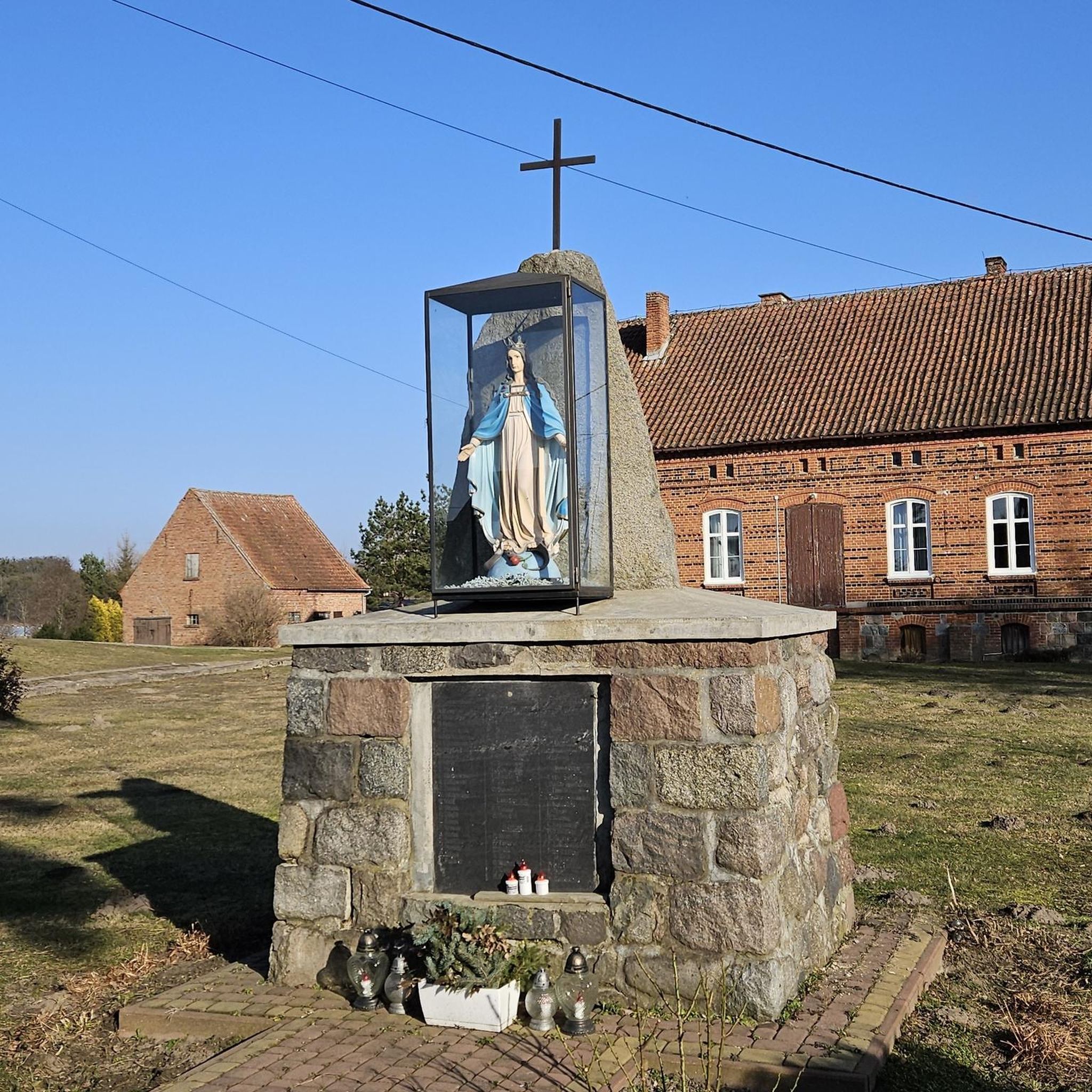



커뮤니티 팁

Church of Saint-Pierre. Auvers, a large village located 8 kilometers from Sablé and the Abbey of Solesmes, is mentioned as early as the 11th century as a priory dependent on the Abbey of La Couture in Mans. The texts seem to establish that its foundation was favored by Guy de Laval and later by his son, Hamon. The original chapel was replaced in the 12th century by a church consecrated by Guillaume Passavent, Bishop of Le Mans, which allows us to date its construction between 1154 and 1187. The priory, after a period of relative prosperity in the 13th century, no longer housed a prior from the 15th century onward. The church served as the parish church, while the priory under its control was transformed and enlarged: part of the 17th-century dwelling still survives in the extension of the south arm of the transept. From the 12th-century church Only the nave remains, as the transept and choir were rebuilt in 1866. The overall silhouette of the building is strongly marked by the contrast between the modest volume of the old nave and the substantial eastern block. The plan is that of a Latin cross with a single nave and transept. The 19th-century alterations consisted of building this transept on the site of the two former chapels of Saint Anne and Saint Michael, creating two apsidal chapels opening onto the arms of this transept, and rebuilding the choir and apse. As a reminder, the chapel of Saint Anne served as a burial place for the lords of Le Plessis, and that of Saint Michael for the lords of La Panne. The bell tower of the old building has been preserved to the north, as has the chapel of Saint Peter to the south, which, attached to the priory, was reserved for religious orders. In plan, the base of the bell tower and the chapel of Saint Peter form, with the new transept, a sort of double transept. The western facade is adorned with a portal that dates back to the early 19th century, surmounted by a window that is likely contemporary. The nave is relatively narrow and elongated, its masonry constructed of small, cubic rubble stones, with roussard sandstone quoins. It is lit to the south by three semicircular bays and two to the north, which were modified in the 19th century. Some of the upper Romanesque openings, which were blocked, are still recognizable on the exterior of the north wall. It is covered with a paneled vault with exposed tie beams. The base of the bell tower has a ribbed vault, with a rather heavy profile. The interest of this building lies in the large collection of mural paintings dating from the 16th century that cover the walls of the nave. These paintings were partially discovered as early as 1903 and the painter Yperman was then commissioned to make copies for the Museum of Comparative Sculpture. In 1948, they were the subject of a classification order, then, in 1973, a study by the Champs-sur-Marne Laboratory. Several cycles can be recognized, notably: on the south wall, the Nativity and the Flight into Egypt, as well as the life of Saint Martin; on the north wall, the Last Judgment and the Sacrifice of Abraham, as well as Saint James the Greater and the legend of Saint Hubert. They also feature numerous miracle-working saints: Saint Europa, who cured dropsy, Saint Apollonia for toothaches, Saint Avertinus of Tours, for headaches, Saint Generated, the object of a popular cult in the region. Some forty years ago, Saint Opportune, Saint Julian of Brioude, Saint Mammès, the "Tale of the Three Dead and the Three Living," and numerous other scenes were still being identified. The poor condition of the framework and roofing led to deterioration of the building's walls, particularly those of the nave: the Sauvegarde de l'Art Français (French Art Protection Agency) awarded a grant of 60,000 francs for this work in 1997.
0
0
The Church of Our Lady of Sablé-sur-Sarthe is believed to have been built in the 15th century. Extensively restored over the centuries, it now boasts a late 18th-century neo-Gothic style, which has helped to highlight its medieval architecture. During the third quarter of the 17th century, the church's high altar was restored, and at the end of the first quarter of the 18th century, three new bells were cast by workshops in Le Mans. Finally, in the mid-18th century, the bell tower was rebuilt, as we can still see it today.
0
0

Superb bucolic place which is easily reached from the start of the Suze by bike
0
0

very beautiful castle, on the edge of the departmental road.
0
0

The old fortress of Malicorne which preceded this castle was founded in the 11th century. It fell into English hands for just over 50 years in the 14th and 15th centuries, but was eventually recaptured. The castle you see now was built in the 18th century on the ruins of the old building.
3
0
At the beginning of the 11th century it was a Benedictine abbey. It is worth visiting, but also crossing the river to admire it from its elevated position.
2
0
This Gothic mansion was started in earnest in 1490. It then gave up its military function and, like many other buildings of its type in the region, it became a manor house in the new style of Louis XII.
2
0
Built in the 13th century, the Manoir de la Cour is one of the rare examples of a civil building from this period that is still well preserved. It has been restored and now houses a permanent exhibition on the history of the building in the Middle Ages.
2
0
자주 묻는 질문
비옹 주변에는 얼마나 많은 로드 사이클링 코스가 있나요?
비옹 주변에는 300개 이상의 로드 사이클링 코스가 있으며, 그중 72개는 쉬움, 225개는 보통 난이도로 분류되어 다양한 수준의 라이더에게 폭넓은 선택지를 제공합니다.
비옹에는 초보자에게 적합한 쉬운 로드 사이클링 코스가 있나요?
네, 비옹에는 72개의 쉬운 로드 사이클링 코스가 있어 초보자나 편안한 라이딩을 원하는 분들에게 완벽합니다. 이 코스들은 일반적으로 고요한 사르트(Sarthe) 시골을 통과하는 완만한 오르막과 내리막을 특징으로 합니다. 인기 있는 쉬운 코스 중 하나는 사블레쉬르사르트(Sablé-sur-Sarthe)에서 출발하는 파르세 방앗간 – 솔렘 수도원 루프로, 길이는 17.5마일(28.2km)입니다.
비옹 주변 로드 사이클링 코스에서 어떤 지형을 예상할 수 있나요?
비옹 주변의 로드 사이클링은 사르트(Sarthe) 지역의 특징인 완만하게 구불구불한 풍경을 특징으로 합니다. 농경지, 조용한 시골길, 작은 마을, 강 계곡이 혼합되어 있어 약간의 고도 변화가 있는 다양한 지형을 경험할 수 있습니다.
비옹에 가족 친화적인 로드 사이클링 코스가 있나요?
비옹 주변의 쉬운 코스 중 다수는 완만한 경사의 조용한 시골길을 따라 이어지므로 가족에게 적합합니다. 이 지역은 강 평야와 농경지에 중점을 두어 교통량이 많은 곳을 피해 쾌적하고 안전한 사이클링 경험을 제공합니다.
비옹 주변 로드 사이클링 코스를 따라 무엇을 볼 수 있나요?
코스는 종종 아름다운 프랑스 시골을 통과하며 사르트(Sarthe) 강 계곡과 매력적인 마을의 풍경을 감상할 수 있습니다. 또한 파르세 방앗간, 노트르담 교회, 사르트 강 고가교와 같은 역사 유적지와 랜드마크도 발견할 수 있습니다.
비옹에 순환형 로드 사이클링 코스가 있나요?
네, 비옹 주변의 많은 로드 사이클링 코스는 루프(loop) 형태로 설계되어 같은 장소에서 시작하고 끝낼 수 있습니다. 예를 들어 솔렘(Solesmes)에서 출발하는 솔렘 수도원 – 노트르담 교회 루프와 파르세쉬르사르트(Parcé-sur-Sarthe)에서 출발하는 파르세 방앗간 – 솔렘 수도원 루프가 있습니다.
다른 로드 사이클리스트들은 비옹에서의 사이클링을 가장 즐겁게 느끼는 점은 무엇인가요?
이 지역은 20개 이상의 리뷰에서 평균 4.3점의 높은 점수를 받은 코무트(komoot) 커뮤니티로부터 높은 평가를 받고 있습니다. 사이클리스트들은 종종 조용한 시골길의 평화로운 분위기, 사르트(Sarthe) 시골의 아름다운 풍경, 그리고 다양한 수준의 라이더에게 적합한 코스의 접근성을 칭찬합니다.
비옹에서 로드 사이클링을 즐기기에 가장 좋은 시기는 언제인가요?
비옹에서 로드 사이클링을 즐기기에 가장 쾌적한 날씨는 일반적으로 온화한 기온과 적은 강우량을 보이는 봄과 가을입니다. 여름도 즐거울 수 있지만, 한낮의 더위를 피하기 위해 하루 중 일찍 시작하는 것이 좋습니다.
비옹에 더 숙련된 로드 사이클리스트를 위한 옵션이 있나요?
비옹은 완만하게 구불구불한 풍경으로 유명하지만, 225개의 보통 난이도 코스는 더 긴 거리와 약간 더 도전적인 고도 변화를 제공하여 숙련된 사이클리스트에게 적합합니다. 예를 들어, 솔렘(Solesmes)에서 출발하는 말리코른쉬르사르트(Malicorne-sur-Sarthe) – 솔렘 수도원 루프는 30.2마일(48.7km)의 보통 난이도 코스입니다.
비옹의 로드 사이클링 코스에 접근하기 위해 대중교통을 이용할 수 있나요?
비옹 자체는 작은 코뮌이지만, 사블레쉬르사르트(Sablé-sur-Sarthe)와 같은 인근 마을에는 지역 기차 서비스가 제공될 수 있으며, 이를 통해 더 넓은 사이클링 코스 네트워크에 접근할 수 있습니다. 지역 대중교통 시간표와 자전거 운송 정책을 확인하는 것이 좋습니다.
비옹의 로드 사이클링 코스를 위한 주차 공간은 어디에서 찾을 수 있나요?
많은 코스가 사블레쉬르사르트(Sablé-sur-Sarthe), 솔렘(Solesmes), 또는 파르세쉬르사르트(Parcé-sur-Sarthe)와 같은 마을이나 도시에서 시작하며, 이곳에는 일반적으로 공공 주차 공간이 있습니다. 라이딩하려는 코스의 시작점 근처에 지정된 주차 구역을 찾아보세요.
비온 주변에서 가장 인기 있는 명소


더 살펴보기
다른 지역의 최고의 로드 사이클링 경로를 살펴보세요.
