니엔부르크/베저 최고의 러닝 경로
4.4
(298)
3,588
달리기 하는 사람
463
러닝
니엔부르크/베저에서 하이킹하며 미들 웨저 구석 부분까지 살펴볼까요? 니엔부르크/베저에 있는 모든 하이킹 및 워킹 경로 컬렉션 중 가장 멋진 하이킹 경로를 엄선하여 소개해드릴게요. 다른 하이커가 공유한 실제 팁과 사진을 살펴보고 후기를 읽으며 마음에 드는 니엔부르크/베저 워킹 경로를 찾아보세요.
마지막 업데이트: 10월 14, 2026
3.0
(1)
171
달리기 하는 사람
6.60km
00:43
20m
20m
보통 조깅. 좋은 체력 필요. 대부분 포장된 지면. 실력과 관계없이 누구나 갈 수 있음.
3.2
(5)
65
달리기 하는 사람
6.33km
00:43
10m
10m
보통 조깅. 좋은 체력 필요. 대부분 포장된 지면. 실력과 관계없이 누구나 갈 수 있음.

72
달리기 하는 사람
6.46km
00:43
10m
10m
보통 조깅. 좋은 체력 필요. 대부분 포장된 지면. 실력과 관계없이 누구나 갈 수 있음.
59
달리기 하는 사람
6.21km
00:38
20m
20m
보통 조깅. 좋은 체력 필요. 대부분 포장된 지면. 실력과 관계없이 누구나 갈 수 있음.
5.0
(2)
45
달리기 하는 사람
12.3km
01:22
30m
30m
보통 조깅. 좋은 체력 필요. 대부분 포장된 지면. 실력과 관계없이 누구나 갈 수 있음.
45
달리기 하는 사람
6.70km
00:43
10m
10m
보통 조깅. 좋은 체력 필요. 대부분 포장된 지면. 실력과 관계없이 누구나 갈 수 있음.
5.0
(7)
44
달리기 하는 사람
보통 조깅. 좋은 체력 필요. 대부분 포장된 지면. 실력과 관계없이 누구나 갈 수 있음.
4.3
(4)
33
달리기 하는 사람
10.7km
01:09
30m
30m
보통 조깅. 좋은 체력 필요. 대부분 포장된 지면. 실력과 관계없이 누구나 갈 수 있음.
4.8
(4)
36
달리기 하는 사람
6.09km
00:40
30m
30m
보통 조깅. 좋은 체력 필요. 대부분 포장된 지면. 실력과 관계없이 누구나 갈 수 있음.
4.3
(3)
54
달리기 하는 사람
8.23km
00:55
10m
10m
보통 조깅. 좋은 체력 필요. 대부분 포장된 지면. 실력과 관계없이 누구나 갈 수 있음.
더 다양한 경로와 다른 탐험가들의 추천을 살펴보세요.
이미 komoot 계정이 있나요?
투어 추천은 다른 사람들이 komoot에서 완료한 수천 개의 활동을 바탕으로 구성되어 있습니다.
오늘 무료 계정으로 시작하세요
다음 모험이 기다리고 있어요.
니엔부르크/베저의 다른 모험


커뮤니티 팁

니엔부르크에서 가장 오래된 집은 니엔부르크의 클라이네 키르히슈트라세 2번지에 있으며, 성 마틴 교회 바로 옆에 있습니다. 약 1490-1500년에 지어졌으며 교회를 둘러싼 초기 건물에 속합니다.
2
0

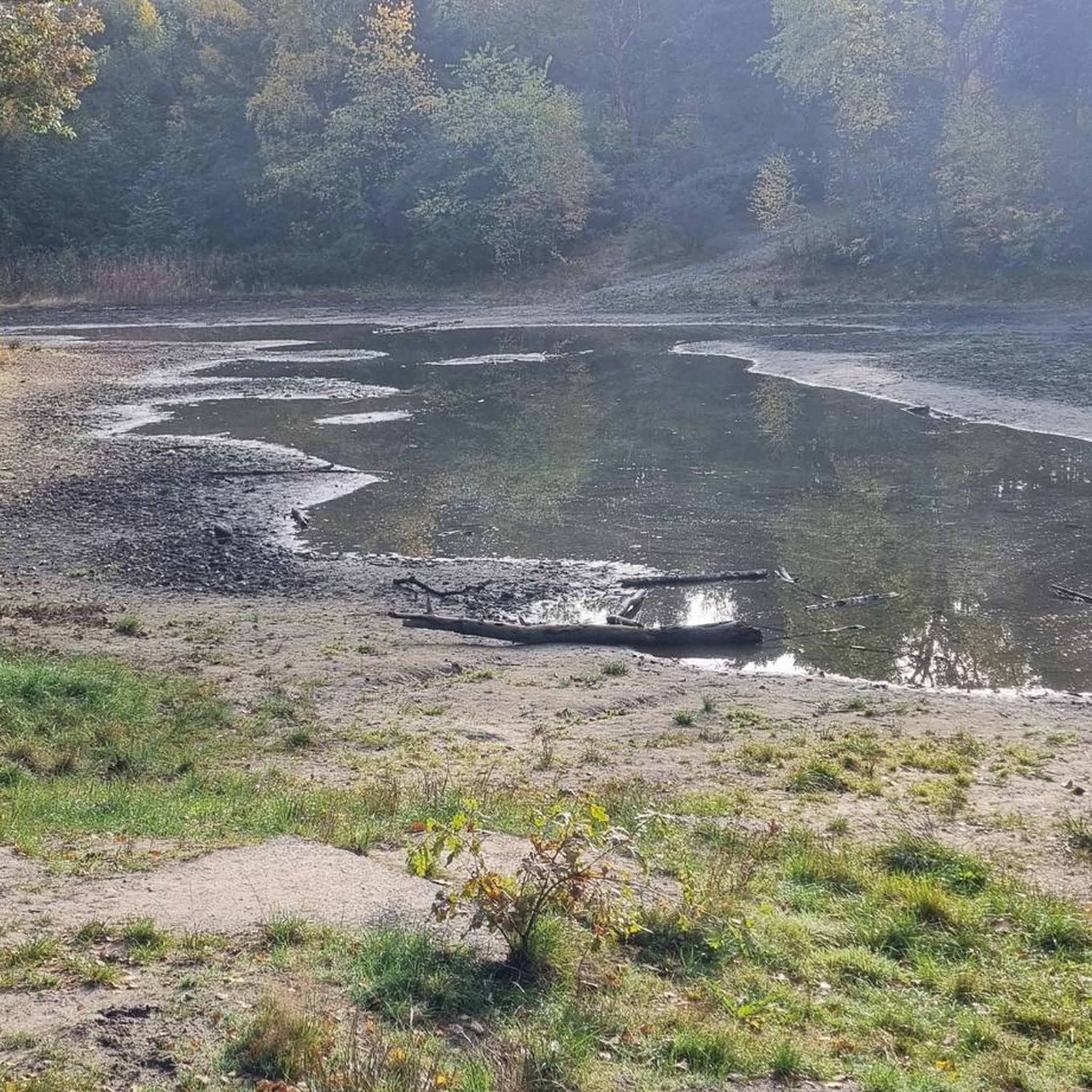
로쿰 수도원 숲의 연못은 역사적인 수도원 풍경의 일부이며 로쿰 수도원 근처의 숲 지역인 로쿰 수도원 숲에 위치해 있습니다. 이 연못들은 중세 시대에 만들어져 수도원 단지에 사용되었던 도랑, 수로, 연못, 개울 시스템의 일부입니다. 이 연못들은 풍경을 형성하며 신비롭고 매혹적인 장소로 이어지는 Kleine Klosterlandschaftsweg의 일부입니다.
0
0

Remnants of a fortress moat between the Weser and Aue rivers. The town was built on flood-protected dune terrain in the triangle between the Weser and Aue. To protect against attacks, a moat was dug from the Weser to the Aue, so that the town was completely surrounded by water. After the fortress was dismantled during the French occupation in 1808, the moat was gradually filled in. The Albert Schweitzer School, formerly a Latin school and now home to one of Nienburg's two grammar schools, stands on the site of the remaining section of the fortifications.
1
0
The house was named after its builder, Emanuel Bruno Quaet-Faslem, and houses the collection on classicism in Nienburg. It is also used for a wide variety of events.
1
0
The former manor house served as a royal post station on the Hanover-London route until 1860. It housed, among other things, the Elector's and later the Royal Hanoverian Post Office, including a postmaster's office, post station, and horse-changing station. Since its restoration in 1977, it has housed the city library. The carillon mounted on the side plays the song "The Little Nienburg Girl" several times a day.
1
0
Nienburg's oldest house stands at Kleine Kirchstraße 2, right next to St. Martin's Church. It was built around 1490-1500 and is part of the original development surrounding the church. Its slightly crooked appearance is not without reason, as naturally grown oak beams had to be used for economic reasons at the time, and so the inhabitants quite naturally lived on a sloping floor. This is still visible from the outside today, as the house's basic structure has been preserved. Also, almost nothing has changed in the surrounding area. The unique location next to the chancel of St. Martin's Church prevented any alterations. In and around the house, one can easily imagine oneself transported back to a time over 500 years ago. At that time, castles were being replaced by urban fortresses, and Nienburg became the strongest fortress in the Middle Weser region. It was the time of Copernicus, Columbus, Riemenschneider, Dürer, and Leonardo da Vinci, who was competing with Michelangelo in Italy and had just completed what is now the world's most famous painting, the Mona Lisa. Humanity still believed it lived on a flat surface and could only feel somewhat safe behind fortress walls. Source: https://www.pension-st-martin.de/Wie-alles-begann
1
0
The glacial erratics from Småland in Nienburg/Weser are impressive relics of a natural history dating back tens of thousands of years. These large, often smoothly polished boulders originally came from the southern Swedish region of Småland and were transported to northern Germany by mighty glaciers during the last Ice Age. As the ice sheet slowly moved south, it tore rocks from the Scandinavian bedrock and carried them over long distances. When the ice melted, these so-called erratics were left behind in the landscape – far from their place of origin. Such glacial erratics, which can be geologically clearly attributed to Sweden, can also be found in Nienburg. Their composition, such as granite or gneiss, as well as characteristic structures, allow conclusions to be drawn about their Småland origin. They thus vividly illustrate the immense forces of the Ice Age and demonstrate how profoundly glaciers shaped the landscape we see today. The glacial erratics are silent witnesses to history, forging a connection between the Nienburg region and Scandinavia. Beyond their geological significance, these erratics also play a cultural and design role. In Nienburg, they are deliberately used as striking elements in the cityscape and green spaces, serving simultaneously as a starting point for environmental education and the preservation of historical memory.
1
0
The Ros Beiaard statue in Nienburg/Weser is a striking work of art in the public space and a special symbol of the city's connection to history, myth, and European culture. The sculpture depicts the legendary Ross Beiaard, a figure from the medieval heroic sagas of the Four Sons of Aymon, best known through the famous "Ros Beiaard" festival in the Belgian city of Dendermonde. Ros Beiaard, also called Ross Bayard, is a legendary horse from the medieval cycle of sagas about the Four Sons of Aymon and is one of the most famous mythical figures in European heroic literature. The legend originates in the Old French epic, in which Ros Beiaard is described as an exceptionally strong, intelligent, and almost magical horse. It carries the four brothers—Reinout and his companions—on its back at once and helps them escape from Emperor Charlemagne. Thus, Ros Beiaard represents not only physical strength but also loyalty, courage, and resistance against overwhelming odds. As the legend unfolds, the horse becomes a tragic figure. Charlemagne recognizes the animal's extraordinary power and ultimately demands its death as a condition for reconciliation with the brothers. Ros Beiaard is bound and thrown into a river, but depending on the version of the tale, it either survives or escapes its fate. These differing endings have contributed to the horse's enduring symbolism of resilience and freedom.
1
0
니엔부르크/베저에서 가장 인기 있는 명소


찾고 계신 것을 찾지 못하셨나요?
니엔부르크/베저에서 더 많은 러닝 트레일 & 경로를 확인하고 목적지에서 완벽한 경로를 찾아보세요.
