4.3
(24)
192
자전거 타는 사람
37
라이딩
니보그에 있는 멋진 산악자전거 라이딩 경로를 따라 어디로 가 볼까요? 니보그에 있는 MTB 경로 컬렉션 중에서 가장 멋진 장소를 아래에서 살펴보세요.
마지막 업데이트: 2월 20, 2026
Google 검색 결과에서 komoot을 선호하는 출처로 추가하세요.
지금 추가
4.9
(7)
20
자전거 타는 사람
33.4km
02:07
170m
170m
보통 산악 자전거 타기. 좋은 체력 필요. 실력과 관계없이 누구나 갈 수 있음.
12
자전거 타는 사람
97.4km
06:25
560m
560m
어려운 산악 자전거 타기. 우수한 체력 필요. 실력과 관계없이 누구나 갈 수 있음.
무료 회원 가입
4.5
(2)
11
자전거 타는 사람
21.5km
01:29
110m
110m
보통 산악 자전거 타기. 모든 체력 수준에 적합. 뛰어난 라이딩 실력이 필요함.
5.0
(1)
9
자전거 타는 사람
38.2km
02:40
220m
220m
보통 산악 자전거 타기. 좋은 체력 필요. 뛰어난 라이딩 실력이 필요함.
5.0
(2)
9
자전거 타는 사람
20.4km
01:17
50m
50m
초급용 산악자전거 라이딩. 모든 체력 수준에 적합. 실력과 관계없이 누구나 갈 수 있음.
더 다양한 경로와 다른 탐험가들의 추천을 살펴보세요.
무료 회원 가입
이미 komoot 계정이 있나요?
투어 추천은 다른 사람들이 komoot에서 완료한 수천 개의 활동을 바탕으로 구성되어 있습니다.
Google 검색 결과에서 komoot을 선호하는 출처로 추가하세요.
지금 추가
8월 1, 2025, Gammel Toldbod Nyborg
The old customs house (“Gammel Toldbod”) in Nyborg is located at Havnegade 2 and holds historical significance for the town. Today, the building houses the “Kiropraktorhuset Gammel Toldbod” (Chiropractic Practice Old Customs House). In earlier times, the building served as a customs house. This was because Nyborg was situated on an important waterway, the Great Belt, where ships had long been required to pay tolls to Denmark. The old customs house in Nyborg, like other similar buildings in Denmark, played a crucial role in monitoring shipping traffic to prevent the smuggling of goods. The building in its current form was constructed during a period when these customs controls were of paramount importance.
2
0
6월 26, 2025, Holckenhavn Castle
Holckenhavn Castle, built in 1579 in the Renaissance style with its moat and towers, is still a magnificent sight today
1
0
6월 8, 2025, Nyborg Town Hall
Nyborg Town Hall was first built in 1586. After the great fire of 1797, it was rebuilt in 1803 and remodeled in 1862, with an additional floor added. Since then, it has been renovated several times, most recently in 1970. Even today, it remains an impressive and worth seeing building. https://www.visitnyborg.dk/nyborg/planlaeg-din-tur/raadhuset-i-nyborg-gdk914692
2
0
6월 8, 2025, Forsavn Memorial Sculpture, Nyborg
The sculpture "FORSAVN" by Lars Abrahamsen was erected to commemorate the 35 sailors from Nyborg who died in service during World War II. The sculpture is 5 meters high and made of aluminum that can be rotated on a circular plane. The memorial evokes a sinking ship, a giant sail, a compass with a large needle—or perhaps something else? It has four bronze plaques engraved with the names of the 35 sailors. https://www.visitnyborg.de/nyborg/reiseplanung/forsavn-gdk1114648
2
0
6월 8, 2025, Nyborg Castle
Nyborg Castle (Danish: Nyborg Slot, also Danehofslottet) is located in the town of Nyborg, about 29 kilometers southeast of Odense on Funen. The castle was built around 1170 by Duke Knud Prislavsen, a nephew of Valdemar the Great, as protection against the Wends. In 1282, Erik V Glipping signed the first Danish charter here. This charter transferred the supreme court from the king to the Danehof, the first Danish parliament, which met at Nyborg Castle. When Erik VII moved to Copenhagen, the castle there became the center of royal power in Denmark until 1416. Nyborg, however, remained another royal residence. The castle was later used as an armory and granary. During the Counts' Feud (1533–1536), the castle was conquered twice. Christian III. He subsequently expanded the castle and fortified it with a large rampart. Christian IV had the castle further expanded in 1607 by the Italian architect Domenicus Badiaz. During the war with Sweden (1658–1660), three-quarters of the castle were destroyed. Part of the building materials were reused in 1722 to rebuild the castle in Odense. Nyborg itself remained a garrison town until 1913. After the garrison was dissolved, the castle was reconstructed by Morgen Clemmensen from 1917 to 1923. Today, the castle houses a museum. Two half-towers and the gatehouse from Erik's time can still be visited. One wing of the former royal palace, including a large ballroom, has been preserved. Three halls depict Nyborg's history during the time of the Danehof, Queen Margaret I, and Christian III. https://de.wikipedia.org/wiki/Schloss_Nyborg
2
0
6월 8, 2025, Church of Our Lady (Vor Frue Kirke), Nyborg
The Church of Our Lady in Nyborg on Funen, on the west coast of the Great Belt, is a Gothic brick pseudo-basilica. It is the most important church building in the city and is used by the Danish National Church. The "Church of Our Lady" was built between 1388 and 1428 and consecrated on Pentecost 1428 by Bishop Navne Jensen Krigebusk. Its patron saint is Mary, the mother of Jesus. The oldest parts are the four western parts of the church, which were enclosed on the east side by a north-south wall in the early 14th century. Before 1428, the church was expanded to include the two easternmost parts, the present-day choir, and probably three additional chapels. At the time of the Reformation, three chapels with a shared roof were built on the south side of the church, and in the 1550s, King Christian III had a new chapel built. The church was expanded by an additional aisle in the north, running the entire length of the church. The large west tower and the small east tower were completed around 1600. Until 1870, the Church of Our Lady appeared as a five-aisled church. During the extensive renovation of 1870/1871, the outer aisles were demolished on both sides, except for the central nave bays. Dormers were built over the remaining outer bays, so that the church has since had a transept located unusually far to the west. Inside, however, the transepts continue to have the same low height as the side aisles. The church has two organs: the main organ, built in 1973, with 37 stops on three manuals and a pedal, is a work by Poul-Gerhard Andersen; the choir organ, built in 1872 by Johan Andreas Demant, is a single-manual organ with five stops. A special feature of this church is the design of its vaulted ribs, which are otherwise constructed from the usual short brick segments. These begin with square limestone corbels. Human heads – some of them grotesque – have been carved out of several of them. https://de.wikipedia.org/wiki/Vor_Frue_Kirke_(Nyborg)
3
0
6월 7, 2025, Knudshoved Fyr
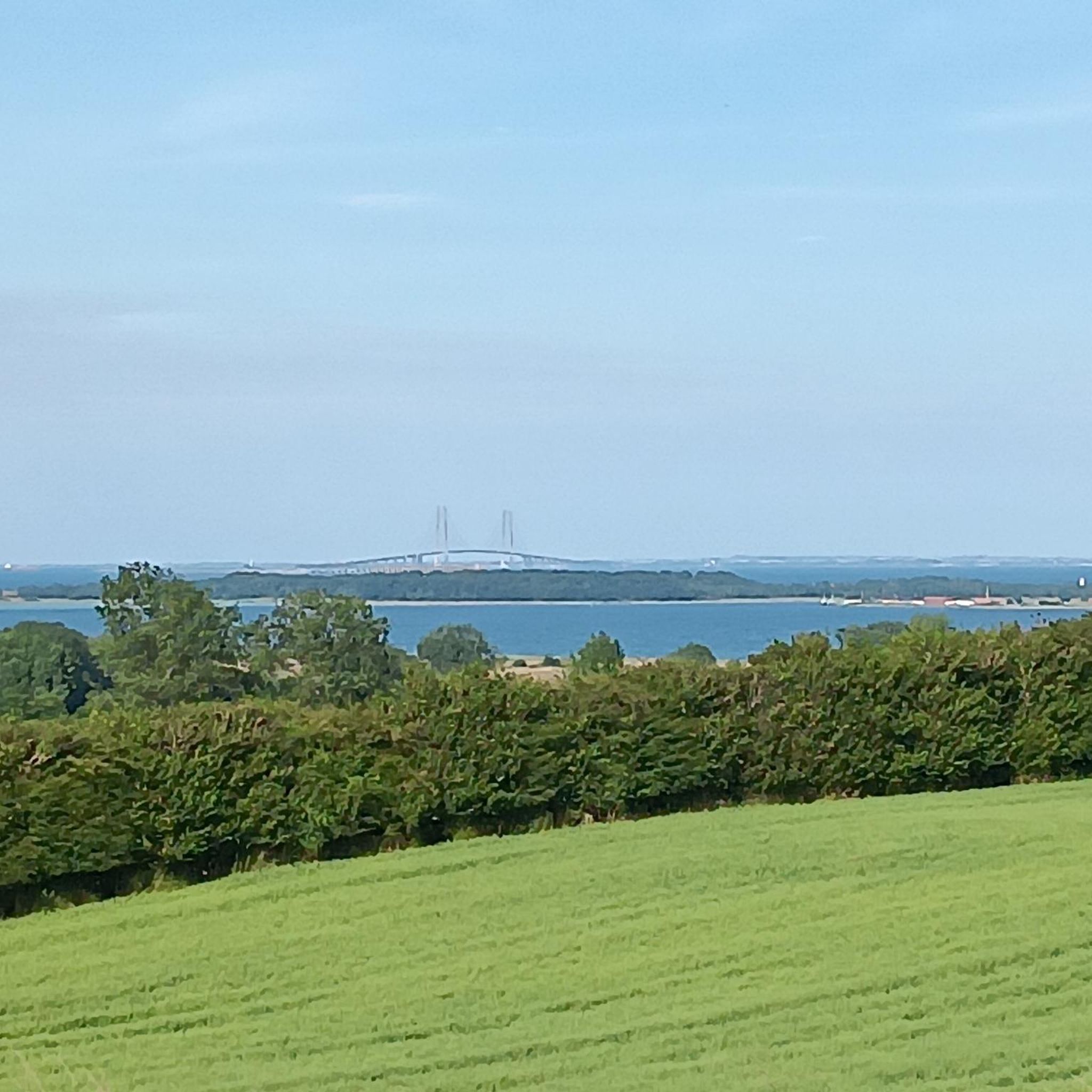
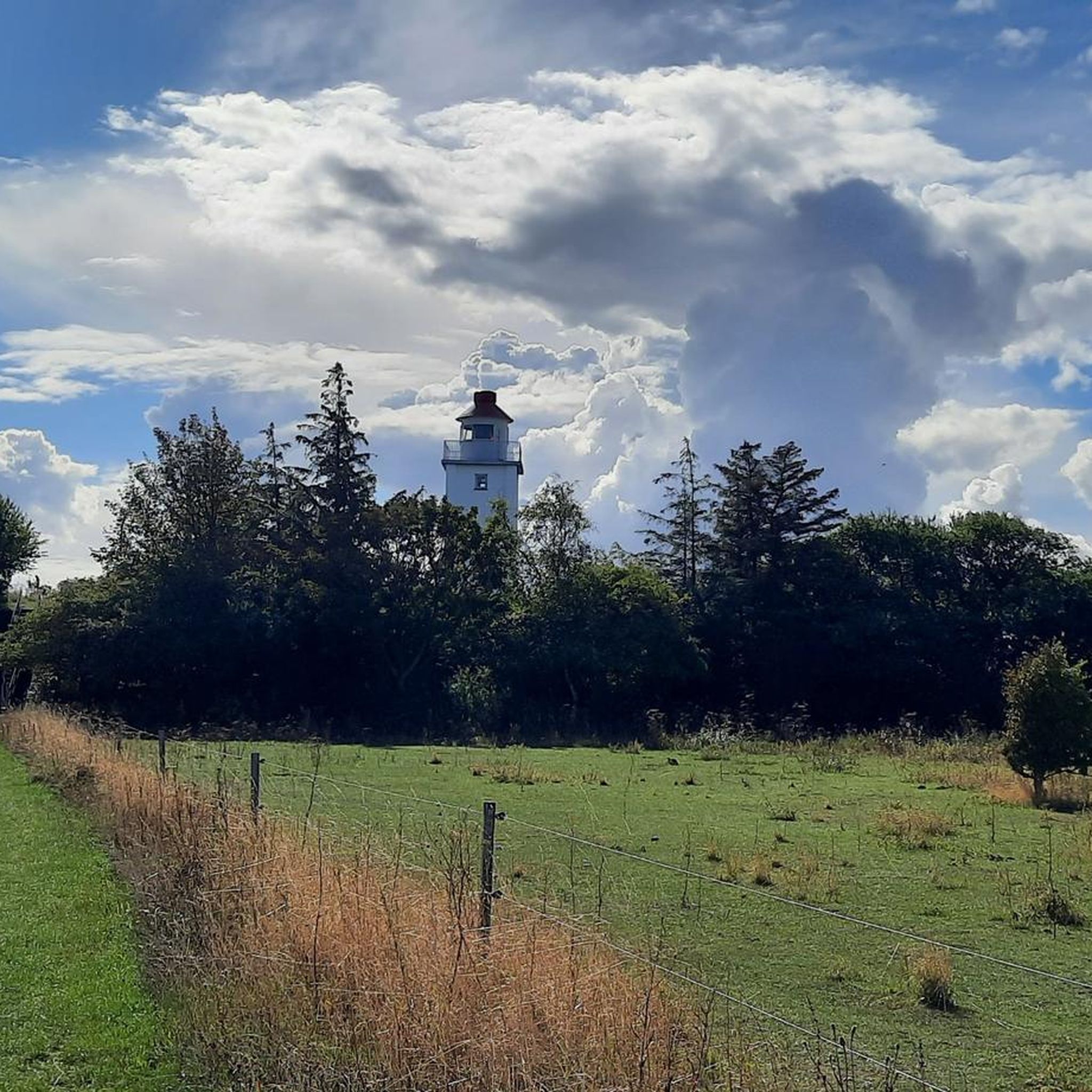
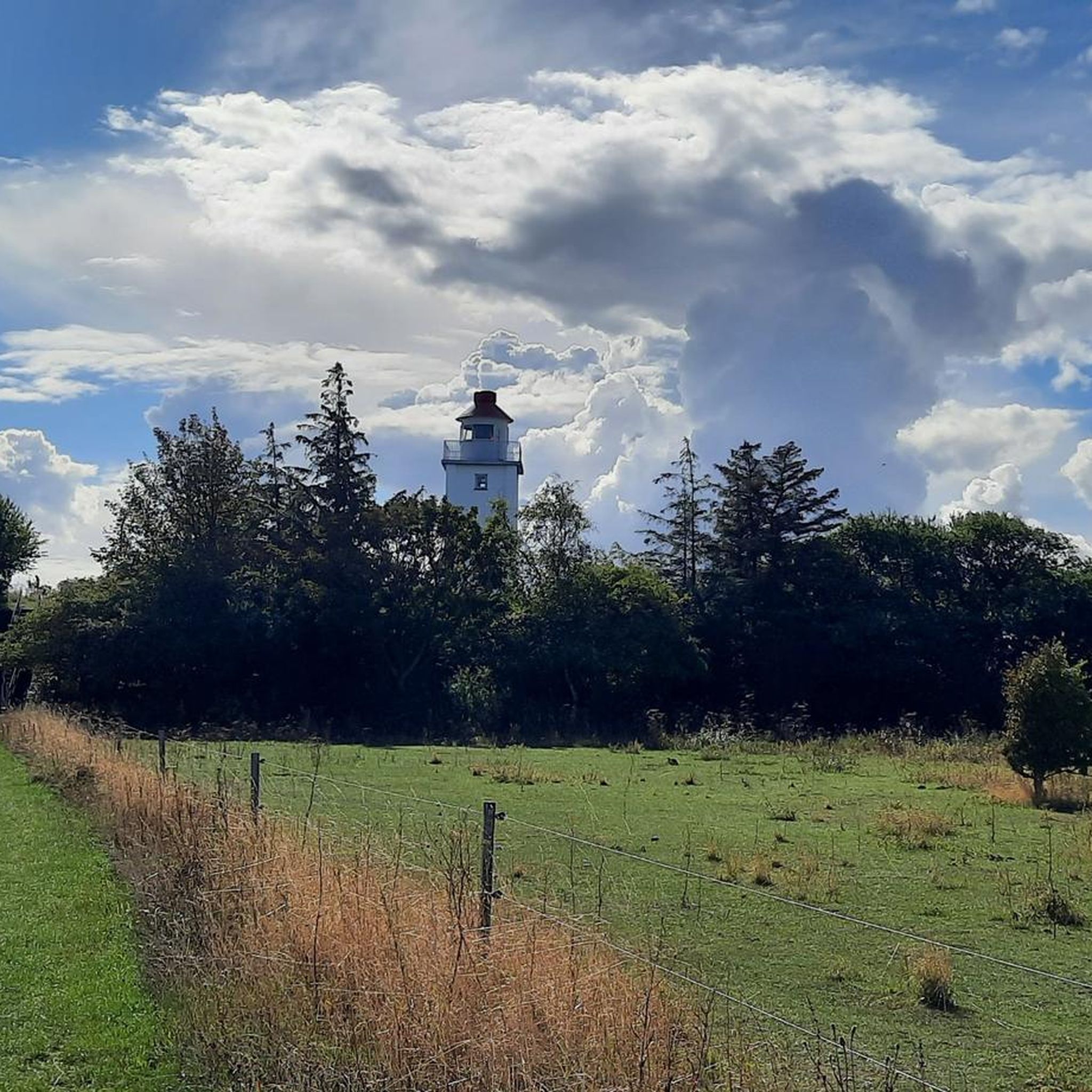
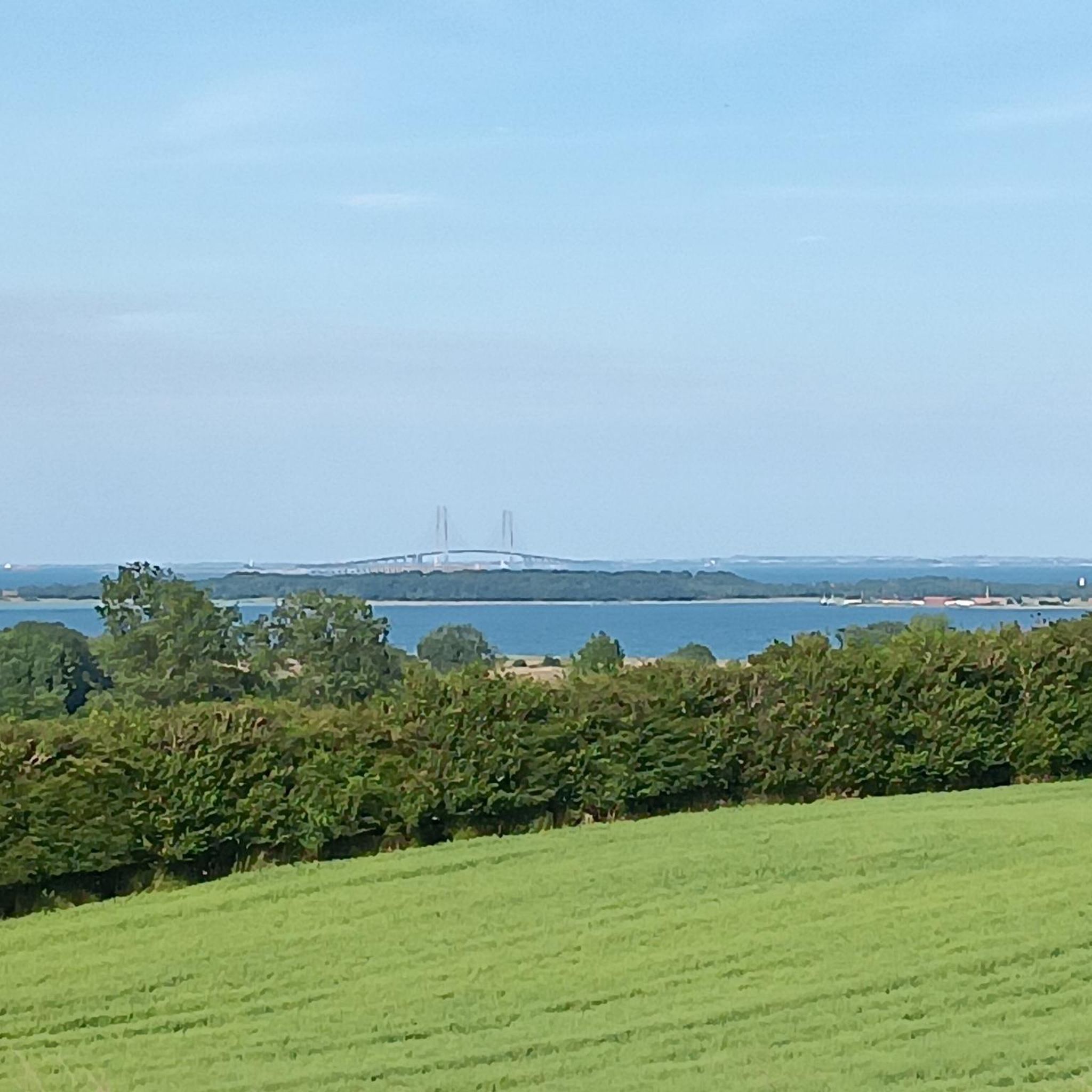
The Knald Station here in Knudshoved is one of the oldest surviving acoustic warning systems in the country. It was introduced in 1901 by the Lighthouse Directorate as a warning system for ferry traffic on the Great Belt, replacing the outdated acoustic warning that occurred when two cannons called "Löwes Batteri" were fired. The Knald Station was intended to guide ferries safely into Nyborg Fjord by sound in cases of dense fog, heavy snowfall, etc. In normal weather conditions, the ferries could navigate using the visual lighthouses that had guided ships safely into Nyborg Harbor since the mid-19th century using bonfires and lighthouses. But when the weather and visibility were poor, the lighthouses could not be seen. The Cracking Station was built with a 7-8 meter high mast, equipped with a curved rocker arm at the top, which could be lowered to a small shed built next to the mast. Here, the explosive charges were mounted on a gallows and the rocker arm was raised back into the air. The explosive charges were detonated using an electrical device, and the ferries could orient themselves according to the sound. The cracking station was decommissioned in 1934 and replaced by more modern warning systems (electric sirens). From 1934 onward, and for 40 years afterward, the cracking station stood and fell into disrepair. In 1976, it collapsed onto the beach due to cliff erosion. In 1983, the mast and rocker arm of the blasting machine were reconstructed, but mistakenly fitted with a firewood basket, as if it were a "rocker light" for visual warning. After restoration in 1983, the mast and rocker arm of the blasting machine were once again in poor condition and were restored to a high shine in 2009 with paint and new steel wires. In 2022, DSB Ejendomme carried out a careful restoration of the mast, tilting structure, and stiffening wires. The mast and tilting lever have now been returned to their original design and fitted with a gallows for securing the explosive charge. https://www.visitnyborg.dk/nyborg/planlaeg-din-tur/fyrtaarn-og-knaldfyr-paa-knudshoved-gdk1114413
3
0
2월 1, 2025, Nyborg Town Hall
In 1586, the town hall was built on the east side of the square. However, only a very small part of the brickwork of this building has survived, as it burned down along with many other houses in the town in the great fire of 1797. It was rebuilt in 1803, but was already rebuilt in 1862, with a floor added. Further renovations were carried out in 1899 and 1931–36. The most recent extension dates from the 1970s. Source: VisitNyborg
0
0
7월 31, 2023, Nyborg Castle
Beautiful park with many moats that served as protection in earlier times. In addition, the "castle" or defensive structure is to be restored.
0
0
7월 31, 2023, Nyborg Town Hall
Beautiful town hall and great flower beds in front of it.
0
0
7월 31, 2023, Church of Our Lady (Vor Frue Kirke), Nyborg
Nice little pedestrian street. beautiful church.
0
0
6월 10, 2023, Church of Our Lady (Vor Frue Kirke), Nyborg
The cornerstone of the Gothic Church of Our Lady (Nyborg Church) was laid in 1388 by Queen Margarethe I.
2
0
6월 10, 2023, Nyborg Castle
Nyborg Castle (Danehof Castle) was built around 1170 by Duke Knud Prislavsen.
0
0
4월 29, 2023, Gravel Trail Through Brændeskov
A cool segment where you drive primarily on dirt roads. The large forest area offers many exciting routes on gravel.
1
0
4월 29, 2023, Singletrack Along the Coast
Singletrack through beautiful natural area. The area is actually a dump/landfill which is buried in the ground, but that does not make the experience any worse. Good climb, beautiful view and single track right down to the water.
2
0
4월 29, 2023, Tårup Lund Forest
Tårup Lund forest has some good dirt road to cycle on and a beautiful view of Kongshøj Å, which runs through the forest.
2
0
다른 지역의 최고의 MTB 트레일를 살펴보세요.
무료로 가입하기