슈미트뮐렌에서 가장 멋진 20개의 동굴
성을 방문하는 건 언제나 특별한 일이에요. 하이킹을 하다가 잠깐 들를 때도, 가이드를 따라 제대로 둘러볼 때도 말이죠. 슈미트뮐렌에 있는 아름다운 성 20
곳을 아래에서 살펴본 후에 마음에 드는 성을 다음 모험 때 만나보세요!
마지막 업데이트: 10월 10, 2026
오베레스 슐로스 슈미트뮐렌 (라트하우스)
하이라이트 • 성
번역자 Google •
팁에 의해

로스슈타인 성 폐허
하이라이트 • 성
Roßstein is located near Schmidmühlen and Hohenburg in the middle of the lonely Taubenbacher Forest.
Chunrad Oerelheimer named himself after the castle for the first time in 1331, …
번역자 Google •
팁에 의해

이런 장소를 발견하려면 지금 가입하세요
최고의 싱글 트랙, 봉우리 및 다양한 흥미로운 야외 장소에 대한 추천을 받아보세요.

호헨펠스 성 유적과 포렐렌바흐 분수
하이라이트 • 성
The Knights of Hohenfels are a branch of the Raitenbuch family. They had their ancestral castle in the hamlet of Hausraitenbuch and were ministerials of the Bishop …
번역자 Google •
팁에 의해
함머슐로스 트라이덴도르프
하이라이트 • 역사적 장소
번역자 Google •
팁에 의해

무료로 가입하여 슈미트뮐렌 주변의 더 많은 성을 발견하세요.
이미 komoot 계정이 있나요?
오늘 무료 계정으로 시작하세요
다음 모험이 기다리고 있어요.



커뮤니티 팁

상부 성 상부 성은 슈미트뮐렌의 영주들이 수성(水城)으로 지었습니다. 12세기 중반부터 에른스트 폰 슈미트뮐렌(1166–1170)을 시작으로 이곳에 거주한 기록이 있습니다. 레겐슈타우프의 관리였던 게오르크 하우즈너 폰 빈부흐(1595–1614)가 현재 성의 건축가입니다. 1600년이라는 숫자는 기사 홀의 화려한 문틀 중 하나에서 볼 수 있습니다. 상부 성은 박공지붕을 갖춘 3층 높이의 석조 건물입니다. 팔각형 계단탑이 증축되었고 서쪽에도 추가 증축이 있습니다. 이 성의 1층에는 작은 예배당도 있었지만, 오랫동안 흙으로 메워지고 벽으로 막혔습니다. 탑 위쪽에는 꽃과 로제트로 그려진 둥근 천장이 있으며, 섬세한 나무 기둥으로 지지됩니다. 전체 2층은 독일 르네상스 시대의 가장 흥미로운 소장품 중 하나에 속합니다. 그곳에 있는 세속적인 벽화는 란츠후트의 트라우우스니츠 공성 성채의 벽화를 연상시킵니다. 제2차 세계 대전 중과 그 이후에 상부 성은 점령군의 주둔으로 인해 심각한 피해를 입었습니다. 2층에 있던 귀중한 세라믹 난로가 파괴되었습니다. 1937년에 이 성은 슈미트뮐렌 시장의 소유가 되었습니다. 전후 시대부터 이 성은 슈미트뮐렌 시장의 시청으로 사용되고 있습니다. 1977년과 1980년 사이에 철저한 복원이 이루어졌으며, 이 과정에서 성과 성 정원의 모습이 바뀌었습니다. 리노베이션은 2003년에 완료되었습니다. 성 안에는 슈미트뮐렌의 향토 및 협회 박물관도 있습니다. 성 앞 분수대에는 모리스크 무용수의 주조된 형상이 서 있으며, 뮌헨 구 시청사의 연회장을 위해 유명한 후기 고딕 양식의 모리스크 무용수들을 만든 슈미트뮐렌의 조각가 에라스무스 그라서(Erasmus Grasser)를 기리고 있습니다. 출처: 위키백과
4
0
뮌히스호펜 성 뮌히스호펜 성에는 최소한 하나의 중세 전신 건물이 있었으며, 18세기까지 적어도 하나의 탑이 남아 있었던 것으로 보이며, 동시대의 그림이 이를 보여줍니다. 서관의 문틀에는 1597년이라는 숫자가 새겨져 있습니다. 30년 전쟁으로 심각한 피해를 입은 후, 이 단지는 17세기 후반에 대대적으로 재설계되었습니다. 뮌히스호펜 성은 오버팔츠 지역에서 르네상스 양식을 완전히 따르는 드문 기념물 중 하나입니다. 오벨리스크와 볼루트는 나중에 추가되었습니다. 이 단지는 나브 강 쪽으로 삼면이 막힌 안뜰을 형성합니다. 평면도상으로는 9개의 창이 있습니다. 뒤쪽에는 더 작고 삼면으로 된 아케이드 안뜰이 있습니다. 이곳에서 가파르게 솟아 있는 뮌히스호퍼 산에는 2층 높이의 지지벽이 있습니다. 단지 중앙에는 시계탑과 2단 나선형 계단이 있습니다. 성은 이전의 성 예배당과 직접 연결되어 있습니다. 경제 마당으로 통하는 문 통로, 둘레 벽의 잔해, 벽돌로 지은 곡물 창고가 보존되어 있습니다. 1868년, 이 성은 율리 율리 안나 라이히스프라인 폰 아레틴에게 넘어갔고, 그녀는 이 성을 라이히스그라펜 폰 아르만스페르크 가문에 들였습니다. 1910년, 바트 키싱겐의 왕립 바이에른 궁내관이자 정부 고문이었던 알렉산더 폰 모로 남작이 이 성을 인수했습니다. 그의 아들 막시밀리안 폰 모로 남작이 그 유산을 이어받았습니다. 오늘날 이 성은 안토니우스 폰 모로 남작의 개인 소유입니다. 이 성은 개인 소유이며 외부에서만 볼 수 있습니다. 2011년 9월 27일의 경매는 성공하지 못했습니다. 뮌히스호펜 성은 황폐화될 위험에 처해 있습니다. 출처: www.wikipedia.de 발췌
2
0

In the 14th century, an iron hammer mill was built here, which shaped the region for centuries. In the 16th century, the castle belonged to the Lords of Bertelshofen, whose impressive gravestones can still be seen today at the parish church of St. Michael in Kallmünz. In the mid-17th century, the castle passed into the possession of the Tänzl von Tratzberg family through marriage, who also built the nearby Dietldorf Castle. At that time, the lords of the manor even held the right to prospect for and mine ores in the surrounding area. In the 19th century, the hammer mill was transformed into a glass grinding and polishing workshop, which operated until the early 20th century. The then owner of the castle and operator of the factory, Philipp Berlin, a mirror manufacturer from Fürth, was expropriated by the Nazis because of his Jewish ancestors and was forced to leave Germany with his family. *). After operations ceased, the hydroelectric power plant was modernized and continues to generate electricity today. Since then, the Hammerschloss has gained an excellent reputation as a seminar and conference center, extending beyond the region. The legendary, regular Sunday brunches were particularly popular. After decades of varied use, Lebensraum eG acquired the historic building in 2018. With the advisory and financial support of the Bavarian State Office for Monument Preservation, the rooms were extensively restored and adapted to the new needs of the residents. Baroque pieced ceilings of outstanding quality were uncovered and now adorn the 12 partially newly built apartments in a property with a rich history and a new future. Source: https://www.hammerschloss.de/
1
0
Hohenfels Castle Ruins The Knights of Hohenfels are a branch of the Raitenbuch family. They had their ancestral castle in the hamlet of Hausraitenbuch and were ministerials of the Bishop of Regensburg. At the end of the 12th century, the Raitenbuch family moved their headquarters to nearby Hohenfels and called themselves "von Hohenfels" ever since. They owned their castle in Hohenfels as independent property, and later they were also found in Falkenstein and Helfenberg. One Hohenfelser even achieved international fame: On December 28, 1250, Konrad von Hohenfels attempted to murder King Konrad IV on behalf of the Bishop of Regensburg, but had to flee after the failed assassination attempt. King Konrad IV had the castle destroyed, but the attack initially did little harm to the Hohenfelsers: another Konrad even became mayor of the imperial city of Regensburg in 1258. They owe their downfall to another, less spectacular development: the impoverishment of the knights at the end of the 14th century. During this time they repeatedly tried to improve their finances with feuds and raids. In 1366 they placed their rule under the Bohemian king as a fief. The corresponding document speaks of the castle and town of Hohenfels, so the place at the foot of the castle had developed well. Nevertheless, money was still lacking. In 1375 the Hohenfelsers mortgaged their castle to the Palatinate. In 1383 they had to sell it for good: Count Palatine Ruprecht paid them 17,700 guilders. In 1393 the last Hohenfelser Hilpolt died. The castle was occupied by the Palatinate Wittelsbachs with guardians. In 1427 it was destroyed by the Hussites. It was rebuilt, but subsequently lost all practical significance. In 1804 the Hohenfels guardianship was dissolved, the intact castle was sold for demolition and used as a quarry. The 100-meter-long Romanesque castle complex had two keeps. The round keep, built on a rocky peak on the east side to protect the castle entrance, with a high entrance made of quarry stone at a height of over 10 meters, is the only castle building that has survived. Several square castle buildings from the period between 1250 and 1427 were grouped around the square keep, which protected the entrance to the main castle. A Gothic vault that was found in the rubble probably comes from the castle chapel. Source: Excerpts from www.burgenseite.de / www.wikipedia.de
2
0

Very nice, well-maintained building. You can book the location for events and weddings.
0
0

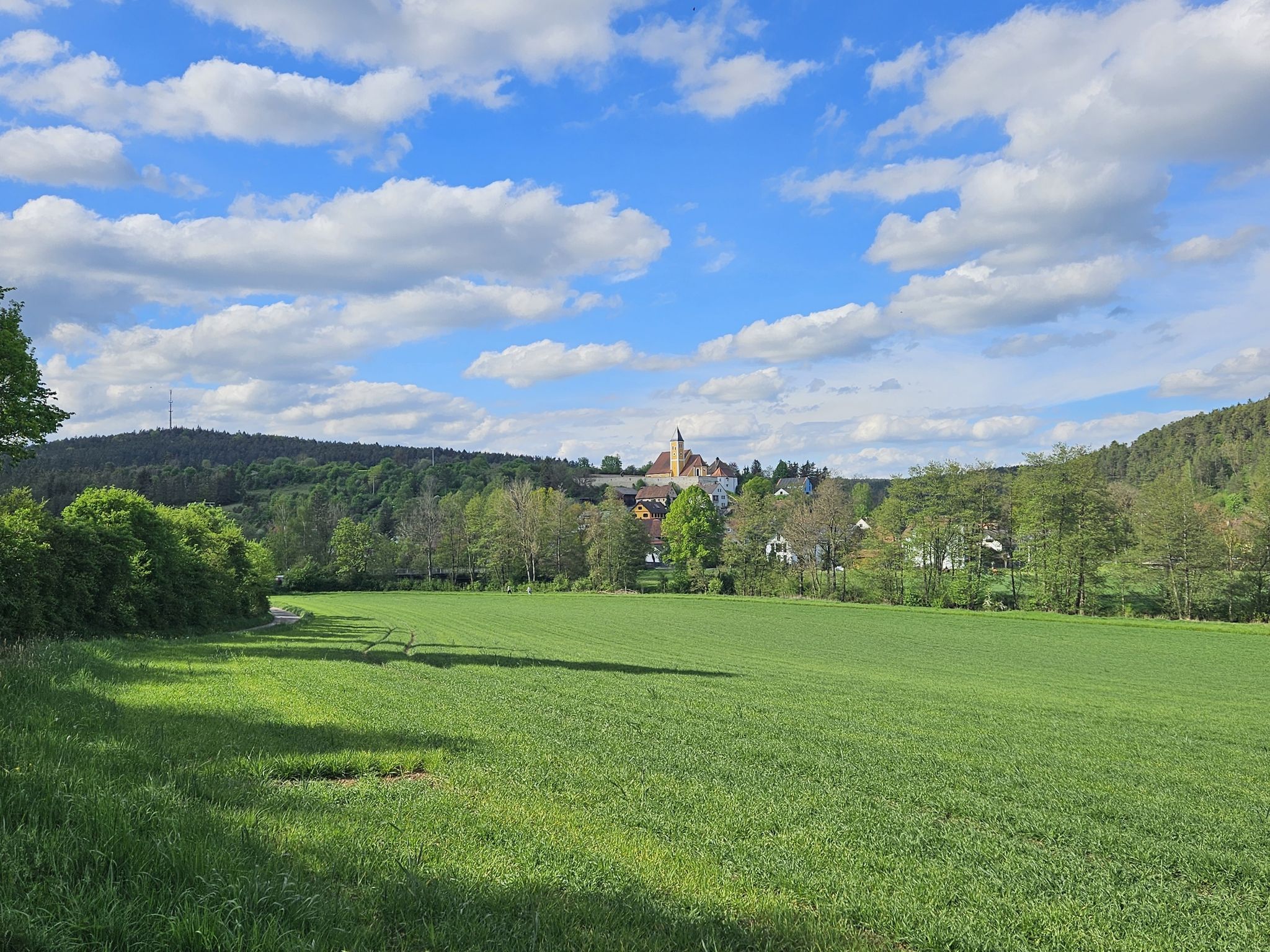
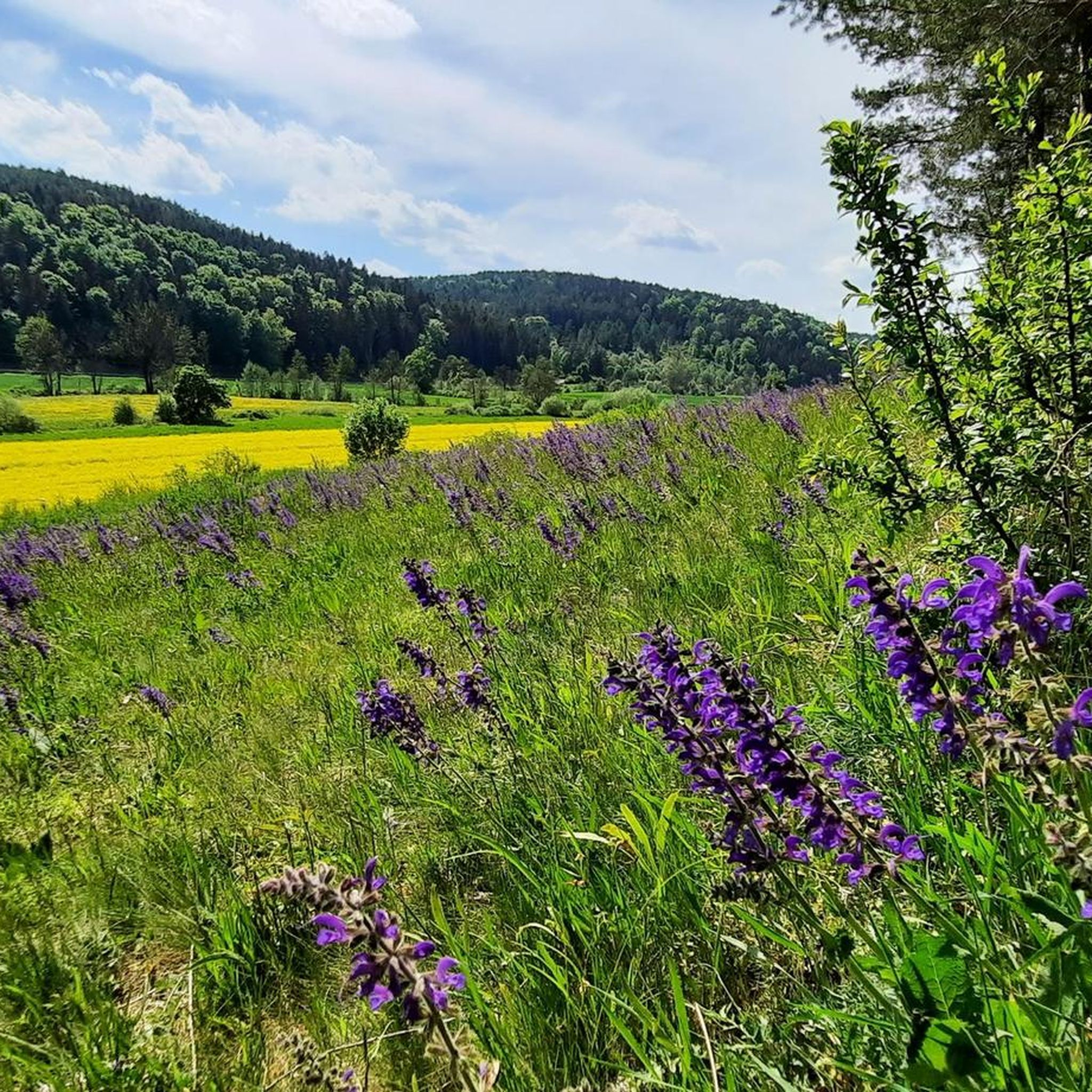
The municipality has a number of highlights to offer. Within walking distance, you can admire the juniper heaths and dry grassland slopes, karst rocks give the valley a rough feel and the hospitable town centre invites you to feast.
0
0

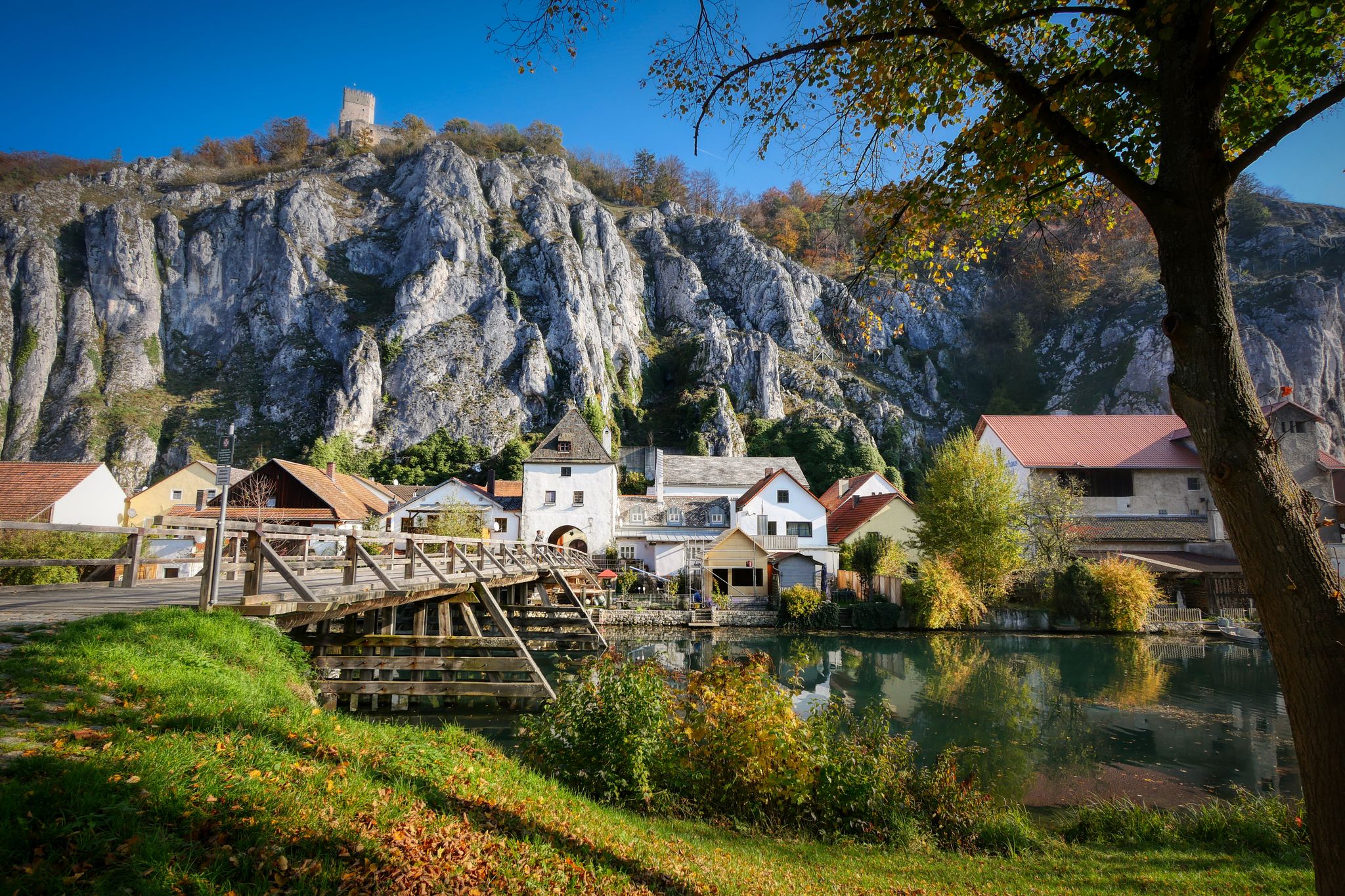
Very beautiful former Hofmarkburg, which was probably built on the walls of a moated castle, essentially from the 13th century. In the 20th century the chateau was used as a warehouse for hops and grain. The market town has belonged to it since 1937 and has since been used as the town hall. There is a charging station for e-bikes.
5
0
Rossstein ruins Roßstein is located near Schmidmühlen and Hohenburg in the middle of the lonely Taubenbacher Forest. Chunrad Oerelheimer named himself after the castle for the first time in 1331, so he could be the builder. At that time it was conveniently located on the Bistumer Steig, a trade route from the Eger region. In 1357 the castle came to Rüdiger Punzinger, who was in the service of the Wittelsbach Count Palatine, as a dowry to a daughter of Konrad. Rüdiger made a career and became a nurse in Hohenfels around 1375. After his death, his brother Georg Punzinger succeeded him in 1381 - a pugnacious spirit. He came into conflict with the city of Regensburg around 1400: Apparently he housed shady rabble in his castle, who had repeatedly attacked Regensburg merchants on the street. In the course of this feud, the castle was set on fire by the Regensburgers in 1411, but was rebuilt by Andreas Punzinger. Nevertheless, the Punzinger did not lose their important position. However, the family gradually loses interest in the now remote Roßstein Castle. The Counts Palatine want to buy Roßstein back from the last Punzinger named Mathes, but he refuses. After his death, Roßstein was only inspected by a forester from the Palatinate. In 1550 it caught fire due to carelessness. Lienhart Spieß, appointed as administrator in 1563, no longer renews it, but resides in the Spießhof, which still exists today, at the foot of the castle hill. Since then decay up to our days, around 2000 securing of the remains. The main castle consists of a large, almost rectangular residential tower made of quarry stone. The corners are made of ashlars, one can even find a few hump ashlars. The residential tower has a vaulted basement, a low ground floor with light slits and two spacious upper floors with windows and two head-high, vaulted entrances. Access to the east could be blocked with a locking bar. Even if the castle ruins are rather small, a visit is worthwhile, especially if you combine it with a hike through the beautiful Taubenbach valley and the lonely Taubenbach forest. Far away from major roads, the Upper Palatinate Jura can be experienced in a unique way. Source: Excerpts from www.Burgen-seite.de
8
0
슈미트뮐렌 주변에서 가장 인기 있는 명소


더 살펴보기
다른 곳에서 최고의 성을 찾고 계신가요? 다른 가이드를 발견해보세요 슈미트뮐렌 주변:
