우르센솔렌에서 가장 멋진 20개의 동굴
우르센솔렌 주변의 최고의 성들은 이 지역의 역사적인 건축물과 전략적인 과거를 엿볼 수 있는 기회를 제공합니다. 독일 바이에른에 위치한 이 지자체에는 잘 보존된 거주지부터 고고학 유적지까지, 성에서 유래한 여러 역사적인 구조물들이 있습니다. 이 지역의 풍경은 중세 주거 건물과 중요한 요새를 탐험하는 배경이 됩니다. 방문객들은 수세기에 걸친 건축 발전과 방어 전략을 반영하는 구조물들을 발견할 수 있습니다.
우르센솔렌 주변 최고의 성들
- 가장 인기 있는 성은 마법 같은 분위기를 지닌 잘 보존된 폐허인 포프베르크 성터입니다. 프랑켄 알프에서 가장 높은 곳에 위치하며 후기 중세…
마지막 업데이트: 10월 23, 2026

포프베르크 성 유적지
하이라이트 • 성
번역자 Google •
팁에 의해

이런 장소를 발견하려면 지금 가입하세요
최고의 싱글 트랙, 봉우리 및 다양한 흥미로운 야외 장소에 대한 추천을 받아보세요.
파펜호펜의 슈베퍼만스부르크 성터
하이라이트 • 성
Pfaffenhofen is part of the core area of the powerful Counts of Sulzbach. The castle was part of their alodic property, so it was not taken as a fief …
번역자 Google •
팁에 의해

로스슈타인 성 폐허
하이라이트 • 성
Roßstein is located near Schmidmühlen and Hohenburg in the middle of the lonely Taubenbacher Forest.
Chunrad Oerelheimer named himself after the castle for the first time in 1331, …
번역자 Google •
팁에 의해

우르센솔렌 주변의 다른 모험


커뮤니티 팁

Schweppermannsburg Pfaffenhofen – 용감한 기사의 고향 카스틀(Kastl) 근처의 작은 마을 파펜호펜(Pfaffenhofen) 한가운데에 인상적인 성곽이 솟아 있습니다. 이곳은 중세의 유명한 장군 자이프리트 슈베퍼만(Seyfried Schweppermann, 약 1257–1337)의 역사적인 거주지였으며, 바이에른의 황제 루트비히 4세에 대한 그의 충성심은 오늘날까지도 잊히지 않고 있습니다. 전설적인 달걀 인용구: 뮐도르프 전투(1322)에서 승리한 후, 굶주린 군대를 위한 식량이 거의 남아 있지 않았습니다. 황제는 부족한 보급품을 나누어 주며 다음과 같은 유명한 말을 남겼습니다. „모든 병사에게 달걀 하나씩, 용감한 슈베퍼만에게는 두 개를!“ 웅장한 주거용 탑: 멀리서도 보이는 견고한 자연석으로 지어진 주거용 탑은 이 성의 핵심이며 중세 건축의 인상적인 증거입니다. 길가에서 만나는 역사: 라우테라흐 계곡(Lauterachtal)에서 즐기는 환상적인 중간 기착지로, 오버팔츠(Oberpfalz)의 진정한 역사를 가까이에서 체험할 수 있습니다!
1
0
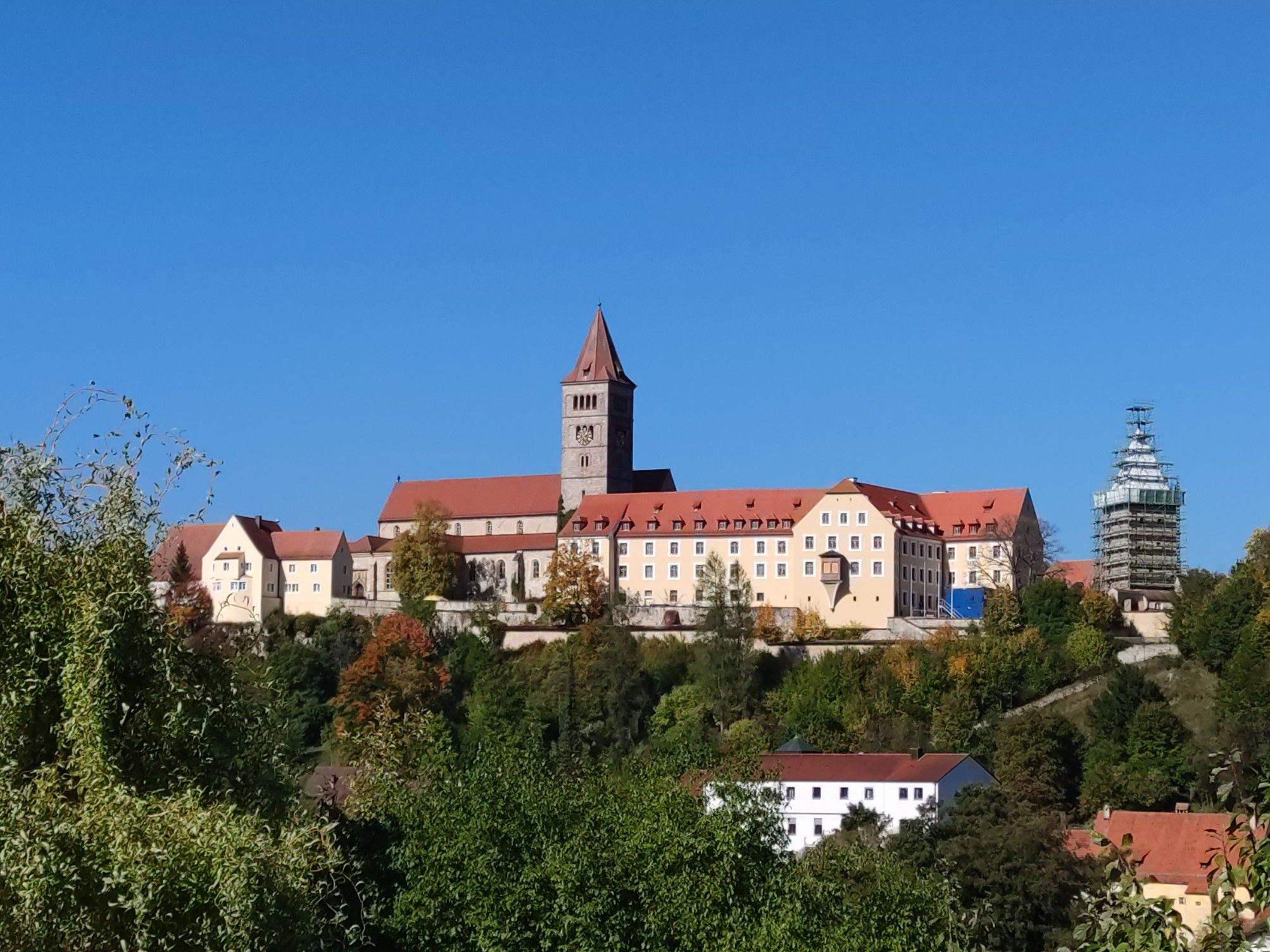
Klosterburg Kastl – 라우터아흐탈 계곡 위의 인상적인 랜드마크 강력하고 멀리서도 잘 보이는 역사적인 수도원 성이 카스틀 시장 위의 클로스터베르크에 우뚝 솟아 있습니다. 12세기에 설립된 이 베네딕토회 수도원은 오버팔츠에서 가장 중요한 중세 수도원 단지 중 하나입니다. 건축 및 역사: 특징적인 쌍둥이 탑이 있는 인상적인 로마네스크 양식의 성 베드로 수도원 교회와 유서 깊은 안뜰은 수도원의 긴 역사를 실감하게 합니다. 역사적 특징: 이 성에는 1319년에 이곳에서 사망한 바이에른 황제 루트비히의 3세 딸인 안나 공주의 미라가 수 세기 동안 안치되어 있었는데, 이는 지역 역사의 독특한 부분입니다. 탁 트인 전망: 오래된 성벽에서 카스틀의 지붕들과 목가적인 라우터아흐탈 계곡을 내려다보는 환상적인 파노라마 뷰를 즐길 수 있습니다. Jurasteig 하이킹 중 잠시 들르기에 완벽한 장소입니다!
1
0

Moos Castle Moos was the seat of the noble family of Moos. Otto von Moß is mentioned as a witness in documents in 1121, Hermann von Moße in 1126, Otto von Mose in 1166, and Friedrich Mosaer in 1190. The service in which this family served and their coat of arms are unknown. Presumably, there was no stone manor at that time, but rather a motte-and-bailey castle built on a hill. The Moos family appears until the end of the 12th century, after which their trail disappears. In the first half of the 14th century, Moos was already a Hofmark (a type of manor). The Nortweiner family, who were wealthy landowners in the area, are mentioned as its owners. In the mid-15th century, Moos came into the possession of Jörg Kastner; the subsequent ownership history is unclear. The estate moved to the center of Bavarian history when Elector Maximilian had the city of Amberg surrendered to him at Moos Castle on October 8, 1621, after the Battle of White Mountain. Thus, the estate reverted from the Electorate of the Palatinate to Bavaria. Due to heavy debt, the estate passed to the government in Amberg, and various owners followed. In 1904, all the property belonging to the castle was demolished. A year later, Leonhard Bernreuther acquired the castle and renovated it in exemplary fashion. It then passed to the Uwe Herrmann family. The newly renovated castle is a three-story solid building with a hipped roof, dormer windows, and simple stucco detailing. The building dates back to the Late Gothic period; it may have previously been a fortified house. In 1738, it was rebuilt with the exception of the four main walls. Until the reconstruction, it was a defensive structure with one-meter-thick walls on the ground floor and narrow slits instead of windows. Two windows remain on the east side. There, on the first floor, is an exposed Late Gothic window with a straight lintel and dressed stonework, as well as a latrine bay window. A ring wall with numerous keyhole-shaped loopholes hewn from dressed stone and four projecting corner towers from the first construction phase surrounds the castle. It is approximately three meters high and 80 cm thick. The tall spires were added during the last renovation (1982–1984). The former moat can still be seen as a strip of barren land on the south and east sides. Access to the complex is from the north; a bridge once stood here, the inner section of which could be raised. Source: Excerpts from www.wikipedia.de
2
0

An old hilltop castle, long used as a monastery by various religious orders. Today it houses the police academy. It lies on a dolomite spur above the valley. This is also where the "Hochholz Trail" begins, which is not to be missed.
0
0

The Kastl castle complex has towered over the Lauterach Valley since the 10th century. In 1098, it was decided to convert the castle into a monastery. Description: It was founded in 1103, and the choir and St. Egidius Chapel were consecrated in 1129. Construction of the monastery church was completed at the end of the 12th century. Through constant renovations and expansions, the church acquired its present appearance. In 1782, it became the property of the Knights of Malta. The basilica has been used as a parish church since 1808. A late Gothic main portal, a four-bay barrel vault, the alternating support of columns and pillars in the nave, and the Gothic stone tomb in the vestibule, which was once the tomb of the deceased Princess Anna, make the church a true gem. Princess Anna was the daughter of King Ludwig the Bavarian and died in 1319. The mummy of the one-and-a-half-year-old "Kastl Child" was preserved until the end of 2013 and can be viewed again. The antechamber also houses the sarcophagus of General Schweppermann. [ Source: https://www.ostbayern-tourismus.de/attraktionen/klosterburg-kastl-fd22a56fae ]
1
0

Very beautiful monastery castle currently serves as a police training center
0
0
Poppberg Castle Ruins It is difficult to determine from the sources when the castle was built. It is particularly unclear whether the mentioned castles and lords of the "Puchberg," "Puckberg," or "Pocksberg" are identical with the Poppbergs. A coat of arms of the "Pocksberg" appears in the Kastl monastery church in the row of founders' coats of arms on the south side of the nave. It can be assumed that the castle was founded to control the "high road" from Prague to Nuremberg, perhaps even under the Counts of Sulzbach, who ruled until 1188. In any case, the village of Poppberg is mentioned as belonging to the Fürnried parish as early as 1139. However, the castle's existing buildings show no signs of such an early foundation; they are more consistent with the period after 1300, when tower-like residential buildings became fashionable. The first truly confirmed reference to the castle appears in 1373, when the so-called New Bohemian Lands of Emperor Charles IV passed into the hands of the Bavarian duke. Poppberg was part of this Bohemian territory on Upper Palatinate soil, founded by Charles in 1353, but dissolved after his death. The Bavarian dukes pawned the castle to their Palatinate relatives in 1395, but redeemed the pledge in 1451. What seems odd is that two years later the castle is described as "deserted and desolate," meaning it was already abandoned. In 1505, after the Landshut War of Succession, Poppberg passed to the Duchy of Palatinate-Sulzbach, and in 1791 to Bavaria, but remained abandoned and fell into disrepair until the present day. The entrance to the castle is protected by a narrow tower on a pointed rock formation that forms the highest point of the castle. The upper part of the tower is occupied by a recently built, concreted shelter, which served as an air observation post during World War II. A circular wall adjoins the rock formation, forming a clearly visible edge of the terrain and extending extensively around the entire area. Traces of soil near the entrance suggest several utility buildings. The most impressive part of Poppberg is the residential building, a typical late medieval mixture of residential tower and palace dating from after 1300. The lower floor of the building probably served as a pantry and kitchen. The second floor is much more residential, with larger windows and two large entrances leading to the former battlements on either side. A third floor is suspected. Source: www.burgenseite.de
5
0

Great monastery castle with an amazing view - be sure to take the small juniper hiking trail!
0
0
우르센솔렌 주변에서 가장 인기 있는 명소


더 살펴보기
다른 곳에서 최고의 성을 찾고 계신가요? 다른 가이드를 발견해보세요 우르센솔렌 주변:
