20의 그럽 암 포스트가지 명소 & 주요 장소
그럽 암 포스트에는 둘러볼 만한 장소가 많답니다. 하이킹 또는 사이클링을 좋아한다면 그럽 암 포스트에 숨겨진 20
가지 보석을 만날 수 있을 거예요. 이 지역의 주요 명소를 살펴보면서 다음 모험을 계획해보세요.
마지막 업데이트: 10월 9, 2026
리히텐펠스의 운터스 토어(하부 문)
하이라이트 • 기념물
번역자 Google •
팁에 의해


이런 장소를 발견하려면 지금 가입하세요
최고의 싱글 트랙, 봉우리 및 다양한 흥미로운 야외 장소에 대한 추천을 받아보세요.

코부르크 시장 광장
하이라이트 • 역사적 장소
번역자 Google •
팁에 의해


오늘 무료 계정으로 시작하세요
다음 모험이 기다리고 있어요.
커뮤니티 팁

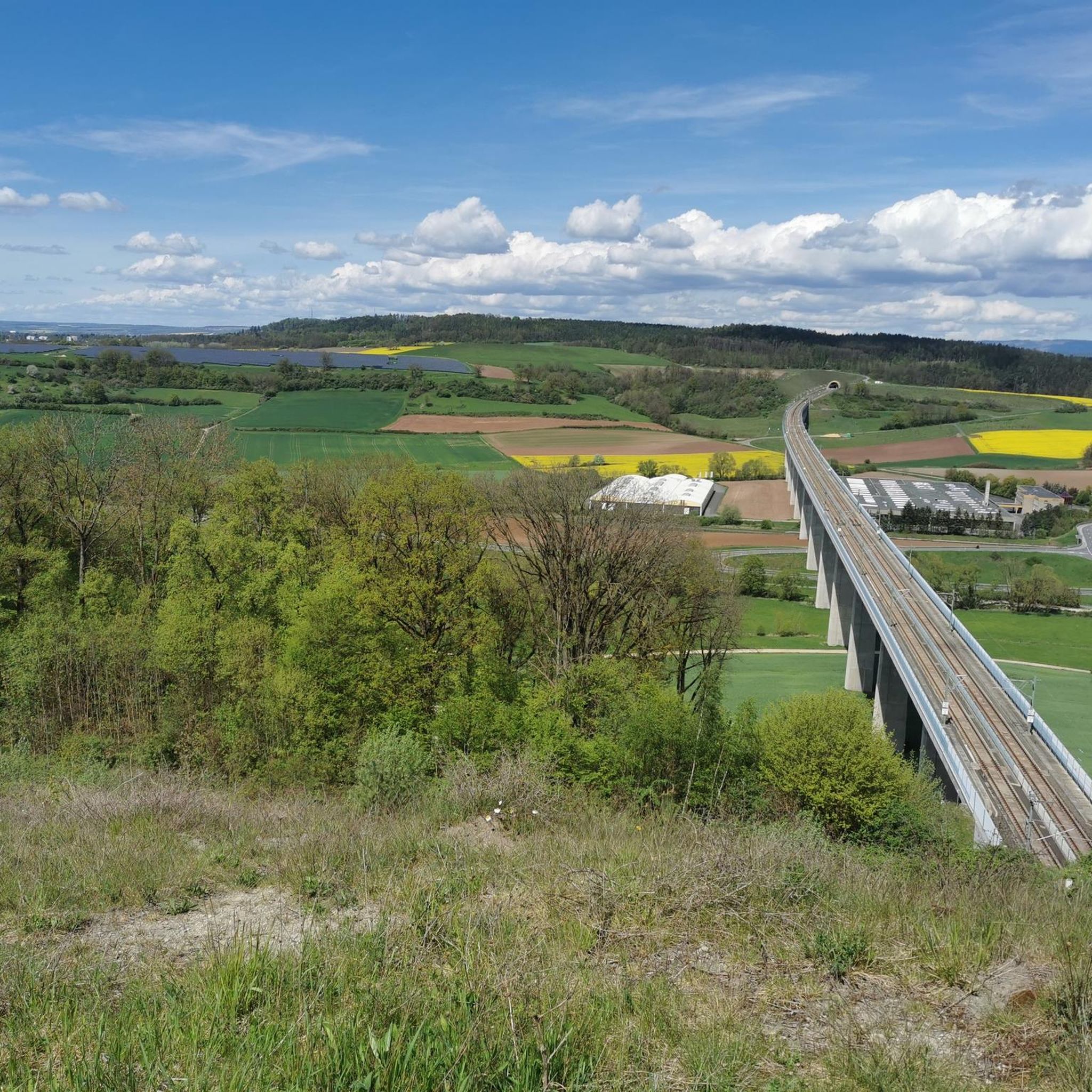
Nicely integrated into the cycle path.
4
0

A beautiful building. Well suited to the new era.
10
0

A beautiful place in the middle of the city. The concerts in the Coburg summer take place there in a special setting.
11
1

At the Lower Gate you will find two cafés, a butcher's shop, a small restaurant, a farm shop and a pub with Franconian specialties. So if you're a little hungry, you've come to the right place 😉
5
0

The Coburg Castle Square is one of the most remarkable square designs in Bavaria. The spacious square is designed as a forecourt to Ehrenburg Castle and is located in the center of the former royal residence of Coburg. The Castle Square was created under Duke Ernst I from 1825 with the demolition of the eastern houses of Grafengasse and the subsequent demolition of the old commercial and auxiliary buildings of the castle, which were located to the north of it, in 1835. It was created in its current design as a representative square by 1849 in the historical and classicist style with the participation of Karl Friedrich Schinkel and Peter Joseph Lenné. Until the beginning of the First World War, the III. Battalion of the 6th Thuringian Infantry Regiment No. 95, stationed in Coburg, used the Castle Square for its parades. A military band played on Sunday afternoons.[1] In the 1920s, the Castle Square was often a meeting place for demonstrators, such as on Bloody Saturday in Coburg. Today, cars can be parked on the Schlossplatz in the evenings during performances at the State Theater. It is also used as an event space, for example for open-air concerts. The first plans for an underground car park on the Schlossplatz were made in 1977, but in 1988 the highest building authority in Munich did not approve it for cost and monument protection reasons. Source: Wikipedia
11
0
The secularization began on November 28, 1802. In 1803, the Electorate of Bavaria took over the administration of the monastery. Buildings were partially sold and demolished, and the abbey church became a parish church. The secularization was officially completed on October 24, 1803.[1] The Banz office, the property of the monastery, was converted into the Banz district court. In 1814, Duke Wilhelm in Bavaria acquired the former monastery complex, which was subsequently known as "Banz Castle" and was a summer residence. Duke Wilhelm hosted the King of Bavaria and the Tsarina of Russia, among others. The living quarters were given new furnishings. The monastery crypt under the abbey church served as the burial place of the ducal family until 1883. After the end of the First World War, the Wittelsbachs leased the property to the Trappists, who had been expelled from the Alsatian Abbey of Oelenberg and moved to Engelszell in 1925. In 1933, the Community of the Holy Angels, which was dedicated to pastoral care for Catholic Germans living abroad, purchased the former monastery complex from Ludwig Wilhelm Herzog in Bavaria for a symbolic Reichsmark, while the lands remained in Wittelsbach ownership. From 1941, art and cultural assets were stored in the vaulted cellars. Between 1942 and 1945, the Wehrmacht used parts of the castle as a reserve hospital. From the summer of 1944, Banz served as the residence of Kurt von Behr, who worked in the Reichsleiter Rosenberg operational staff. He had numerous art treasures deposited in the lowest cellar of the south wing of the castle. After the end of the Second World War, a large part of the monastery was set up as a retirement home run by Caritas for refugees and displaced persons. The School Sisters of Our Lady (Bohemia) were the sponsors of this retirement home. In 1950, Banz had 324 residents.[3] Caritas closed the retirement home in 1964. In 1978, the Community of the Holy Angels donated the former monastery to the Hanns Seidel Foundation, which is close to the CSU. Since then, it has served as a conference venue for the foundation. The local parish took over the abbey church. From 1987 to 2016, the two-day music festival Songs took place annually on a summer evening on the monastery meadows. Since 2017, the Lieder auf Banz festival has taken place instead. When Sophie in Bavaria married the Crown Prince Alois of Liechtenstein, the lands became the property of the House of Liechtenstein. Source: Wikipedia
13
2
The Benedictine abbey, founded around 1070 by Countess Alberada of Schweinfurt and her husband, Count Hermann of Habsberg-Kastl, on the site of the former Banz Castle, was the oldest monastery on the Upper Main until secularization (opening on November 18, 1802, closing on October 24, 1803)[1]. In the Middle Ages, the monastery owned the neighboring Stachilize Castle, which was awarded to it in 1127 by Bishop Otto of Bamberg at the request of Abbot Baldewin.[2] In the years from 1565 to 1568 there were disputes between the Duke of Saxony and the bishops of Würzburg and Bamberg over the monastery, which was occupied by armed men. In 1568, the monastery and its 27 villages (mostly in Saxony-Coburg, see: Amt Banz) bought themselves out of Coburg's protection. In 1566, the Bishopric of Würzburg had already recognized the sovereignty of the Bishopric of Bamberg in a settlement. Ecclesiastically, however, the monastery belonged to the Diocese of Würzburg. The dispute culminated in 1568 with the departure of the entire convent and Abbot Georg von Henneberg, who all converted to Protestantism. It was not until seven years later that Banz was resettled at the request of the Bishop of Würzburg, this time under Abbot Johann Burkhard, who served until 1598. With the resettlement, the rule that only nobles could be admitted to the convent as monks was abolished and turned into its opposite.[1] After the Thirty Years' War, the monastery had to be rebuilt. The abbots Eucharius Weiner and Kilian Düring commissioned Leonhard Dientzenhofer and, after his death in 1707, his brother Johann. Construction work began in 1698. The church was consecrated in 1719. While the Vierzehnheiligen pilgrimage church on the other side of the Main (built 1743–1772, mainly by Balthasar Neumann) is a Rococo building of the highest order, the Dientzenhofer Abbey Church of Banz is a prime example of the South German-Bohemian Baroque at the beginning of the century. In the second half of the 18th century, Banz Abbey enjoyed a nationwide reputation as a place of Catholic enlightenment and because of its learned monks. Like many monasteries, this one also had an imperial hall.
13
0

Coming from the Hofgarten you have the best view of the Schlossplatz above the arcades. On the left the Ehrenburg, in the middle the view of the old town, on the right the theater. The square is regularly used for events and is also the ideal starting point for getting to Veste Coburg. A little tip on the side - the sunset from the Hofgarten with a view of the Schlossplatz is a special highlight. The best opportunity to experience a sunset with a great backdrop close to the center!
7
0
그럽 암 포스트 주변에서 가장 인기 있는 명소


더 살펴보기
찾고 있는 하이라이트를 아직 못 찾으셨나요? 다른 지역의 주요 명소 가이드를 확인해보세요:
