에인들링에서 가장 멋진 12개의 동굴
성을 방문하는 건 언제나 특별한 일이에요. 하이킹을 하다가 잠깐 들를 때도, 가이드를 따라 제대로 둘러볼 때도 말이죠. 에인들링에 있는 아름다운 성 12
곳을 아래에서 살펴본 후에 마음에 드는 성을 다음 모험 때 만나보세요!
마지막 업데이트: 9월 14, 2026

마르크트 성 (푸거성 마르크트)
하이라이트 • 성
Right next door is a (private) garden (Fugger) that is worth seeing and can only be visited as part of public tours.
번역자 Google •
팁에 의해

이런 장소를 발견하려면 지금 가입하세요
최고의 싱글 트랙, 봉우리 및 다양한 흥미로운 야외 장소에 대한 추천을 받아보세요.

Säulen-Skizzenpark 클레터발트
하이라이트 • 등반
There's one for adults next door.
번역자 Google •
팁에 의해
부르크 마르크트와 성 요한 세례자 성당
하이라이트 • 성
번역자 Google •
팁에 의해

무료로 가입하여 에인들링 주변의 더 많은 성을 발견하세요.
이미 komoot 계정이 있나요?
오늘 무료 계정으로 시작하세요
다음 모험이 기다리고 있어요.


커뮤니티 팁

It's strictly private, so forget about shuffling in there.
0
0

Witch's cottage at the Scherneck Castle climbing park. The Scherneck Castle climbing park is beautifully situated. It sits atop the Lechleite, offering fantastic views across the Lech plain to Augsburg.
1
0

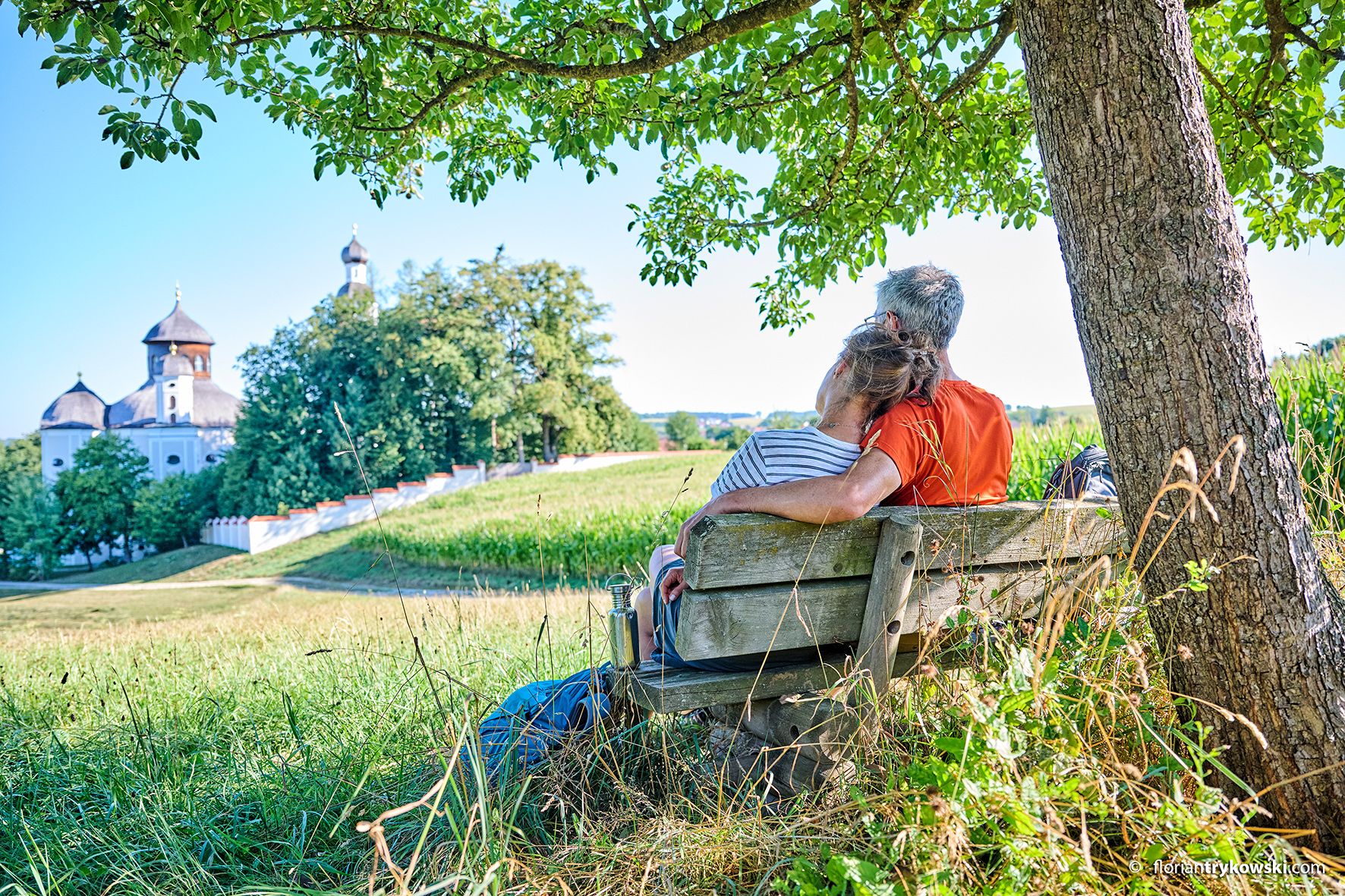
The castle chapel of St. John the Baptist is located on the grounds of Burg Markt, a district of Biberbach in the Swabian district of Augsburg, Bavaria. The chapel was built between 1738 and 1739 according to plans by the master builder Simon Rothmiller from Höchstädt on behalf of Joseph Maria Fugger. It is an important example of the late Baroque period and is characterized by its artistic furnishings. Architecture and furnishings: • The chapel has magnificent stucco work and frescoes created by the artists Johannes Finsterwalder, Josef Höchstetter and Johann Georg Wolcker. • Particularly noteworthy are the wooden reliefs, which are believed to be by Daniel Mauch. • The interior impresses with its harmonious design and the use of high-quality materials. History: • The castle chapel originally served as a private place of worship for the Fugger family. • Over the centuries it has been restored several times to preserve its original splendor. • Today the chapel is a listed building and is an important example of Baroque sacred architecture in the region.
1
0
Markt Castle, also known as Fugger Castle, is located above the town of Markt, a district of Biberbach in the Swabian district of Augsburg, Bavaria. The hilltop castle on a spur probably dates back to the 14th century and consists of the rear (eastern) castle around the keep and the front (western) castle with the Onoldsbach tower. History: • The castle originally belonged to the Rechbergers and later the Pappenheimers. • In 1508 Jakob Fugger acquired the castle together with the Biberbach lordship and had it rebuilt as a castle in 1525. • The keep, the walls and the Onoldsbach tower have been preserved. Complex: • The castle includes the Catholic castle chapel of St. John the Baptist from 1738 to 1739, designed by Simon Rothmiller, as well as the former chaplain's house and some farm buildings from the 19th century. • The western part is used as a riding stable. • The keep was renovated in 2013. Current use: The Markt Castle is privately owned and is partly used for agricultural purposes.
1
0

Thank you very much for the information.
1
0

The castle was built at the end of the 17th century on the same site where several previous buildings had stood. It is privately owned and not open to the public.
2
0
Interesting facts about the individual buildings of the castle - a little journey through time Keep The keep was first mentioned in a document from 1426. It did not always stand alone, but was connected to a residential building. Structural changes to the tower and residential wing were probably carried out in 1710, as a coat of arms from that year is embedded in the building. In 1852 the castle was demolished, only the white tower remained; it has eight floors and is 30.49 m high. When the cladding of the scaffolding in the form of a huge mobile toilet was visible from afar during restoration work in 2013, the Markt Castle gained media coverage across Germany. Forge The forge was built on the Markt Castle in the 1860s. It is located above an underground walled chamber in which the remains of a system for operating a groundwater pump have been preserved. Below lies a well shaft from the 16th century with passages branching off to the side, which are the subject of many legends. They are said to extend as far as Blankenburg and Marshal Erkinger is said to have fled from the Augsburgers through these tunnels. A treasure is also said to have sunk into this well. Church The current castle chapel of St. John the Baptist was built in 1738 on the site of the dilapidated late Gothic chapel; however, the tombs of the builders are not there. Eight family members of the ruling Fugger family were buried in the more important pilgrimage church in the neighboring town of Biberbach in a crypt under the chancel. After the branch church of the Biberbach parish was in danger of collapsing despite several renovations in the 20th century, the roof, dome, tower and facade were completely renovated between 2006 and 2010. Onoldsbach Tower In the first depiction of the castle, the Onoldsbach Tower is described as a "pleasure house", which at the time simply meant that leisure activities took place there. In the 17th and 18th centuries it was inhabited by the chaplain, which is why it was also called the "chaplain's tower". The name "Onoldsbach Tower" comes from the old name of the city of Ansbach, which was also subject to the feudal lord of the Markt outer bailey, the burgrave of Nuremberg.
2
0
History of Markt Castle The beginnings of Markt Castle are unknown. The "old castle" of the noblemen of Biberbach was in Biberbach, where the pilgrimage church and rectory now stand. Under the rule of the Pappenheim family, the castle was moved to Markt in the 14th century. In the 1380s, it was the scene of military conflicts. Marshal Erkinger of Biberbach, a vassal of the Wittelsbach family in the conflict between the sovereigns and the imperial cities, repeatedly had quarrels with the Augsburgers. In 1381, they conquered the castle and destroyed it. In the South German City War, which broke out against the sovereigns shortly afterwards, Erkinger stole 2,000 head of cattle from the Augsburgers in 1388. Despite the end of the war a year later, the conflicts continued and in 1399 the castle was destroyed again, but was rebuilt shortly afterwards. In the following period, it was the subject of dispute between the owners themselves. The Margraves of Brandenburg, as owners of Markt Castle, transferred the outer castle as a fief and the eastern half of the castle as free property to the Marshals of Pappenheim. The ownership situation was therefore complicated. In 1480, Tristan von Pappenheim occupied the entire castle and thus also the rule of his brother Ulrich, so that he had to enforce his rightful ownership claims by force with the help of Wertingen and Augsburg troops. After the conclusion of the Eternal Peace, Markt Castle lost its military importance. Conflicts were settled in court from then on. As a residence, however, it remained of great importance for the surrounding area for a long time. In 1514, Emperor Maximilian I bought the castle and pledged it as an imperial fief to Jakob Fugger the Rich. For the period that followed, Elias Holl's house chronicle shows that the city architect worked on the castle over 21 times. The castle's character as a residence can be seen, among other things, in the fact that wine was grown on the slopes of the castle hill in the middle of the 16th century. During the Thirty Years' War, the complex was occupied by Swedish troops; in 1632 it was inhabited by their queen Eleonore, as the Fuggers had temporarily left the castle. After a six-month stay in Markt, she traveled to follow her husband, King Gustav Adolf II, as he marched with his army to Saxony. As the Swedish king was killed in the Battle of Lützen, she returned to her homeland. In the First Coalition War from 1792 to 1797 against the young French Republic, the castle was used in 1794 as a hospital for sick French prisoners of war; the dead were buried in the castle wood. By this time, the castle was no longer a seat of power. It was completely rebuilt around 1850, the gate tower was demolished and the outbuildings renovated. The castle became dilapidated and was demolished in 1852; only the white keep remained. In the 20th century, the tower was renovated and made habitable. Before that, there was probably a water reservoir on the top floor (with a pressure pipe to the manor), which put a lot of strain on the building structure. In 1987, Paul Mannert acquired the keep, including the partially collapsed ring wall, and restored it completely at great expense. In 1999, he was awarded the Monument Protection Medal by the Free State of Bavaria for his services to monument protection. In the years that followed, the castle was renovated again and again and, with its charming view over the Lech Valley, is widely regarded as one of the most romantic castle complexes in Swabia.
2
0
에인들링 주변에서 가장 인기 있는 명소


더 살펴보기
다른 곳에서 최고의 성을 찾고 계신가요? 다른 가이드를 발견해보세요 에인들링 주변:
