부르제 최고의 라이딩 경로
4.3
(13)
216
자전거 타는 사람
89
라이딩
부르제의 로드 사이클링 경로를 찾으시나요? 그렇다면 부르제 로드 라이딩 컬렉션 중에서 가장 멋진 라이딩 장소를 아래에서 살펴보세요.
마지막 업데이트: 8월 26, 2026
2
자전거 타는 사람
47.1km
02:08
390m
400m
This moderate 29.3-mile (47.1 km) road cycling loop from Saint-Agil explores the scenic Perche Natural Park, passing Château de Montmirail.
7
자전거 타는 사람
82.3km
03:40
750m
750m
보통 도로 자전거 타기. 좋은 체력 필요. 지면 대부분이 잘 포장되어 있고 라이딩하기 쉬움.

무료 회원 가입
2
자전거 타는 사람
71.3km
02:54
390m
390m
보통 도로 자전거 타기. 좋은 체력 필요. 지면 대부분이 잘 포장되어 있고 라이딩하기 쉬움.
6
자전거 타는 사람
64.6km
02:41
340m
340m
보통 도로 자전거 타기. 좋은 체력 필요. 지면 대부분이 잘 포장되어 있고 라이딩하기 쉬움.
3
자전거 타는 사람
65.0km
02:43
400m
400m
보통 도로 자전거 타기. 좋은 체력 필요. 지면 대부분이 잘 포장되어 있고 라이딩하기 쉬움.
더 다양한 경로와 다른 탐험가들의 추천을 살펴보세요.
무료 회원 가입
이미 komoot 계정이 있나요?
투어 추천은 다른 사람들이 komoot에서 완료한 수천 개의 활동을 바탕으로 구성되어 있습니다.
오늘 무료 계정으로 시작하세요
다음 모험이 기다리고 있어요.
로그인 또는 가입하기
부르제 주변 인기 장소



커뮤니티 팁

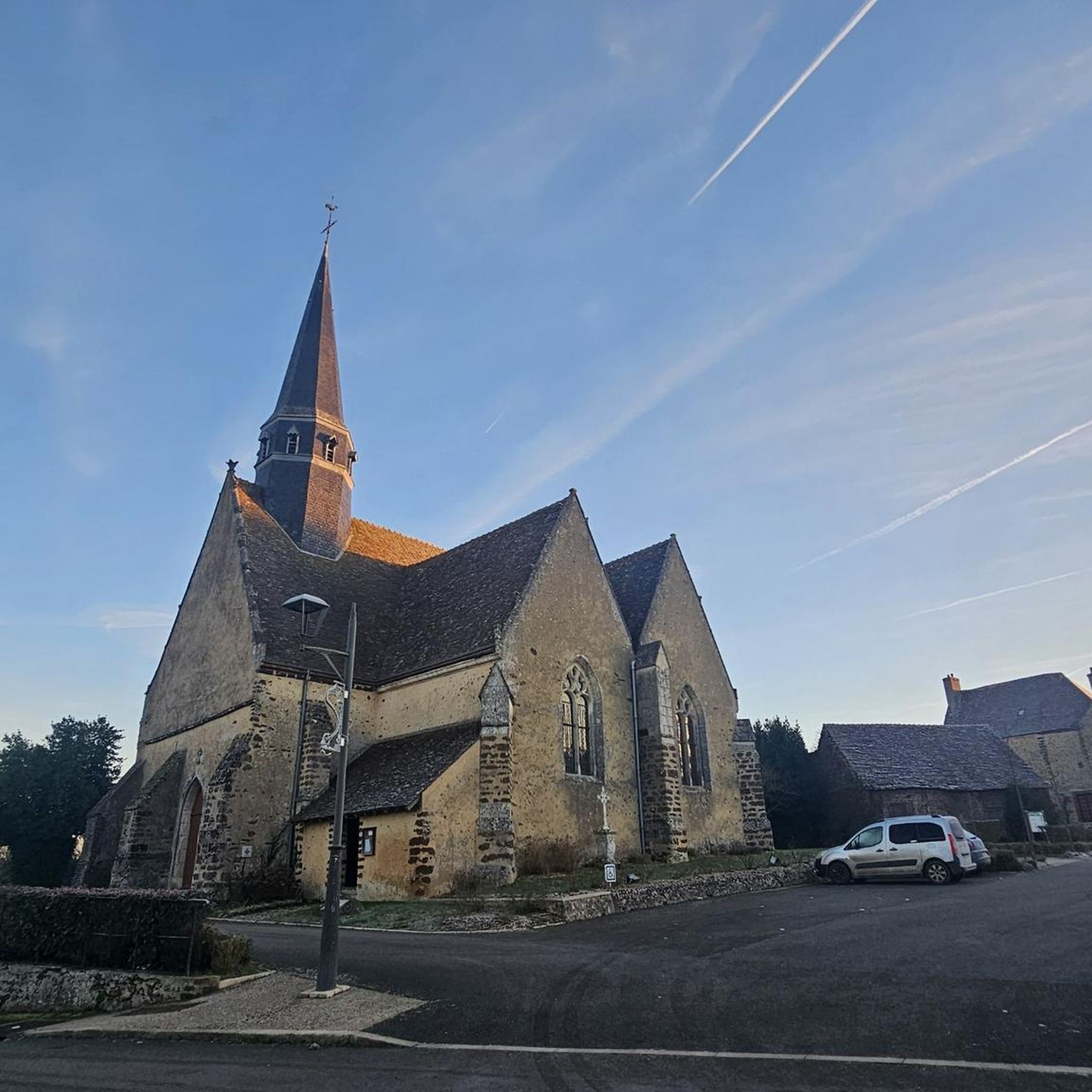
Placed under the patronage of Saint Hilaire, this parish was given by Gannelon de Montigny, lord of the place, to the abbey of Marmoutier around 1042. Its reconstruction probably dates from this period; it then became a priory. The church has a rectangular nave ending in a choir with a flat chevet. An examination of the masonry easily reveals two distinct periods of construction: the Romanesque period and the Renaissance. Built of flint rubble with rendering, the western part of the building appears to date from the 11th or 12th century. A limestone cornice supported by rather crude corbels underlines the base of the roof. To the south, two narrow Romanesque windows flared inwards light the nave. To the north, the bays were later reworked and enlarged. On this same side, a Romanesque doorway was walled up; It allowed the church to connect with a building whose traces of detachment remain. The bell tower was built to the north of the Romanesque nave, extending the western façade. The absence of a connection between the east and west walls of the bell tower and the north wall of the nave clearly indicates that it is an entirely later construction. However, its crowning is much later, as evidenced by its cornice, whose molding is in the classical style. Flanked by obliquely angled buttresses, it is covered with a saddleback roof. The eastern half of the church appears to be an extension built during the Renaissance period. Its ogee-shaped cornice and the decoration of the eastern gable, as well as the moldings of the buttress bands, attest to this dating. A vast rectangular choir then appears to have replaced a semicircular Romanesque apse; the eastern gable and the southern and northern façades were then pierced with networked bays. In the lower part of the north façade, projecting ashlars appear to have supported the roof of a lean-to building. To the south, a sacristy was built in the 19th century. Inside, the entire building is covered with a paneled vault with exposed tie beams and kingposts. The 18th-century high altar is surmounted by an Assumption of the Virgin inspired by Murillo's. For the restoration of the roofs and façades, the Sauvegarde de l'Art Français (French National Art Protection Agency) awarded a grant of €30,490 in 2001.
0
0
The Church of Saint Sauveur La Trinité, probably built in the 12th century, is notable for its Romanesque windows with columns and capitals. On its walls, alternating with the consecration crosses, one can admire a Stations of the Cross in blue enamel on earthenware. The choir is lit by five Romanesque windows decorated with stained glass depicting Our Lord and the four Evangelists.
0
0
The church dates from the 12th century and was remodeled in the 15th or 16th century, its buttresses and bell tower date from the 19th century. It houses a wrought iron communion table from the 18th century.
0
0
This church contains 14th century wall paintings. These paintings were discovered in 1895. They formerly occupied the entire width of the western wall of the nave. The central part was destroyed following the renovation of the door. The left side represented paradise. Of the bust of Christ, in a trilobed medallion, which occupied the center, there remains only a fragment of the cruciform halo. The rest of the composition is divided into rectangular compartments, each enclosing, in the surviving part, a figure of a crowned chosen one. On the right, hell is represented by a cauldron in which several characters are immersed, including a pope, a bishop, a monk, a king, a queen. Above, a woman with her legs apart. On the right, an enormous horned demon sticks out its tongue. On the left, another carries a basket filled with the damned and is about to plunge a woman into the cauldron. Construction periods: 14th century
0
0
This church was originally supposed to be a simple chapel of the commandery, founded in the 12th century by the Templars, forming one side of the courtyard that groups the buildings. The monumental 15th century porch is flanked by two brick towers. The nave ends with a semi-circular apse covered in a cul-de-four. Construction periods: 12th century, 13th century, 15th century
0
0
Building built in the 15th century, ribbed vaulted, with straight apse; beginning of the 16th century, c. 1530, construction of the Sainte-Barbe chapel on the south side; Renaissance stained glass, not. Tree of Jesse (surviving fragments); 17th century altarpiece and high altar. History of protection: the classification order of April 25, 2003 replaces the classification order of February 11, 1911 and the registration orders on the supplementary inventory of historic monuments of January 20, 1926 and February 4, 2002.
0
0
the Saint-André church dates from the 11th century; it was a priory then dependent on the abbey of St.-Calais, but the current building was completely rebuilt around the walls and framework of the old building. The project was carried out in 1877. The construction of a transept, enlarged windows and a stone bell tower completely modified the old monument. The environment has also changed a lot. All traces of the old cemetery, transferred outside the village at the beginning of the 18th century, have disappeared. The furniture includes a stone baptistery, a statue of the Virgin and Child, a confessional and a Louis XV period bench. The beautiful wooden tabernacle decorated with a statue of Saint Lubin comes from the church which was located a few kilometers away, in Saint-Lubin-des-Cinq-Fonts, and of which only the choir, which has become a chapel, remains today. .
0
0
The Saint Hilaire church is a vast building from the end of the 11th or 12th century which originally consisted of only a nave with choir and semi-circular apse supported by slightly protruding buttresses made of grison, an extremely hard ferruginous agglomerate which does not allow any work. of sculpture. You can see the primitive work in the walls of the nave and the choir with its small windows and the exterior buttresses in gray. Its appearance was considerably modified during the Renaissance period, when a transept was added, then during a second campaign of transformations, the small side chapels of the choir covered with ribbed vaults with vines and tiers which would have had to be topped with a pavilion roof. The entire monument is covered with a paneled vault with visible beams and hallmarks; above the sanctuary the shingle decorated with arabesques and painted cherubs' heads bears the date 1561. In the 17th century, like many churches of the time, the glass roof at the bottom of the apse was closed to build an altarpiece then fashionable, as it is today with the woodwork that accompanies it. On the west side of the north transept, above the small shed, we can clearly see in the masonry a stone arch which is perhaps the beginning of the cloister mentioned in the archives. In addition to the charm of its Renaissance parts, this church is fortunate to have beautiful furniture from the 17th and 18th centuries which preserves the appearance it had under the Ancien Régime: a lectern dated 1754, modified in 1784 with a antiphonary and a Chartres gradual from 1784. It is in perfect condition, as the cantors must have used it before the revolution. Another valuable piece, the solid oak work bench, cleaned a few years ago of the paint with which it had been decorated, and which now serves as an altar to meet the new standards of the liturgy for the mass facing the faithful.
0
0
부르제 주변에서 가장 인기 있는 경로
부르제 주변에서 가장 인기 있는 명소


더 살펴보기
다른 지역의 최고의 로드 사이클링 경로를 살펴보세요.
