쇼비니 뒤 퍼슈 최고의 라이딩 경로
4.7
(13)
260
자전거 타는 사람
39
라이딩
쇼비니 뒤 퍼슈의 로드 사이클링 경로를 찾으시나요? 그렇다면 쇼비니 뒤 퍼슈 로드 라이딩 컬렉션 중에서 가장 멋진 라이딩 장소를 아래에서 살펴보세요.
마지막 업데이트: 6월 4, 2026
9
자전거 타는 사람
55.5km
02:30
370m
370m
보통 도로 자전거 타기. 좋은 체력 필요. 지면 대부분이 잘 포장되어 있고 라이딩하기 쉬움.
4.0
(2)
10
자전거 타는 사람
44.1km
01:57
320m
320m
보통 도로 자전거 타기. 좋은 체력 필요. 지면 대부분이 잘 포장되어 있고 라이딩하기 쉬움.

무료 회원 가입
9
자전거 타는 사람
70.2km
03:10
510m
510m
보통 도로 자전거 타기. 좋은 체력 필요. 지면 대부분이 잘 포장되어 있고 라이딩하기 쉬움.
8
자전거 타는 사람
112km
04:53
610m
610m
보통 도로 자전거 타기. 좋은 체력 필요. 투어 중 라이딩하기 어려운 비포장 구간이 있을 수 있음.
4
자전거 타는 사람
64.7km
02:41
340m
340m
보통 도로 자전거 타기. 좋은 체력 필요. 지면 대부분이 잘 포장되어 있고 라이딩하기 쉬움.
더 다양한 경로와 다른 탐험가들의 추천을 살펴보세요.
무료 회원 가입
이미 komoot 계정이 있나요?
투어 추천은 다른 사람들이 komoot에서 완료한 수천 개의 활동을 바탕으로 구성되어 있습니다.
오늘 무료 계정으로 시작하세요
다음 모험이 기다리고 있어요.
로그인 또는 가입하기
쇼비니 뒤 퍼슈 주변 인기 장소

커뮤니티 팁

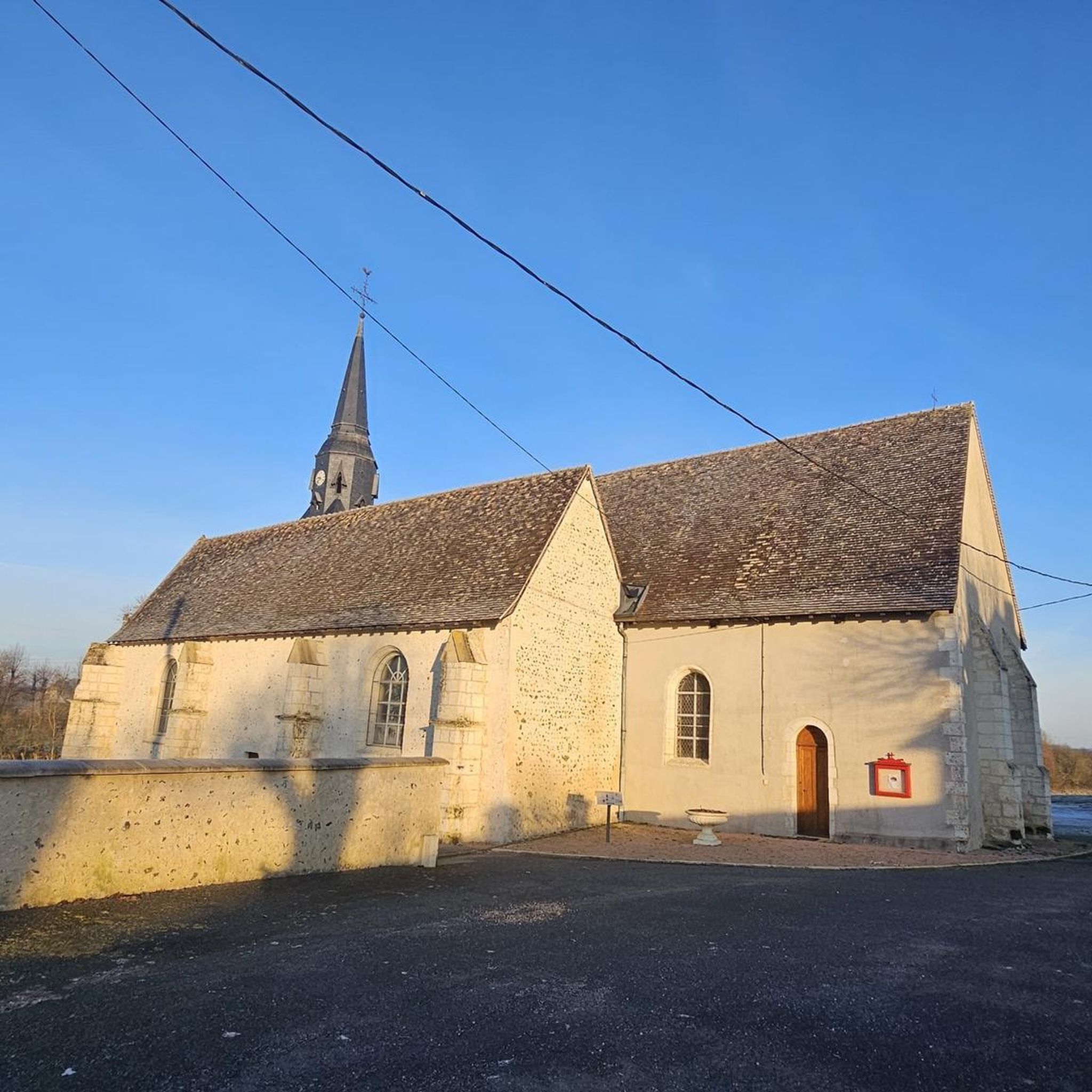
Placed under the patronage of Saint Hilaire, this parish was given by Gannelon de Montigny, lord of the place, to the abbey of Marmoutier around 1042. Its reconstruction probably dates from this period; it then became a priory. The church has a rectangular nave ending in a choir with a flat chevet. An examination of the masonry easily reveals two distinct periods of construction: the Romanesque period and the Renaissance. Built of flint rubble with rendering, the western part of the building appears to date from the 11th or 12th century. A limestone cornice supported by rather crude corbels underlines the base of the roof. To the south, two narrow Romanesque windows flared inwards light the nave. To the north, the bays were later reworked and enlarged. On this same side, a Romanesque doorway was walled up; It allowed the church to connect with a building whose traces of detachment remain. The bell tower was built to the north of the Romanesque nave, extending the western façade. The absence of a connection between the east and west walls of the bell tower and the north wall of the nave clearly indicates that it is an entirely later construction. However, its crowning is much later, as evidenced by its cornice, whose molding is in the classical style. Flanked by obliquely angled buttresses, it is covered with a saddleback roof. The eastern half of the church appears to be an extension built during the Renaissance period. Its ogee-shaped cornice and the decoration of the eastern gable, as well as the moldings of the buttress bands, attest to this dating. A vast rectangular choir then appears to have replaced a semicircular Romanesque apse; the eastern gable and the southern and northern façades were then pierced with networked bays. In the lower part of the north façade, projecting ashlars appear to have supported the roof of a lean-to building. To the south, a sacristy was built in the 19th century. Inside, the entire building is covered with a paneled vault with exposed tie beams and kingposts. The 18th-century high altar is surmounted by an Assumption of the Virgin inspired by Murillo's. For the restoration of the roofs and façades, the Sauvegarde de l'Art Français (French National Art Protection Agency) awarded a grant of €30,490 in 2001.
0
0
The Church of Saint Sauveur La Trinité, probably built in the 12th century, is notable for its Romanesque windows with columns and capitals. On its walls, alternating with the consecration crosses, one can admire a Stations of the Cross in blue enamel on earthenware. The choir is lit by five Romanesque windows decorated with stained glass depicting Our Lord and the four Evangelists.
0
0
The church dates from the 12th century and was remodeled in the 15th or 16th century, its buttresses and bell tower date from the 19th century. It houses a wrought iron communion table from the 18th century.
0
0
Although the Notre-Dame church in the town of Areines may seem modest in size, the richness of its interior decoration is remarkable. It consists of a rectangular nave from the 11th century that extends into a narrower choir and ends with a semi-circular apse from the 12th century. The bell tower was added in the Gothic period. All the walls are covered with murals. The restoration of those in the choir and apse dating from the middle of the 12th century allows us to see: Christ in Majesty, the Lamb with a halo, the Annunciation, the Visitation, the Nativity, saints and apostles. Some of these primitive frescoes were covered by paintings from the 15th, 16th and 18th centuries. Many traces are visible on the walls of the nave and will be restored in the years to come.
0
0
This is a church dating from the 12th and 15th centuries. The nave of the church was paneled in the 15th century. A statue representing Saint Martin on horseback, sharing his cloak, was placed in a niche above the portal.
0
0
The Saint-Barthélémy church dates from the 12th century but was restored and enlarged in the 17th and then in the 19th century. The elegant bell tower, formed of a square tower, becomes octagonal at 20 m high. Small loophole-type windows light the belfry. It is topped by a dome, itself topped by a campanile and a lantern. It is considered a case study by schools of architecture. This church also contains several movable objects classified as Historic Monuments including Christ on the Cross, a polychrome wooden statue from the 17th century, two oils on canvas from the 17th century, a funerary plaque from 1674 by Michel de Verthamon, Knight of Malta, in stone and marble (epitaph in Latin and coat of arms) and a bronze bell, tuned in F, from 1580.
0
0
The church of Notre-Dame de l’Assomption stands on a hill, a little away from the village of Chauvigny from which it is separated by the cemetery. It is built on the site of a former priory dependent on the abbey of Marmoutier, founded between 1116 and 1136 by Barthélemy de Vendôme. In 1342, Marmoutier abandoned the priory to the bishop of Chartres while retaining the appointment to the parish. It is a large church, whose initial core, probably from the 12th century (?), was considerably enlarged in the 16th, then in the 19th century. Originally, it consisted of a single nave supported by buttresses, whose flat chevet was later pierced by a large window with a pointed arch axis. In the 16th century, a first aisle was added to the south, separated from the central nave by four semicircular arches resting on circular pillars. In the 17th century, the choir was shortened by the erection of the large altarpiece of the high altar which isolates the space of a sacristy. Finally, in 1860-1863, the church was again enlarged by the construction of a north aisle, identical to the one that existed to the south. The district architect Édouard Marganne, responsible for this enlargement, also designed a new western façade in order to harmonize the gable walls of the three naves. The church is distinguished by a large set of paneling covering the walls of the three sanctuaries. Seventy-seven sculpted panels from the 16th and 17th centuries are inserted there, representing biblical characters and scenes from the life of Christ. As indicated by an inscription in the south chapel, they were donated to the parish in 1938, after the destruction of the chapel of the Château de la Gaudinière, which stood in the Fréteval forest. They were apparently brought back from Menton in 1867 by the Duke of La Rochefoucauld to adorn his château, which was then under construction. The church also preserves a small stone group from the 16th century representing the education of the Virgin, a painted wooden Saint Gildéric from the 17th century, and a beautiful portrait of Mgr Fleuriau d’Armenonville, Bishop of Orléans, commemorating his solemn entry into the city of Orléans in 1707. To participate in the restoration of the church roof, the Sauvegarde de l’Art français granted a donation of €5,000 in 2011.
0
0
In 1133, Geoffroi, Viscount of Châteaudun, founded a priory dependent on the abbey of Tiron, in the diocese of Chartres, in this place. When he died, his wife, Helvise de Mondoubleau, built the church around 1140. The church is formed of a long nave ending in a semicircular apse. It has retained several narrow bays, with a semicircular arch, very flared towards the inside. In the 16th century, a chapel was added to the south of the church, a paneling with exposed tie beams above the nave and the choir, and a mass of carpentry to the west which supports the spire of the bell tower on pointed arches. The choir has a trefoiled piscina from the 14th century. In 1660, Jean Gry, a carpenter from Vendôme, executed the altarpiece and the following year, Pierre Janvier, a painter from Mondoubleau, painted the Resurrection which decorates it. The church houses two funerary slabs, one of a priest who died in 1658, the other of François Leboulx, Lord of Chauvellières, who died in 1691.
0
0
쇼비니 뒤 퍼슈 주변에서 가장 인기 있는 명소


더 살펴보기
다른 지역의 최고의 로드 사이클링 경로를 살펴보세요.
