ブールトでののおすすめグラベルライド
3.7
(3)
10
ライダー
5
ライド
Gravel biking around Bourth offers routes through the Eure department's varied landscapes. The region features verdant valleys, extensive flax fields, and rural roads that provide suitable terrain for gravel cycling. Forest tracks and farm paths are common, particularly in the Iton Valley, offering unpaved sections for exploration. The area's gentle elevation changes make it accessible for different skill levels.
Best gravel bike trails around Bourth
- The most popular gravel bike trail is Bois Francs Castle – Bois Francs Greenway loop…
最終更新日: 10月 7, 2026
3.7
(3)
5
ライダー
43.3km
02:37
180m
180m
中程度のグラベルライド. ある程度のフィットネスレベルが必要です。 全般的に舗装された状態です。あらゆるスキルレベルに適しています。
2
ライダー
30.3km
01:56
130m
130m
初級者向けグラベルライド. あらゆるフィットネスレベルに適しています。 全般的に舗装された状態です。あらゆるスキルレベルに適しています。

1
ライダー
22.4km
01:31
140m
140m
初級者向けグラベルライド. あらゆるフィットネスレベルに適しています。 全般的に舗装された状態です。あらゆるスキルレベルに適しています。
1
ライダー
34.0km
02:01
190m
190m
難しいグラベルライド. ある程度のフィットネスレベルが必要です。 ツアーの一部で自転車を押して歩く必要があるかもしれません。
1
ライダー
50.8km
03:09
290m
290m
中程度のグラベルライド. ある程度のフィットネスレベルが必要です。 全般的に舗装された状態です。あらゆるスキルレベルに適しています。
おすすめのツアーは他のkomootユーザーが実際に経験した何千ものアクティビティに基づいています。
無料アカウントで今日から始めよう
次の冒険が待っています。


コミュニティからのヒント


The church is closely inserted between the castle park and the houses of the village, which presents a harmonious ensemble of buildings from the 18th and early 19th centuries, combining flint and brick with lime plaster tinted with ochre. You have to step back a little to see its apse, the foundation of which probably dates back to the Romanesque period. Next to the entrance gable, dressed in Grison rubble, the bell tower was built in 1867 (according to the inscription preserving the names of the mason Gelin and the carpenter Hallier, with those of the priest, Abbot Porcher, the mayor, Viscount des Brosses, and the municipal councilors). The nave is extended by a rounded apse, with thick walls pierced by widely splayed semicircular openings, between which are placed the statues of Saint Sebastian, the Virgin and Child, Saint Michael and the dragon, and a holy bishop. On the "perque" (or beam of glory), a large Christ surrounded by the Virgin and Saint John. The transverse chapel, on the right, from the 15th or 16th century, vaulted with ribs resting on four pendentives with a central key carved like lace, was the seat of the brotherhoods. It houses the more recent statues of Saint Sebastian, the Virgin, Saint Michael and a holy bishop. The seigneury of Chennebrun, which belonged successively to Saint-Simon de Courtomer (1650), Caumont de la Force (1670), Grimoard de Beauvoir (1688), Laval Montmorency (1714), d'Espinay Saint-Luc (1765), etc., was acquired during the Restoration by Jacques-Alexandre Giroult des Brosses, whose father had been mayor of Dreux in 1771. In the seigneurial chapel on the left, inscriptions recall the names and dates of the members of this family linked for more than four generations to the life of the commune. We are grateful to them for having admirably maintained the castle, whose 18th century façade and the entrance to the park are visible from the gate. Their coat of arms appears on the stained glass window of this chapel, where we recognize in the center those of a Laval-Montmorency, Lord of Chennebrun, knight of honor of the Duchess of Orléans, master of the cavalry camp, who died in 1757, as indicated by his funerary slab on the threshold. The numerous 19th century stained glass windows with the names of the donors are worth seeing in detail. The one in the center, in the choir, lifts us to the sky with Our Lady of the Assumption. The statue of Mary, patron saint of Chennebrun, never ceases to watch over her church.
0
0
The church dedicated to Saint Christopher was under the patronage of the Abbey of Saint-Père de Chartres in the 12th century. Of Romanesque origin, the building was extensively enlarged and remodeled during the 16th and 19th centuries; it is currently undergoing a general restoration. This church owes its fame to the automobile pilgrimage held on the last Sunday in July. The single-aisled building, preceded by a porch, consists of a nave and a choir with a recessed flat chevet. To the south are the bell tower and a chapel. The use of traditional materials in this part of Normandy—flint and grison, a locally quarried ferruginous stone—indicates that the oldest parts of the building are of medieval origin. The nave is built of rubble masonry (grison and flint) set in mortar. In dressed stone, Grison was used to form, on one side, the corners of the exposed gable of the nave and, on the other, the corner buttresses, to frame the small arched openings, since walled up but still visible on the north and south walls, as well as the pointed arch of the portal. The same approach is found in the choir. The elevations are finished with a quarter-round cornice, part of which is also made of Grison stone. The use of brick corresponds to the 19th-century interventions, in two phases of work whose completion date is unknown. An examination of the construction reveals a first phase of repairs to the openings, particularly in the choir and nave, where large rectangular openings with curved lintels were created, the bricks of which are light in color. This was followed by further interventions with pointed arched openings framed in purplish brick, some of which replaced the rectangular openings of the previous phase. The porch features an ornate gable of light-colored, rendered brickwork, flanked by brick and chipped flint pilasters, and pierced by a central bay framed in brick and topped with a niche; the side sections are timber-framed on a masonry base. The southern flank of the building was added during the 16th century to a vast chapel and a bell tower, made of rubble blockwork, in which bays are pierced, framed in limestone, with curved profiles in the case of the bell tower. Restoration work has revealed several molded courses on the south face of the chapel, corresponding to a bay removed during later restorations, which confirm the dating of this part of the building. This chapel opens onto the nave through a large arcade adorned with several rows of moldings, resting on simple square piers devoid of decoration, with animal figures (reused?) at their bases, unearthed during the restoration work. The interior is remarkably simple, with whitewashed walls and geometric stained-glass windows. Only the choir is more ornate; its entrance is marked by a stone arch resting on hexagonal piers with historiated capitals, where a sculpted frieze of foliate ornaments, figures, and a coat of arms unfolds. The church has a painted faux-marble altarpiece, above which are visible traces of incomplete wall paintings depicting draperies. The rafter frame forming a truss was straightened and reinforced by restoring the removed or weakened kingposts and tie beams. According to tradition, the carpenters left the mark of their work by sculpting a scalloped ... The bell tower's belfry has also undergone a complete restoration. For this restoration, designed to strengthen the church and enhance its architecture, the Sauvegarde de l'Art Français (French Art Protection Agency) granted €10,000 in 2005.
0
0

At the end of the 19th century, Mayor Désiré Guillemare decided that his village would be unlike any other. Each house built would be topped with a twisted chimney made of local brick.
0
0

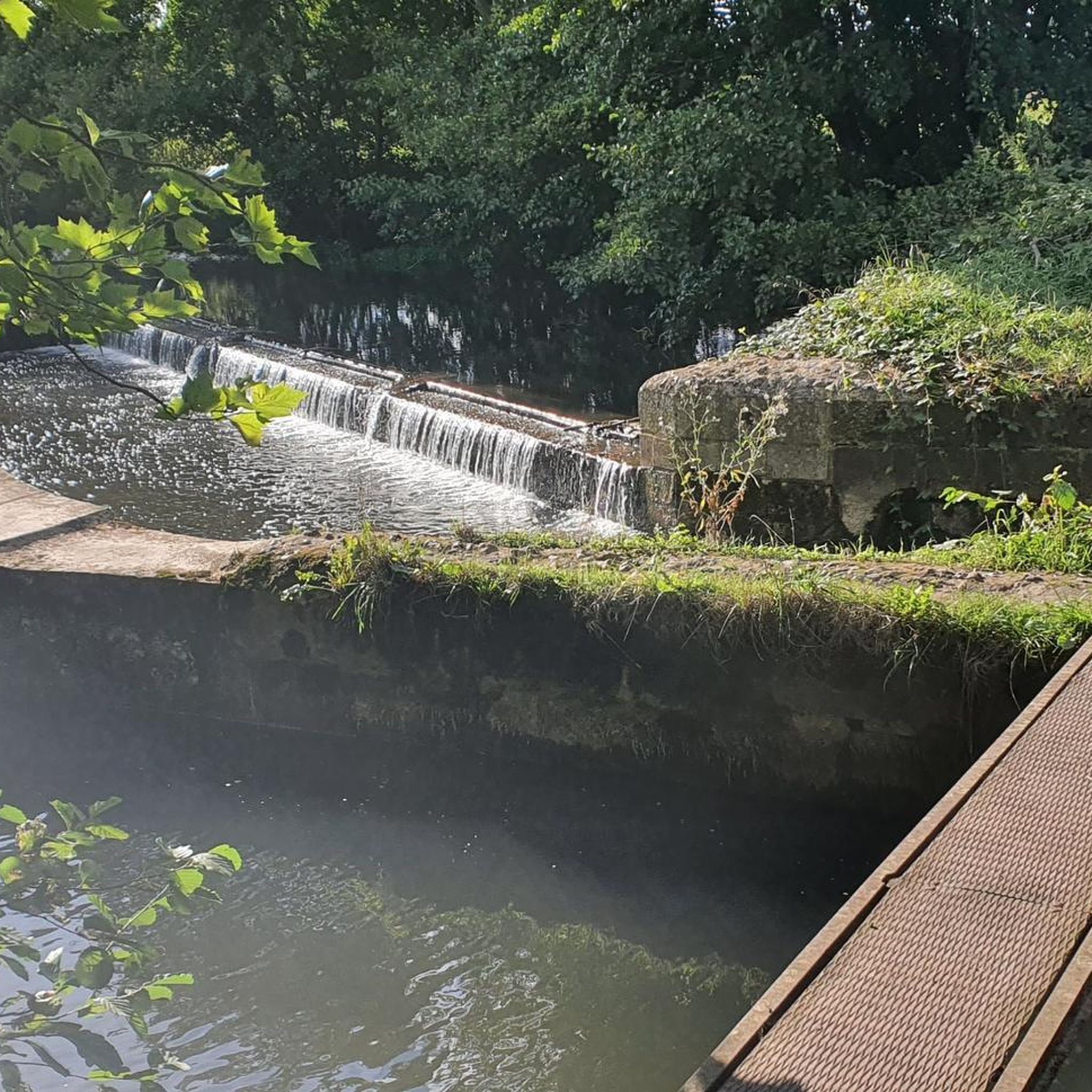
Right next to the town hall, the ideal place for a break
0
0
よくある質問
ブールト周辺のグラベルバイクトレイルではどのような地形が期待できますか?
ブールト地域は、緑豊かな谷、広大な亜麻畑、静かな田舎道など、グラベルサイクリングに最適な多様な地形を提供しています。特にイートン川流域には、未舗装区間が多い森林や農道も数多くあり、緩やかな起伏は様々なスキルレベルの方でも走りやすいです。
ブールトには初心者や家族向けの簡単なグラベルバイクルートはありますか?
はい、ブールトには走りやすいルートがあります。例えば、ヴェルヌイユ=シュル=ラ=ヴォーヴ発の「ル・トリアノン・シネマ – サン=テティエンヌ教会ループ」は、19世紀の城とその広大な敷地の周辺を巡る、22.4kmの簡単なルートで、よりリラックスしたサイクリングに最適です。
ブールト近郊でグラベルバイクに乗る際に、どのような歴史的建造物や見どころがありますか?
いくつかのルートは、注目すべき史跡を通過します。広大な森の中に建つ印象的な19世紀の城、「ボワ=フラン城」を探索できます。リューグル発の「ノートルダム=オートル=ル=トー教会 – ガルガンチュワのメンヒル ループ」は、古代のガルガンチュワのメンヒルを通過します。さらに、顕著な「ラ・マドレーヌ教会」があるヴェルヌイユ=シュル=ラ=ヴォーヴの「中世の町並み」も近くの重要な見どころです。
ブールト地域には、より長距離または挑戦的なグラベルバイクルートはありますか?
長距離ライドをご希望の方には、リューグル発の「ガルガンチュワのメンヒル – シャトー・デ・レルミットの眺め ループ」がおすすめです。これは、田園風景や史跡を巡る50.6kmの中級ルートです。より難易度の高い選択肢としては、34kmで獲得標高が多い「ソレロ灯台 – ラグル地方の緑道 ループ」があります。
ブールト周辺には、周回型のグラベルバイクルートはありますか?
はい、ブールトのグラベルバイクルートの多くはループ型に設計されており、同じ地点からスタートして同じ地点に戻ることができます。例えば、リューグル発の「ノートルダム=オートル=ル=トー教会 – ガルガンチュワのメンヒル ループ」や、ヴェルヌイユ=シュル=ラ=ヴォーヴ発の「ル・トリアノン・シネマ – サン=テティエンヌ教会ループ」などが、便利な周回ルートとして探索に適しています。
ボワ=フラン緑道とは何ですか?また、サイクリングのためにどのようにアクセスできますか?
「ボワ=フラン緑道」は、かつての鉄道線路が約9kmのアスファルト舗装路に生まれ変わったものです。畑、森、村の景観を楽しめ、サイクリングに適しています。グラベル専用ではありませんが、地域の多くのグラベルルートに接続しており、あらゆる種類の自転車で走りやすい区間を提供しています。
ブールトでのグラベルバイクライディングに最適な時期はいつですか?
緑豊かな谷や広大な畑など、この地域の多様な景観は、特に気候が穏やかで自然の風景が鮮やかな春と秋に最も快適です。夏も良い条件ですが、暑くなることがあります。冬のライドも可能ですが、雨量によっては一部のトレイルがぬかるんだり、アクセスしにくくなったりする場合があります。
ブールト近郊のグラベルバイクルートで探索できる自然の特徴や公園はありますか?
ブールトは、「ル・ペルシュ地域自然公園」の近く、またはその範囲内に位置しています。この公園は、美しい丘、森、オークの木々、田園地帯の邸宅で知られています。イートン川流域にも広大な森林や農道があり、ライドに手つかずの自然環境を提供しています。
ブールトでのグラベルバイクライディングについて、他のサイクリストはどのように評価していますか?
ブールトのグラベルルートは、komootコミュニティから平均4.5つ星の高評価を得ています。サイクリストは、この地域を特徴づける静かな田舎道、多様な森林トレイル、緑豊かな谷を高く評価しており、様々なレベルのサイクリストに満足のいく体験を提供しています。
ブールトのグラベルバイクトレイルの近くに駐車場はありますか?
各トレイルの具体的な駐車場は詳細に記載されていませんが、ブールトとその周辺のリューグルやヴェルヌイユ=シュル=ラ=ヴォーヴのような村の田舎の性質上、一般的にアクセスしやすい駐車場があります。多くのルートはこれらの町から出発するか、これらの町を通過するため、通常はライドを開始するための公共駐車場を見つけることができます。
ブールトでのの人気観光スポット

komootモバイルアプリでインスピレーションを得よう


さらに探索
他の地域の最高のグラベルライドを見てみましょう。
