4.7
(371)
5,284
자전거 타는 사람
464
라이딩
바비에서 로드 사이클링을 하실 계획인가요? 바비의 모든 로드 라이딩 중에서 가장 멋진 라이딩 장소를 엄선했으니 바비에서 가장 마음에 드는 로드 사이클링 경로를 찾아보세요.
마지막 업데이트: 5월 26, 2026
56
자전거 타는 사람
23.6km
01:04
200m
200m
보통 도로 자전거 타기. 모든 체력 수준에 적합. 투어 중 라이딩하기 어려운 비포장 구간이 있을 수 있음.
21
자전거 타는 사람
37.0km
01:49
340m
340m
보통 도로 자전거 타기. 좋은 체력 필요. 지면 대부분이 잘 포장되어 있고 라이딩하기 쉬움.

무료 회원 가입
21
자전거 타는 사람
27.2km
01:15
230m
230m
보통 도로 자전거 타기. 모든 체력 수준에 적합. 투어 중 라이딩하기 어려운 비포장 구간이 있을 수 있음.
13
자전거 타는 사람
17.4km
00:48
140m
140m
초급용 로드 라이딩. 모든 체력 수준에 적합. 지면 대부분이 잘 포장되어 있고 라이딩하기 쉬움.
8
자전거 타는 사람
28.9km
01:25
280m
280m
초급용 로드 라이딩. 모든 체력 수준에 적합. 지면 대부분이 잘 포장되어 있고 라이딩하기 쉬움.
더 다양한 경로와 다른 탐험가들의 추천을 살펴보세요.
무료 회원 가입
이미 komoot 계정이 있나요?
투어 추천은 다른 사람들이 komoot에서 완료한 수천 개의 활동을 바탕으로 구성되어 있습니다.
오늘 무료 계정으로 시작하세요
다음 모험이 기다리고 있어요.
로그인 또는 가입하기
바비 주변 인기 장소
This charming duck pond is nestled in the picturesque village of Willoughby. A nearby bench offers a perfect place to rest and recharge, and just a short stroll away is The Rose Inn, a lovely village pub.
1
0
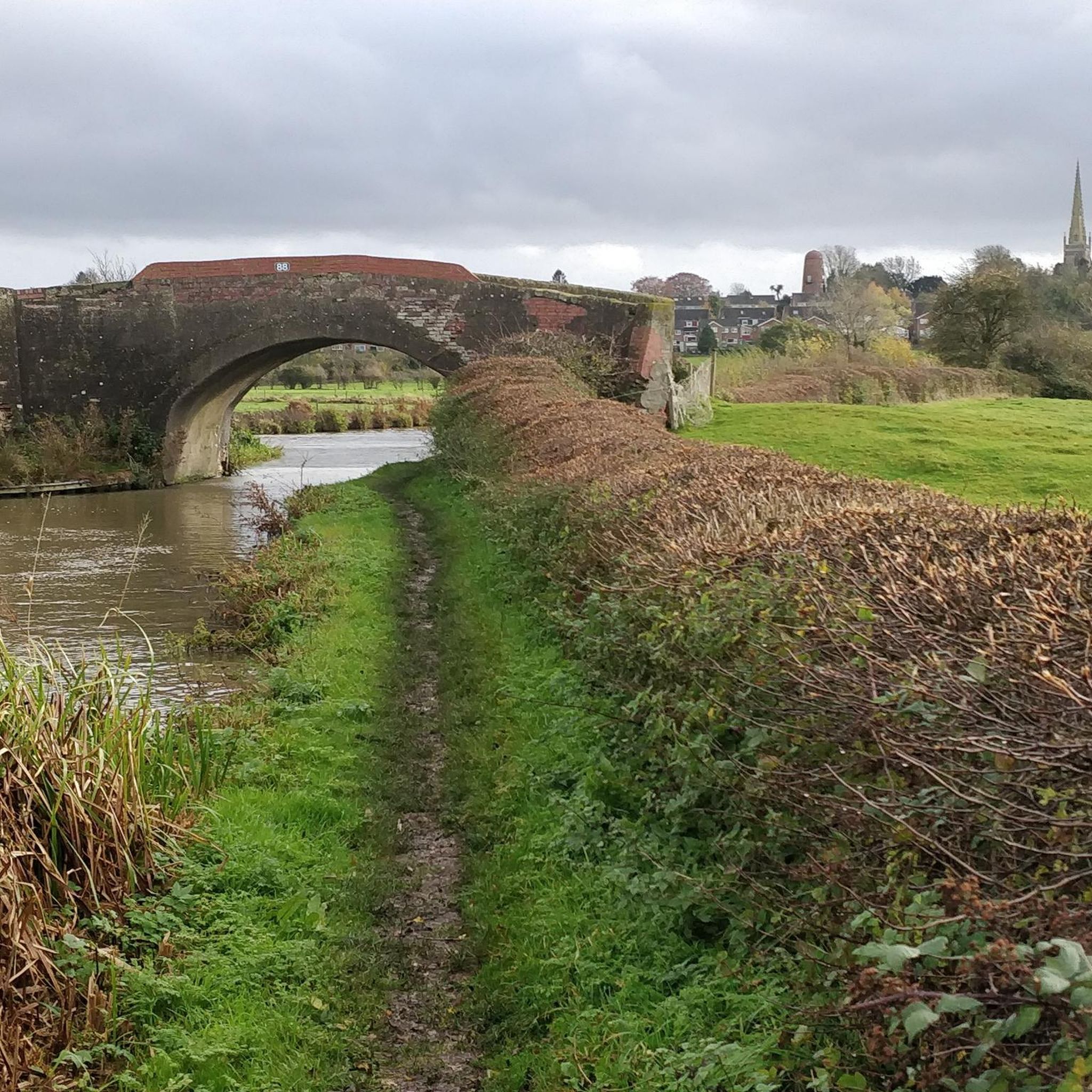
Where the canal passes under the road. You can join the canal down the rideable slope on the North side.
0
0
The church of ALL SAINTS consists of chancel 23 ft. by 17 ft. 6 in., with vestry on the north side, clearstoried nave 41 ft. 8 in. by 17 ft. 6 in., north aisle 9 ft. 6 in. wide, south aisle about 8 ft. wide, south porch, and west tower 11 ft. square, all these measurements being internal. The tower is surmounted by a short leadcovered spire. The width across nave and aisles is 40 ft. All the roofs are leaded and of low pitch, with overhanging eaves. The building is generally of roughly coursed rubble, but has been much restored. The vestry was added about 1860, and the restoration of the chancel took place in 1887–8, when its south wall was rebuilt. The nave was restored in 1890, the old high closed pews and a west gallery erected in 1791 being then removed. The present seating dates from 1928. The tower is said to have been taken down to its foundations and rebuilt in 1728–9, but the old materials appear to have been used again. The earliest work in the building dates from c. 1150, to which period the half-round responds of the chancel arch belong: they have moulded bases and scalloped capitals with square chamfered abaci or imposts continued along the wall on the nave side. The extent of the nave of the 12th century church was probably the same as at present, but in the first half of the 13th century a south aisle was added and the chancel rebuilt as now existing. The south arcade and chancel arch are of this period (c. 1225–30), and the south doorway is also probably contemporary, though in appearance rather earlier in style. At the beginning of the 14th century a north aisle was added to the nave, and about a century later the tower appears to have been erected, followed shortly after by the addition of the clearstory. New windows were inserted in the chancel and south aisle, the east end of the aisle refaced or rebuilt, and the porch added. All this later work apparently extended over a considerable period towards the end of the 14th and the beginning of the 15th century. All the walls are plastered internally. The chancel has a chamfered plinth, but is without buttresses. At the east end of the north wall is the only remaining 13th-century window, a single lancet, (fn. 107) the hood of which has notch-stops. The fourcentred east window and one in the rebuilt south wall are of three cinquefoiled lights, and there is a square-headed window of two trefoiled lights west of the modern priest's doorway. A round-headed north doorway, now opening into the vestry, may belong to the 12th-century church. The unmoulded trefoiled piscina recess has a slot for a wooden shelf, but the bowl is new; below the south-east window is a rectangular aumbry. The chancel arch is of two chamfered orders without hood-mould. The roof is modern, with flat-boarded ceiling. The nave arcades are of three bays, with pointed arches of two chamfered orders, those of the 13thcentury south arcade springing from cylindrical piers with circular moulded capitals and bases, and from similar half-round responds. The arches have plain hood-moulds on each side. The piers and responds of the later north arcade are octagonal, with deeper moulded capitals and the hood-moulds of the arches have head-stops. The south doorway is a good example of early 13th-century work, with semicircular arch of two orders, and hood-mould enriched on the underside with a continuous line of dog-tooth. The inner order has a keel-shaped moulding springing from plain chamfered imposts on nook-shafts with moulded bases, and simple water-leaf (west) and foliated capitals. There are traces of colour on the wall on either side the opening inside the porch, and a scratch dial at the top of the west jamb. The south aisle is lighted by two windows in the south wall, one on each side of the porch, that to the east being of three lights similar to those in the chancel, and the other a square-headed window of two trefoiled lights. There is also a single-light trefoiled window of c. 1350 in the west wall, but the east wall is blank. In the north aisle are two 14thcentury square-headed windows respectively of three and two cinquefoiled lights, and west of the blocked doorway a modern window of two lights. The end walls are blank. There are three pointed clearstory windows on each side, all of two cinquefoiled lights, with tracery and hood-moulds, and above them a hollow-moulded string. The low-pitched east gable has a modern apex cross, and stands high above the chancel roof. The tower is faced with ashlar, and is of three stages, with moulded plinth and diagonal buttresses the height of the lower stage. The pointed bellchamber windows are of two trefoiled lights with quatrefoil in the head, and the tower terminates with a plain moulded parapet behind which the tiny spire is scarcely seen. There is no vice. The two lower stages are blank on the north and south, but on the west there is a square-topped doorway with plain lintel, and above it a second lintelled opening with wooden door; over this again is a glazed pointed opening with central mullion, the whole arrangement apparently dating from the 18th-century rebuilding. There is no arch to the nave, the west wall of which is pierced by a square-headed doorway. The font is of 12th-century date, and consists of a large rectangular bowl with plain sides and shafted angles with cushion capitals and moulded bases; the capitals have a line of pellets at the angle. The modern Gothic oak pulpit was formerly in Wisbech parish church. In the floor at the east end of the south aisle are the brass effigies of Kenelme Cheseldyn of Uppingham (d. 1596) and his wife Winefred, daughter of Francis Say of Wilby, Northants, and an armorial brass plate to Edward Cheseldyn of Braunston (d. 1642). A large blue floor-slab in front of the chancel arch has the indents of a single figure and an inscription. There are considerable traces of mediæval paintings on the east and south walls of the south aisle. In the middle of the east wall is an image bracket about 6 ft. 6 in. above the floor, which probably supported a figure of our Lady of Sorrows, of which the painting formed the background. An angel with outstretched wings is depicted on either side and on a medallion at the north end are a cross and the instruments of the Passion. On the south wall are portions of a text and fragments of a painting in red and black of the Mass of St. Gregory. It depicts an altar with chalice and paten, and about the altar four candlesticks and a patriarchal cross. There is a stone coffin in the south aisle, and in the churchyard is preserved a grotesque stone figure (fn. 116) of the type known in Ireland as 'Sheela-na-gigs,' which was found in use, face downward, as a doorstep into the church. There are four bells in the tower: the treble is by Thomas Newcombe (II) of Leicester (c. 1562–80), inscribed 'S. Thoma,' the second dated 1710, the third by Hugh Watts of Leicester (c. 1593–1615), inscribed 'Praise the Lord,' and the tenor by Thomas Norris of Stamford, 1660. The plate consists of a cup of 1570–71; a paten of 1640–41; an undated paten with makers' marks 'R-S' only, and a pewter flagon.
0
0
Left to Barby or just up the hill there is the Rugby Model Railway Society...
1
0
Daventry War Memorial including plaque to 9 American Serviceman details below: The Norton B-17 On the 15th of December 1944 B-17G Flying Fortress 43-38973 of the 305th Bomb Group, 422nd Bombardment Squadron based at Chelveston was returning from a bombing mission over the mashalling yards at Kassel in Germany. It had been badly damaged and one engine was out. The aircraft managed to return from the raid but once over the coast it began to have difficulty in maintaining height. The problems were compounded by a complete blanket of fog over England. Not sure of their position they flew lower and lower and eventually collided with the Air Ministry GEE mast on Borough Hill Daventry. The port wing was severed during the collision and the aircraft crashed at Norton Fields killing the crew of nine. On August the 24th 2014 Sywell Aviation Museum carried out an excavation to locate the remains of the aircraft. All artefacts recovered during this excavation may be viewed in a special display within the museum. On the 24th of August 2015 a memorial service was held at the Daventry War Memorial and a plaque was unveiled to the crew by the son and grand daughter of the ball gun turret operator Sgt. Burry. The USAF was represented at the memorial service by Lieut.Col Ford, Commander of the 422nd Medical Squadron USAF from RAF Croughton and sir Tim Boswell, Deputy Lord Lieut. of Northamptonshire representing the county.
0
0
Church. C15 with earlier tower. Ironstone rubble, squared and coursed with slate roof to chancel, nave, vestry and porch. Chancel, which is of 2 bays has 2 restored C15 windows to south and one to north and one restored C15 window to east. Small C15 priest's door to south has moulded arch and later wood door. Adjoining nave to north a vestry of later date with wood-panelled door. Hood mould and label stops to windows and doors, coping to gables and quoins to angles. Aisled nave has no clerestorey and is of 3 bays. 3 restored C15 windows to south with one at east and one at west, and 3 to north with one C14 window at west. Hood moulds and label stops, some carved. Door to north has pointed, triple moulded arch with hood mould and later 2-leaf wood-panelled door. Roof has coped gables. Porch to south has moulded door surround with wood plank door and hood moulds and roof has coped gable and kneelers. To either side a small, square-headed window of 2 liqhts. Tower is of 3 storeys, to west at first stage a single pointed lancet, chamfered and with hood mould, probably C14. Second stage has similar lancet to south and clock face to west. Third stage, which is slightly set back, has three C14 sandstone windows of Reticulated tracery, all with hood moulds. The corners have angle buttresses. Corbel table to top stage with carved faces. The whole building rests on a stone plinth. Interior: chancel window to east surmounted by hood mould with carved foliage label stops. The roof is C19 and rests upon carved foliage corbels. C14 piscina in south wall is cusped. Chancel arch, which is C15, is chamfered and has polygonal respond shafts below capitals. Nave is 4-bay double-chamfered arcade with C15 polygonal piers upon plinths, with responds to west wall and chancel. Tower arch is set slightly off centre and is double chamfered beneath hood mould. Roof is mostly C19 and C20 restoration, perhaps with some reused C15 beams in aisles. Moulded pointed arch to porch has hood mould and 2-leaf wood door of 10 panels. Arch to outer door is moulded and chamfered. Floor to east end of chancel is decorated with C19 polychrome marbels and some malachite, reputed to be a Russian gift. C20 choir stalls. Pulpit was carved by villagers in 1899. Pews are C19. C19 stained glass in 2 chancel windows and in west wall tower. Series of C17, C18 and early C19 memorial tablets set in walls of chancel and nave are dedicated to the Clarke family, some having been carved by Cox of Daventry. Corbel set into wall is late medieval and probably reset, whilst simply moulded stone font is of later date.
0
0
다른 지역의 최고의 로드 사이클링 경로를 살펴보세요.