20의 카살치프라노가지 명소 & 주요 장소
카살치프라노에는 둘러볼 만한 장소가 많답니다. 하이킹 또는 사이클링을 좋아한다면 카살치프라노에 숨겨진 20
가지 보석을 만날 수 있을 거예요. 이 지역의 주요 명소를 살펴보면서 다음 모험을 계획해보세요.
마지막 업데이트: 8월 25, 2026
캄포바소 역사 지구
하이라이트 • 역사적 장소
번역자 Google •
팁에 의해

프로솔로네 – 칼의 마을
하이라이트 • 정착지
번역자 Google •
팁에 의해

이런 장소를 발견하려면 지금 가입하세요
최고의 싱글 트랙, 봉우리 및 다양한 흥미로운 야외 장소에 대한 추천을 받아보세요.
무료 회원 가입
캄포바소 산 조르조 교회
하이라이트 • 종교적 장소
번역자 Google •
팁에 의해

에레모 디 산트에지디오
하이라이트 • 종교적 장소
번역자 Google •
팁에 의해
무료로 가입하여 카살치프라노 주변의 더 많은 명소를 발견하세요.
무료 회원 가입
이미 komoot 계정이 있나요?
오늘 무료 계정으로 시작하세요
다음 모험이 기다리고 있어요.
로그인 또는 가입하기



커뮤니티 팁

The historic center is beautiful and rises up to the Monforte castle.
0
0

Almost nothing is reliably known about the life of Saint George, to whom the church of Campobasso was dedicated, but the veneration of his person goes back to early Christianity. A martyr identified with George is said to have lived in the third century. However, the legend of St. George as a dragon slayer is well known and widespread; he is usually depicted - in paintings or as a statue - as the conqueror of the monster, often as a knight on horseback. The memorial day of the very popular George - he is, among other things, patron of the English kingdom - in the calendar of saints is April 23rd.
0
0

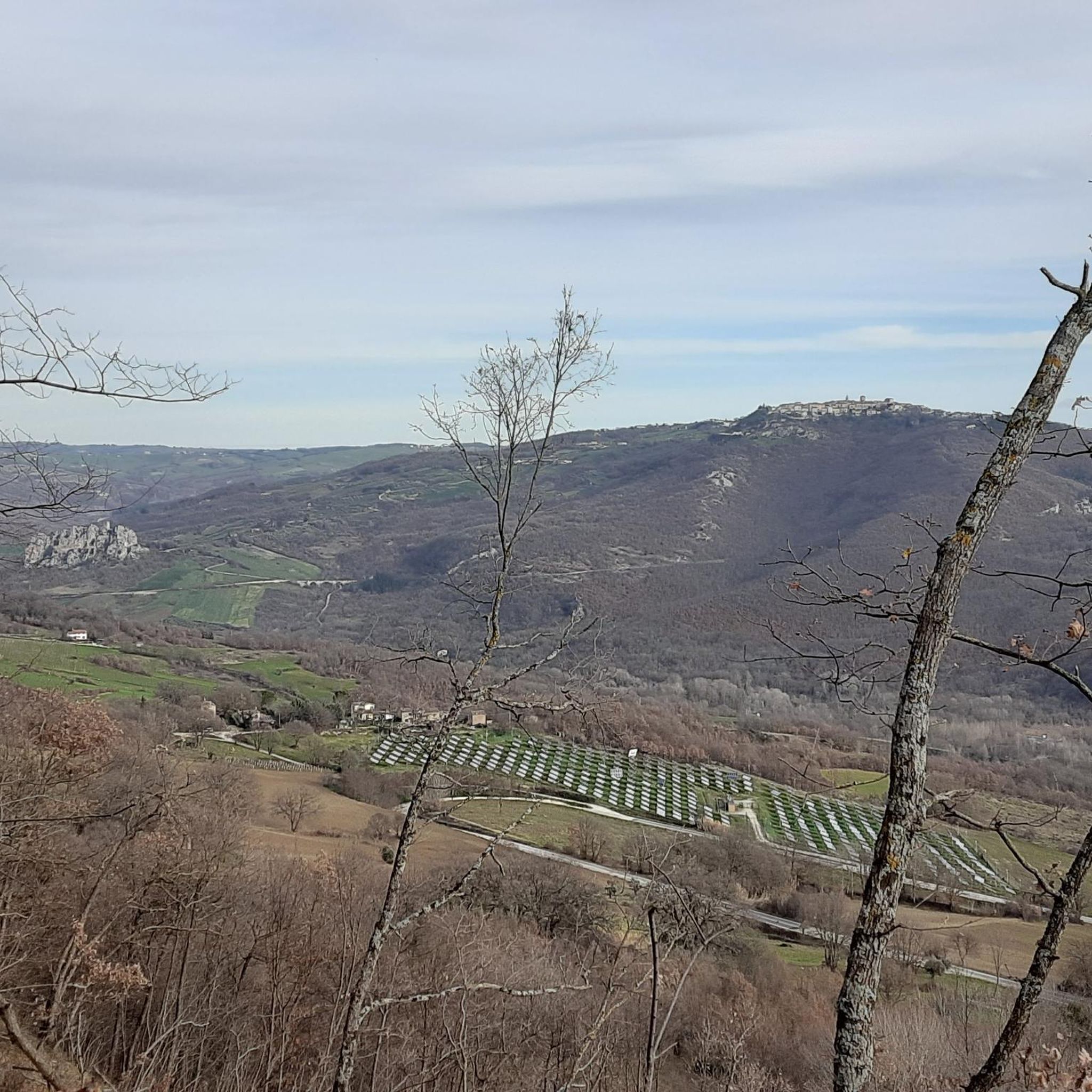
Campobasso is the capital of the Molise Region, an Apennine town full of greenery where there is no shortage of places to visit. The historic center contains the main tourist attractions, a visit by bike is not very feasible due to the stairways typical of the ancient villages of central Italy, but the distances are very short so it is possible to move around easily on foot. Despite this, among the various places the Monforte Castle stands out, reachable by bike from a completely asphalted climb. Worthy of note are the Sannitico Provincial Museum and the Museum of the Mysteries, the latter preserves throughout the year the "Mysteries" or processional machines, allegorical-religious scenic structures that allow figures to parade and be carried on their shoulders through the streets of city on Corpus Domini Sunday. The city offers fine public fountains where you can stop for a break and then leave again. Leaving the city it is easy to reach other small villages within a few kilometers while enjoying the hilly panorama that connects the various centres.
0
0

Frosolone (Frescëlonë in Molise, Frusëlónë in Frosolonese dialect) is an Italian municipality of 2,797 inhabitants in the province of Isernia in Molise. The hypotheses which derive the name Frosolone from the Frosone, which some identify as the bird present in the municipal banner, must be considered Paretymologies, as well as that which associates it with an unidentified Samnite settlement cited by Livy, Fresilia and that according to which Frosolone it would have been founded by Benedictine monks coming from Frosinone, who would therefore have called the new settlement with the name of their place of origin. Before the Roman age the area was inhabited by Samnite populations, as evidenced by the presence of polygonal megalithic wall enclosures, visible on the mountain above the town, in the Civitelle area. These remains belong to what is defined as a high-altitude settlement: a fortified settlement of not very large dimensions, probably intended to be inhabited only in certain periods of the year, with generically defensive functions. As with many other centers in Molise, the medieval phase of the town ended drastically with the earthquake of 1456: according to what Antonino Pierozzi reports in his Chronicon, Frosolone was totally razed to the ground and there were 317 victims[16]; this information was then taken up by various authors, including Giovanni Antonio Summonte, who recalls how the town "largely fell, with the death of 318 people". There are regular testimonies of Frosolone starting from the Spanish period; in this era it went through an intense phase of development: together with Agnone and Trivento it hosted one of the three bishop's residences of the diocese. There is also a war fortification, which concerns very few centers in Molise, with the construction of an armed ravel in the area where today stands the so-called loggia dei pezzenti, the space known as Largo XX Settembre. In the early years of the 19th century, Frosolone was one of the most populous inhabited centers in the Molise countryside: in the same period in which it was close to 4,000 inhabitants, Agnone had around 7,500, Boiano around 3,500, Campobasso around 5,500, Isernia around 6,900. The 1805 earthquake imposed a major setback in the country's development; this second catastrophe seems to have had an equally disastrous outcome as that of 1456: sources of the time define it as "almost entirely adequate for the ground", and report a figure (how reliable it is not known) of a thousand deaths and 46 injuries out of a population of 4,000 souls. Source: Wikipedia
0
0
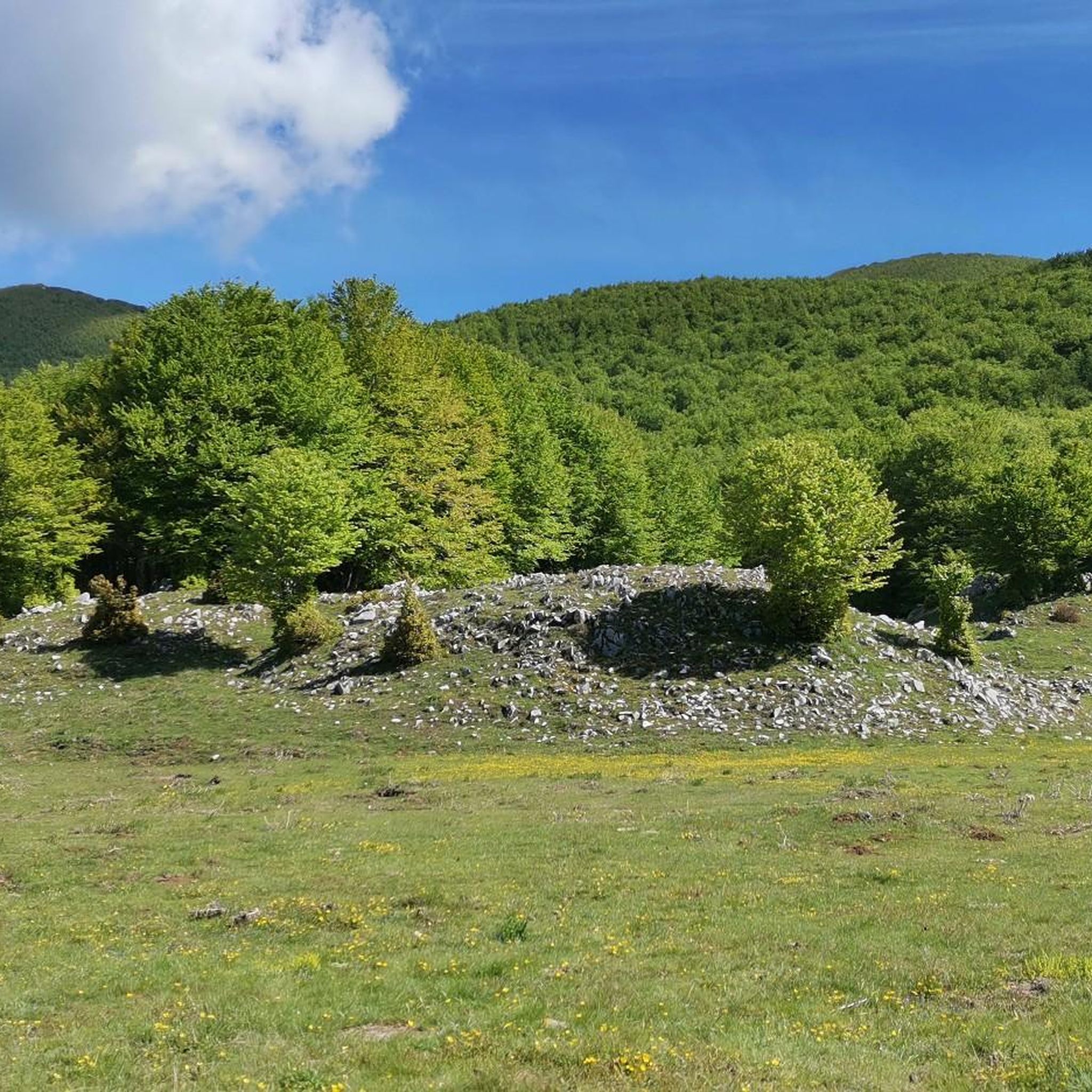
The Hermitage, at the foot of the Morgia Quadra of Frosolone (IS), is a true pearl. To welcome visitors, the ancient church of Sant'Egidio which, in the Middle Ages, was a chapel, dependent on the nearby convent of Sant'Onofrio. Protected by the Antonians, according to tradition, it has become famous for the numerous miraculous healings of which the monks were protagonists. At the beginning of 1300, after the Church of Rome excommunicated the congregation, the chapel was destroyed together with the convent of Sant'Onofrio. In the following years, it was rebuilt, probably by hermits and livestock sellers, who went to Sant'Egidio for the end-of-summer fair. In 1704, thanks to Michele Vago and Antonio Zaccagnino, a real church was built in place of the chapel. Falling to pieces with the earthquake of 1805, the small complex was rebuilt and subsequently restored several times. The last renovation took place in the 1980s. The church of Sant'Egidio represents a place of worship very dear to the people of Frosolone, above all because it houses the statue of the Crowned Virgin which, according to tradition, has appeared near the church several times. Furthermore, inside the sacred walls, an ancient and precious manuscript is preserved which lists some miracles performed by Sant'Egidio. Going beyond the church, what is most striking is, certainly, the surrounding landscape. In these sections, it is possible to see some horses in the wild or, more simply, calm herds of cows and flocks of sheep that, at sunset, go to water, after an abundant meal of fodder. The same one that makes Frosolone milk and cheeses so good as to satisfy the palates of the most severe gourmets. Source: www.moliseeccellenze.it There is also a fountain for hikers!
1
0

Campobasso, a city rich in history and culture.
11
0

The church of San Giorgio is the oldest church in Campobasso and according to some the oldest in the entire province, and is also the church dedicated to the city's patron saint.
13
0

Capital and most important and populous city of Molise. Its symbol, which stands out over the city, is the Monforte Castle.
1
0
카살치프라노 주변에서 가장 인기 있는 명소


더 살펴보기
찾고 있는 하이라이트를 아직 못 찾으셨나요? 다른 지역의 주요 명소 가이드를 확인해보세요:
