밀타크 최고의 워킹 & 하이킹 경로
4.5
(295)
1,166
등산객
58
하이킹
정확한 경로를 찾는 것이 때로는 어렵지만 밀타크에서 하이킹을 하면 다양한 경치를 마음껏 감상할 수 있답니다. 밀타크에서 가장 멋진 하이킹과 워킹 중에서 마음에 드는 활동을 시작해보세요.
마지막 업데이트: 9월 16, 2026
4.7
(99)
294
등산객
10.6km
03:11
350m
350m
보통 하이킹. 좋은 체력 필요. 실력과 관계없이 누구나 쉽게 갈 수 있는 길.
4.2
(27)
87
등산객
7.95km
02:03
40m
40m
보통 하이킹. 좋은 체력 필요. 실력과 관계없이 누구나 쉽게 갈 수 있는 길.

4.8
(29)
109
등산객
6.10km
01:48
180m
180m
초급용 하이킹. 모든 체력 수준에 적합. 실력과 관계없이 누구나 쉽게 갈 수 있는 길.
4.6
(23)
68
등산객
12.6km
03:22
140m
140m
보통 하이킹. 좋은 체력 필요. 실력과 관계없이 누구나 쉽게 갈 수 있는 길.
4.9
(14)
50
등산객
6.57km
02:00
220m
220m
보통 하이킹. 좋은 체력 필요. 실력과 관계없이 누구나 쉽게 갈 수 있는 길.
더 다양한 경로와 다른 탐험가들의 추천을 살펴보세요.
이미 komoot 계정이 있나요?
투어 추천은 다른 사람들이 komoot에서 완료한 수천 개의 활동을 바탕으로 구성되어 있습니다.
오늘 무료 계정으로 시작하세요
다음 모험이 기다리고 있어요.

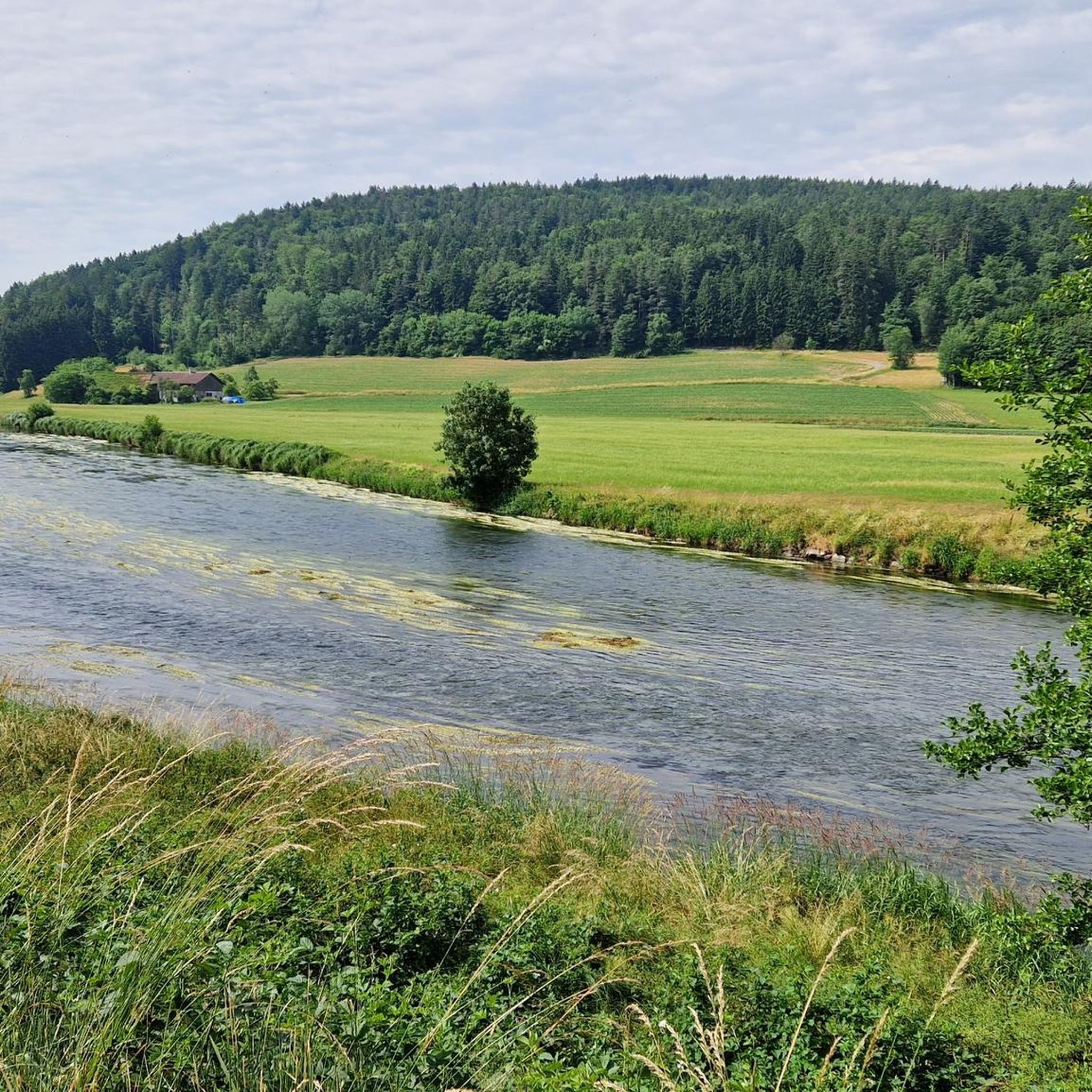
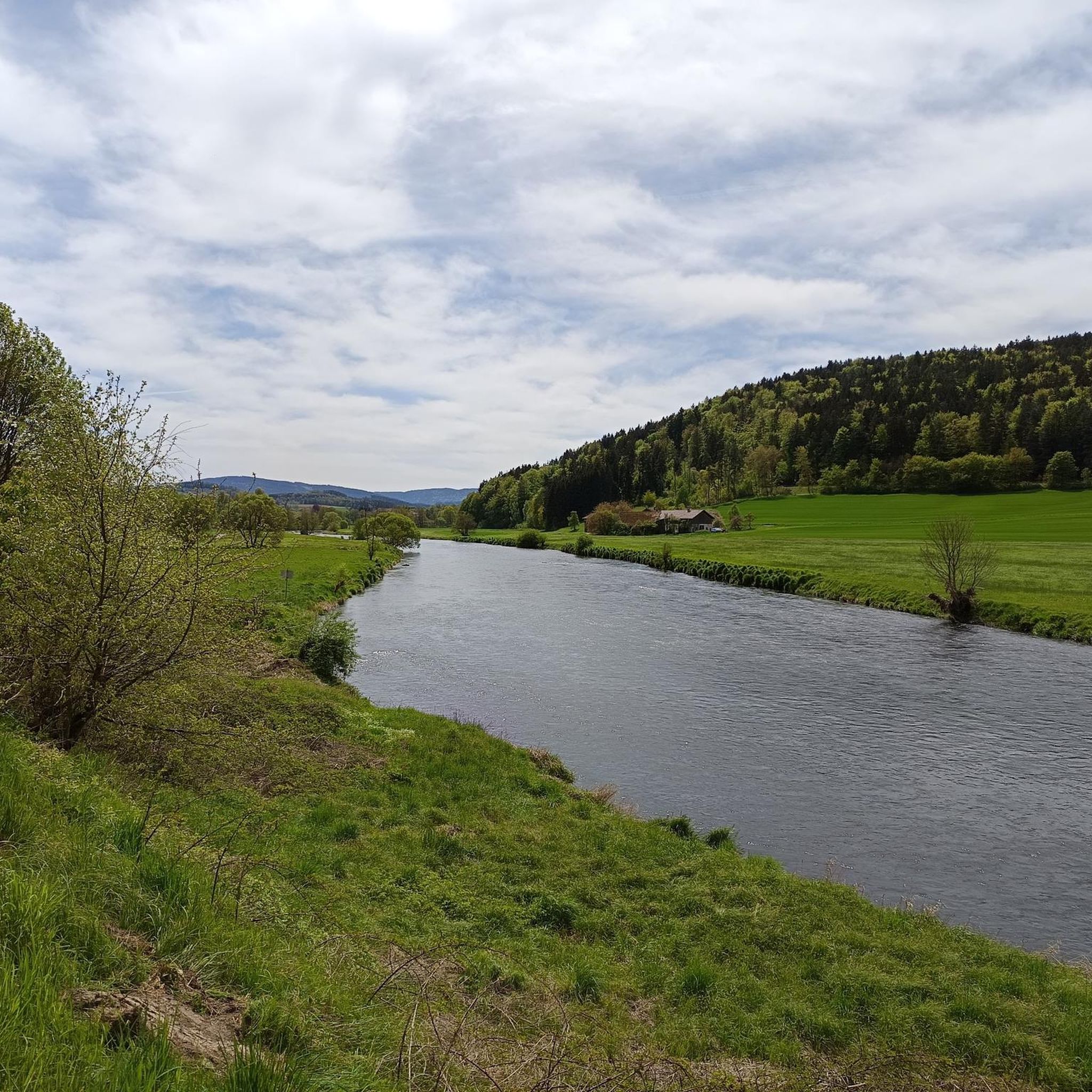


커뮤니티 팁

다리에서 강을 멋지게 볼 수 있습니다
0
0

마을의 큐브처럼 보이지만 음향적으로는 굉장한 경험일 것 같아요. 그렇게 짓다니 대담하네요!
0
0

A curious building, it serves as a cultural and exhibition space.
1
0

If possible, you should definitely take a guided tour of the spectacular interior: interesting details about the construction, acoustics, etc.
0
0

Parish Church of the Assumption of Mary This neo-Romanesque hall church was built in 1880. It consists of a nave, a narrow, three-sided choir supported by buttresses to the north, and a three-story facade tower to the south. The top story, with its chamfered corners, houses the clock tower and the bell cage, and is topped with a pointed spire. The interior of the nave is spanned by a wooden flat ceiling, while that of the choir has a cross-ribbed vault. The church's furnishings include a high altar, on whose reredos a crescent-shaped Madonna is depicted. The Madonna is framed by the figure of St. Florian to the left and St. Sebastian to the right. The left side altar contains figures of St. Anne (center) and the princely apostles Peter with the keys to heaven (left) and Paul (right). The right altar depicts John the Baptist (center), St. Joseph with a White Lily (left) and St. John of Nepomuk (right). Of the original four gaff heads at the top of the oval granite baptismal font, which was created around 1320, two are still preserved. In 2022 and 2023, St. Mary's Church was renovated inside and out. Source: Excerpts from www.wikipedia.de
2
0
Zandt Castle In a document dated between 1216 and 1223 from the Oberaltaich Monastery, Heinrich and Friedrich "de Zant" are mentioned. They most likely settled here. A relationship with the Regensburg patrician Zante family is certainly assumed. After the extinction of the family, which held its property as a fief of the Regensburg Diocese, Hans I. Sattelboger and his cousin Friedrich were granted the "hoffmarch ze Sant" in 1382. Jörg Ramsperger succeeded them as owners in 1424, and from 1439 onward, Friedrich III. Thierlinger remained in possession of Zandt until 1536. At the end of the 19th century, bankers purchased the castle property, which was subsequently destroyed. Since 1949, the former Hofmark residence has served as a nursing home for the elderly, still operated by the Bavarian Red Cross. There is no evidence of the appearance of the oldest structure, presumably dating to the 13th century. A castle-like structure can be assumed to have existed by the 14th century at the latest. In 1399, a chapel for weekly mass was donated by Konrad II Sattelboger. In 1425, a "seat" was explicitly mentioned for the first time, which was referred to as a "castle" in 1441. This was apparently preceded by a restoration of the structure, which had probably been damaged in the Landshut War of Succession. After the destruction in 1633 or 1641, restoration measures and extensive new construction were probably carried out in the farmyard. In the late 18th and 19th centuries, the main building was doubled in size to the south, and after 1851, the entire complex was redesigned in the Gothic Revival style. The complex is an elongated, two-story building measuring 46.5 x 13.5 m. The northern section, located lower on the slope, is built on a high base. The gables are crowned by neo-Gothic stepped gables. The northeastern of the two corner towers, as well as its crenellated crown, also date back to the reconstruction after 1851. In the center of the western eaves rises the six-story, 18-meter-high octagonal stair tower, also with a neo-Gothic crenellated crown. The courtyard adjoining the southwest was enclosed on all sides and accessible via a three-story gate tower on the north side. Only the two-story building with a high hipped roof between the castle and the gate tower, which already existed in 1550, is well preserved. The other buildings have been demolished or significantly altered. Source: Excerpts from www.ebidat.de
2
0

Parish Church of St. Martin The first Romanesque religious building in Miltach was built between 1050 and 1100. Around 1400 the apse was demolished and the current choir was built in the same place. Around the middle of the 18th century the church was given a baroque makeover, mainly by raising the tower. There were two reasons for the renewed expansion and redesign in 1974: the lack of space for churchgoers and the dilapidated structure of the nave. After initial concerns, the State Office for Monument Preservation gave its consent to the demolition of the rear part and the subsequent new construction. The official laying of the foundation stone took place on September 8, 1974 by cathedral canon Martin Lehner. The topping-out ceremony was celebrated on October 25 of the same year. Auxiliary Bishop Karl Flügel consecrated the parish church on August 8, 1976. The high altar from 1760, a Rococo structure with free-standing round and square columns, is extended to the sides with passageways underneath. The figure of St. Andrew on the left and St. James on the right stand as altar guards. The center of the high altar is a painting depicting the patron saint of the parish church, St. Martin. The picture with the well-known motif of the cloak being divided was painted by Ignaz Anton Sollfleisch from Cham. At the top, the high altar ends with a so-called mercy seat, a depiction of the Holy Trinity. To the left of the altar is the figure of St. Florian (1763), to the right is the plague saint Sebastian (1754), and St. Barbara (around 1980), the latter as a replacement for the statue stolen around 1960. The left side altar is a reconstruction of the altar that burned on December 9, 1986. The Gothic Madonna of the Radiance and Child (1480) was also completely destroyed in this disaster. The other two figures, Saint Francis Xavier on the left and Saint Nepomuk on the right, were restored by carving. The altarpiece shows Saint Gertrude von Hefta, painted by Georg Achtelstetter from Cham in 1923. The right side altar (1760) received a picture of Saint Nicholas in 1987, a copy from the church in Haag near Hohenschambach. The golden apples and the book on the altar pillars as well as the miter above the altar testify that it was already dedicated to Saint Nicholas before 1923. Source: Excerpts from www.pfarrei-miltach.de
2
0
밀타크 주변에서 가장 인기 있는 명소


더 살펴보기
다른 지역의 최고의 하이킹를 살펴보세요.
