콘다트 쉬르 비엔 주변 최고의 교통량 없는 자전거 라이딩 코스
4.4
(191)
5,452
자전거 타는 사람
13
라이딩
로드 사이클링 코스 주변의 교통량이 적은 Condat-Sur-Vienne은 비엔(Vienne) 강과 브리앙스(Briance) 강의 합류 지점에서 역동적인 풍경을 가로지릅니다. 이 지역은 구불구불한 언덕, 광활한 산림 지역, 그리고 로드 사이클링에 적합한 잘 포장된 도로가 특징입니다. 사이클리스트들은 그림 같은 강 계곡을 탐험하고 매력적인 마을과 역사적인 랜드마크를 지나가는 코스를 발견할 수 있습니다. 이 지역은 강둑을 따라 완만하게 달리는 코스부터 더 도전적인 오르막까지 다양한 기술 수준에 맞는 지형을 제공합니다.
Condat-Sur-Vienne 주변 교통량 적은 최고의 로드 사이클링 코스
- 가장 인기 있는 교통량이 적은 로드 사이클링 코스는 파나졸(Panazol) 출발…
마지막 업데이트: 8월 27, 2026
67
자전거 타는 사람
57.2km
02:37
590m
590m
보통 도로 자전거 타기. 좋은 체력 필요. 지면 대부분이 잘 포장되어 있고 라이딩하기 쉬움.
4.3
(3)
12
자전거 타는 사람
25.4km
01:11
290m
290m
초급용 로드 라이딩. 모든 체력 수준에 적합. 지면 대부분이 잘 포장되어 있고 라이딩하기 쉬움.

무료 회원 가입
11
자전거 타는 사람
30.8km
01:32
410m
410m
보통 도로 자전거 타기. 좋은 체력 필요. 지면 대부분이 잘 포장되어 있고 라이딩하기 쉬움.
4.0
(3)
7
자전거 타는 사람
21.0km
00:56
210m
210m
초급용 로드 라이딩. 모든 체력 수준에 적합. 지면 대부분이 잘 포장되어 있고 라이딩하기 쉬움.
4.0
(1)
3
자전거 타는 사람
53.8km
02:42
790m
790m
보통 도로 자전거 타기. 좋은 체력 필요. 지면 대부분이 잘 포장되어 있고 라이딩하기 쉬움.
더 다양한 경로와 다른 탐험가들의 추천을 살펴보세요.
무료 회원 가입
이미 komoot 계정이 있나요?
투어 추천은 다른 사람들이 komoot에서 완료한 수천 개의 활동을 바탕으로 구성되어 있습니다.
오늘 무료 계정으로 시작하세요
다음 모험이 기다리고 있어요.
로그인 또는 가입하기
콘다트 쉬르 비엔 주변 인기 장소

커뮤니티 팁

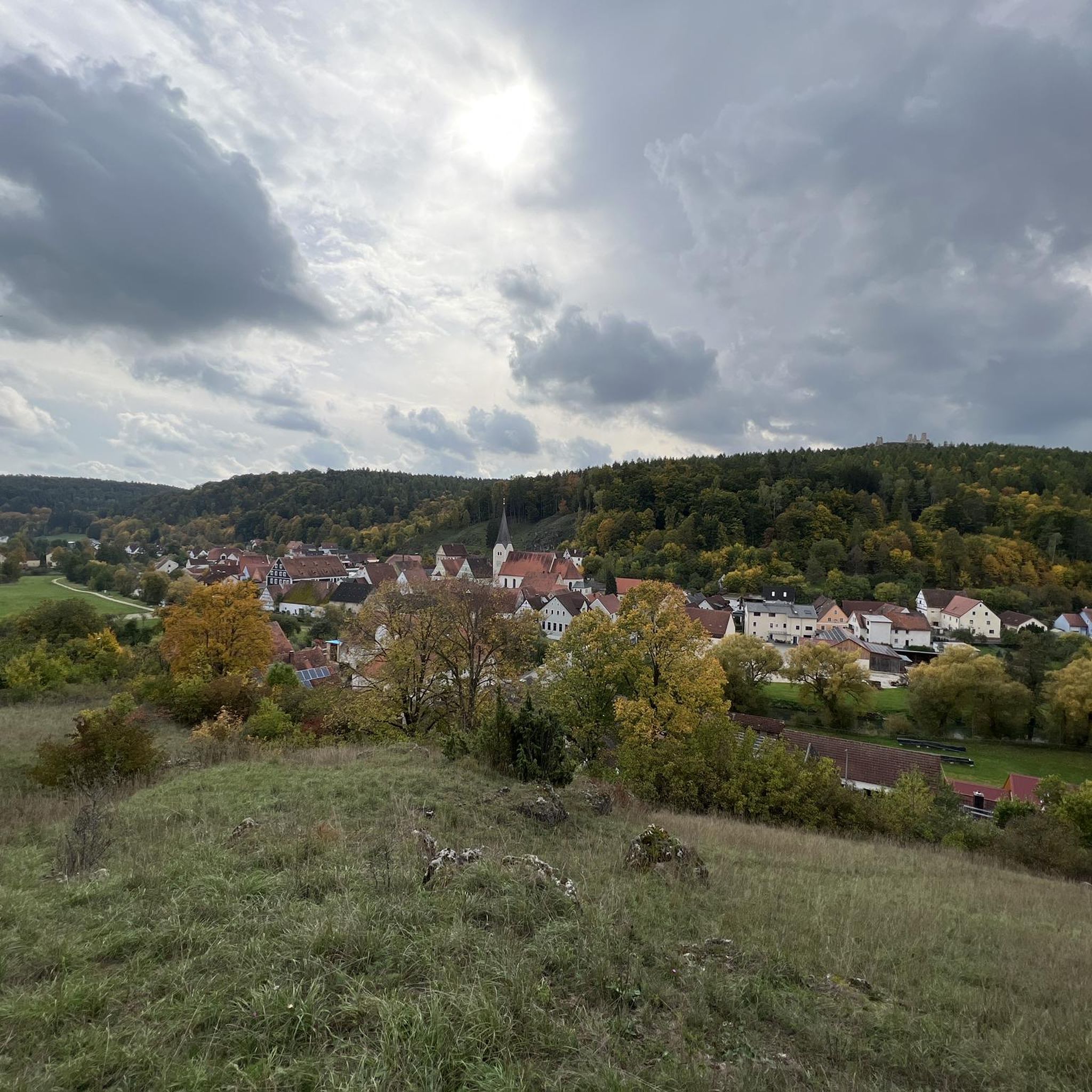
비엔 강을 따라 그늘진 곳. St Priest 마을에 도착하여 그곳의 교회와 시대별 건물들을 보았습니다. 기념물과 옛 거리들에 대한 정보가 담긴 명판들은 우리 조상들의 삶을 되살아나게 합니다.
0
0

Beautiful church with atmospheric interior.
0
0

A granite hall church in the late Gothic style (14th-15th centuries), topped by a typical Limousin bell tower, 70 meters high and adorned with a copper ball in 1824. Four corner turrets mark the start of the octagonal upper floors. The current church was rebuilt on the site of a chapel dedicated very early to the Archangel Saint Michael on a high point in the city, along which the old Roman road from Lyon to Saintes passed. It houses the relics of Saint Martial, the city's first bishop, and Saint Loup, his successor, saved from the revolutionaries of 1793. That year, the church was declared a "Temple of Reason." The head (skull) of Saint Martial, patron saint of the city, is shown to the people every seven years during a solemn display, and his bust framed by the letters S and M still constitutes the "furniture" of the coat of arms of Limoges.
1
0
Saint-Pierre du Queyroix Church, a late Gothic hall church built in several stages from the 13th century to the beginning of the 16th century. It is topped with a bell tower and spire, typically Limousin, similar to those of Saint-Michel des Lions.
1
0

Saint Loup, Bishop of Limoges, gave a Saint-Michel chapel to the canons of Saint Martial around 630. Two fires in Limoges, in 1123 and 1147, destroyed the church. It was the monk Pierre de Verteuil who rebuilt it. The church was consecrated in 1213. This new church collapsed and the first stone of a new church was laid in 1364. Of this, two chapels and part of the walls remain. In 1552, enlargement work was carried out with a bay added to the west, remarkable for its large stained glass windows. Work was carried out over the following centuries, particularly on the bell tower (1604, 1754, 1810). It is a Gothic-style church, built between the 14th and 16th centuries. It has a typical Limousin bell tower (like the Saint-Étienne cathedral) topped with a curious metal ball. In 1810, when lightning struck the church bell tower, the religious building was damaged. The soldier in charge of the project to restore the monument's spire had the idea of topping it with a ball, "to facilitate triangulation operations and geodesic measurements". This sphere weighs 600 kg and is about two meters in diameter. The people of Limoges have become accustomed to this military appendage (a hotel even borrows its name from it: the Hôtel de la Boule d'Or) which is very exposed to the wind and once again puts the building in danger. Restoration work is underway and the debate rages between those who want a bell tower with or without a ball. The members of the Limousin Archaeological and Historical Society are also divided between boulophiles and boulophobes. The Prefect of the time decided by asking the opinion of the Ministry of Fine Arts. A new ball had to replace the old one; the First World War was declared. The new sphere was openwork and made of copper. It waited until the end of the war to find its place alongside the weather vane, which had not moved since 1824. The church was listed as a historical monument in 1903. The lions, from the Gallo-Roman period, were probably funerary monuments placed at the entrance to the public ancient necropolises. They always remained in the same place, once the cemetery became Christian, then when the cemetery was moved for reasons of sanitation.
0
0
In France there are 173 basilicas. Saint-Michel-des-Lions becomes the 174th", explains Father François Renard. At the head of the Saint-Martial parish, which includes, in addition to Saint-Michel, the churches of Saint-Joseph and Saint-Pierre-du-Queyroix, he learned the news on February 2, 2023. Noting that there was no basilica in Limousin, Monsignor Bozo, Bishop of Limoges, launched the procedure in 2020. The process was long and laborious. First, he made his request to all the bishops of France. 97% responded favorably to this request. Then he sought the agreement of the Congregation for Divine Worship and the Discipline of the Sacraments, placed under the authority of a cardinal prefect. With the help of Mathias Martin, a layman, member of the sacred art commission in Limoges, Father Renard, the bishop and all the parish's vital forces responded to a questionnaire in Latin. They drew up an inventory of the monument and created a complete list of the movable and liturgical heritage contained in this place. Sent to Rome in April 2021, this document took a long time to return to Limoges. In November, Monsignor Bozo, passing through the Vatican, relaunched the prelates. A tenacity that proved to be profitable. If the cathedral remains the mother church of a city, the basilica is, for tourists and pilgrims, a reference. To obtain this title, the building must be built on a tomb that is very strong in terms of symbolism and commemoration. Saint-Michel houses the tomb of Saint Martial, thirteenth apostle of Aquitaine and above all the first bishop of Limoges. Thus, Saint-Michel is linked to the universal church of Rome. As luck would have it, it became a basilica when the 2023 ostensions began on March 19. That day, during the flag-raising ceremony, François Renard read the decree during the mass. The blessing will then follow. Believers or not, the people of Limoges are attached to what must now be called the basilica. In the 6th century, there was a small chapel dedicated to Saint Michael and John the Baptist on this site. Founded in 535 by Rorice II, Bishop of Limoges, it was located in the middle of a cemetery, guarded by granite lions. They symbolize the protective deities because they are reputed to sleep with one eye and watch over sleeping souls. The work began in 1364 and was completed in 1455, the year of the consecration. In 1373, construction began on the bell tower, which was 70.91 metres high at the time. Saint-Michel-des-lions has a particularity. The pillars inside are not straight. Named "Temple of Reason" during the Revolution, the church has a rich heritage of buildings. The stained glass windows are superb. The triptych on the ostensions dates from 1875. It shows Clement V, Edward I of England, Philip the Bold, son of Saint Louis, and Alienor of Aquitaine bowing before the head of Saint Martial. The basilica should benefit from greater visibility. The town signs will be modified and inside, the information on hunting and the tomb will be denser. Its bas-reliefs show the most significant episodes in the life of the holy founder of Limoges. All of this will be highlighted. In short! Tourists and pilgrims will soon have the "basilica instinct". Jean-François Julien Le Populaire du Centre
0
0
1A large necropolis existed during the Late Empire around the current Place de la République in Limoges. Within this necropolis several mausoleums were to be located. Two are known today. One of them probably housed a cult to Saint Martial, the first bishop of Limoges, from the 5th century.
0
0
La présence d'un culte sur le tombeau de saint Martial est attestée dès le vie siècle, dans les œuvres de Grégoire de Tours. Vers 680, ce sanctuaire est témoin d'un épisode politique : un homme de guerre, nommé Loup, duc d'Aquitaine et de Vasconie, se révolte contre le pouvoir des rois francs et tente un coup de force dans la ville, qui a une importance stratégique pour le contrôle de l'Aquitaine. Il échoue, d'après les textes, du fait d'un miracle du saint, ou bien par l'opposition des habitants de Limoges. Au Moyen Âge, l'abbaye et le quartier qui l'entoure constituent l'un des deux pôles urbains autour desquels la ville se développe. L'autre pôle est regroupé autour de la cathédrale. Une basilique consacrée au Sauveur est construite à proximité immédiate, mais à côté, du tombeau de saint Martial au ixe siècle, à une date qui fait débat. Les principales informations données par les sources sur le sujet sont issues des œuvres du chroniqueur Adémar de Chabannes, moine à l'abbaye au début du xie siècle. L'hypothèse traditionnelle considère les datations qu'il indique comme sujettes à caution, car il a développé un dossier de falsification pour faire considérer saint Martial comme un apôtre et non plus comme un confesseur, c'est-à-dire comme un prestigieux compagnon du Christ et non comme un saint ordinaire. Elle refuse donc la chronologie qu'il avance, lorsqu'il indique que la basilique aurait été consacrée en 832 et aurait accueilli le sacre de Charles l'Enfant, fils de Charles II le Chauve comme roi d'Aquitaine en 855 : la construction de cette église n'aurait guère eu de sens quelques années avant la transformation de la communauté qui desservait le sanctuaire en abbaye bénédictine, en 848. Cependant, une autre hypothèse, plus récente, pourrait valider la chronologie d'Adémar de Chabannes : la basilique aurait été construite en 832 dans le cadre d'un ensemble palatial, qui aurait donc naturellement accueilli le sacre de Charles l'Enfant. Saint-Martial de Limoges paraît jouer alors un rôle politique et mémoriel important pour les rois et ducs d'Aquitaine. Pour répondre à une épidémie d'ergotisme, en 994, l'évêque de Limoges Hilduin et son frère Geoffroy, abbé de Saint-Martial, organisent une procession avec les reliques de plusieurs saints limousins, et en premier lieu saint Martial. Ses reliques, tirées de son tombeau, sont placées dans une châsse d'or et transportées en procession jusqu'au Montjovis, un lieu situé à un peu plus d'un kilomètre de l'abbaye (aujourd'hui un quartier du nord-ouest de Limoges), le 12 novembre 994. Là, elles sont présentées à la vénération des fidèles avec celles des autres saints limousins. Elles y demeurent jusqu'au 4 décembre, puis sont rapportées à l'abbatiale. À cette date, l'épidémie s'est interrompue. Le clergé et le duc Guillaume IV d'Aquitaine profitent de ce rassemblement, et de la joie liée à la fin de l'épidémie, pour instaurer la Paix de Dieu. La pratique de la procession et de la présentation des reliques à la vénération des fidèles est ensuite reprise ponctuellement pendant plusieurs siècles, puis une périodicité septennale est instaurée au cours du xvie siècle. Elle reçoit au xiiie siècle le nom d'ostensions. Au début du xie siècle, les moines de Saint-Martial de Limoges se lancent dans une entreprise de falsification historique de grande ampleur, pour obtenir que saint Martial soit considéré non plus comme un confesseur de la foi, mais comme un apôtre : ce compagnon du Christ est au sommet de la hiérarchie des saints, alors que le confesseur se place loin derrière, après l'apôtre mais également le martyr. L'histoire recomposée fait donc de Martial le jeune garçon ayant apporté les cinq pains et les deux poissons pour la multiplication des pains. Il aurait ensuite servi les apôtres à table lors de la Cène, avant d'être envoyé par saint Pierre évangéliser la Gaule, à la demande du Christ. En 1023, cette campagne de promotion aboutit à la requalification du saint, de confesseur à apôtre, dans les offices liturgiques célébrés à l'abbaye. L'évêque de Limoges s'y opposant, le duc convoque un concile provincial, réunissant les évêques d'Aquitaine. L'assemblée porte saint Martial au rang des apôtres, ce qui couronne les efforts des moines. L'opposition de l'évêque et des chanoines conduit à plusieurs nouveaux conciles, mais l'opinion des moines prévaut à chaque fois. L'un d'entre eux, Adémar de Chabannes, rédige pour l'un de ces conciles une vita de saint Martial. Un chantier de reconstruction complète de l'église abbatiale, consacrée au Sauveur, est lancé vers 1017-1018 pour accompagner cette entreprise de réécriture de l'histoire. Le chantier a pour objectif de promouvoir le pèlerinage, notamment par des locaux plus adaptés. Le chevet de la nouvelle église est dédicacé par l'évêque de Limoges, à la demande de l'abbé Odolric, en 1028. En 1043, un incendie détruit une partie des bâtiments conventuels et endommage le chantier en cours. L'abbaye est donnée à l'ordre de Cluny en 1062 par le vicomte de Limoges, Adémar. Les moines de Saint-Martial refusent de reconnaître l'autorité de Cluny, et, après la mort de l'abbé Mainard, l'installation du nouvel abbé, Adémar de Laurière, désigné par l'abbé de Cluny Hugues de Semur, est difficile. Il faut une intervention d'un légat pontifical, Pierre Damien, pour que l'ordre soit rétabli. Le premier abbé clunisien, Adémar de Laurière, poursuit et achève les travaux de l'abbatiale : il installe notamment la table d'autel en marbre blanc commandée quelques décennies plus tôt par l'abbé Odolric, et construit les trois dernières travées de la nef de l'abbatiale, à l'ouest. L'église, probablement achevée, est finalement consacrée par le pape Urbain II en 1095, toujours sous l'abbatiat d'Adémar. Il fait également reconstruire une partie des bâtiments conventuels et y ajoute une infirmerie. Il développe également le rayonnement culturel de l'abbaye en y faisant produire des manuscrits richement enluminés. Sous le deuxième successeur d'Adémar, Amblard, un incendie endommage les bâtiments conventuels en 1123, conduisant à une nouvelle reconstruction. Ces travaux, comme ceux d'Adémar, sont financés par l'accroissement du temporel de l'abbaye. À la fin du xiie siècle, l'abbaye, comme la ville de Limoges, est prise dans les troubles causés par l'opposition entre Henri le Jeune, son père, Henri II Plantagenêt le roi d'Angleterre, et son frère cadet Richard Cœur de Lion. Pour financer ses campagnes militaires, Henri le Jeune pille le trésor de Saint-Martial. Ces événements, ainsi qu'un conflit lors d'une élection abbatiale en 1214, mettent l'abbaye dans une situation financière difficile. L'abbé Hugues de Brosse (1198-1214) est à l'origine de la reconstruction de l'ensemble des bâtiments conventuels situés autour du grand cloître. Le projet, inscrit dans le cadre d'une émancipation progressive vis-à-vis de Cluny, est extrêmement ambitieux et s'inspire des grands monuments gothiques de la France du nord. L'aile orientale, avec la salle capitulaire, le dortoir et la chapelle Saint-Benoît, sont sans doute achevées en 122410. Les galeries du cloître sont achevées en 1249, après le réfectoire sur lequel elles s'appuient. L'abbé Raymond Gaucelm, élu en 1226, rétablit la situation financière de l'abbaye, puis lance de nouveaux travaux de grande ampleur sur les bâtiments conventuels. Il enrichit également le trésor. Sous son abbatiat, l'abbaye se détache progressivement de l'ordre de Cluny. Cette séparation est achevée par un accord en 1246. En 1535, sous l'impulsion de l'abbé Matthieu de Jovion, l'abbaye bénédictine de Saint-Martial de Limoges est sécularisée et devient une collégiale de chanoines. Elle décline tout au long de la période moderne, et ses bâtiments se dégradent, malgré quelques efforts ponctuels pour relever telle ou telle partie. Ainsi, la chapelle Saint-Benoît, confiée à la grande confrérie de saint Martial se voit restaurée par ses membres jusqu'à en faire « la plus élégante de toutes les constructions du monastère [...], une charmante construction toute à jour, en style gothique, qui reproduisait la forme et les dimensions de la Saint-Chapelle de Paris ». Les chanoines manquent régulièrement d'argent ; en 1730, ils vendent une partie de la bibliothèque au roi de France Louis XV. Dès 1745, une partie des bâtiments conventuels est démolie. L'abbatiale est à son tour démantelée à la suite de la sécularisation des biens du clergé à la Révolution française, après 1791. Les vestiges archéologiques sont inscrits au titre des monuments historiques par arrêté du 12 mars 2019
0
0
자주 묻는 질문
Condat-sur-Vienne 주변에 통행량이 적은 로드 사이클링 코스가 몇 개 있나요?
Condat-sur-Vienne 주변에는 10개 이상의 전용 통행량 적은 로드 사이클링 코스가 있으며, 다양한 거리와 난이도를 제공합니다. 편안한 라이딩에 적합한 쉬운 코스부터 숙련된 사이클리스트를 위한 더 도전적인 코스까지 다양한 옵션을 찾을 수 있습니다.
Condat-sur-Vienne이 통행량이 적은 로드 사이클링 목적지로 좋은 이유는 무엇인가요?
Condat-sur-Vienne은 잘 포장된 다양한 도로망을 갖춘 '사이클링의 땅'으로 알려진 오트비엔(Haute-Vienne) 지역에 위치해 있습니다. 비엔(Vienne) 강과 브리앙스(Briance) 강의 합류 지점에 위치하여 구불구불한 언덕과 숲을 통과하는 경치 좋은 코스를 제공하며, 차량 통행량이 많은 곳에서 벗어나 평화로운 사이클링 경험을 보장합니다.
초보자나 가족을 위한 쉬운 통행량 적은 로드 사이클링 코스가 있나요?
네, 초보자나 가족에게 적합한 쉬운 통행량 적은 로드 사이클링 코스가 몇 가지 있습니다. 예를 들어, 리모주(Limoges)에서 출발하는 파나졸(Panazol) – 라부아르(Lavoire) 루프는 21km가 조금 넘는 거리와 최소한의 고도 상승으로 편안한 라이딩을 제공하는 훌륭한 옵션입니다. 이 지역의 조용한 도로는 일반적으로 편안한 속도로 달리기에 적합합니다.
이 통행량 적은 코스에서 어떤 풍경을 기대할 수 있나요?
Condat-sur-Vienne 주변의 코스는 종종 그림 같은 비엔(Vienne) 강과 브리앙스(Briance) 강 계곡을 따라 이어지며 아름다운 강변 풍경을 제공합니다. 또한 벨기에 아르덴(Ardennes)을 연상시키는 완만한 지형, 매력적인 구불구불한 언덕, 그리고 도전적인 오르막과 시원한 그늘 구간을 모두 제공하는 넓은 숲 지역을 통과하게 됩니다.
숙련된 라이더를 위한 도전적인 통행량 적은 로드 사이클링 코스가 있나요?
물론입니다. 많은 코스가 통행량이 적은 곳을 우선시하지만, 이 지역의 자연 지형에는 상당한 고도 변화가 있습니다. 아익스-쉬르-비엔(Aixe-sur-Vienne) 다리 – 퐁 드 라 가비(Pont de la Gabie) 루프 (아익스-쉬르-비엔 출발)와 같은 코스는 53km가 넘는 거리와 600미터 이상의 고도 상승으로, 조용한 도로에서 더 힘든 라이딩을 원하는 분들에게 적당한 도전을 제공합니다.
통행량 적은 로드 사이클링 코스를 따라 어떤 역사 유적지나 명소를 볼 수 있나요?
많은 코스가 문화 유산이 풍부한 지역을 통과합니다. 생테티엔(Saint-Étienne) 중세 다리와 같은 중세 다리를 지나거나, 생테티엔 대성당(Saint Stephen's Cathedral)과 같은 인상적인 종교 건축물 근처를 자전거로 달릴 수 있습니다. 이 지역에는 샤뤼셰 성(Château de Châlucet)과 같은 역사적인 성도 있어 라이딩 중 흥미로운 정차 지점을 제공합니다.
Condat-sur-Vienne의 로드 사이클링에 대해 다른 사이클리스트들은 어떻게 말하나요?
이 지역의 통행량 적은 로드 사이클링 코스는 komoot 커뮤니티에서 평균 4.4점의 높은 평가를 받고 있습니다. 사이클리스트들은 종종 고요한 환경, 잘 관리된 도로, 그리고 특히 강 계곡을 따라 이어지는 아름다운 자연 경관과 조용한 시골길을 칭찬합니다.
통행량 적은 순환형 로드 사이클링 코스를 이용할 수 있나요?
네, Condat-sur-Vienne 주변의 통행량 적은 로드 사이클링 코스 중 상당수는 순환 루프로 설계되어 있어 같은 지점에서 시작하고 끝낼 수 있습니다. 이를 통해 출발 지점으로 돌아갈 교통편을 마련할 필요 없이 편리하게 라이딩을 계획할 수 있습니다. 예로는 생쥐스트-르-마르텔(Saint-Just-le-Martel) 전망 – 메르네르(Menhir Marin) 루프 (파나졸 출발)가 있습니다.
Condat-sur-Vienne에서 통행량 적은 로드 사이클링을 즐기기에 가장 좋은 시기는 언제인가요?
봄과 가을은 온화한 기온과 아름다운 풍경으로 Condat-sur-Vienne에서 로드 사이클링을 즐기기에 가장 쾌적한 조건을 제공하는 시기입니다. 여름에도 즐거운 라이딩이 가능하며, 특히 이 지역의 넓은 숲을 통과하는 그늘진 구간을 활용하여 한낮의 더위를 피하기 위해 일찍 시작하는 것이 좋습니다.
이 조용한 사이클링 코스를 따라 식사나 음료를 즐길 곳을 찾을 수 있나요?
이 코스들은 통행량이 적은 지역에 중점을 두고 있지만, 종종 카페, 빵집, 레스토랑을 찾을 수 있는 매력적인 마을이나 도시를 통과하거나 근처에 있습니다. 특히 장거리 라이딩 시에는 미리 경로를 확인하고 정차 지점을 계획하여 음료 옵션을 이용할 수 있도록 하는 것이 좋습니다.
대중교통으로 이 통행량 적은 사이클링 코스에 접근할 수 있나요?
Condat-sur-Vienne은 지역 교통 허브 역할을 하는 리모주(Limoges)와 가깝습니다. 특정 코스의 모든 출발 지점으로 가는 직행 대중교통은 제한적일 수 있지만, 종종 리모주까지 버스나 기차로 이동한 후 원하는 출발 지점까지 자전거로 이동할 수 있습니다. 오트비엔(Haute-Vienne) 지역의 대중교통에 대한 자세한 정보는 지역 교통 당국 웹사이트를 참조할 수 있습니다.
통행량 적은 로드 사이클링 코스를 시작할 때 차를 어디에 주차할 수 있나요?
많은 코스가 파나졸(Panazol), 아익스-쉬르-비엔(Aixe-sur-Vienne), 또는 리모주(Limoges)와 같은 마을이나 도시에서 시작하며, 이러한 곳에는 일반적으로 공영 주차장이 있습니다. 라이딩을 즐기는 동안 차량을 안전하게 보관하기 위해 이러한 지역의 지정된 주차 공간, 종종 마을 중심가나 공공 시설 근처를 찾아보세요.
콘다트 쉬르 비엔 주변에서 가장 인기 있는 명소


더 살펴보기
다른 지역의 최고의 로드 사이클링 경로를 살펴보세요.
