히든하우젠에서 가장 멋진 20개의 천연기념물
천연기념물을 방문하여 히든하우젠의 아름다운 풍경을 만나보세요. 히든하우젠에 있는 20
개의 천연기념물과 상세 정보를 살펴본 후에 방문하고 싶은 천연기념물을 다음 모험 계획에 추가해보세요!
마지막 업데이트: 10월 11, 2026
시엘파크의 그라디에르베르크
하이라이트 • 기념물
Not far from the location of this graduation tower, three graduation towers …
번역자 Google •
팁에 의해

베레를 건너는 실베어 다리
하이라이트 • 다리
번역자 Google •
팁에 의해

이런 장소를 발견하려면 지금 가입하세요
최고의 싱글 트랙, 봉우리 및 다양한 흥미로운 야외 장소에 대한 추천을 받아보세요.
빌레펠트의 오베르제(요하니스바흐탈스페레)
하이라이트 • 호수
번역자 Google •
팁에 의해

바트 오인하우젠 쿠어파크
하이라이트 • 자연 기념물
번역자 Google •
팁에 의해

슈파첸베르크 정상 십자가
하이라이트 (구간) • 정상
번역자 Google •
팁에 의해

무료로 가입하여 히든하우젠 주변의 더 많은 자연 기념물을 발견하세요.
이미 komoot 계정이 있나요?
오늘 무료 계정으로 시작하세요
다음 모험이 기다리고 있어요.
커뮤니티 팁

The supposed summit cross at the highest point of the Spatzenberg, also called Löhner Berg (96 m, according to Komoot/Open Street Map 101 m above sea level) is actually a memorial. At the foot of the cross, the short inscription reads: "Remembrance Cross. We warn." It was erected in 1954 by the "Association of Returnees" and commemorates the fate of the prisoners of war of World War II. Some historical background: In 1954/55, the last surviving German prisoners of war returned from the former Soviet Union. In 2006, the memorial cross was completely replaced. Those who venture up the steep and somewhat adventurous trail (preferably on foot) will find a wonderful place of silence and contemplation up there.
2
0

Spas like God in France During the Empire, two neo-Gothic churches (1874), the Bathhouse II (1885) in Renaissance style, the neo-Baroque spa house (1908), the spa theater (1913) in the neo-Rococo style and the spa administration (1903) were completed. All buildings of this period were modeled on French castles and palaces. To underline the castle-like character of the spa house, a baroque garden parterre was created in the middle of the spa park in 1908. A picturesque rose garden with a Swiss dairy was also created in the west of the park. A temple as the finishing touch The first democracy in Germany gave the park a marble-white promenade (1926) with a drinking fountain, which presents itself as a Greek temple building with Doric colonnades. A simple spa building was added to the rear facade of Bathhouse II in 1929. From a historical perspective, this marks the end of construction work in the park. The unique ensemble, which gave Bad Oeynhausen the reputation of being the "architecture museum of the 19th century", represents all the major architectural styles of European history and is a picturesque expression of European identity in Westphalia. Insensitive changes to the park landscape and the buildings in the post-war period have been carefully reversed and restored in recent years. With its dense tree population of native and exotic species, the planting of the flowerbeds that changes four times a year and the unique flair of the spa architecture, the spa park in Bad Oeynhausen is now one of the most beautiful spa facilities in Germany. (Source: https://www.staatsbad-oeynhausen.de/kultur-geschichte/kurpark)
3
0
The spa park – 19th century architecture museum If you’re looking for the centre, you’ll find the spa park. Where elsewhere the market square is the centre, Bad Oeynhausen is a green oasis. It is a testament to a sophisticated spa and bathing world and takes visitors on a journey through the history of architecture. King Friedrich Wilhelm IV took the plunge when he founded a spa in 1845 south of today’s Bathhouse II, where the first thermal brine spring had just been discovered. He played a key role in the development of the “Royal Spa Oeynhausen” – among other things by commissioning the design of a park in the vicinity of the spring. The town of Bad Oeynhausen was also to develop around this park. -Arcadia on the Werre – The spa park by Peter Joseph Lenné The 26 hectare spa park in Bad Oeynhausen is a total work of art with a history spanning over eighty years. In 1847, the royal... Garden director Peter Joseph Lenné drew up a first plan for the horseshoe-shaped complex, which was implemented in 1853. The park was designed as a romantic, English landscape garden and its architecture evoked ancient Arcadia. The Prussian monarchy generously financed the first spa and bathing buildings. Bathhouse I was completed in 1857 in the classicist style and is still considered a masterpiece and prototype of German bathing architecture. (Source: https://www.staatsbad-oeynhausen.de/kultur-geschichte/kurpark)
3
0

... the Sielwehr on the Sielterrassen 💦💦💦 ... a great natural spectacle and an absolute highlight!!! 👍 ... the parking lot and the restaurant at the Sielterrassen offer a good starting and ending point for beautiful "Nordic walking tours"!!! 👍👟👍
5
0

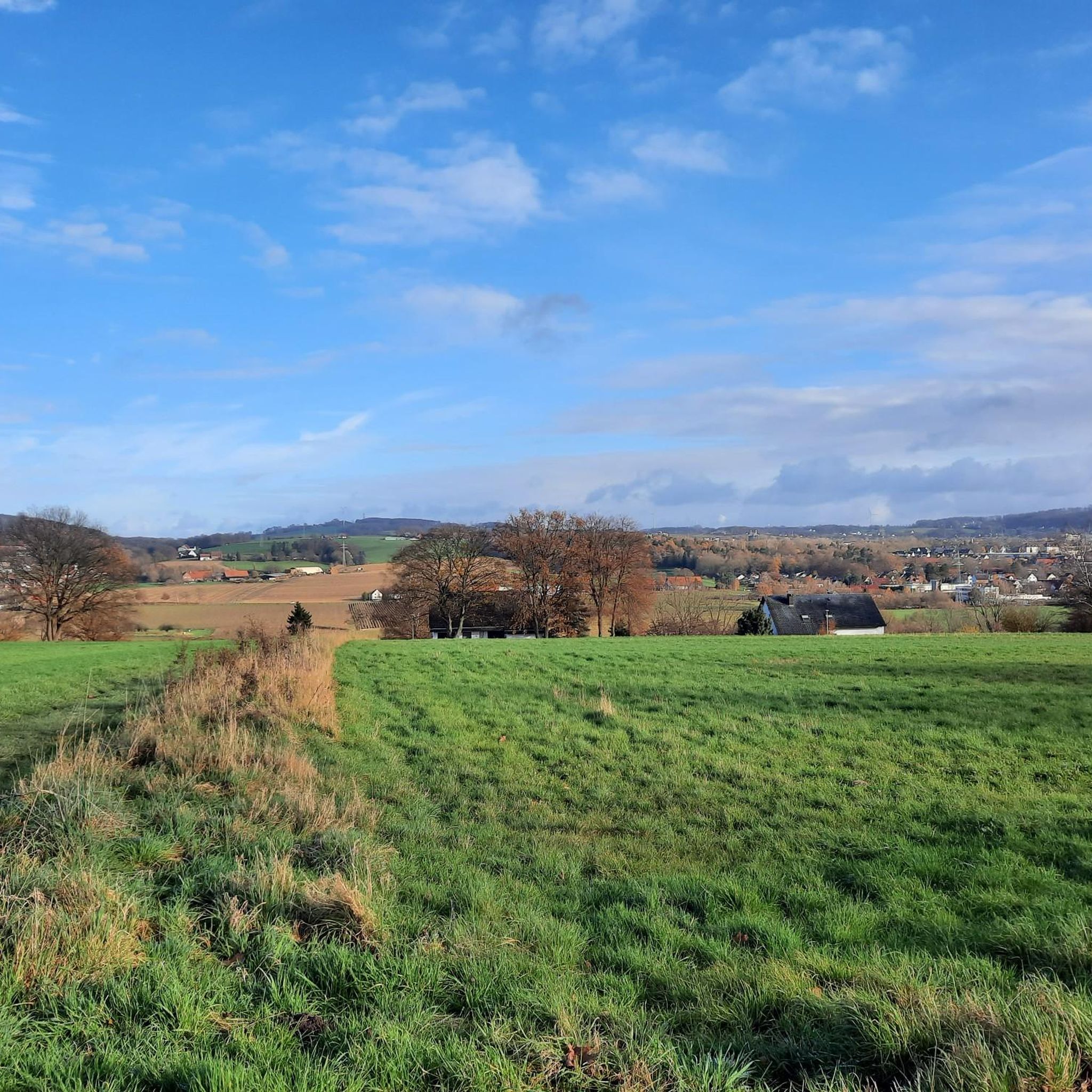
From the meeting point we ride in the direction of Löhne through the Werretal, past the Spatzenberg, from Löhne through the Werreauen, on the Else-Werre cycle path to Kirchlengern and from there back to Herford. The tour leads through a charming meadow landscape worthy of protection with beautiful views across the country. With a bit of luck we can listen to the singing of the nightingale on the Spatzenberg. A stop in Kirchlengern is planned.
1
0

The summit cross on the small mountain 🏔️ is a great destination
1
0
There is even a summit cross on the Spatzenberg
1
0

Very beautiful and, above all, well-kept park not far from the center of Bad Oeynhausen. In addition to the beautiful green area with its numerous fountains, there are also some historic spa buildings to see.
6
0


