경로

플래너

기능

업데이트

App

로그인 또는 가입

앱 다운로드

로그인 또는 가입

경로
Places to see
Natural Monuments
스페인
카탈루냐
바르셀로나
발레스 오리엔탈

발고르기나

발고르기나‬에서 가장 멋진 ‪20‬개의 천연기념물


천연기념물을 방문하여 발고르기나의 아름다운 풍경을 만나보세요. 발고르기나에 있는 20
개의 천연기념물과 상세 정보를 살펴본 후에 방문하고 싶은 천연기념물을 다음 모험 계획에 추가해보세요!

마지막 업데이트: 6월 3, 2026

Les Llobateres 조류 관측소

하이라이트 • 전망대

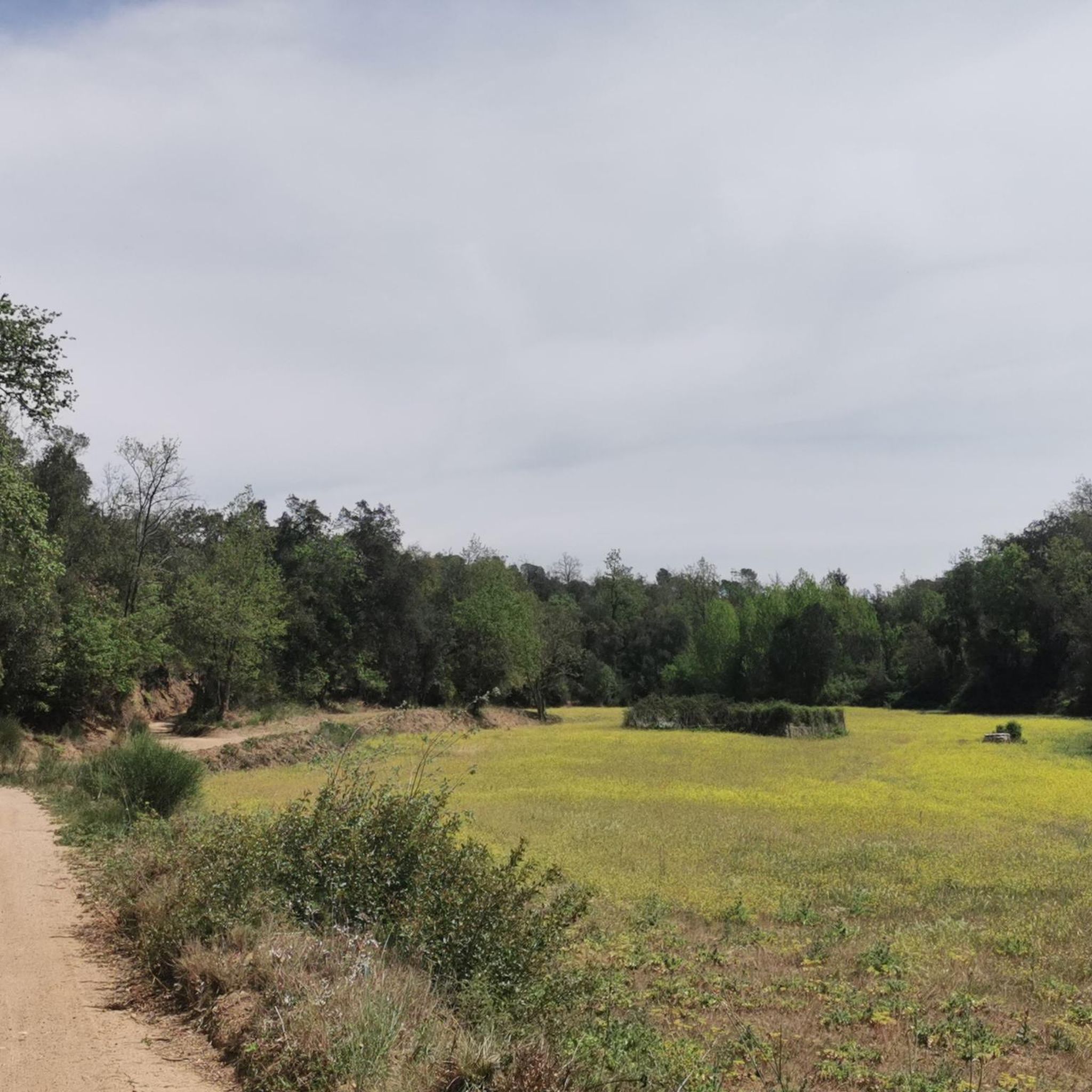
This wetland is called Les Llobateres. It is a wetland in the middle basin of the Tordera river.

The Llobateres wetland is the result of the operation and restoration of …

번역자 Google •

에 의해

라이딩 보기

휴대폰으로 전송

저장

돌멘 데 페드라 헨틸

하이라이트 • 역사적 장소

저장

이런 장소를 발견하려면 지금 가입하세요

최고의 싱글 트랙, 봉우리 및 다양한 흥미로운 야외 장소에 대한 추천을 받아보세요.

무료 회원 가입

돌멘 데 카 라레네스

하이라이트 • 역사적 장소

A megalithic tomb approximately 5,000 years old. Discovered in 1997 and restored in 2006 and 2007.

번역자 Google •

에 의해

저장

몬탈트

하이라이트 • 정상

Peak included in the list of 100 peaks of the F.E.E.C. feec.cat/activitats/100-cims/cim/montalt

Montalt is a mountain that belongs to the Catalan coastal range, within the Corredor mountain range and the …

번역자 Google •

에 의해

저장

말굽 바위

하이라이트 • 자연 기념물

In the surroundings of the "Pedra de la Ferradura" we can find small accumulations of granite blocks, disordered, heterometric and rounded, which accumulate in a horizontal or slightly inclined relief. …

번역자 Google •

에 의해

저장

무료로 가입하여 발고르기나 주변의 더 많은 자연 기념물을 발견하세요.

무료 회원 가입

이미 komoot 계정이 있나요?

오늘 무료 계정으로 시작하세요

다음 모험이 기다리고 있어요.

로그인 또는 가입하기
발고르기나 주변 인기 장소

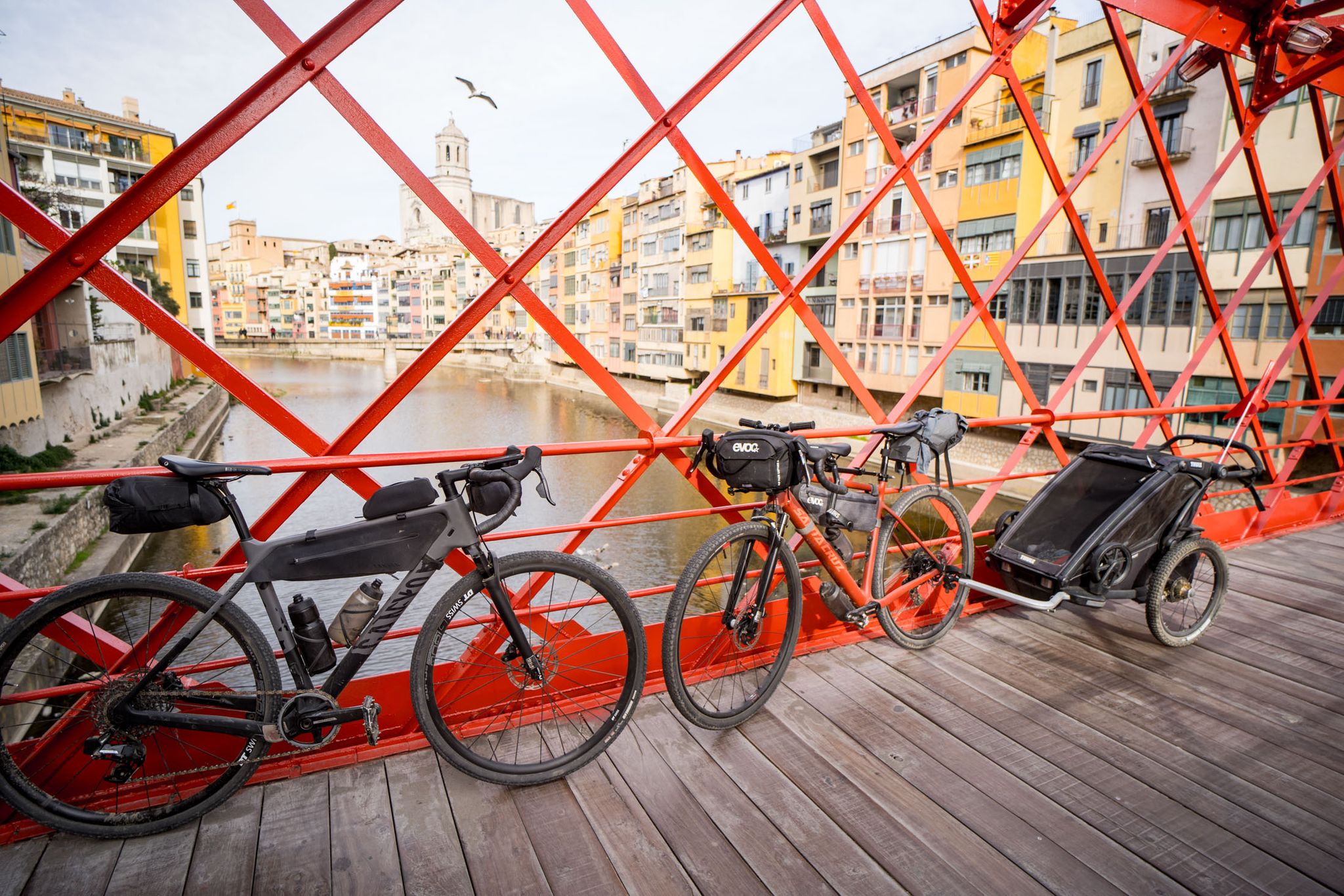
가족 바이크패킹 / 바르셀로나-히로나

공랑드 공화리스 발리스 (GR 92)

발고르기나 로드 사이클링 경로

발고르기나 사이클링

발고르기나 MTB 트레일

발고르기나 러닝 트레일

발고르기나 하이킹

발고르기나 주변 그래블 라이딩

발고르기나 주변의 다른 모험

가족 바이크패킹 / 바르셀로나-히로나

사이클링 컬렉션 에 의해

Max Schumann

커뮤니티 팁

An Argentona
12월 8, 2025, Dolmen de Ca l'Arenes

It's a megalithic tomb, approximately 5,000 years old, discovered in 1997 and restored in 2006-2007. Located in the heart of the Montnegre i el Corredor Natural Park, it's easy to miss, but it has a history: it belonged to a Neolithic community that used it as a collective grave. Interestingly, remains of the tumulus that covered it are still preserved, which is unusual, and its orientation seems related to astronomical events, like other dolmens in the area. It's an archaeological rarity in the middle of a prime cycling area, perfect for stopping and reflecting that humans once walked this path... but without helmets.

번역: Google

2

0

It belongs to the Montnegre Park and almost all the paths can be done either on foot or by bike (the dolmen path is quite broken "stones")

번역: Google

3

0

Bird Observatory, nowadays, and especially at this time of the year, you can very likely and relatively easily see... Kingfisher (Ardea cinerea) White tern (Egretta garzetta) Egyptian goose (Alopochen aegyptiacus) Blauet (Alcedo atthis) Moorhen (Gallinula chloropus) Common kestrel (Falco tinnunculus) Sparrowhawk (Accipiter nisus) Common buzzard (Buteo buteo) Green woodpecker (Picus viridis) Upupa epops Cornelian crow (Corvus corone) Motacilla cinerea (Motacilla cinerea) Hedge Sparrow (Prunella modularis) Common chilli (Saxicola torquata) Smoked car (Phoenicurus ochruros) Common thrush (Turdus philomelos) Repicatalons (Emberiza schoeniclus) ...and a multitude of typical riverside species and agricultural areas. https://www.google.com/url?sa=i&url=https%3A%2F%2Fsantceloni.cat%2F9203&psig=AOvVaw1m8-tBmRbvJQa1D6HQTWS7&ust=1679049247506000&source=images&cd=vfe&ved=0CA8QjRxqFwoTCJCVmYGg4P0CFQAAAAAdAAAAABAE

번역: Google

6

0

It is a large granite block located between Turó de Montalt (596 m) and Turó del Mig (550 m), a hill where the municipal limits of Arenys de Munt, Dosrius and Sant Vicenç de Montalt meet. Of the two stones, the smaller one has an engraving that seems to represent a horseshoe, although the meaning is unknown. It could be, for example, a mark to delimit the old parishes. Granite is a hard rock, with a granular texture, which in the Maresme has been used for construction. Fresh granite is known as "snake's eye" as it is made up of a black mica which, in contrast to the other components, is reminiscent of a snake's eye. In this environment and during the next section of the route, we will find small accumulations of granite blocks, disordered, heterometric and rounded, which accumulate in a horizontal or slightly inclined relief. These capricious formations have their origin in weathering. Later, the rainwater dissolves the feldspar and the large initial rock cracks and gives rise to rounded shapes and a kind of sand, called "sauló" in Catalan.

번역: Google

1

0

Óliver
3월 15, 2023, Montalt

El Montalt is a mountain belonging to the Catalan coastal range, within the Sierra del Corredor and the protected natural area in which it is included. A few kilometers from the coast, the top is surrounded by forest. A common point to face the final meters of ascent is the Coll de la Ferradura, a pass located to the northeast. It is a crossroads of different paths and forest tracks and, from this point, the path to the summit is narrow and has a very steep slope. The northern slope enters completely into the natural park, with different plateaus, other peaks and the Creu de Rupit, an outstanding cross in the middle of the path. To the northeast is the Sanctuary of the Corridor, with a car park and a tourist service office. From this point, through forest tracks, To the south, we find two towns, Sant Andreu de Llavaneres and Sant Vicenç de Montalt, well connected by tracks and paths. In the same way possible starting points for the ascent, to the west is the municipality of Dosrius and its population center of Canyamars, while to the east is the town of Arenys de Munt. On the other hand, the first stage of the Camino del Norte, or GR 83 long-distance path, which begins in the town of Mataró, passes very close, along its northern slope. Its top houses a geodesic vertex and a mailbox, offering magnificent views of the entire Maresme coast.

번역: Google

1

0

In the surroundings of the "Pedra de la Ferradura" we can find small accumulations of granite blocks, disordered, heterometric and rounded, which accumulate in a horizontal or slightly inclined relief. These capricious formations have their origin in weathering. Later, the rainwater dissolves the feldspar and the large initial rock cracks and gives rise to rounded shapes and a kind of sand, called "sauló" in Catalan.

번역: Google

20

0

It is a large granite block located between Turó de Montalt (596 m) and Turó del Mig (550 m), a hill where the municipal limits of Arenys de Munt, Dosrius and Sant Vicenç de Montalt meet. Of the two stones, the smaller one has an engraving that seems to represent a horseshoe, although the meaning is unknown. It could be, for example, a mark to delimit the old parishes. Granite is a hard rock, with a granular texture, which in the Maresme has been used for construction. Fresh granite is known as "snake's eye" as it is made up of a black mica which, in contrast to the other components, is reminiscent of a snake's eye.

번역: Google

16

0

Located in the center of a small rocky outcrop formed by two large rocks surrounded by smaller stones. It is a spheroidal granite ball, measuring 1.30 meters high, 2 meters long and 1.50 meters wide, with two incised engravings. The first engraving is located on the northwest side of the rock (facing Arenys de Munt), measures 0.34 meters by 0.21 meters and forms an oval figure with a flat base. At the upper end, a small rectilinear stroke enters the inside of the oval, while at the base there are two more strokes at the ends towards the outside. The second engraving (facing Dosrius) is at the west end, measures 0.34 meters by 0.13 meters and has a ramiform (branch-like) shape. The element is included within the limits of Parc del Montnegre and the Corridor. Since the end of the 19th century, this stone has been identified as a dividing landmark between the municipal terms of Dosrius, Arenys de Munt and Sant Vicenç de Montalt. The first deed of settlement in which it appears is from the year 1889 (identified as the seventh mollón between Dosrius and Arenys de Munt and the first between Dosrius and Sant Vicenç de Montalt) and, subsequently, it appears again in 1918 in a new recognition of limits. In both acts, the owner of the area is the Marquis of Aigüesvives and reference is made to the engravings. Several authors attribute a Neolithic chronology to the rock, reused as a landmark for a castle in the Middle Ages. Traditionally, the engraving facing Arenys de Munt has been identified with a horseshoe, although also a boar's hoof and a bell. In 1918, the second engraving was identified as a palm. In reality, the two engravings are term marks, the one on the horseshoe identified with Sant Martí as patron saint of Arenys de Munt (the horseshoe is one of its symbols) and the one on the branch in reference to Dosrius (the palms correspond to the two patrons Saint Iscle and Saint Victoria and have been present in the municipal coats of arms since the 19th century). This last engraving cannot be ruled out as symbolizing the confluence of two streams (Canyamars and Rials streams forming the Dosrius stream). The proposed chronology is related to the heyday of this type of engraving.

번역: Google

0

0

발고르기나 주변에서 가장 인기 있는 경로

발고르기나 로드 사이클링 경로

발고르기나 주변에서 가장 인기 있는 명소

Places to see

Store rating

komoot 모바일 앱으로 영감을 받아보세요

무료 komoot 계정로 끝없는 야외 모험을 손쉽게 찾고, 맞춤 설정하며 길안내할 수 있어요.

또는

지금 komoot에 가입하세요

Store rating

더 살펴보기

발고르기나 주변의 최고의 동굴을 찾기 위해 이 가이드를 확인해보세요:

카노베스 1세 사말루스타가마넌트산트 페레 데 빌라마요르몬체니포가르 드 몽클루스아이과프레다칼데스 드 몽뷔산트 에스테베 데 팔라우토데라라메텔라 델 발레스카브레라 다노이아마시스 델 몬체니파크 내추럴 델 몬체니레 프랑키즈 델 발레스캠핀스피가로-몽마니산트퀴르제 사파자카스텔테르콜리사 다문트산트 포스 데 캄센텔레스라 로카 델 발레스라 가리가산타 에울랄리아 데 론차나산타 마리아 데 팔라우토데라그라네라구알바몰레 델 발레스파레츠 델 발레스산트 펠리우 데 코디네스몬트멜로카스텔시르산타 마리아 데 마르토렐레스몽토르네스 델 발레스산트 셀로니마토렐레스발로마네스리나르스 델 발레스그래놀러빌라노바 델 발레스리사 드 발라 라고스타산트 안토니 데 빌라마요르카르데두카노벨빌랄바 사세라

근처 어드벤처 가이드

빌랄바 사세라 즐길거리

background

새로운 정복을 위한 준비를 하세요

무료로 가입하기

탐험하기
경로경로 플래너기능하이킹MTB 트레일로드 사이클링 경로바이크패킹사이트맵
앱 다운로드
소셜 미디어에서 팔로우하기

© komoot GmbH

개인 정보 보호 정책