스톤턴에서 가장 멋진 4개의 천연기념물
Stoneton CP 주변의 최고의 자연 기념물에는 다양한 역사적, 자연적 특징이 포함됩니다. 이 지역은 지역의 역사와 지질에 대한 통찰력을 제공하며, 자연 경관과 인간의 유산이 조화를 이루는 장소들이 있습니다. 방문객들은 고대 우물과 중요한 자연 지역으로 변모한 옛 채석장터를 탐험할 수 있습니다. 이 지역은 자연 환경과 역사적 이야기 모두와 연결될 기회를 제공합니다.
Stoneton CP 주변 최고의 자연 기념물
- 가장 인기 있는 자연 기념물은 상당한 그리스 양식의 석조 우물집이 있는 역사적인 장소인 Holy Well, Burton Dassett입니다. 버려진 버턴 다셋 마을에 위치하며 '성스러운 우물'이라고…
마지막 업데이트: 8월 23, 2026

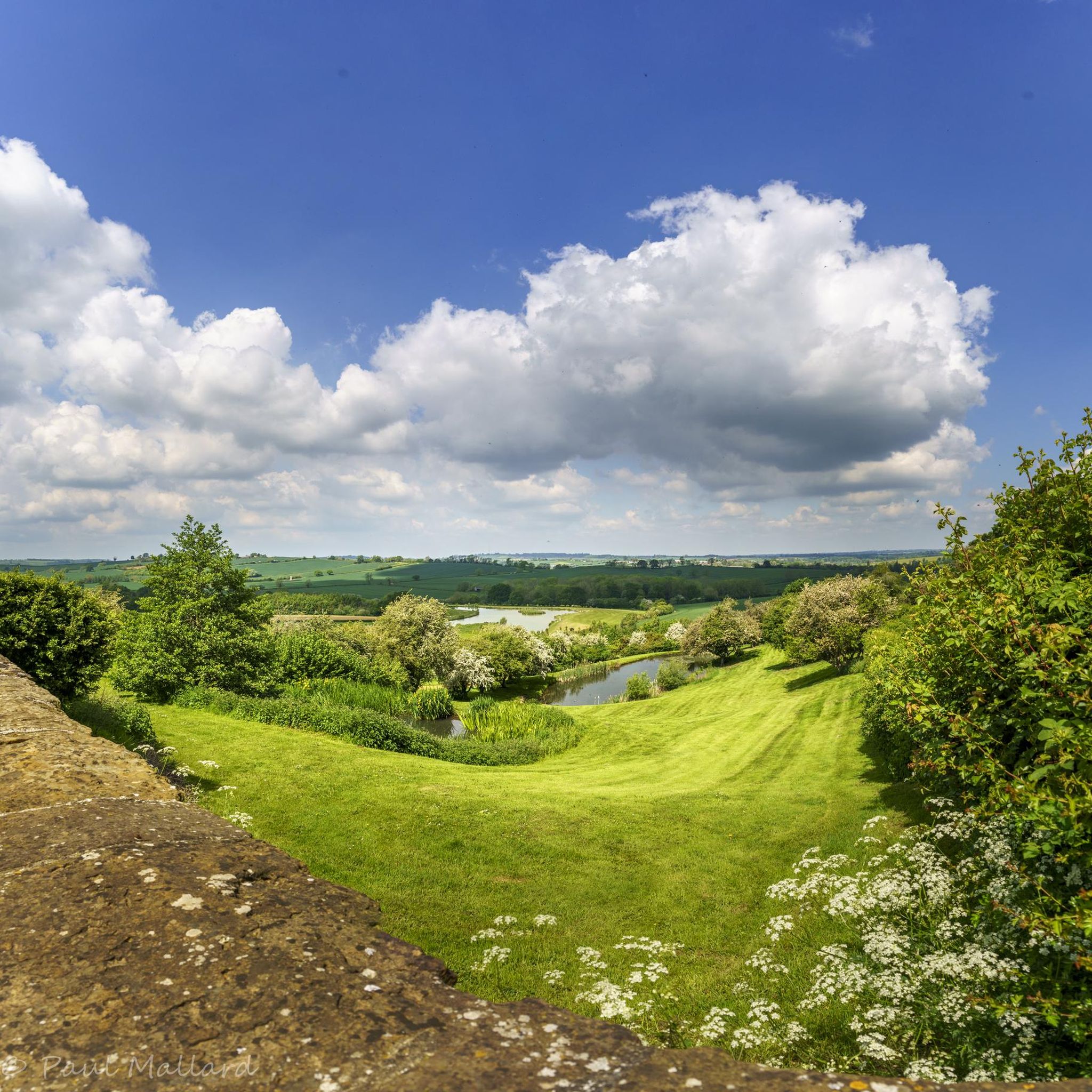
Bishops Bowl Lakes
하이라이트 • 자연 기념물
팁에 의해

이런 장소를 발견하려면 지금 가입하세요
최고의 싱글 트랙, 봉우리 및 다양한 흥미로운 야외 장소에 대한 추천을 받아보세요.
무료 회원 가입
오늘 무료 계정으로 시작하세요
다음 모험이 기다리고 있어요.
로그인 또는 가입하기
커뮤니티 팁

It is an unusual half-moon stone structure holding the water, with three strange heads out of whose mouths the water flows down to the river.
0
0

We had to double back on ourselves slightly to see the lakes, as they were hidden behind a hedge
0
1

If you follow the beautiful trail that departs from Southam heading east and runs alongside the River Stowe, you will come across The Holy Well, believed to be the oldest recorded Holy Well in England. It has been there for over a thousand years, with its most recent renovation taking place almost twenty years ago.
1
0

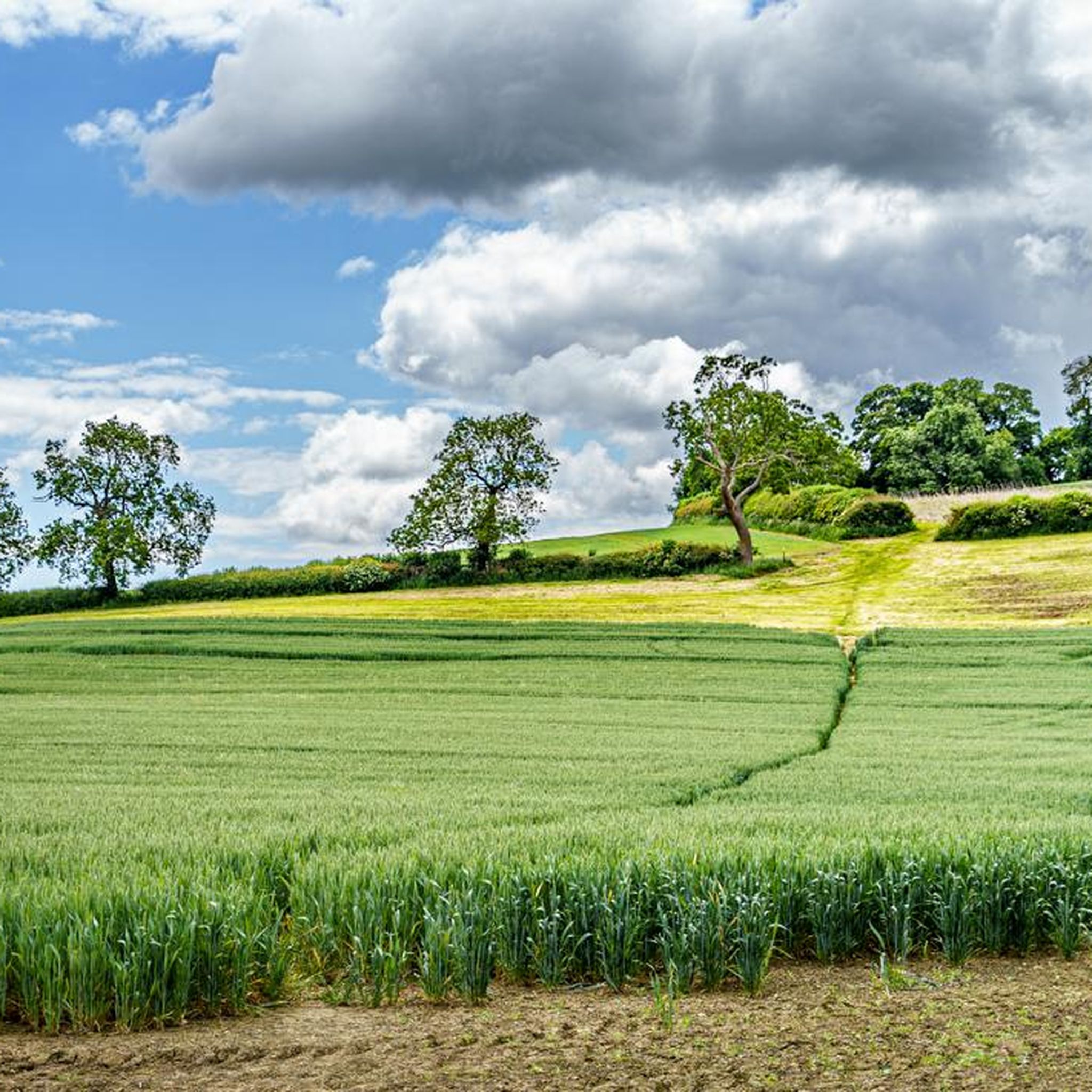
A circular earthwork is clearly visible on the ground on Harts Hill. It measures approximately 15m internal diameter, the ditch is 2m wide and the entrance (facing SE) is 2.5m across.
0
0
The site of a holy well which dates to the Medieval period, though the stone work surrounding the well dates to the Imperial period. Further restoration has taken place in the 20th century. It is situated 800m west of the church, Southam. Oldest recorded holy well in England? The first mention of the well is apparently 998, when it is mentioned in a charter to Leofwine by King Ethelred the Unready as a consequence as the term holy well per se derives from Old English halig this is probably the oldest recorded. However, it does not appear to be specifically mentioned as such. However in a Feet of Fines there is a notice in 1206 of a: “half acre land at Hallewellcul to the north” Over the next 800 years there then appear to be regular references to the well. By the 18th century there is reference to some sort of protective structure, although the date of the current structure cannot perhaps be gauged from these references. By 1701 a record notes that the Rector was exempted from keeping the well and fencing in repair: “one footway of the breadth of three feet leading from a certain stile at the bottom of an ancient enclosed ground called Bury Orchard towards Ufton by the Brook to the said well called Holy Well.” By 1760, a public footpath to the well was made permanent in an Act of Parliament and the enclosures act noting: “it is hereby further enacted and declared, That the said Well, called Holy Well, in the said Open Fields of Southam aforesaid, shall not be allotted to any of the said Proprietors, but shall be inclosed round with Posts and Rails, Three Yards at least distant from the Stone-work of the said Well, by, and at, the Expence of all the said Proprietors, and shall be kept for the Benefit of all the Inhabitants of the Parish of Southam aforesaid; and which said Posts and Rails shall, forever thereafter, be repaired and kept in Repair by, and at, the Expence of the Inhabitants of Southam aforesaid; and that the said Commissioners, or their Successors, or any three or more of them, shall assign, or lay out, a Footway from the Town of Southam aforesaid, to the said Well..” Healing eye water The main two properties, other than a possibly being better than beer, is that it was very cold but never froze and that it was good for eyes. Indeed, its powers in restoring eyes lead to a Henry Lilley-Smith establishing in 1818 an eye and ear hospital not far. Local remedies also recall how to make a tincture with the well water for eyes. The well of St Fremund? One of the possible reasons for the site being a holy well is that it was associated with the Mercian saint Fremund. The Life and Death of the Most Holy Fremund, King and Martyr by Burghard, 12th century (tr. from text in Nova Legenda Anglie ) tells how St Fremund, having been beheaded: “stood up as if nothing had happened, picked his head up off the ground, and set out with the head in his hands. The crowd were amazed at this miracle and followed in his tracks, praising God. He made his way to a spot between Itchington and Harbury, and when he got there he took a stand and thrust the point of his sword in the ground. He prayed to God for a little water to wash his head and body, and what he sought, he gained. For a spring welled up at this very spot, flowing in an unfailing stream and proving the merits of this famous martyr before all the world. He drank of its waters, he washed his wounds, he gave honour to that God in whom all live and have their being. Then turning his head to the east, he sank dead to the ground”. The Metrical Life of St Fremund by William of Ramsay, 1194×1220 (tr. from text in Pinchbeck Register 1925) repeats the story from Burghard, detailing how ‘No sooner had he wished for water than a spring appeared/ Purer than dew, clearer than crystal, finer/ Than gold, and scattering silver sands’. Later, the Life of Sts. Edmund and Fremund by John Lydgate, 1434 tells how “there sprong up a welle/ With crystal watrys the stremys gan up welle;/ And wessh away the blood that was so red,/ Which doun disttillyd from his hooly hed”. egend has it that Fremund was a son of Kind Offa of Mercia. After his death, a great battle ensued at Radford Semele against the invading Vikings in which Fremund was completely victorious. However as Fremund knelt in prayer of thanksgiving one of his own men envious of his success struck off his head. However the legend suggests that the well was not at Southam. For when his corpse stood up, picking up his head and walking away; he stopped somewhere between Harbury and Whitton, possibly Whitnash and there a miraculous well sprung up at his feet, in the water of which he washed his head then lay down and died. This would go against the view that the Southam well is the same. Well preserved fabric The first description of the site is Carlisle (1812) ‘Observations on the positions of the alien cell of Begare, and of Halywell upon Watling Street’ who describes: “a well of very fine clear water, called Holywell, or Halywell, which has always been reputed salubrious. It is… perpetually overflowing, without much variation from the seasons. It is a basin on the declivity of a rising ground. Its form is the larger section of a circle; the bottom is paved with smooth stones; and the sides are walled with the same, a little higher than the water stands, which is about two feet deep. It was formerly nearly encompassed with another wall, and upon a stone, at the mouth of the well, the words Utere, sed non abutere were inscribed.” However it was apparently in decline by the 1850s as an article written on the 6th October 1855 in the Warwickshire Advertiser describes: “on the foot road from Southam to Stoney-Thorpe, the residence of H T Chamberlain Esq., is an Ancient Well called ‘Holy Well’ now in a dilapidated condition; but even in its present state, the massive stone work, with curious and not very elegant carved head shews it to have been at one time an object of interest. Its earlier history is not clear, some asserting that it was the source from which Stoney Thorpe was supplied with water when used as a Priory ……it is a large semi-circular well about five feet deep embanked with massive stone masonry, and is supplied by a powerful spring of the Purest Water. It lies at a lower level than the Town, otherwise it might without much expense, be made most valuable for domestic and sanitary purposes. Tradition says it formally had a stone seat placed round it; was furnished with drinking vessels, and covered by an Arched Stone Roof; thus affording refreshment to the Traveller, and a pleasant resort to the health seeker. It is now proposed to restore by a public subscription, this beautiful relic of antiquity, and a considerable sum has already been promised.” This restoration is described by Freton (1890) in his The Warwickshire Feldon: a sketch of its hills and valleys, waters, famous trees, and other physical features in the Proceedings of Warwickshire Naturalists’ & Archaeologists’ Field Club, states that around 40 years ago: “I and a few enthusiastic friends undertook to clear out this old well, in the hopes that it might lead to its ultimate restoration. Our efforts as amateur navvies excited little sympathy among the rough labouring lads of the neighbourhood, who seemed to look upon us as having a slate off, and we invariably found our labour of one evening fruitless the next, so after a week’s hard work we gave it in.” Certainly when Richardson (1928) found it as: “a semicircular recess in the bank. A low retaining wall – recently renovated – prevents the bank from slipping down into it. At its foot is a flagged path along the curved margin of the semicircular well. Impounding the water in the well… is low two buttressed stonework. The stonework is much mutilated, the water flowing over the two broken and worn ends; but the central portion is higher and has three faces sculptured on it from orifices below which the water spouts out. Two flights of steps– that on the left with three steps, that on the right with four – lead down to a “trough” below the stonework”. The most curious facet of the well are the well worn, and hence presumably ancient carved heads. What is their origin? Thoughts have ranged from effigies of sun gods to the recycled remains from a priory or church. I certainly favour the later and they were probably gargoyles and incorporated in the fabric in the 18th century. This may explain why they look more worn than would be expected if was last constructed in that century. However, it seems odd to have incorporated them and it may have been an attempt to produce a folly for a local lord. Well restored However, despite Richardson’s favourable visit, not everything was positive. In 1925 the water was diverted into a reservoir and the provision of mains water artesian wells in the 1930s took their toll on the flow, an article in a local newspaper noting that: “the Holy Well itself a few yards away has been partly emptied, and no water now flows into its basin in dry weather.” By 1981, Brian Townsend noted in Southam Through the Centuries III notes it was little more than a trickle but a year after clearing out and restoration by the Community Enterprise Programme restored the flow through the heads. Yet by 1991 it was dry again, possibly as the result of quarrying and work on a by-pass. This is what it was like when I first visited…filled with rain water and polluted by crab apples. Through the 1990s restoration was planned but due to various reasons it was never attempted until the early 2000s. By 2005 the water supply was relocated and it could be restored, a Holy Well community was established an Heritage Lottery Fund money of £102,500 was successfully obtained. By 2005-7 the site was splendidly restored with seats and a palisade fence with delightful well related carvings on the posts…a fantastic return to the glory..the crowning of that glory the fact the water flows as profusely as ever. A delightful site and a holy well must.
0
0
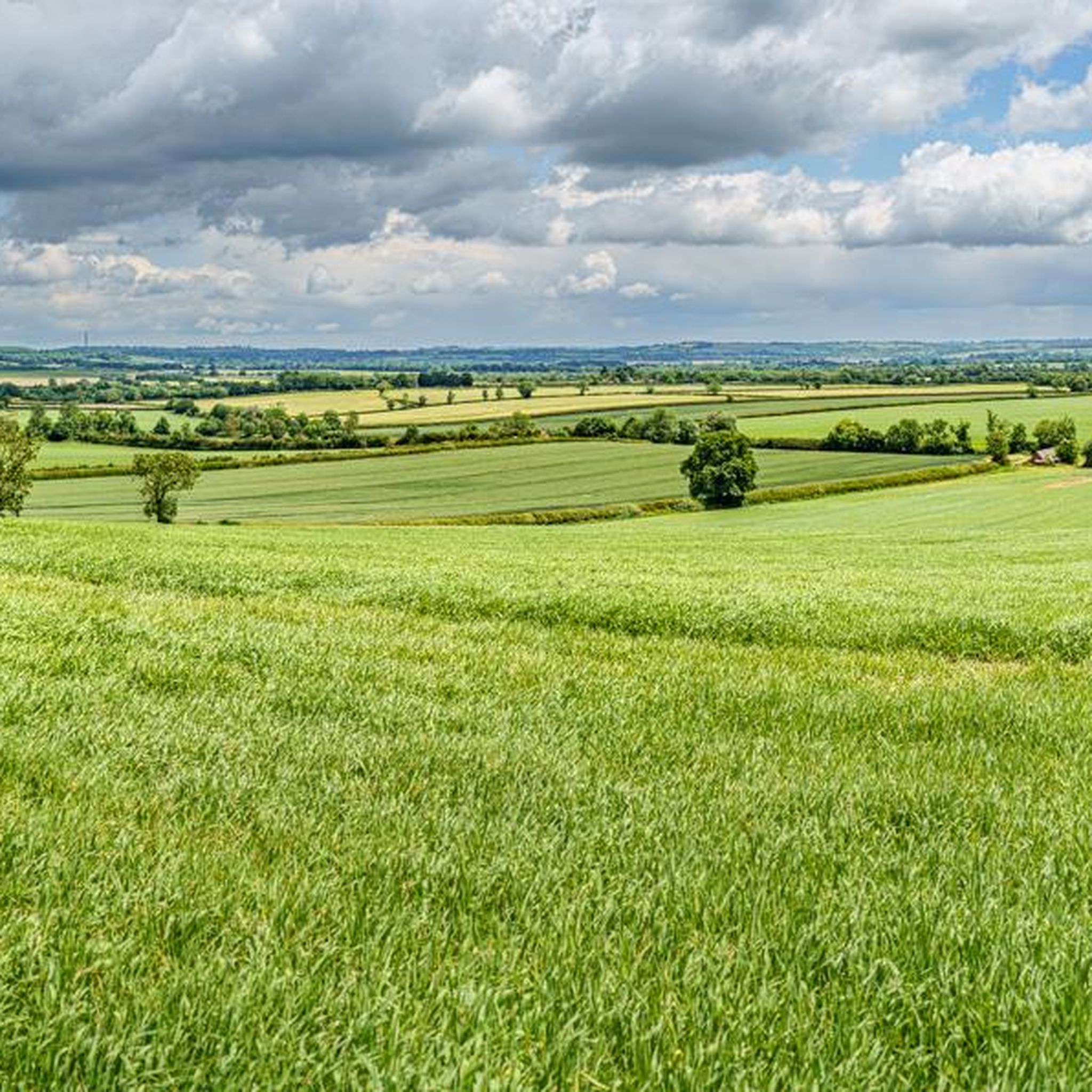
Bishops Bowl Fishery sits on a 90 acre former limestone quarry, located on the Oxfordshire/Warwickshire border. The quarry work many years ago has created an attractive stone faced bowl. The whole site is recorded as a site of scientific interest. As at Lyme Regis, the Blue Lias at Harbury is rich in marine fossils. In 1927 and 1928 the skeletons of two marine reptiles were found in Harbury quarry. They are an ichthyosaur and a plesiosaur, and both fossils are now in the Natural History Museum, London. The plesiosaur is the unique example of the early Jurassic species Macroplata tenuiceps.
1
0
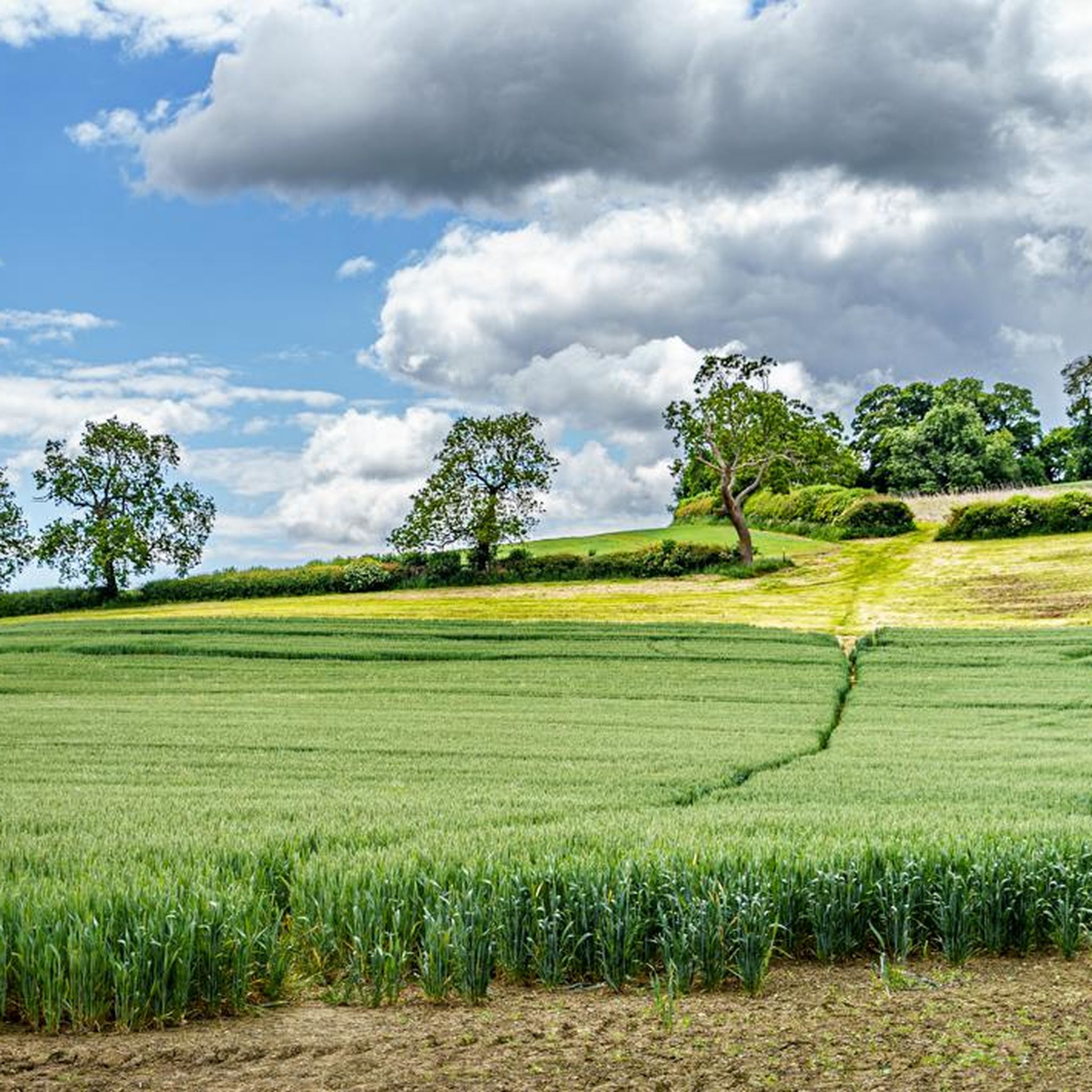
The Battle of Edgecote Moor took place 6 miles (9.7 km) north east of Banbury, Oxfordshire, in what is now the civil parish of Chipping Warden and Edgcote, England on 26 July 1469 during the Wars of the Roses. The site of the battle was actually Danes Moor in Northamptonshire, at a crossing of a tributary of the River Cherwell. The battle saw supporters of Richard Neville, Earl of Warwick, defeat the forces of King Edward IV, leading to the king's capitulation soon afterwards.
1
0
자주 묻는 질문
Stoneton CP 주변의 가장 주목할 만한 자연 기념물은 무엇인가요?
Stoneton CP 주변 지역에는 몇 가지 독특한 자연 기념물이 있습니다. 상당한 그레코 양식의 우물집으로 유명한 홀리 웰, 버튼 다셋(Holy Well, Burton Dassett)의 역사적, 자연적 중요성을 탐험할 수 있습니다. 또 다른 중요한 유적지는 복원과 지역 전설에 대한 풍부한 역사를 가진, 영국에서 가장 오래된 기록된 성스러운 우물로 여겨지는 홀리 웰, 사우담(Holy Well, Southam)입니다. 다른 자연 경험을 위해서는 이전 석회석 채석장이었으나 현재 해양 화석으로 인한 과학적 관심 지역으로 인정받는 비숍스 볼 호수(Bishops Bowl Lakes)를 방문해 보세요.
Stoneton CP 근처에 방문할 만한 가족 친화적인 자연 기념물이 있나요?
네, 홀리 웰, 사우담(Holy Well, Southam)과 에지코트 전투(Battle of Edgcote) 유적지 모두 가족 친화적인 곳으로 간주됩니다. 홀리 웰은 흥미로운 역사적, 자연적 장소를 제공하며, 에지코트 전투 유적지는 가족들에게 매력적일 수 있는 역사적 맥락을 가진 전망을 제공합니다.
이 자연 기념물들은 어떤 역사적 중요성을 가지고 있나요?
이 지역의 많은 자연 기념물은 역사와 깊이 얽혀 있습니다. 예를 들어, 홀리 웰, 사우담(Holy Well, Southam)은 998년까지 거슬러 올라가는 기록과 치유 효능에 대한 전설을 가진, 영국에서 가장 오래된 기록된 성스러운 우물로 여겨집니다. 홀리 웰, 버튼 다셋(Holy Well, Burton Dassett)은 전체 출처가 불분명하지만, 세례에 사용되었다는 역사적 주장이 있습니다. 또한, 에지코트 전투(Battle of Edgcote) 유적지는 1469년 장미 전쟁 중 중요한 사건을 기념하는 역사적인 전망을 제공합니다.
Stoneton CP 주변에서 독특한 자연적 특징이나 지질학적 유적지를 찾을 수 있나요?
물론입니다. 비숍스 볼 호수(Bishops Bowl Lakes)는 90에이커 규모의 이전 석회석 채석장에 자리 잡고 있는 대표적인 예입니다. 이곳에서는 어룡과 장경룡 골격 등 풍부한 해양 화석으로 인해 과학적 관심 지역으로 인정받고 있습니다. 또한, 역사적 중요성을 지닌 자연 기념물인 하츠 힐(Harts Hill)에서는 원형 토목 구조물을 관찰할 수 있습니다.
Stoneton CP 주변의 자연 기념물 근처에서 어떤 야외 활동을 할 수 있나요?
이 지역은 다양한 야외 활동을 제공합니다. '웜슬리턴 CP에서 출발하는 버튼 다셋 컨트리 파크 – 윈드밀 힐 비컨 루프'와 같은 수많은 하이킹 코스를 찾을 수 있습니다. 달리기 애호가들을 위해 '페니 컴튼에서 출발하는 하츠 힐 – 버튼 다셋 컨트리 파크 루프'와 같은 트레일이 있습니다. 산악 자전거 또한 인기가 많으며, '사우담 루프'와 같은 코스가 있습니다. Stoneton CP 주변 하이킹, Stoneton CP 주변 달리기 트레일, 그리고 Stoneton CP 주변 MTB 트레일 가이드 페이지에서 더 많은 옵션을 탐색할 수 있습니다.
자연 기념물 중에 전망대가 있나요?
네, 에지코트 전투(Battle of Edgcote) 유적지와 하츠 힐(Harts Hill) 모두 전망대를 제공합니다. 에지코트 전투 유적지는 데인스 무어(Danes Moor)를 조망하는 역사적인 관점을 제공하며, 하츠 힐은 원형 토목 구조물과 아름다운 경치를 자랑합니다.
사우스햄의 홀리 웰(Holy Well, Southam)이 특별히 흥미로운 이유는 무엇인가요?
사우스햄의 홀리 웰(Holy Well, Southam)은 여러 가지 이유로 매력적입니다. 998년에 처음 언급된 잉글랜드에서 가장 오래된 기록된 성스러운 우물로 여겨집니다. 지역 전설에 따르면 이 우물의 물은 눈병 치료에 좋았다고 하며, 이로 인해 19세기 근처에 안과 및 이비인후과 병원이 설립되었습니다. 또한 물이 흘러나오는 세 개의 조각된 머리가 있는 독특한 반달 모양의 석조 구조물을 갖추고 있으며, 수세기에 걸쳐 상당한 복원 노력을 거쳤습니다.
고대 구조물이나 토목 공사를 찾을 수 있나요?
네, 하츠 힐(Harts Hill)에서는 지상에서 명확하게 원형 토목 공사를 볼 수 있으며, 내부 직경 약 15m, 너비 2m의 도랑이 있습니다. 이 유적지는 자연 지형과 역사적인 인간 활동이 결합된 곳입니다.
버튼 다셋(Burton Dassett)의 홀리 웰(Holy Well)을 탐험하는 가장 좋은 방법은 무엇인가요?
버튼 다셋의 홀리 웰(Holy Well, Burton Dassett)은 버려진 버튼 다셋 마을에 있습니다. 1840년경 지역 붉은 사암으로 지어진 상당한 규모의 그리스 양식 우물 건물이 특징입니다. 중앙 출입구는 지면보다 약간 낮으며, 계단이 사각형 방으로 이어집니다. 여전히 소원 비는 사람들이 방문하며, 물속에서 동전을 발견하곤 합니다. 근처의 웅장한 교회도 방문할 가치가 있습니다.
과학적 관심 대상이기도 한 자연 기념물이 있나요?
네, 비숍스 볼 레이크스(Bishops Bowl Lakes)는 과학적 관심 대상으로 기록되어 있습니다. 이 옛 석회암 채석장은 해양 화석이 풍부한 것으로 유명하며, 특히 런던 자연사 박물관에 소장된 상당한 규모의 어룡류와 수장룡류 골격이 있습니다. 지질학과 고생물학에 관심 있는 사람들에게 훌륭한 장소입니다.
이러한 자연 기념물을 포함하는 걷기 또는 달리기 경로에 대한 정보는 어디에서 찾을 수 있나요?
코무트(Komoot)는 이 지역의 야외 활동을 위한 여러 가이드를 제공합니다. 이러한 자연 기념물 근처를 지나가는 하이킹, 달리기, 산악자전거를 위한 상세한 경로를 찾을 수 있습니다. 예를 들어, '홀리 웰, 버튼 다셋 – 워들스턴 CP에서 출발하는 버튼 다셋 컨트리 파크 루프'는 인기 있는 달리기 경로입니다. 더 많은 옵션을 보려면 스토넷 톤 CP 주변 하이킹, 스토넷 톤 CP 주변 달리기 코스, 그리고 스토넷 톤 CP 주변 MTB 코스 가이드를 살펴보세요.
스톤턴 주변에서 가장 인기 있는 경로
스톤턴 주변에서 가장 인기 있는 명소


더 살펴보기
스톤턴 주변의 최고의 동굴을 찾기 위해 이 가이드를 확인해보세요:
