맨하이에서 가장 멋진 6개의 폭포
폭포에서 숨 막히는 절경을 감상하고 싶나요? 그렇다면 맨하이에 있는 아름다운 폭포 6
개를 살펴보세요. 아래에서 여러 폭포 사진과 팁을 살펴본 후에 마음에 드는 폭포를 다음 모험 계획에 간편하게 추가해보세요!
마지막 업데이트: 9월 20, 2026
호말리우스 바위와 폭포
하이라이트 • 폭포
번역자 Google •
팁에 의해

강을 따라 이어지는 바위 내리막길
하이라이트 (구간) • 트레일
팁에 의해

이런 장소를 발견하려면 지금 가입하세요
최고의 싱글 트랙, 봉우리 및 다양한 흥미로운 야외 장소에 대한 추천을 받아보세요.
네프튠 동굴과 폭포, 오통
하이라이트 • 동굴
번역자 Google •
팁에 의해

암블레브를 따라 있는 작은 폭포
하이라이트 • 폭포
번역문 보기
팁에 의해

다리와 폭포가 있는 숲길
하이라이트 (구간) • 트레일
번역자 Google •
팁에 의해

무료로 가입하여 맨하이 주변의 더 많은 폭포를 발견하세요.
이미 komoot 계정이 있나요?
오늘 무료 계정으로 시작하세요
다음 모험이 기다리고 있어요.

커뮤니티 팁


At approximately 37 meters, the summit of the Homalius Rock, better known as the Falize Rock or Anticline, is literally the highest point in Durbuy. It has been a highlight for many visitors for years, thanks in part to the surroundings and beautiful water features. The rock is somewhat older than the average visitor. It's said to be more than 300 million years old. However, the rock layers are much older: around 375 million years old. The name Anticline comes from the geological phenomenon known as an anticline. It's the opposite of a syncline. While the former is a fold formed over many years, with the innermost layers being the oldest and the folds running downwards, synclines have folds running downwards. Such folds can form for various reasons and range from very small to large, as seen here. Originally, everything was, of course, horizontal. The inverted U-shape created by uplift in Durbuy is not only beautiful to see but also special. And Durbuy has beautifully highlighted this. Another beautiful anticline can be found in Han-sur-Lesse, also in the Famenne-Ardenne region, albeit in the province of Namur (here we are in Luxembourg), where it has been given the name "Tête de bouc" (Tête de bouc). There's a waterfall and a large water feature at the end of the expansive pond in front of the rock, which you can also climb. And there's plenty of room to admire it all. Don't forget the many smaller works of art and curiosities, and take a look in the water.
6
0


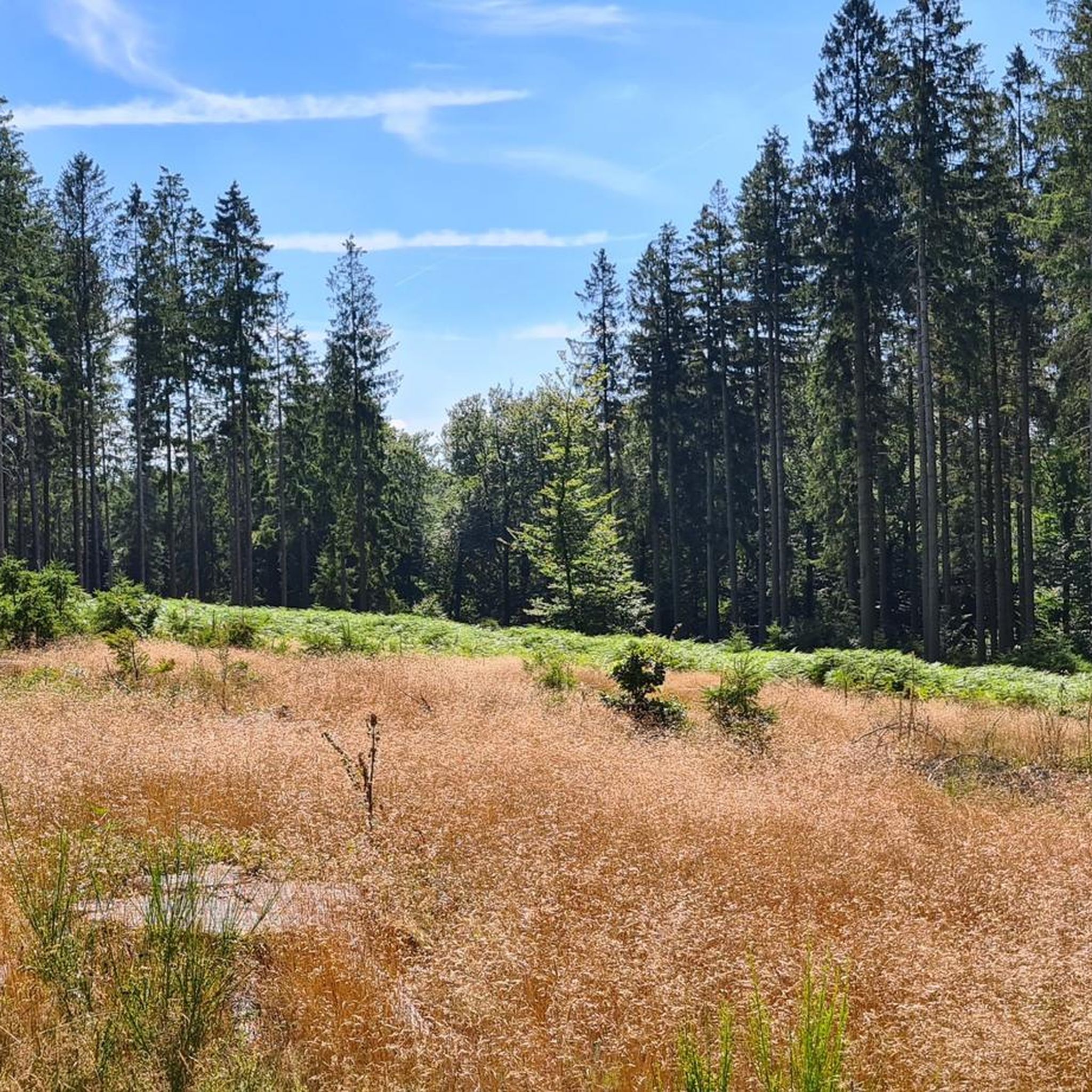
Singletrack through the forest that can be driven up as much as down. Halfway you pass a bridge with a small waterfall.
0
0

it climbs...
0
0

Nice path through the forest. Not too difficult.
1
0

On this narrow path along the Amblève, an unexpected little waterfall adds to the charm of the place. Please note: this somewhat adventurous trail is not accessible during flooding!
2
0

And if you encounter hikers.. Just smile and say Hi
0
0


