쉬운 에이젠 주변 하이킹 및 워킹 코스
4.4
(971)
5,189
등산객
206
하이킹
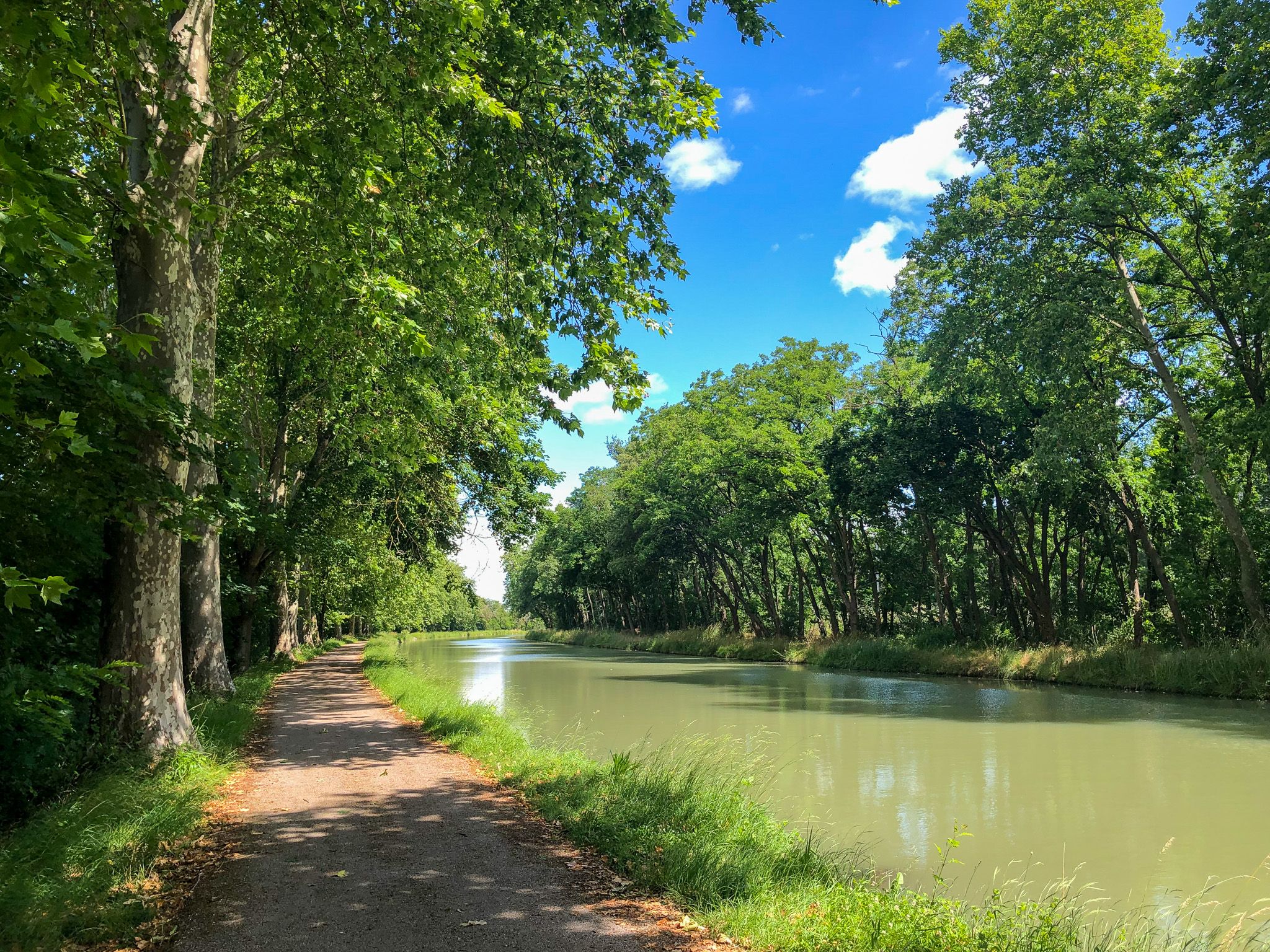
쉬운 하이킹 코스는 가론 강과 가론 운하를 따라 이어지며, 수많은 강변길과 그늘진 녹색 도로를 제공합니다. 이 지역은 구불구불한 시골, 녹지 공간, 강 계곡이 특징이며, 다양한 지형에서 산책을 즐길 수 있습니다. 많은 코스가 지역 공원과 자연 보호 구역을 포함하고 있어 접근성이 좋은 야외 활동을 제공합니다. 완만한 언덕과 수로를 따라 이어지는 평탄한 구간이 있어 쉽게 탐험하기에 적합합니다.
아젠 주변 최고의 쉬운 하이킹 코스
- 가장 인기 있는 쉬운 하이킹 코스는 성 야고보 순례길로, 6.7km 길이이며 1시간 53분이 소요됩니다. 이 길은 역사적인 순례길을…
마지막 업데이트: 10월 10, 2026
4.6
(19)
74
등산객
6.69km
01:53
140m
140m
초급용 하이킹. 모든 체력 수준에 적합. 실력과 관계없이 누구나 쉽게 갈 수 있는 길.
4.4
(11)
23
등산객
5.46km
01:34
130m
130m
초급용 하이킹. 모든 체력 수준에 적합. 실력과 관계없이 누구나 쉽게 갈 수 있는 길.

4.2
(6)
53
등산객
3.65km
00:57
20m
20m
초급용 하이킹. 모든 체력 수준에 적합. 실력과 관계없이 누구나 쉽게 갈 수 있는 길.
43
등산객
3.69km
00:56
10m
10m
초급용 하이킹. 모든 체력 수준에 적합. 실력과 관계없이 누구나 쉽게 갈 수 있는 길.
5.0
(1)
49
등산객
7.74km
01:58
30m
20m
초급용 하이킹. 모든 체력 수준에 적합. 실력과 관계없이 누구나 쉽게 갈 수 있는 길.
4.0
(1)
11
등산객
6.08km
01:45
150m
150m
초급용 하이킹. 모든 체력 수준에 적합. 실력과 관계없이 누구나 쉽게 갈 수 있는 길.
4.0
(1)
16
등산객
4.75km
01:13
20m
20m
초급용 하이킹. 모든 체력 수준에 적합. 실력과 관계없이 누구나 쉽게 갈 수 있는 길.
15
등산객
5.07km
01:27
120m
120m
초급용 하이킹. 모든 체력 수준에 적합. 실력과 관계없이 누구나 쉽게 갈 수 있는 길.
3.7
(3)
4
등산객
4.27km
01:12
80m
80m
초급용 하이킹. 모든 체력 수준에 적합. 실력과 관계없이 누구나 쉽게 갈 수 있는 길.
15
등산객
5.63km
01:36
130m
130m
초급용 하이킹. 모든 체력 수준에 적합. 실력과 관계없이 누구나 쉽게 갈 수 있는 길.
더 다양한 경로와 다른 탐험가들의 추천을 살펴보세요.
이미 komoot 계정이 있나요?
투어 추천은 다른 사람들이 komoot에서 완료한 수천 개의 활동을 바탕으로 구성되어 있습니다.
에이젠 주변의 다른 모험


커뮤니티 팁

여기서는 낚시꾼과 개를 데리고 다니는 사람들만 만날 수 있습니다. 여러 곳에서 수영을 시킬 수 있습니다. 맑은 물.
0
0


The Martrou Chapel was built in the Romanesque period. The presence of these different sanctuaries made Agen a stop on a pilgrimage route to Santiago de Compostela. A Martyr's Hospital[ was built next to the Martrou Chapel, which became its chapel, near the Saint-Caprais collegiate church. A Saint-Jacques Hospital was founded in the second half of the 14th century and not in the 12th century[. In 1562, the different hospitals of Agen, Saint-Antoine, Saint-Georges, Saint-Michel and Saint-Jacques, were united at the Martyr's Hospital[]. The whole was called the Saint-Jacques-du-Martyre Hospital. This hospital was closed in 1819 after its merger with the General Hospital for the Poor, which then took the name Saint-Jacques Hospital, before becoming the Hôtel du Département de Lot-et-Garonne in 1992. The Martrou Chapel was part of the Saint-Caprais collegiate church. It currently belongs to the Sainte-Foy church. It has undergone numerous alterations, from the Romanesque period to the 20th century. It was restored after the merger of the various hospitals of Agen, after 1563. A room was built above the nave, which served as a meeting place for the Grey Penitents. The choir fresco was painted in 1934 by Giovanni Masutti, an Italian-born painter who had worked in other churches in the department. The Diocesan Association of Agen undertook the renovation of the Martrou Church (enhancement of the bell tower, improvement of the acoustics, heating, paving of the crypt, restoration of the façade, painting of the choir, lighting, and whitewashing of the interior walls) in 2007. It was given a non-religious, but rather cultural, purpose. The current chapel consists of a rectangular, paneled nave and a choir with a semi-domed vault. Below is a crypt built in the 4th century by the first Christians of Agen, on the site where the bodies of the first martyrs were buried. The building was listed as a historic monument on November 29, 1995.
0
0
A chapel was built near a Christian cemetery outside the first city wall. The current chapel was built at the end of the 13th century when it became a parish church under the name of Notre-Dame du Bourg. It was included in the second city wall of Agen. In the 15th century, the initially square chevet was replaced by a polygonal apse. On the night of December 1, 1561, the Protestant rulers of the city looted and burned Saint-Étienne Cathedral, the Saint-Caprais collegiate church, and Notre-Dame du Bourg. A report on the condition of the churches was then drawn up by the city authorities. The church was restored and enlarged by piercing the south wall to build a side aisle. The Bishop of Agen, Jules Mascaron, made it a place of devotion, which led to its second name, Notre-Dame de Grâce. Following a decree from Napoleon I, the cemetery was abolished in 1809. The church was decorated with stained-glass windows created by Bordeaux master glassmaker Henri Feur in 1884. The building was listed as a historic monument on February 22, 1926.
0
0
This footbridge is old, dating back to 1835. But the one that exists today is no longer the one from before; it was completely rebuilt, and as it stands, it was completed in 2002. This footbridge is magnificent... it's a bit rocky if you have heavy steps, but I think you'll find it perfectly safe. For those prone to vertigo, don't look at the Garonne through the planks, and be aware that many people use this footbridge every day. On the left bank pillar, you can see a few padlocks that lovers like to place as souvenirs... They're nowhere near as numerous as on the Pont des Arts in Paris, but it's still something... In any case, it's from this footbridge that you can best observe the canal bridge as a whole. Don't miss a visit!
0
0
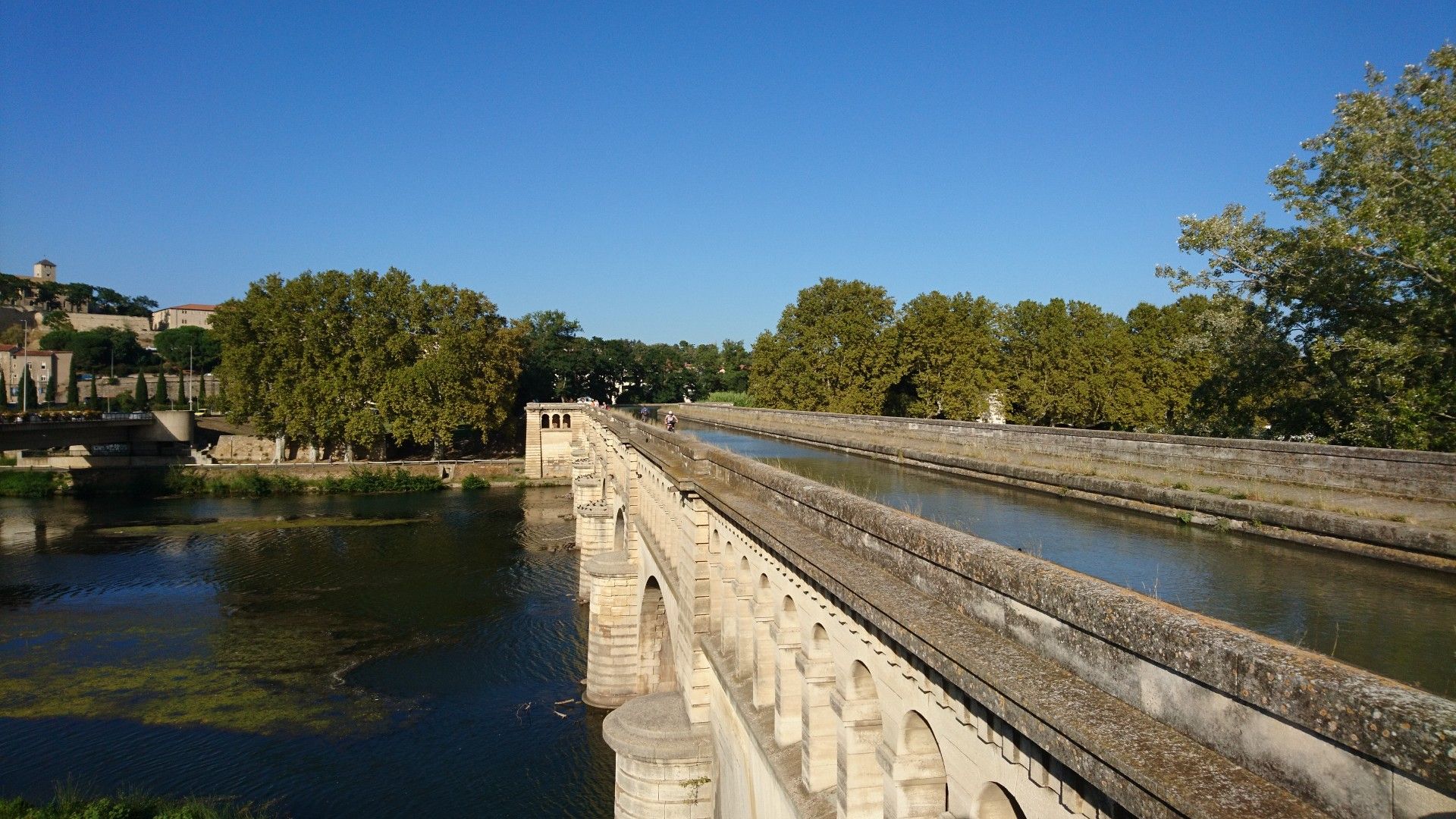
Construction of the Agen canal bridge was almost halted permanently due to competition from waterways and the railway. Its history is, of course, closely linked to that of the entire Canal Lateral. On August 25, 1839, the foundation stone was laid by the Duke of Orléans, eldest son of Louis-Philippe, and Princess Helene of Mecklenburg, his wife. In 1841, work was halted. The bridge would be used for a time by farmers' carts to avoid a detour via the old stone bridge. On May 5, 1846, a law mandated the resumption of work, and the bridge was completed in 1847. But that wasn't the end of the worries. This bridge could perhaps have become a railway bridge: In 1850, those who exclusively supported the railway raised the question of filling in the canal cut (in its entirety) to lay the tracks. It wasn't until March 1856 that the entire Garonne lateral canal was completed. This bridge itself is 539 meters long, 12.48 meters wide, 2.70 meters deep, and has 23 arches. The waterway is 8.80 meters wide, which prevents crossings. Holding basins were built on either side of the aqueduct. The civil engineers Jean-Baptiste de Baudre and Jean Gratien de Job were responsible for its construction. It is made entirely of freestone from Quercy.
0
0
Saint-Caprais Cathedral in Agen features several architectural peculiarities: its Romanesque apse is extended by a single-nave Gothic nave. Replacing an earlier wooden campanile, the current bell tower was built in 1835 at the initiative of Bishop Jean-Aimé de Levezou de Vezins and is unusual in that it consists of three Gothic stylistic elements (lancet Gothic, radiant Gothic, and flamboyant Gothic) curiously presented in reverse chronological order. A corbel composed according to this principle can still be seen in a corner of the north transept of Agen Cathedral. This corbel, in itself, is a small monument containing two large formerets and a long-span pointed arch. The paintings on the walls and ceilings depict the history of the arrival of Christianity in the region. A central role is given to the first martyrs of Agen. Other paintings are presented in series: the Evangelists, the Apostles, the patriarchs of the Jewish people (Abraham, Noah, etc.), the great kings of Israel, etc. The cathedral is much shorter than one might expect, judging by the size of the choir; indeed, political and financial difficulties greatly influenced the cathedral's final form. The painted decoration was entrusted to Jean-Louis Bézard, a painter from Toulouse who won the Prix de Rome in 1829. He completed the decoration of the chapel of the Hospice Saint-Jacques d'Agen, now the departmental hotel, in 1845, which has since disappeared. At the same time, he began painting the Chapel of the Virgin Mary in the cathedral. He continued decorating the cathedral until 1869. The choice of themes was made by the cathedral clergy and was the subject of debate between the painter and Abbé Deyche. For the decoration of the apse, the choice was made to depict the martyrdom of the saints of Agen. For the rest of the decoration, the paintings blend local themes and Marian iconography, the great figures of the Bible, the Old Testament, and the New Testament. Jean-Louis Bézard drew inspiration from the decoration of the Sicilian churches of Palermo and Montereale for the medallions of the arches of the transept crossing. The altar decoration: an altar cross and six candlesticks are listed as historical monuments. On the counter-façade, two statues: on the right, Saint Caprais, and on the left, Saint Stephen, by Louis Rochet. The main organ, built by organ builder Jean-Baptiste Stoltz, was featured at the 1855 World's Fair in Paris. According to legend, it was donated by Empress Eugenie in 1858 to Agen Cathedral, which until then had no instrument. It is the largest instrument in the Lot-et-Garonne department, with 45 stops spread over three manuals and a pedalboard. It has mechanical action. It is listed as a historic monument. The choir organ was built by organ builder Jules Magen in 1885 (15 stops over two manuals/pedalboard). It has been listed as a historic monument. Concert pianist and organist Jérôme Chabert has been its organist since 2002. He founded the Heures d'Orgue, an international festival held every summer in July and August on the cathedral's two organs.
0
0
Saint-Caprais Cathedral was built in the 12th century on the site of an episcopal basilica constructed in the 6th century, sacked by the Normans in 853 and then restored. Saint-Caprais Church is mentioned, along with Saint-Étienne Cathedral, in the will of Raymond, Lord of Toulouse, Marquis of Gothia, Count of Rouergue, Gévaudan, and Narbonne, who died in 961.[6] It was originally a collegiate church. Sacked again in December 1561 during the Wars of Religion, Saint-Caprais Collegiate Church became a fodder store in 1791 before being reopened in 1796 and becoming the official cathedral of Agen, following the destruction of the old Saint-Étienne Cathedral during the Revolution. It was elevated to the rank of cathedral in 1802. At the request of the Bishop of Agen, Jean-Aimé de Levezou de Vezins, the architect Gustave Bourrières[7] rebuilt the south façade, the bell tower, and the interior floors between 1838 and 1847.
0
0
자주 묻는 질문
에젱 주변에 쉬운 하이킹 코스가 얼마나 있나요?
에젱 주변에는 100개 이상의 쉬운 하이킹 코스가 있어 모든 난이도에 맞는 다양한 옵션을 제공합니다. komoot 커뮤니티는 이 코스들에 대해 별점 4.5점으로 높게 평가했습니다.
에젱 근처 쉬운 하이킹에서 어떤 풍경을 기대할 수 있나요?
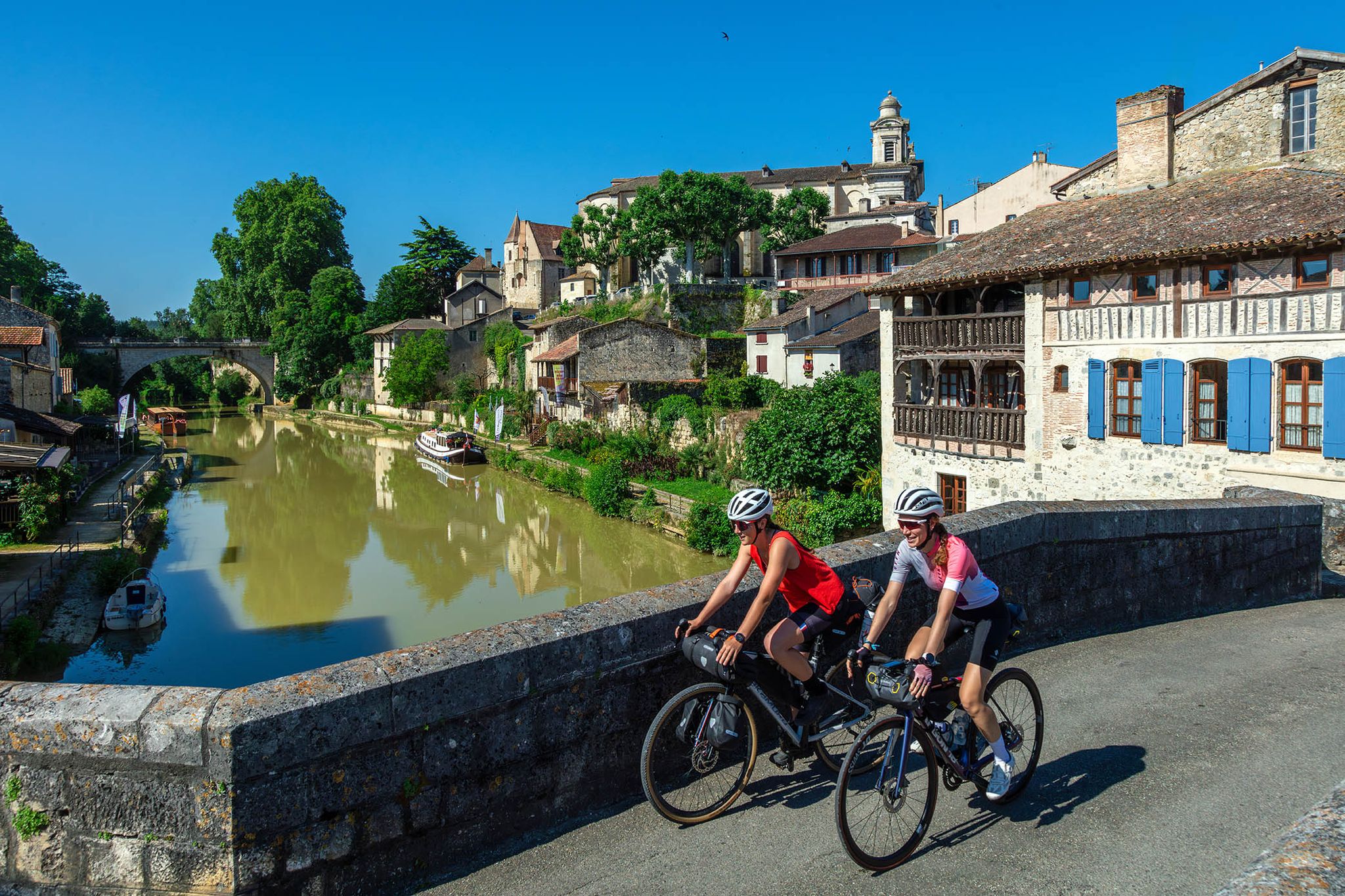
에젱 근처의 쉬운 하이킹은 주로 아름다운 가론 강과 고요한 가론 운하를 특징으로 하며, 수많은 강변 길과 그늘진 녹지 도로를 제공합니다. 또한 완만한 시골 풍경, 지정된 녹지 공간, 강 계곡을 통과하는 코스도 있어 다양하고 접근하기 쉬운 야외 경험을 제공합니다.
에젱 주변에 쉬운 순환 하이킹 코스가 있나요?
네, 에젱 주변의 많은 쉬운 코스는 순환형입니다. 예를 들어, 바자몽(Bajamont) 출발 바자몽 호수 루프는 평화로운 호숫가 산책을 제공하며, 에젱 출발 에클루즈 루프는 완만한 강변 경험을 제공합니다.
에젱 주변의 쉬운 코스는 어린이를 동반한 가족에게 적합한가요?
물론입니다. 에젱의 많은 쉬운 코스는 특히 가론 운하를 따라 있거나 지역 공원에 있는 코스들이 가족에게 완벽합니다. 이 코스들은 종종 평평한 구간, 그늘진 지역, 휴식 기회를 제공합니다. 그라비에 광장(Gravier esplanade)과 뒤 팽 광장(Square du Pin)과 같은 녹지 공간도 가족 활동에 좋습니다.
에젱에서 쉬운 하이킹을 할 때 개를 데려갈 수 있나요?
일반적으로 개는 에젱 주변의 많은 자연 코스, 특히 가론 강과 가론 운하를 따라 있는 코스에서 환영받습니다. 하지만 항상 목줄을 착용하고 모든 사람에게 즐거운 경험을 보장하기 위해 특정 공원이나 자연 보호 구역의 현지 규정을 확인하는 것이 가장 좋습니다.
에젱 근처 쉬운 하이킹에서 어떤 흥미로운 볼거리나 랜드마크를 볼 수 있나요?
많은 쉬운 하이킹 코스에는 역사적 및 자연적 랜드마크가 포함되어 있습니다. 독특한 에젱 운하 다리를 건너거나, 에젱 강 항구를 탐험하거나, 역사적인 모이라(Moirax)의 노트르담 교회를 방문할 수 있습니다. 산티아고 순례길 또한 문화적 통찰력을 제공합니다.
가론 계곡의 멋진 전망을 제공하는 쉬운 하이킹 코스가 있나요?
네, 몇몇 코스는 아름다운 전망을 제공합니다. 가이드 데이터에 명시적으로 나열되어 있지는 않지만, 더 넓은 지역에는 '뤼지냥-가론 계곡의 파노라마 전망 트레일'과 같은 코스와 강 및 주변 시골의 멋진 풍경을 제공하는 퐁 드 샤즈(Pont de la Chaise)와 같은 전망대가 있습니다.
에젱 주변에서 쉬운 하이킹을 하기에 가장 좋은 시기는 언제인가요?
봄과 가을은 쾌적한 기온과 아름다운 풍경을 제공하는 에젱 주변의 쉬운 하이킹에 이상적인 시기입니다. 봄에는 꽃이 피는 자연을 볼 수 있고, 가을에는 활기찬 단풍을 즐길 수 있습니다. 여름은 더울 수 있어 가론 강이나 운하를 따라 물가 산책이 특히 상쾌하며, 겨울에는 평화롭고 시원한 조건에서 산책할 수 있습니다.
가론 운하를 따라가는 쉬운 코스가 있나요?
네, 가론 운하는 쉬운 하이킹을 위한 두드러진 특징입니다. 운하는 느긋한 산책에 완벽한 그늘진 녹지 도로로 둘러싸여 있습니다. 에클루즈 – 에젱 운하 다리 루프 (에젱 출발)는 가론 강 위 운하 다리를 직접 걸을 수 있게 해주는 훌륭한 예입니다.
에젱의 쉬운 코스에 대해 다른 하이커들이 가장 좋아하는 점은 무엇인가요?
에젱의 쉬운 코스는 komoot 커뮤니티에서 별점 4.5점으로 높게 평가받고 있습니다. 하이커들은 종종 가론 강과 운하를 따라 있는 평화로운 물가 길, 코스의 접근성, 그리고 에젱 운하 다리와 같은 역사적 관심 지점과의 자연의 아름다움의 조화를 칭찬합니다.
역사 유적지로 이어지는 쉬운 하이킹 코스가 있나요?
네, 역사 유적지로 이어지는 쉬운 하이킹 코스를 찾을 수 있습니다. 예를 들어, 샤토 드 보빌(Château de Beauville) 루프는 역사적인 샤토 주변을 부드럽게 탐험할 수 있는 코스입니다. 이 지역에는 모이라 근처의 클루니 수도원과 같이 종교 유산과 로마네스크 예술을 보여주는 순례길을 따라가는 코스도 있습니다.
야생 동물 관찰에 특히 좋은 쉬운 하이킹 코스가 있나요?
가론 강 내에 위치한 프레리에 달로즈 자연 보호 구역(Frayère d'Alose Nature Reserve)은 큰 알로즈 물고기 보존에 전념하는 보호 구역으로, 특히 5월에 교육적인 산책 경험을 제공합니다. 가론 강과 운하를 따라 있는 물가 코스 또한 지역 조류 및 기타 수생 생물을 관찰할 기회를 제공합니다.
에이젠 주변에서 가장 인기 있는 명소


더 살펴보기
다른 지역의 최고의 하이킹를 살펴보세요.
