4.1
(7)
83
자전거 타는 사람
29
라이딩
Gravel biking around Les Brouzils offers diverse rural landscapes within the Vendée department of western France. The region is characterized by its "haut bocage Vendéen," featuring a mosaic of wooded areas, cultivated fields, prairies, and hedgerows. This varied terrain includes valleys and hills, providing a mix of unpaved paths, farm roads, and forest trails suitable for gravel bikes. The extensive Forêt de Grasla, covering 600 hectares, contributes significantly to the network of trails.
마지막 업데이트: 5월 5, 2026
10
자전거 타는 사람
65.2km
04:02
500m
500m
어려운 자갈길 타기. 우수한 체력 필요. 대부분 포장된 지면. 실력과 관계없이 누구나 갈 수 있음.
11
자전거 타는 사람
45.7km
02:56
450m
450m
어려운 자갈길 타기. 좋은 체력 필요. 투어 중 자전거를 끌고 가야 하는 구간이 있을 수 있음.

무료 회원 가입
6
자전거 타는 사람
어려운 자갈길 타기. 우수한 체력 필요. 대부분 포장된 지면. 실력과 관계없이 누구나 갈 수 있음.
8
자전거 타는 사람
54.1km
03:20
210m
210m
보통 자갈길 타기. 좋은 체력 필요. 대부분 포장된 지면. 실력과 관계없이 누구나 갈 수 있음.
3.5
(2)
5
자전거 타는 사람
56.3km
03:54
360m
360m
보통 자갈길 타기. 좋은 체력 필요. 대부분 포장된 지면. 실력과 관계없이 누구나 갈 수 있음.
더 다양한 경로와 다른 탐험가들의 추천을 살펴보세요.
무료 회원 가입
이미 komoot 계정이 있나요?
투어 추천은 다른 사람들이 komoot에서 완료한 수천 개의 활동을 바탕으로 구성되어 있습니다.
오늘 무료 계정으로 시작하세요
다음 모험이 기다리고 있어요.
로그인 또는 가입하기
19th century church whose unfinished bell tower was topped with a slate spire which clashes a little - a lot - with the rest of the monument.
0
0
A beautiful 16th-century castle. It was in the woods behind the castle that the final battle of the Second Vendée War took place, marked by the capture of the Vendée general Charette.
2
0
The last remaining witness to the region's papermaking industry, the association "Pour les arts graphiques en Vallée de Clisson" (For Graphic Arts in the Clisson Valley) has been working with local authorities since 1998 to revive the 19th-century papermaking industry at Le Liveau in Gorges. The Moulin du Liveau is a superb example of the region's Italianate architecture. With the active support of local authorities, the mill, owned by the municipality of Gorges, was restored to its original purpose as a paper mill. This magnificent site on the Sèvre Nantaise River in the Clisson Valley opened to the public in spring 2015. MORE THAN A MUSEUM, IT'S A LIVING WORKSHOP The association "Pour les arts graphiques en Vallée de Clisson" offers activities centered around the history and manufacture of paper. Children and adults alike can discover the mechanisms of the paper mill, handcraft their own sheets of paper, and learn about printing. An informative journey through history, accompanied by the ever-present pleasure of playfully recreating the gestures of the past. Inside, a hammer mill powered by a paddle wheel driven by the Sèvre River evokes the preparation of paper pulp from rags. Visitors can also practice calligraphy, participate in writing workshops, take bookbinding courses, and enjoy many other activities.
1
0
The Liveau Paper Mill in Gorges in the Clisson Valley (Loire Atlantique, 44) offers guided tours, educational outings, group visits to the paper mill, papermaking workshops, events, and exhibitions. The mill welcomes you south of Nantes and also offers a shop with a wide selection of paper, stationery, and books. The Liveau Paper Mill is located in Loire-Atlantique, in Gorges on the banks of the Sèvre Nantaise. Two flour mills, one on the right bank, the other on the left bank, made up the Liveau hydraulic site, first mentioned in 1407. Until 1561, it was owned by the lords of Clisson. • 1826, transformation of the right bank mill into a paper mill, a more prosperous activity at that time, and construction of the drying rack (drying rack), marked in its architecture by the strong Italian influence prevalent at that time in the canton of Clisson. • 1827: Papermaking begins at the mill. It produces "large gray paper" or "envelope paper" (wrapping paper) sold to the sugar refineries of Nantes. • 1850: Papermaking ends. • 1851 to 1952: Milling resumes. • 2001: The municipality of Gorges acquires the abandoned mill. • 2004: The "Pour les arts graphiques en vallée de Clisson" association wins first prize from the Fondation du Patrimoine for its project to rehabilitate and promote the Moulin du Liveau, with the support of Gorges elected officials and the Clisson Valley community of municipalities. • 2006: The Fondation du Patrimoine approves the project and brings in financial partners. • 2008-2009: Airtight and watertight construction of the buildings (mill and dryer), half of which was financed by the Total Foundation. Additional funding was provided by the Fondation du Patrimoine, the Crédit Agricole Foundation, parliamentary funds, the Pays de Loire Regional Council, the Loire-Atlantique General Council, the Clisson Valley Community of Communes, the municipality of Gorges, and various private funds. . 2014: Rehabilitation work in preparation for an artisanal papermaking activity, for cultural and tourist purposes. • April 2015: The Liveau paper mill in Gorges welcomes its first visitors.
1
0
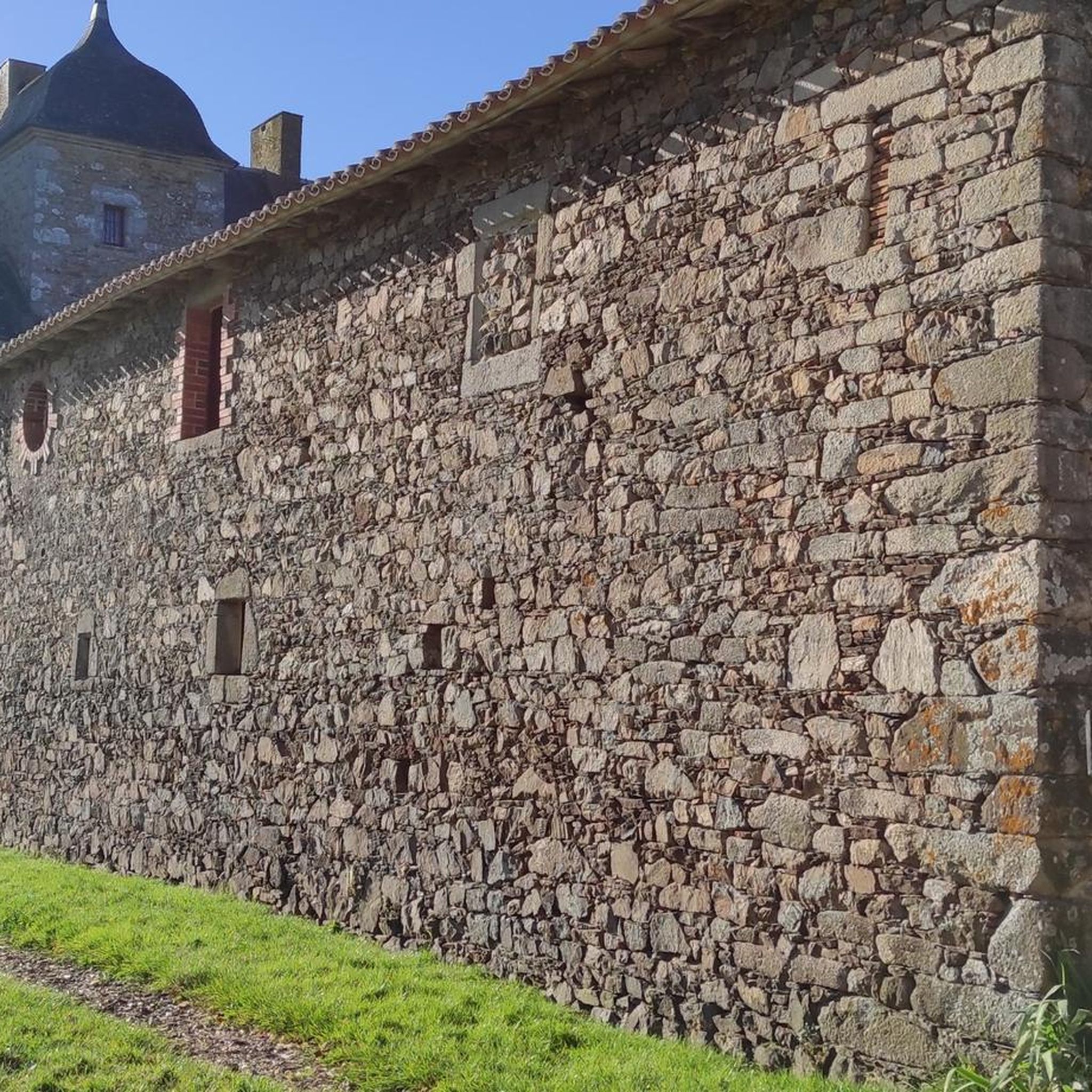
As part of Heritage Days, Isabelle Favre, owner of the La Roche Thévenin estate, opened her property to the public. She allowed visitors to discover both the exterior and interior of her residence. "Traces of this ancient 5,000-hectare barony can be found as early as 1411," explains Isabelle Favre. This fiefdom was then called La Roche Brisard, after its former lords. It was in 1515 that it became the property of the Thévenins, one of the most notable and oldest families in the Barony of Montaigu. Nine generations of Thévenins have succeeded one another. The Château de La Roche Thévenin burned during the Revolution. The plane trees, cedars, and magnolias date from that time, in 1887, when the Abbot of Meslay purchased this house for sick priests. Another owner of the property is the sculptor Grootaers, who is responsible for the fountain in the Place Royale in Nantes and some of his sculptures, which led to the estate being listed as a Historic Monument. Isabelle Favre and her husband purchased this property in 1984. But their love at first sight quickly turned into a nightmare: the building, hidden by lush vegetation, required extensive renovations. Twenty-eight years of work revealed, beneath the cement slabs, terracotta mosaics, a granite staircase with arrow slits, the Thévenin coat of arms on a doorframe, and a Stations of the Cross hidden in a chapel converted into a hayloft.
0
0
Bultière Lake is an artificial reservoir. The Bultière Dam was built in 1994. It is located in the commune of Chavagne en paillers. It supplies the drinking water network. Its surface area is 72 hectares and contains 5.2 million cubic meters of water. It is possible to walk around the lake via a 15-km trail. This lake, with its exceptionally rich fish population, awaits you with almost every type of fish (perch, pike, zander, catfish, carp, roach, bream, tench, etc.). You can go predator fishing from the shore or from a boat to catch zander, pike, and catfish. It is, of course, possible to still fish for roach, bleak, or bream. Carp are also present in this lake. A night carp fishing route located on the right bank in the Maurosière sector will delight those who love a good catch.
0
0
The Church of Saint-Jean-Baptiste is Gothic in style and features an imposing façade. It is built of stone and features ornate carved details. The façade features a richly decorated main portal, adorned with statues, reliefs, or architectural motifs. Inside the church, you will find a spacious, vaulted main nave supported by pillars or columns. The vaults feature decorative star and ribbed motifs typical of Gothic architecture. Restored over a period of five years, the interior of the building now reveals warm colors ranging from yellow to pinkish-red. Colored stained-glass windows are also a characteristic feature of Gothic churches, and the Church of Saint-Jean-Baptiste has magnificent stained-glass windows depicting biblical scenes and saints. In summary, the Church of Saint-Jean-Baptiste in Montaigu is an example of Gothic architecture with an imposing façade and decorative elements. It houses side chapels, a choir, a main altar, and colorful stained-glass windows. In addition to its aesthetic appeal, it is also an active place of worship and a significant historical landmark for the local community. The Church of Saint John the Baptist in Montaigu has a rich history dating back several centuries. Here is a brief overview of its history: The original church in Montaigu was built in the 11th century, but little information is available about this early structure. Over the following centuries, the church underwent alterations and expansions, reflecting changing architectural styles. In the 14th century, the church was rebuilt in the Gothic style, with a spacious main nave, elegant vaults, and carved details. Construction was completed in the 15th century, giving the church its current appearance. During the French Revolution in the 18th century, the Church of Saint John the Baptist was used for secular purposes. It was converted into a community hall and suffered significant damage, including the destruction of decorative and religious elements. After the Revolution, the church was gradually restored and returned to worship. Repair and renovation work was undertaken to restore damaged architectural features. Over the years, modifications and improvements were made to the Church of Saint-Jean-Baptiste. Side chapels were added, stained-glass windows were installed, and religious ornaments were restored. Today, the Church of Saint-Jean-Baptiste is an active place of worship for the Catholic community of Montaigu. It is also a tourist and cultural attraction, attracting visitors with its Gothic architecture, stained-glass windows, and history. Religious events, ceremonies, and concerts are regularly held there.
0
0
다른 지역의 최고의 그래블 라이딩를 살펴보세요.