4.5
(672)
9,206
자전거 타는 사람
328
라이딩
괴클링겐의 로드 사이클링 경로를 찾으시나요? 그렇다면 괴클링겐 로드 라이딩 컬렉션 중에서 가장 멋진 라이딩 장소를 아래에서 살펴보세요.
마지막 업데이트: 7월 8, 2026
4.2
(6)
30
자전거 타는 사람
22.8km
01:06
250m
250m
초급용 로드 라이딩. 모든 체력 수준에 적합. 지면 대부분이 잘 포장되어 있고 라이딩하기 쉬움.
4.5
(2)
16
자전거 타는 사람
25.2km
01:06
220m
220m
초급용 로드 라이딩. 모든 체력 수준에 적합. 지면 대부분이 잘 포장되어 있고 라이딩하기 쉬움.

무료 회원 가입
3.5
(2)
14
자전거 타는 사람
25.9km
01:14
280m
280m
초급용 로드 라이딩. 모든 체력 수준에 적합. 지면 대부분이 잘 포장되어 있고 라이딩하기 쉬움.
10
자전거 타는 사람
21.5km
01:06
310m
310m
보통 도로 자전거 타기. 좋은 체력 필요. 지면 대부분이 잘 포장되어 있고 라이딩하기 쉬움.
10
자전거 타는 사람
24.5km
01:00
90m
90m
초급용 로드 라이딩. 모든 체력 수준에 적합. 지면 대부분이 잘 포장되어 있고 라이딩하기 쉬움.
더 다양한 경로와 다른 탐험가들의 추천을 살펴보세요.
무료 회원 가입
이미 komoot 계정이 있나요?
투어 추천은 다른 사람들이 komoot에서 완료한 수천 개의 활동을 바탕으로 구성되어 있습니다.
오늘 무료 계정으로 시작하세요
다음 모험이 기다리고 있어요.
로그인 또는 가입하기
Knight Stefan von Mörlheim, co-founder of the Cistercian monastery of Eußerthal, donated his manor, including a chapel, to the monastery in Mörlheim around 1148. After a turbulent history, the dilapidated St. Martin's Church in Mörlheim passed into Catholic ownership in 1705. The monastery church in Eußerthal and the church in Mörlheim still display a mitre and abbot's staff alongside the cross on their steeples – ecclesiastical symbols that Heinrich Wilhelm, Baron von und zu Sickingen, was permitted to wear as a layman. In 1754, Heinrich Wilhelm, Baron von und zu Sickingen, had the Mörlheim church rebuilt. It was consecrated on September 14, 1754. One hundred and fifty years later, at the beginning of the 20th century, the church had once again fallen into disrepair. The swinging of the bells in the bell tower had weakened the church ceiling, and the cramped space was no longer sufficient for the congregation. One hundred years ago, on July 1, 1912, the reconstruction of the church into the present one began, based on plans by the architect Johannes Albert Boßlet. It was extended to the west, and the existing beamed ceiling was replaced by a Baroque-style lath and plaster ceiling suspended from the roof truss, visually resting on newly added wall piers. Finally, a church tower nearly 30 meters high was erected. Two bells call the faithful to prayer, and the city of Landau owns the clock and its large clock faces. The reconstruction of the church, and especially the construction of the new church tower, was made possible by the Bavarian Church Community Ordinance of 1912. According to this ordinance, even landowners outside the parish could be assessed for the construction and maintenance of religious buildings. A good 75 percent of the land in Mörlheim subject to these assessments formerly belonged to outsiders, the so-called "outsiders." The extensive renovation of the church in 2008 has given the Mörlheim church a great splendor. (Egon Ehmer)
0
0
The French Gate at Obertorplatz (Upper Gate Square) marked the southern boundary of the city of Landau in earlier times. Its counterpart, the German Gate at Untertorplatz (Lower Gate Square), bordered Landau to the north. In medieval times, these two city gates were the only possible entrances to the city. The construction of both structures as part of the Vauban fortress dates back to the French architect Sébastien de Vauban and thus to the time when the city of Landau belonged to France. During this period, these two city gates were the only possible access points to the city. Both gates are identical in their design: in the style of Roman triumphal arches, they display the coat of arms of the Bourbon dynasty and that of Louis XIV, the Sun King. Even today, the heart of Landau's city center unfolds between the two gates, which are located approximately 900 meters apart. Source: http://waterclerk-on-tour.de/2019/04/01/franzoesisches-tor-landau-in-der-pfalz/
0
0
Landau Fortress could only be entered or exited through two main gates—the "German Gate" in the north and the "French Gate" in the south. These imposing gates secured the vulnerable approaches to the fortress and also symbolized the French king's claim to power. The Bourbon coat of arms (the fleurs-de-lis), the sculpted head of the Sun King, and his motto, "Nec pluribus impar" (Not equal to many), displayed in the gate's pediment, were intended to vividly convey the Sun King's self-image to visitors from afar. Source: https://www.pfalz.de/de/sehenswuerdigkeit/franzoesisches-tor
0
0
The French Gate – also known as the Lower Gate, formerly called the Porte de France – is a listed building in Landau in der Pfalz. It marks the southern end of the old town and is located at Obertorplatz 4. An epitaph for Joseph de Montclar, also a listed monument, is located there. The gate, built between 1688 and 1691, together with its northern counterpart – the German Gate – forms one of two remaining sections of the main wall of the Landau fortress. Until well into the 19th century, it was only one of two ways to enter or leave the city. Partly because this became an increasing obstacle after the opening of the Neustadt–Wissembourg railway line and the city's train station, the fortress was abandoned in 1871, and another, eastern entrance was created in the form of what is now Ostbahnstraße. ... The structure is a Baroque gateway, consisting of a partially three-aisled hall and a magazine building, dating from around 1690. Sébastien Le Prestre de Vauban was the architect responsible for its design. The gateway's design is a reference to the French King Louis XIV. Source: https://de.wikipedia.org/wiki/Franz%C3%B6sisches_Tor
0
0
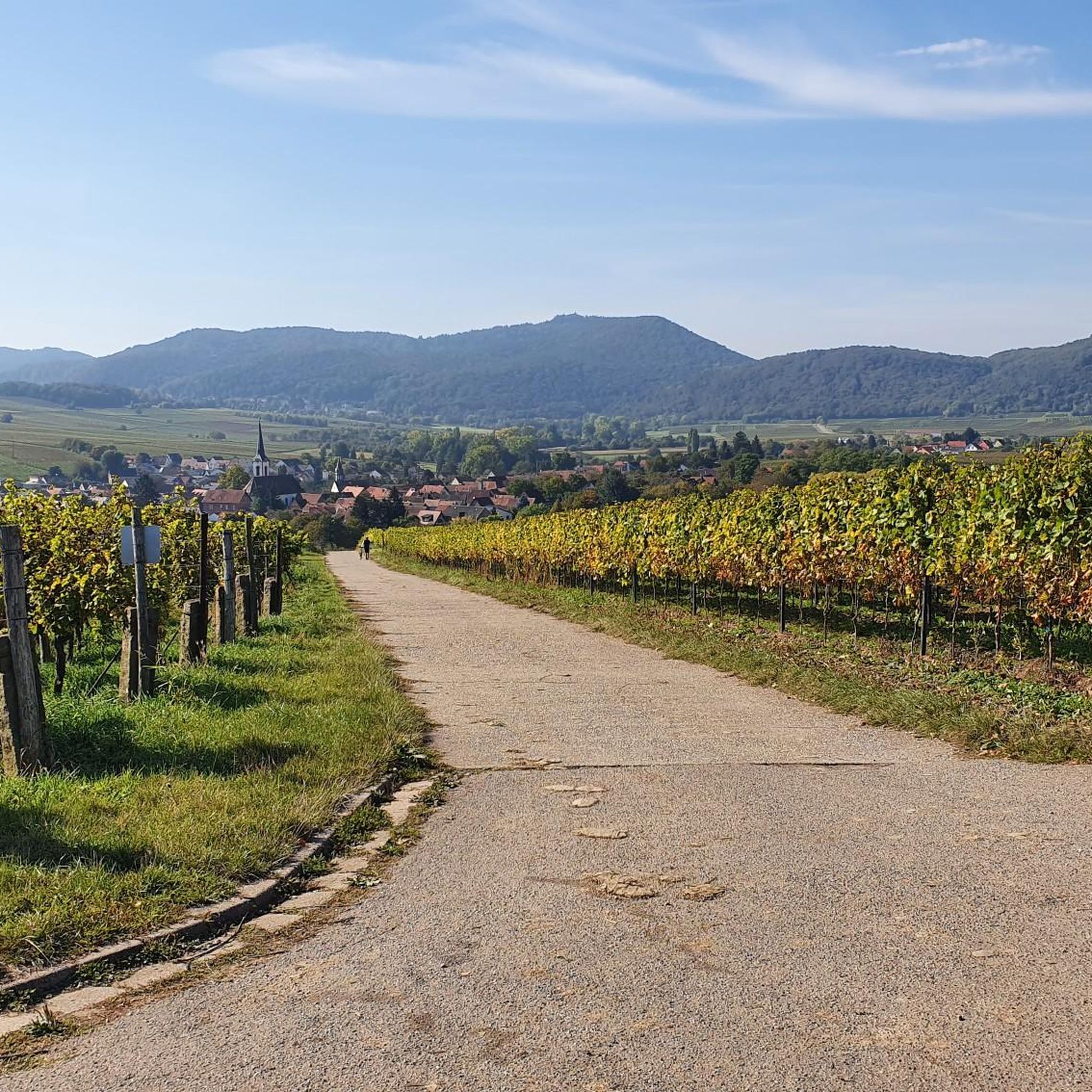
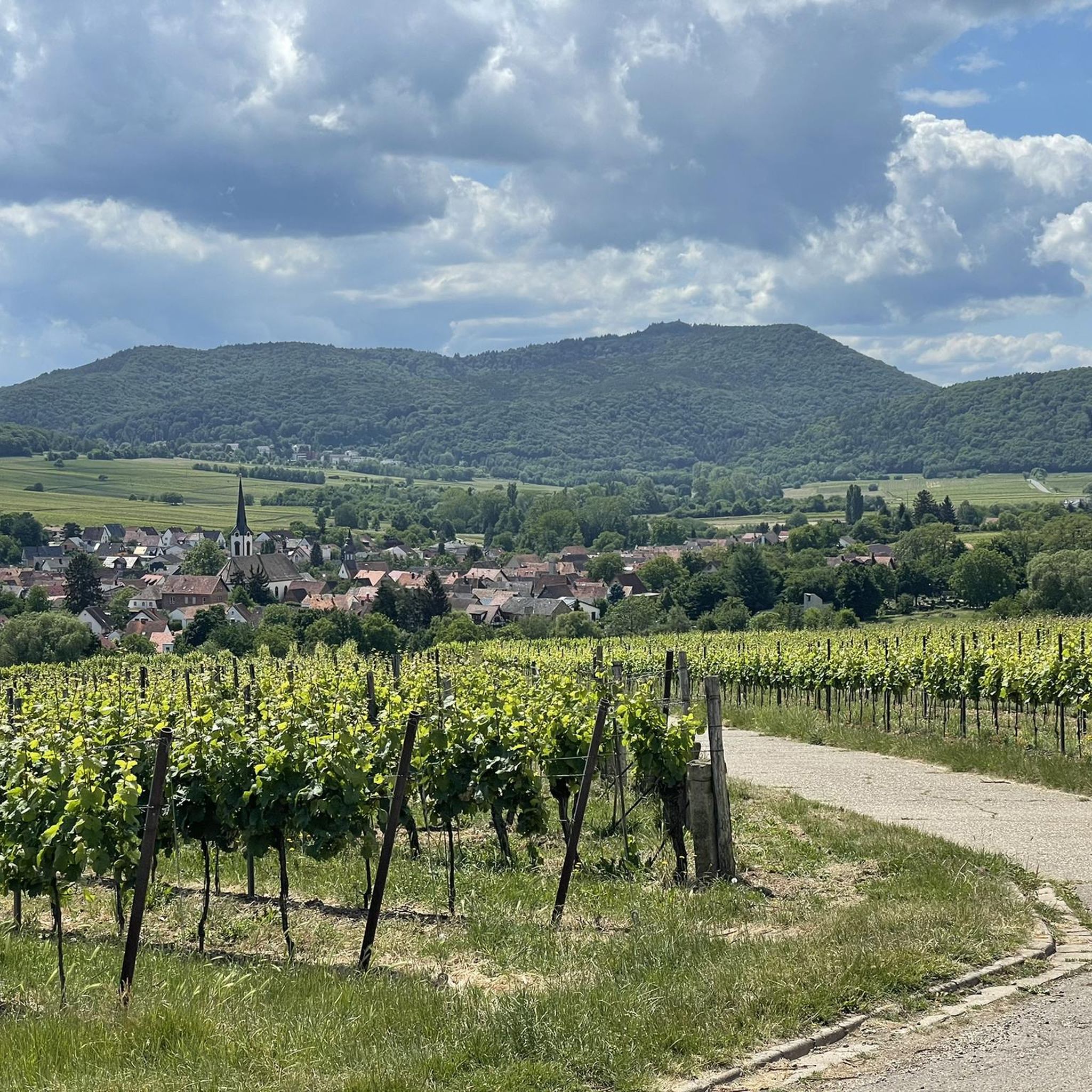
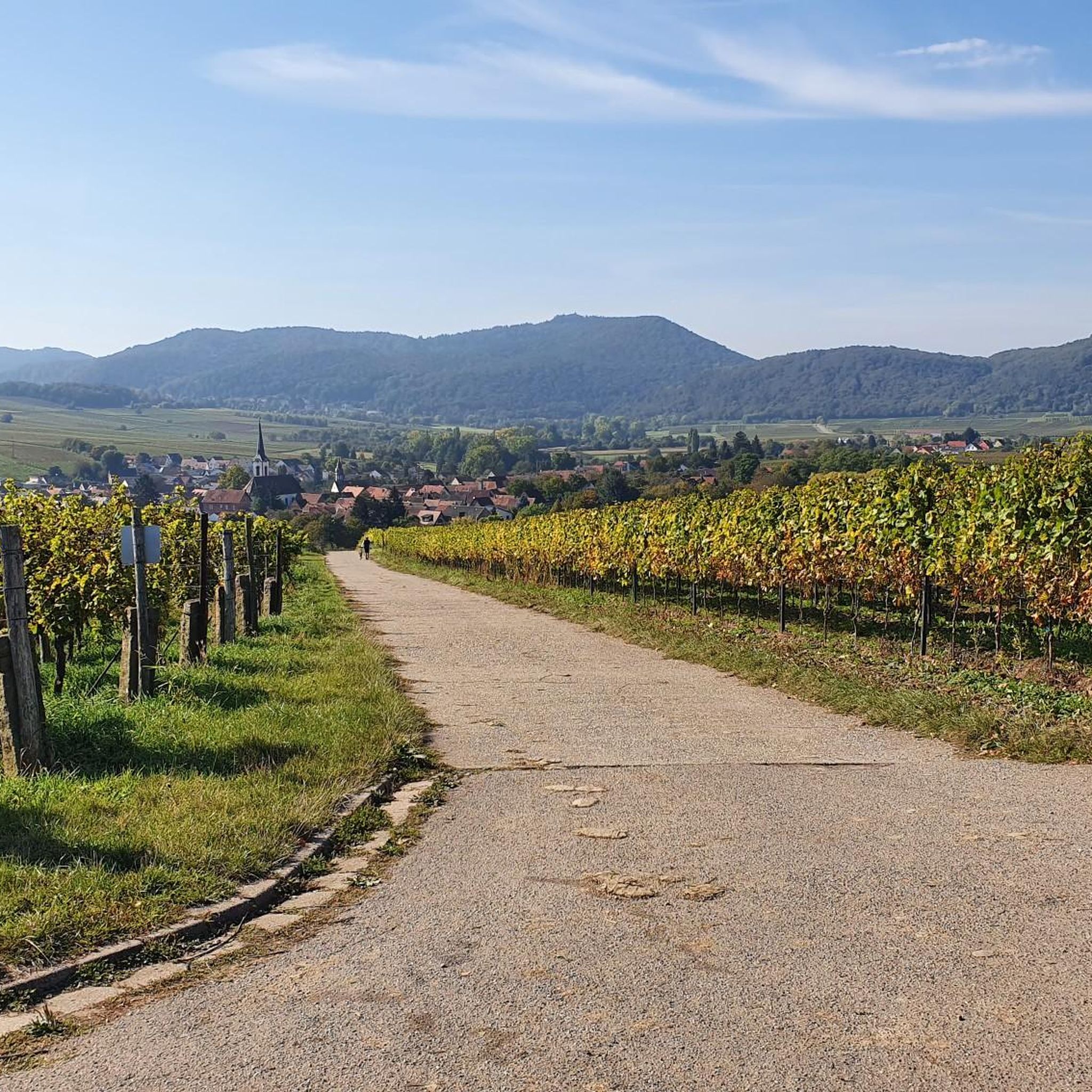
Fantastic view over the vineyards.
0
0
The Benedictine monastery of Klingenmünster, known as "Clinga Monasterium," is the name of the town. It is probably the oldest of Germany's original monasteries, experiencing its heyday under the Salian and Hohenstaufen dynasties between the mid-9th and 13th centuries. Some remnants of the church building from 1100 are still preserved: the Romanesque westwork, the twin towers with spiral staircases, a late Romanesque gallery chapel, and the connection to the abbot's house. Remnants of paintings can only be found above the choir arch on the east wall (outline of a Virgin Mary with Child). A former southern transept (formerly with an apse) is now the sacristy of St. Michael's Church. The monastery complex was surrounded by a protective wall, and some wall remnants from the 13th century are still preserved. In 1996, the former monastery garden was replanted as a herb garden. St. Michael's Church was built in 1738 on the foundations of the former Benedictine abbey. (https://www.pfalz.de/de/kloster-st-michael-in-klingenmuenster)
0
0
다른 지역의 최고의 로드 사이클링 경로를 살펴보세요.