라섹 즐로토리스키 최고의 워킹 & 하이킹 경로
4.8
(71)
664
등산객
83
하이킹
라섹 즐로토리스키 에서 인기 있는 워킹과 하이킹을 찾으시나요? 그렇다면 아름다운 Legnica 숲 주변에 있는 경로 컬렉션을 아래에서 살펴보세요. 라섹 즐로토리스키에 있는 하이킹 및 워킹 트레일 중에서 마음에 드는 곳을 선택해 언제든지 야외 활동을 하면 돼요.
마지막 업데이트: 8월 25, 2026
7
등산객
5.16km
01:21
40m
40m
초급용 하이킹. 모든 체력 수준에 적합. 실력과 관계없이 누구나 쉽게 갈 수 있는 길.
3
등산객
7.56km
01:56
20m
20m
초급용 하이킹. 모든 체력 수준에 적합. 실력과 관계없이 누구나 쉽게 갈 수 있는 길.

무료 회원 가입
4.7
(6)
61
등산객
7.44km
01:53
20m
20m
초급용 하이킹. 모든 체력 수준에 적합. 실력과 관계없이 누구나 쉽게 갈 수 있는 길.
4.8
(14)
35
등산객
8.11km
02:03
10m
10m
보통 하이킹. 좋은 체력 필요. 실력과 관계없이 누구나 쉽게 갈 수 있는 길.
8
등산객
5.43km
01:23
10m
10m
초급용 하이킹. 모든 체력 수준에 적합. 실력과 관계없이 누구나 쉽게 갈 수 있는 길.
더 다양한 경로와 다른 탐험가들의 추천을 살펴보세요.
무료 회원 가입
이미 komoot 계정이 있나요?
투어 추천은 다른 사람들이 komoot에서 완료한 수천 개의 활동을 바탕으로 구성되어 있습니다.
오늘 무료 계정으로 시작하세요
다음 모험이 기다리고 있어요.
로그인 또는 가입하기
커뮤니티 팁

Legnica's Old Town Hall (Stary Ratusz) is an architectural gem located on the central market square (Rynek) and one of the oldest surviving buildings in the city. Here are the key details: 🏛️ Historical Overview Built: Originally in the 14th century, rebuilt and expanded several times. Style: A blend of Gothic, Renaissance, and Baroque styles, with later Neoclassical elements. Function: Served for centuries as the seat of the city council, a court, and an administrative center. 🎨 Architecture & Features Facade: With arcades that formerly served as market halls. Tower: The distinctive clock tower was added in the 16th century. Interiors: Historic council chamber with vaulted ceiling and wall paintings. Former courtrooms and administrative offices. Restorations: Renovated several times, most recently extensively in the 1990s. 📍 Location & Current Use Directly on the Rynek, opposite the Neptune Fountain and close to the Galeria Sztuki (Sculpture Gallery). Today, the building houses cultural institutions, exhibitions, and occasional municipal events. A popular meeting place for city tours and history buffs. 🏙️ Cityscape Context Surrounded by restored town houses, cafés, and landmarks such as the Cathedral of St. Peter and Paul, the Church of Our Lady, and the Copper Museum. Together with the New Town Hall on Plac Słowiański, it forms an exciting architectural duo combining tradition and modernity.
0
0
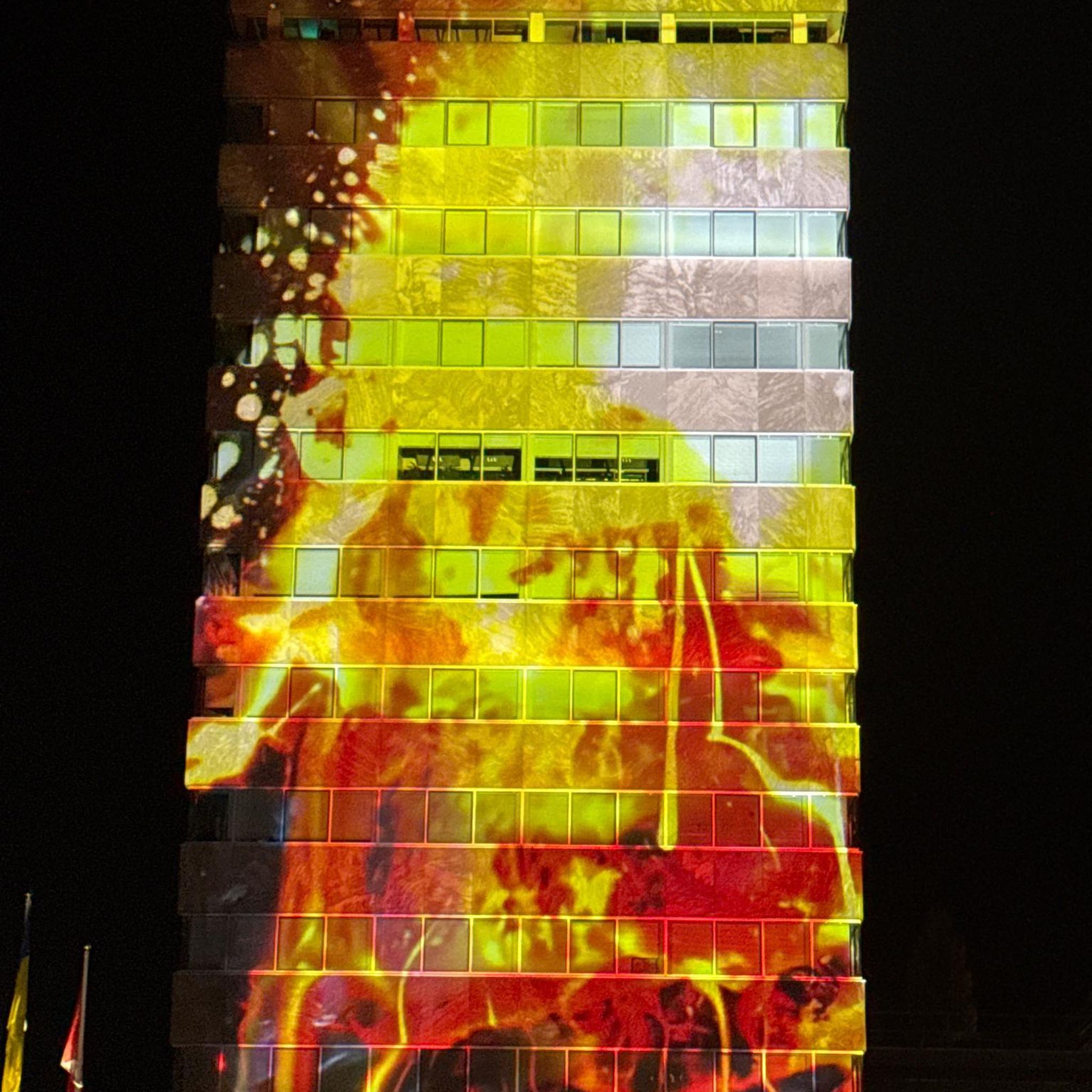
The New Town Hall in Legnica (Nowy Ratusz) is an impressive Neo-Renaissance building and a significant testament to the city's development at the beginning of the 20th century. 🏛️ Architecture & Origin Built: Between 1902 and 1905 according to plans by Paul Öhlmann, originally designed by Lothar Schönfelder. Style: Neo-Renaissance with Baroque elements, richly decorated facades with sandstone cladding and granite bases. Planned concept: A four-wing complex with two courtyards and a monumental tower – however, only part of it was built. 📍 Location & Function Located at what is now Plac Słowiański (formerly Friedrichsplatz), south of the Cathedral of St. Peter and Paul. After World War II, the building became the seat of the Polish city administration in 1947. It has been a listed building since 1981. 🏢 Use & Interiors Ground floor: Police, fire department, detention cells. 1st floor: Tax office, tax offices, cash registers. 2nd floor: Mayor's office, municipal council meeting room, council library. 3rd floor: Building department. Attic: City archives. 🛠️ Technical equipment (at the time of construction) Two independent heating systems: hot water and low-pressure steam. Gas lighting in most rooms, electric lighting in representative areas such as the mayor's office and the meeting room.
0
0
The Julek statue in Legnica is a charming yet controversial public sculpture that is part of a larger artistic project: 🧒 Who is "Julek"? Depiction: A young boy with an oversized backpack, from which a proca (slingshot) protrudes. On his head, he wears a newspaper cap – a typical accessory of childhood in the 1950s. Symbolism: Embodies a cheeky, curious child from Legnica, representing the city's generations. 🎨 Artist & Concept Author: Edward Mirowski, a sculptor from Legnica. Unveiling: On May 30, 2014, directly on the market square, next to the Galeria Sztuki. Part of the "Dzieci Legnicy" (Children of Legnica) cycle: Several sculptures are planned, depicting children from different eras – from the 1950s to the present. Goal: To reflect the city's identity and history through childhood figures. 🗣️ Reactions & Discussion The sculpture sparked controversial discussions: Some saw it as a loving tribute to the city's history, while others criticized it as kitsch. The sculpture's placement between the cathedral and the gallery was also debated. 📍 Location Right on Legnica's Rynek (Market Square), next to the Galeria Sztuki – easily accessible and a popular photo opportunity.
0
0
The Cathedral of St. Peter and Paul in Legnica (Katedra Świętych Apostołów Piotra i Pawła) is a significant sacred building with a rich history and impressive architecture. Here are the key details: 🏰 Historical Overview First church built: Already mentioned in 1208, originally dedicated to the Apostle Peter. Gothic Rebuilding: Built between 1328 and 1378 under master builder Wiland, modeled on St. Elizabeth's Church in Breslau. Consecration: On September 20, 1342, by Bishop Wacław; St. Paul was added as a second patron. Reformation: From 1522/23, the church served as a Protestant church under Duke Frederick II. Fire & Reconstruction: After a fire in 1835, it was rebuilt in the Neo-Gothic style according to designs by Karl Friedrich Schinkel. 🛐 Catholic Cathedral Return to Catholics: After 1945, following the transfer to Poland. Elevation to cathedral status: On March 25, 1992, by Pope John Paul II, the main church of the newly established Diocese of Legnica. Visit of the Pope: John Paul II visited the cathedral on June 2, 1997. 🎨 Architecture & Furnishings Three-aisled hall church with cross vaults in the side aisles and a ribbed presbytery. Northwestern main portal: Around 1370, with a Gothic statue of the Madonna and Child (ca. 1340) – a masterpiece of stonemasonry. West portal: Scenes from the Adoration of the Magi. Interior: Renaissance pulpit (1586/88) Baroque high altar Bronze baptismal font in the shape of a Gothic chalice Gravestone of Duke Ludwig II of Brieg and Elisabeth of Brandenburg. 📍 Location & Surroundings Directly on Liegnitz Square, centrally located in the old town. In the immediate vicinity: Church of Our Lady, Liegnitz Castle, Copper Museum, and Modrzejewska Theater.
0
0

The pergola and its immediate surroundings are a gem in Legnica's People's Park, offering a perfect photo opportunity or simply a place to take a break.
0
0
Julek is a schoolboy with a slingshot and a newspaper cap. Rumor has it that he didn't go to school, preferring to earn some money instead. This is apparently just the beginning of a series called "Children of Legnica." It remains to be seen whether there will be other similar characters. As usual, there are supporters and opponents of this idea. A comparison with the Wrocław dwarves isn't really appropriate, as the reason for their creation is very different.
0
0
The Baroque-style Old Town Hall was last used as a town hall in 1905. It is located at the southeast end of the row of buildings on Legnica's market square, very close to the Church of St. Peter and St. Paul. The basement now houses a restaurant, known in Germany as the Ratskeller.
0
0

Julek – a sculpture of a boy by Legnica artist Edward Mirowski.
0
0


더 살펴보기
다른 지역의 최고의 하이킹를 살펴보세요.
