20의 고니-쇼세가지 명소 & 주요 장소
고니-쇼세에는 둘러볼 만한 장소가 많답니다. 하이킹 또는 사이클링을 좋아한다면 고니-쇼세에 숨겨진 20
가지 보석을 만날 수 있을 거예요. 이 지역의 주요 명소를 살펴보면서 다음 모험을 계획해보세요.
마지막 업데이트: 4월 24, 2026


이런 장소를 발견하려면 지금 가입하세요
최고의 싱글 트랙, 봉우리 및 다양한 흥미로운 야외 장소에 대한 추천을 받아보세요.
무료 회원 가입

SparkOH의 사일로
하이라이트 • 기념물
The sorting and washing machines were mainly operated by female workers and made use of gravity. …
번역자 Google •
팁에 의해
스피엔의 신석기 시대 부싯돌 광산
하이라이트 • 역사적 장소
번역자 Google •
팁에 의해

무료로 가입하여 고니-쇼세 주변의 더 많은 명소를 발견하세요.
무료 회원 가입
이미 komoot 계정이 있나요?
오늘 무료 계정으로 시작하세요
다음 모험이 기다리고 있어요.
로그인 또는 가입하기



커뮤니티 팁

The Neolithic flint mines of Spiennes constitute a vast flint extraction and knapping center covering around a hundred hectares. They were exploited for almost two millennia between 4350 and 2300 BC. They have been included on the UNESCO World Heritage List since 2000. Find all the information here: minesdespiennes.org
0
0

The museum from 2015, built on top of several prehistoric mine shafts (up to 15m deep), can be visited individually (€6/pp; free with MuseumPass). If you also want to descend into one of the mine shafts via ladder (only at 2 pm), you must book this at least one day in advance at the Bergen tourist office, info on the website. Cost: €8/pp on top of museum admission. But for this you get a detailed tour from the excellent guide (we had a perfectly trilingual FR-NL-EN!) First above ground through the museum and then underground. Attention: maximum group of 12 people and children under 10 years not allowed.
0
0
The Neolithic flint mines of Spiennes constitute a vast flint extraction and knapping center covering around a hundred hectares. They were exploited for nearly two millennia between 4350 and 2300 BC. They have been included on the UNESCO World Heritage List since 2000. Find all the information here: https://www.minesdespiennes.org
5
0

The enormous size of the site (nearly 100 ha), its age and its archaeological richness have led to the Spiennes site being recognized as a UNESCO World Heritage site in December 2000. This puts the Neolithic flint mines of Spiennes next to buildings such as the Great Wall of China, the Taj Mahal in India or the cemetery of Machu Picchu in Peru. So it is worth driving by! https://www.visitmons.nl/uitstap-naar-een-vuursteenmijn
8
0
This imposing concrete monolith housed the washing house and storage bunkers for the coal. The sorting and washing machines were mainly operated by female workers and made use of gravity. The material extracted from the mine was then transported to the top floor of this building via a conveyor belt. On the upper floors, the coal was separated from the ore-poor rock. On the middle floors, the coals were then sorted by size. On the ground floor, the end product was stored in funnels: silos in the shape of an inverted pyramid. Railcars drove under the funnels to fill them with coal. In the basement, the small funnels were used to sell coal to the local coal merchants. (information board)
8
0
This is a summit climb. Especially on the adventurous side. There are ropes there to hoist you up. The other side is a nice wide walking path. In my opinion, the most beautiful slag heap on the GR 412.
6
0
The Crachet slag heap is a Site of Great Biological Interest (SGIB). It is also part of the Natura 2000 network to protect its exceptional fauna and flora. Located a stone's throw from the SPARKOH science museum! (former PASS), the slag heap is a fabulous educational tool which regularly welcomes school visits but also families looking for calm and nature. Thanks to its marked and well-equipped paths with stairs, small bridges, duckboards and ropes, its ascent is easy despite a difference in altitude of around 70 m. Relatively wooded, the Crachet sometimes gives way to magnificent grassy wastelands and a few ponds which encourage the development of great biodiversity. Its summit, located at an altitude of 140 m, offers a beautiful panoramic view of the Borinage slag heap range as well as the SPARKOH! site, built by the architect Jean Nouvel. In this place, the ground is adorned with red and black. Smoke can even be observed in certain places because the heap is still burning more than 60 years after the closure of the site. coal mining. https://www.destinationterrils.eu/nl/terril-du-crachet
8
0

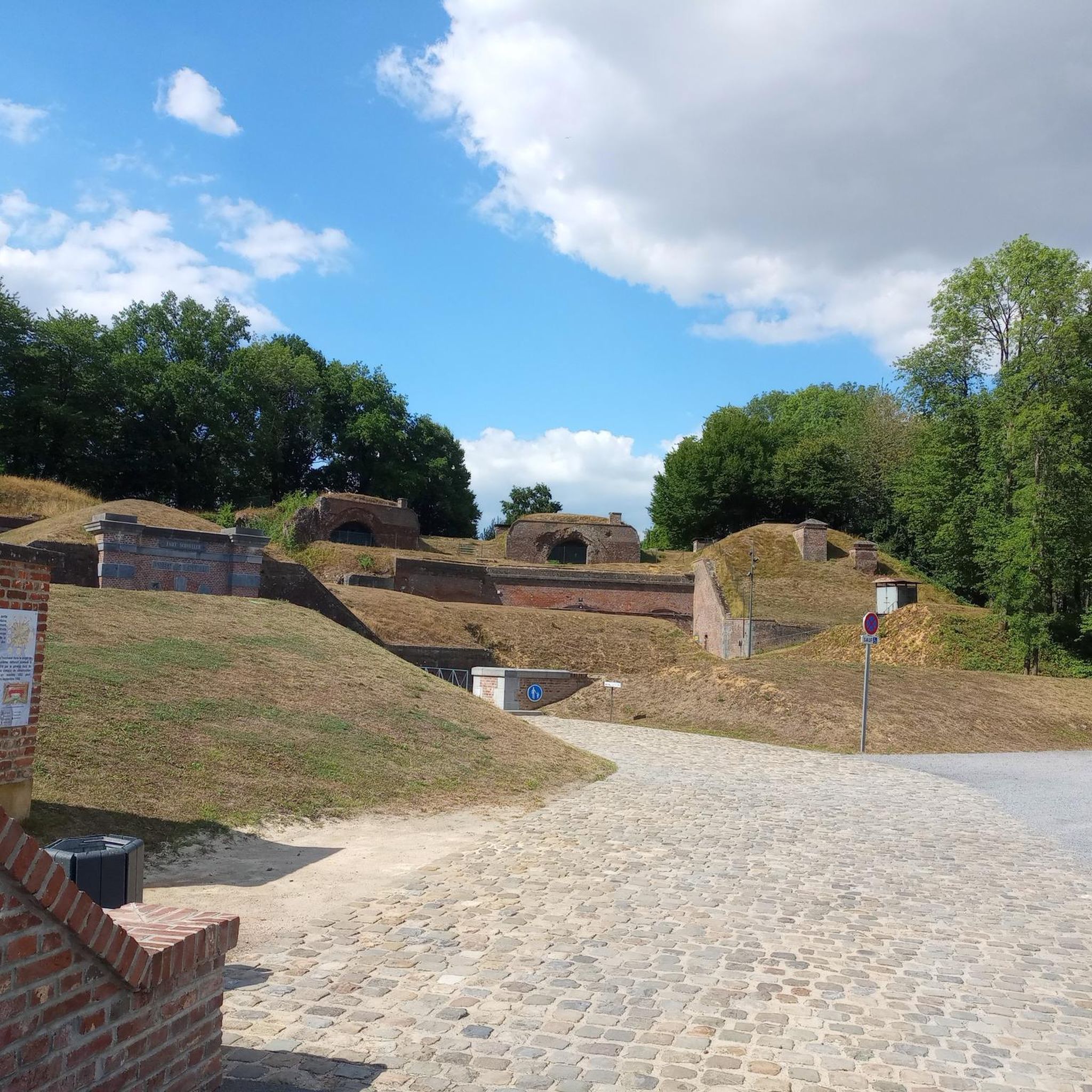
THE LEVEAU FORT Fort Leveau is one of six forts (Sarts, Boussois, Cerfontaine, Bourdiau, Hautmont and Leveau) built on the outskirts of Maubeuge to protect the border. It was built between 1882 and 1884 according to the defense principles of General Séré de Rivières. Now owned by the town of Feignies, it is one of the last witnesses to the Battle of Maubeuge in August-September 1914. The Fort de Leveau museum is largely devoted to the First World War. From local history to a more global vision of the conflict, the daily life of the soldiers and the living conditions of the Poilus are presented from the first days of the war in the forts to the mud of the trenches. The Fort de Leveau Safeguarding Association ensures the safeguarding and enhancement of this fort. The dormant bridge, destroyed by a shell on September 7, 1914, was rebuilt with the support of the Agglomeration, 100 years later with respect for heritage. Association Safeguarding the Fort of Leveau B.P. 51068 FEIGNIES 59606 MAUBEUGE CEDEX Such. / Fax: +33(0)3 27 62 37 07 Email: contact@fortdeleveau.fr URL: http://fortdeleveau.fr/
0
0


더 살펴보기
찾고 있는 하이라이트를 아직 못 찾으셨나요? 다른 지역의 주요 명소 가이드를 확인해보세요:
