자브레자크 최고의 라이딩 경로
4.5
(56)
1,652
자전거 타는 사람
385
라이딩
자브레자크의 로드 사이클링 경로를 찾으시나요? 그렇다면 자브레자크 로드 라이딩 컬렉션 중에서 가장 멋진 라이딩 장소를 아래에서 살펴보세요.
마지막 업데이트: 8월 25, 2026
4.2
(5)
130
자전거 타는 사람
55.6km
02:16
270m
270m
보통 도로 자전거 타기. 좋은 체력 필요. 지면 대부분이 잘 포장되어 있고 라이딩하기 쉬움.
4.0
(6)
57
자전거 타는 사람
54.3km
02:21
280m
280m
보통 도로 자전거 타기. 좋은 체력 필요. 지면 대부분이 잘 포장되어 있고 라이딩하기 쉬움.

무료 회원 가입
4.0
(3)
35
자전거 타는 사람
48.9km
02:00
210m
210m
초급용 로드 라이딩. 모든 체력 수준에 적합. 지면 대부분이 잘 포장되어 있고 라이딩하기 쉬움.
31
자전거 타는 사람
43.6km
01:49
190m
190m
보통 도로 자전거 타기. 모든 체력 수준에 적합. 투어 중 라이딩하기 어려운 비포장 구간이 있을 수 있음.
36
자전거 타는 사람
11.5km
00:34
120m
120m
초급용 로드 라이딩. 모든 체력 수준에 적합. 지면 대부분이 잘 포장되어 있고 라이딩하기 쉬움.
더 다양한 경로와 다른 탐험가들의 추천을 살펴보세요.
무료 회원 가입
이미 komoot 계정이 있나요?
투어 추천은 다른 사람들이 komoot에서 완료한 수천 개의 활동을 바탕으로 구성되어 있습니다.
오늘 무료 계정으로 시작하세요
다음 모험이 기다리고 있어요.
로그인 또는 가입하기




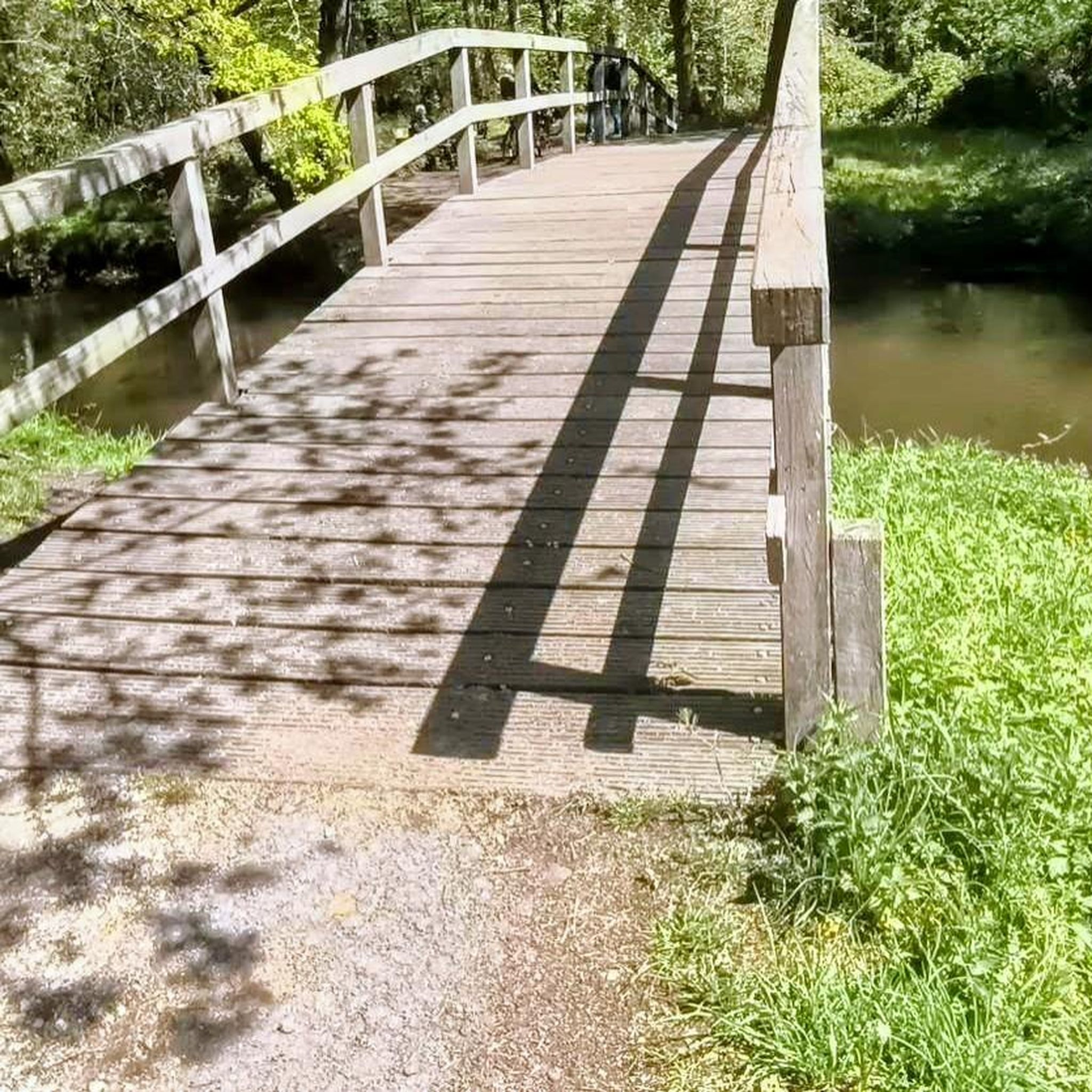
커뮤니티 팁

Chaniers에 있는 La Baine 유적지는 현재의 제분소보다 훨씬 이전의 것입니다. 14세기: 최초의 기록된 제분소 1310년 날짜의 문서는 La Baine에 직물 제분소가 있었다고 언급합니다. 이 제분소들은 강바닥에 박힌 기둥 위에 세워졌으며 특히 직물을 두드리는 데 사용되었습니다. 이 제분소들은 당시 Saintes 대성당의 학장과 사제단에 속해 있었습니다. 몇 년 전 Marche 백작에 의해 파괴되었습니다. 1313년에 사제단은 두 개의 제분소, 둑, 어장을 재건할 허가를 받았습니다. 17세기: 콜베르의 왕립 제분소 La Baine이 상당한 중요성을 띠게 된 것은 17세기에 이르러서였습니다. 5개의 곡물 제분소 단지가 샤랑트 강의 항해에 사용되지 않던 지류에 재건되었습니다. 1630년경, 제분소들은 실질적인 소유권을 가진 Charles와 Jacques Duval 형제에게 속해 있었고, Chaniers의 영지는 Saint-Pierre de Saintes 대성당 사제단에 속해 있었습니다. 그 후 루이 14세의 장관이자 해군 국무장관이었던 Jean-Baptiste Colbert가 등장합니다. 1670년경 Colbert는 생산 능력을 크게 늘리기 위해 제분소를 개조하고 확장했습니다. 새로운 단지는 7개의 수로를 갖추고 당시 이 지역에서 가장 강력한 제분소 중 하나가 되었습니다. Colbert는 왜 La Baine에 관심을 가졌을까요? 그 이유는 Rochefort 군수기지의 건설 및 개발과 직접적으로 관련이 있습니다. 제분소는 주로 왕립 해군의 선원들의 식량으로 사용될 밀과 보리 가루를 생산했습니다. 곡물은 샤랑트 강을 통해 바지선으로 운송되었습니다. 제분소에 짐을 내린 후, 바지선은 특히 Rochefort로 향할 밀가루를 싣고 떠났습니다. 따라서 La Baine 제분소는 샤랑트 강과 Rochefort를 중심으로 조직된 실제 왕립 산업 및 물류 시스템의 일부였습니다. 19세기: 점진적인 변화 19세기에도 제분업은 계속되었습니다. 오래된 제분소들은 점차 실제 산업 시설로 변모했습니다. 1845년에는 5명의 다른 제분업자들이 이 유적지를 운영했습니다. 1897년부터 Lardy 씨가 이 단지를 점진적으로 통합하여 시설을 현대화하고 기계를 도입했습니다. 그의 아들 Rémy Lardy가 그 뒤를 이었습니다. 20세기: 산업용 제분소 1930년대에 이 제분소는 실제 산업용 제분소로 발전했습니다. 하루 약 50 퀸탈의 밀을 처리할 수 있는 용량이었습니다. 1936년에는 직경 약 5미터의 여러 개의 수차에서 수력 에너지를 공급받았습니다. 총 취수량은 약 4미터였고 낙차는 1.50미터였습니다. 시설에는 특히 다음이 포함되었습니다: 2개의 이중 분쇄기; 1개의 이중 컨버터; 1쌍의 맷돌; 1개의 플랜시스터; 5개의 체. 제분업은 20세기 중반에 최종적으로 중단되었으며, 산업 활동의 중단 시점은 제분소인지 완전한 제분업 활동의 소멸인지에 따라 1940-1960년경으로 추정됩니다. 오늘날 건물은 보존되어 레스토랑으로 개조되었으며, 특히 수차와 오래된 기계 장치의 일부 등 산업 유산의 주목할 만한 요소들을 유지하고 있습니다. Moulin de la Baine은 현재 샤랑트 강 바로 위에 있는 17610 Chaniers, 14 rue Colbert에 위치해 있습니다. 특히 흥미로운 지점 제분소, 둑, 수문은 분리할 수 없는 역사적 전체를 형성합니다. 그러나 현재의 둑은 현대적인 변형을 거쳤습니다. 2012년의 현장 명령은 특히 Moulin de La Baine의 수력 구조물을 D급 댐으로 분류합니다.
0
0


Courcoury is a natural island surrounded by the Charente and Seugne rivers, giving it a unique landscape setting between marshes and waterways, conducive to biodiversity and outdoor activities. It is also the only village in Charente-Maritime to have been awarded 4 stars by the "Villes et villages étoilés" label, recognizing its efforts to reduce light pollution through intelligent and environmentally friendly public lighting.
1
0

A beautiful church with beautiful houses hidden in an ancient but romantic village, it's worth a stop. The Saint-Étienne church in Brives-sur-Charente is recent. It was consecrated in 1868 and reflects the 14th-century Gothic style. It replaced an older church, of which only a baptismal font, listed as a historic object in 1922, and a capital remain. This font, square and made of a single block of siliceous limestone, is a rare specimen of 12th-century sculpture and symbolism. Certain characteristic features, such as the draperies, allow it to be dated to the 1150s. On three sides, we discover the Annunciation made to Mary, then on the main face of the font, Christ officiating in heaven, and finally Christ descending into hell, savior of souls.
0
0

HISTORY BOURG GRAVES SAINT AMANT Like its neighbor Angeac, the parish of Saint-Amant-de-Graves was a dependency of the seigneury of Vibrac. During the Revolution, the commune of Saint-Amant-de-Graves was provisionally called Amant-Charente. On January 1, 1997, the commune of Graves merged with that of Saint-Amant-de-Graves which then took the name of Graves-Saint-Amant. HISTORY CHURCH GRAVES SAINT AMANT The village of Graves is home to a parish church, the Saint-Martin church built in the 12th and 15th centuries. The latter contains in particular a mural painting (main shades red and yellow) dating approximately from the 15th century apparently representing a biblical scene (restored in 1977), which is classified as a historical monument as an object. The church has been listed as a historical monument since 1986. The church of Saint-Amant was given in 1124 by the Bishop of Angoulême, Girard II, to the Abbey of Savigny, who gave it to the priory of Bouteville. The latter kept the parish until the end of the 15th century. In 1460, Saint-Amant was the seat of a priory of its own. Unfortunately, the Wars of Religion were detrimental to it, and it was suppressed in 1580. The church of Graves, which formerly depended on the archdeaconry of Saintes, occupies a picturesque site on the left bank of the Charente. It forms a long rectangle in plan. The nave is composed of a long single bay under a barrel vault, originally Romanesque, but rebuilt at a later date. A square bay under a bell tower follows it. It is vaulted with ribbed liernes. A similar bay, whose vault bears a large, crude shield as a keystone, forms a choir with a flat chevet. Its axial bay is slightly offset to the north. The façade, high under an obtuse triangular gable, bears a cornice with modillions decorated with animals and human masks. The portal has two bare semicircular arches, separated by a chamfered joint cover with large sculpted flowers. The capitals of the side columns have been redone. Between the top of the portal and the level of the pediment, four large stone corbels once supported a canopy. Below, an enigmatic relief, probably late, shows a bearded face between the sun and the moon. The side walls have flat buttresses ending in glacis. They show that the nave, before its renovation, had two short bays. The bell tower is a beautiful piece of architecture. It has a bare base and an openwork floor with two semi-circular bays on each side. A spiral serves it in the southwest corner. Its bays were once separated in two by a small column that supported a small monolithic bare tympanum notched with two arches, and surmounted by a circular opening. This arrangement has been partially preserved. The exterior of the choir has bays from the end of the 12th century, and others probably after the Wars of Religion. Furniture: in the north wall of the bay under the bell tower, a painting shows a kneeling donor on the left, three figures against a background of yellow and red flowers, and, on the right, a priest saying mass near a kneeling altar boy. Despite the state of wear, which has made the inscriptions accompanying the scene illegible in particular, one can see the "Mass of Saint Martin", patron saint of the church. On the north wall of the choir there is another painting showing several scenes from the Passion: Jesus in the Garden of Olives, the arrest of Christ, Christ before Pilate, and the flagellation. These paintings are late, popular in style and somewhat naive.
0
0
1656 - Birth of the BRILLET House The Brillet House is located in Graves-Saint-Amant, in a place called Les Aireaux, in an enchanting setting, on the edge of the bucolic Charente. The story begins in 1656 with the birth of Guy Brillet, founding father of the wine estate in the very heart of the Cognac region. 1850 - Creation of the Négoce Vivien Brillet, 7th generation, inaugurates the trading house in 1850, creating a distillery and cellars. This is the beginning of the growth of the Brillet House that Raymond and his son Jean will develop at the turn of the 1920s, creating their own brand of Cognac, in Petite and Grande Champagne (the first two Cognac vintages) and Pineau des Charentes. Thus, 10 generations of the Brillet family succeed one another, passing on and passionately keeping the family heritage alive. 1985 - Creation of a Cognac and Pear liqueur Belle de Brillet It was in 1985 that Jean-Louis Brillet created Belle de Brillet, whose name pays homage to his "Belle", his wife Isabelle. Together, they worked passionately to promote Belle de Brillet, a unique liqueur combining Pear and Cognac with its distinctive pear-shaped bottle. Very quickly, it established itself as the flagship of the House. 2020 - Acquisition of Maison Brillet by the Rémy-Cointreau Group, which also cultivates 50 hectares of vines in Grande Champagne and Petite Champagne. Its Cognac comes from a single vineyard, certified HVE3, planted with the traditional Ugni Blanc grape variety. It is located in an atypical terroir of Fins Bois, on hillsides overlooking the Gironde estuary, and benefiting from the temperate influence of the Atlantic Ocean. These eaux-de-vie are the result of a double distillation without lees in a traditional Charente still, and are aged partly in new oak barrels. They have round, fruity and floral notes, ideal for a harmonious marriage with pear eaux-de-vie. > For more information: https://belledebrillet.com/ > Address: “Les Aireaux” 22 route de Graves 16120 Graves-St-Amant. > Visit, Tasting and Purchases possible: Opening Hours: Monday - Saturday: 9:30 a.m. - 6:30 p.m. Private & professional contact visit: contact@brillet.fr / +336 76 01 10 10
0
0
The Giraud d'Anqueville, lords of Bois-Charente, built the castle in the 16th century. The main building has a 16th century tower and extensions dating from the 19th century. In 1680, the castle passed through marriage to François Goulard, lord of La Faye, and it became the property of Jean Thioulet, gentleman of the king, at the beginning of the 18th century. Bois-Charente belonged in 1900, at the beginning of the 20th century, to Jean Fougerat known as Élie, a wealthy owner and benefactor for the development of the Cognac vineyard. The Charente pharmacist and winegrower Jean Fougerat (1863-1932) made a fortune by exploiting several pharmaceutical specialties, in particular the famous Rami syrup to treat the bronchi. This bachelor amassed a "considerable fortune", part of his income came from the exploitation of large vineyards that he had acquired around Graves-Saint-amant, his native land. Indeed, after the phylloxera, in 1897, he replanted 350 hectares of vines on his land acquired in the communes of Graves (logis de Bois Charente), Champmillon (domaine de la Chapelle), Saint-Preuil, in 1897 and Lignières-Sonneville between 1898 and 1901. In 1906, he harvested 22,000 hl of wine and produced 3,000 hl of brandy. He developed the logis de Bois Charente and enlarged its park. He planted more than 500 different species there. He set up a wine station where, with his colleagues, he prepared future plantations and improved the distillation processes. In the absence of immediate outlets, he distilled and aged the eau-de-vie and built numerous ageing cellars in Champmillon, Saint-Preuil and Bourg-Charente. When he died, Fougerat donated his estate and his Bois-Charente manor to the city of Angoulême, the universal legatee. She set up an "Institut de la viticulture charentaise" there (soon renamed the "Bureau interprofessionnel du cognac" and repatriated to Cognac in the 1980s). The Manor was active until the early 1980s, then between 2003 and 2016 it became an educational center for young people in judicial protection. The educational support was based on a high-end application restaurant, with the preparation of CAP and BEP certificates as a key. In his will, Jean Fougerat also had an imposing monument erected in Bois-Charente to the glory of Charente viticulture and cognac. Created by the sculptors R. Lamour de dieu and Émile Peyronnet, the work represents "six figures engaged in viticultural work, in bronze bas-relief; a distillery is engraved in marble". Jean Fougerat gave his name to a street in Angoulême and to his foundation, based in Graves-Saint-Amant. The latter supported the Institute of Viticultural Research in 1936, then currently supports the educational center with the CCAS.
0
0

자브레자크 주변에서 가장 인기 있는 명소


더 살펴보기
다른 지역의 최고의 로드 사이클링 경로를 살펴보세요.
