10의 팔로가지 명소 & 주요 장소
팔로에는 둘러볼 만한 장소가 많답니다. 하이킹 또는 사이클링을 좋아한다면 팔로에 숨겨진 10
가지 보석을 만날 수 있을 거예요. 이 지역의 주요 명소를 살펴보면서 다음 모험을 계획해보세요.
마지막 업데이트: 10월 30, 2026
오베테르-쉬르-드론
하이라이트 • 정착지
The village is known for its underground church of …
번역자 Google •
팁에 의해

이런 장소를 발견하려면 지금 가입하세요
최고의 싱글 트랙, 봉우리 및 다양한 흥미로운 야외 장소에 대한 추천을 받아보세요.
몽모로 생드니 교회
하이라이트 • 종교적 장소
번역자 Google •
팁에 의해


오늘 무료 계정으로 시작하세요
다음 모험이 기다리고 있어요.


커뮤니티 팁


A charming village and home to the largest underground church in Europe. It is officially listed as "one of the most beautiful villages in France." Located in the southern Charente region, it borders the Dordogne, renowned for its historic villages, castles, prehistoric caves, and breathtaking landscapes. In the heart of the village, a lovely square awaits you, lined with terraces and restaurants. Enjoy strolling through its narrow, cobbled, medieval, and romantic streets, lined with typical stone houses that give the village its special and picturesque character.
0
0

Montmoreau Castle is in the new commune of Montmoreau in Charente Montmoreau is a new French commune located in the Charente department, in the Nouvelle-Aquitaine region. It was created on January 1, 2017 from the merger of Montmoreau-Saint-Cybard, Saint-Amant, Saint-Eutrope, Saint-Laurent-de-Belzagot and Aignes and Puypéroux. Montmoreau Castle stands at the top of a natural hill overlooking the Tude Valley. In the centuries of instability and disorder that followed the collapse of Roman Gaul, the invasion of the Arabs from Spain around 700 and the Viking raids in 844 added to the anxiety of the populations of our region. Then the disintegration of the Carolingian empire led to a dispersion of the centers of power from which feudalism would be born. This is why the 10th and 11th centuries were a time when a large number of fortified entrenchments or camps were established, often built on "castral mounds", which are at the origin of many of today's "castles". The hill of Montmoreau offered in a way a perfect natural mound for the construction of what was probably at first a simple fortified camp and became a feudal castle in the 11th century. It occupied the platform and was provided with a double fortified enclosure. The two round towers of the current building belonged to the feudal castle. Likewise the porch chapel, Notre-Dame chapel, which was located in the first enclosure. But excavations would surely reveal traces of other remains. The current castle was built on this same site in the middle of the 15th century, perhaps by Guy de Mareuil, lord of Montmoreau, Villebois and Mareuil. With the exception of the two feudal towers, the entire building is partly Gothic and partly Renaissance. It is a perfect witness to this pivotal period between a world that was ending and a world that was beginning. Over the centuries, it seems that the various lords and then owners of the castle never had enough money to add buildings from different periods to the building, as can be seen in so many other castles. Preserved almost intact since its construction, the castle of Montmoreau therefore offers an architectural heritage of exceptional purity. The renovations carried out by the current owner aim, by reinforcing the solidity of the buildings, to restore the original aspects under the few modifications that have been made. Towards the east, overlooking the Tude valley, the castle displays a façade that looks great with its high main building flanked by the two round feudal towers and its sloping roofs of flat tiles from which the chimneys emerge. On the side of the north tower, about halfway up, we can make out an old door that opened onto the castle's patrol path. The Gothic gables of the central body bristle with stone plant crosiers. Their bases are seated on two sculptures of "intimidating lions", one opening its mouth to the north, the other to the south, and they are crowned by a finial. To the north and south, a pavilion leans against the gable. The southern one has just regained its original three-sided roof. Towards the west, the façade that faces the park also mixes eras. The mullioned Renaissance windows retain civil Gothic motifs. The hexagonal tower of the staircase projects from the façade. It has a very beautiful door in flamboyant Gothic style, with a tympanum sculpted with prismatic ribs and intertwined foliage practically erased by the erosion of time. But if you look closely, you can make out a bird in profile among the foliage on the right side. Perhaps the signature of the stonemason artist. In the corner of this tower and the façade, stands a watchtower with a pointed bell tower made of chestnut essentes (a type of shingle) whose base in a "cul-de-lampe" is completely in the Renaissance style. Source: https://montmoreau.fr/index-module-orki-page-view-id-116.html#:~:text=L'%C3%A9difice%20a%20%C3%A9t%C3%A9%20class%C3%A9,%C3%A9difice%20par%20la%20nef%20porche. https://fr.wikipedia.org/wiki/Ch%C3%A2teau_de_Montmoreau https://monumentum.fr/monument-histoire/pa00104431/montmoreau-chateau
0
0
Located on one of the paths to Santiago de Compostela, the Via Turonensis (Road to Tours), the Saint-Denys de Montmoreau church was built in the 12th century. It has retained its original appearance, with the exception of the square Romanesque bell tower which was completely modified in the mid-19th century by Paul Abadie. A Romanesque church whose façade is marked by a polylobed portal and two arcades. It consists of a nave covered with a barrel vault, a transept whose crossing has a dome on pendentives and a vast, very bright semicircular apse. The chevet bordering the road is decorated with a very prominent horizontal cordon supported by modillions representing human or animal faces. The magnificent Romanesque frontispiece has an arched portal whose five arches form an archivolt resting on slender columns with sculpted capitals. The inner arch is openworked by six lobes ending with symbolic animal heads. All the decorations bear witness to an oriental influence in the South-West Romanesque and especially to the virtuosity of the sculptors. https://www.montmoreau.fr/index-module-orki-page-view-id-115.html https://monumentum.fr/monument-historique/pa00104432/montmoreau-eglise-saint-denis
0
0

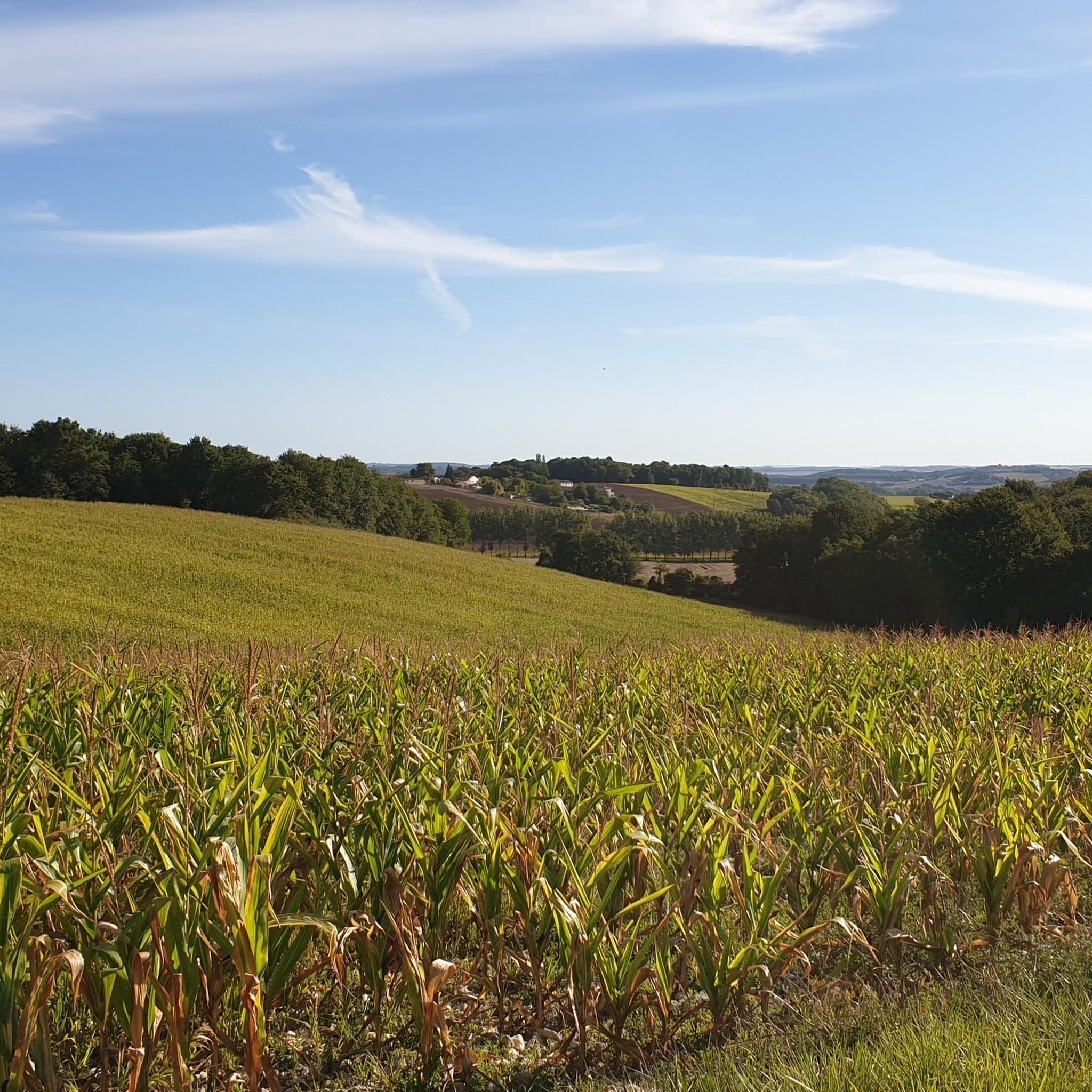
A stone's throw from Aubeterre-sur-Dronne, this overlooking position offers a superb view of the Dronne valley.
0
0
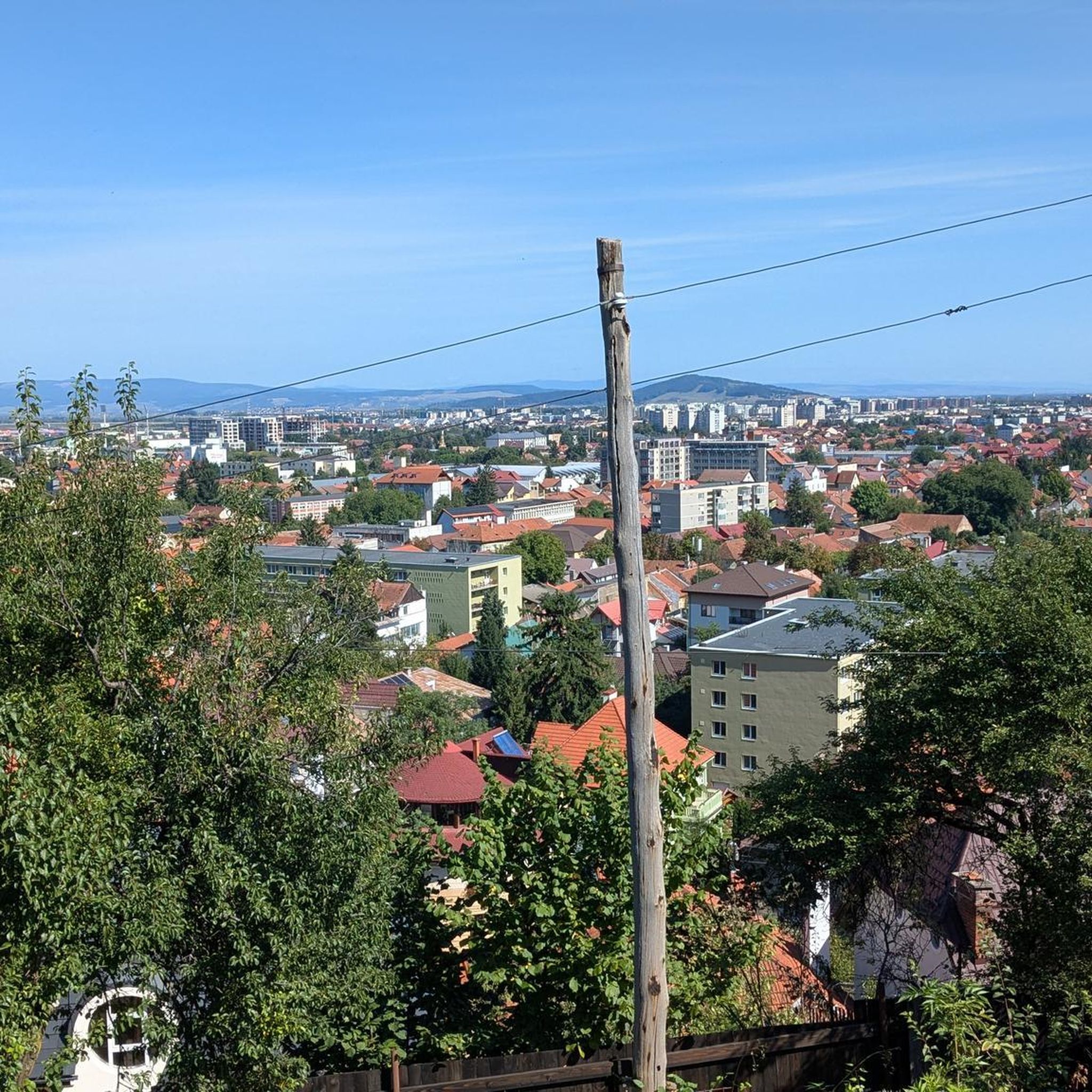
Superb commune certified “Most beautiful villages in France”. The white facades of the houses give the village squares a beautiful appearance. The village is known for its underground church of Saint-Jean in particular. The belvedere offers a breathtaking view of the red tiled roofs of the houses and their characteristic loggias which were once used to dry crops.
0
0


더 살펴보기
찾고 있는 하이라이트를 아직 못 찾으셨나요? 다른 지역의 주요 명소 가이드를 확인해보세요:
