보이시 레 페르쉬 최고의 라이딩 경로
4.6
(62)
572
자전거 타는 사람
215
라이딩
보이시 레 페르쉬의 로드 사이클링 경로를 찾으시나요? 그렇다면 보이시 레 페르쉬 로드 라이딩 컬렉션 중에서 가장 멋진 라이딩 장소를 아래에서 살펴보세요.
마지막 업데이트: 8월 26, 2026
16
자전거 타는 사람
70.9km
03:08
310m
310m
보통 도로 자전거 타기. 좋은 체력 필요. 지면 대부분이 잘 포장되어 있고 라이딩하기 쉬움.
10
자전거 타는 사람
62.8km
02:31
320m
320m
보통 도로 자전거 타기. 좋은 체력 필요. 지면 대부분이 잘 포장되어 있고 라이딩하기 쉬움.

무료 회원 가입
6
자전거 타는 사람
40.6km
01:41
210m
210m
초급용 로드 라이딩. 모든 체력 수준에 적합. 지면 대부분이 잘 포장되어 있고 라이딩하기 쉬움.
4
자전거 타는 사람
41.6km
01:41
260m
260m
초급용 로드 라이딩. 모든 체력 수준에 적합. 지면 대부분이 잘 포장되어 있고 라이딩하기 쉬움.
4.5
(4)
3
자전거 타는 사람
44.6km
01:45
210m
210m
초급용 로드 라이딩. 모든 체력 수준에 적합. 지면 대부분이 잘 포장되어 있고 라이딩하기 쉬움.
더 다양한 경로와 다른 탐험가들의 추천을 살펴보세요.
무료 회원 가입
이미 komoot 계정이 있나요?
투어 추천은 다른 사람들이 komoot에서 완료한 수천 개의 활동을 바탕으로 구성되어 있습니다.
오늘 무료 계정으로 시작하세요
다음 모험이 기다리고 있어요.
로그인 또는 가입하기



커뮤니티 팁


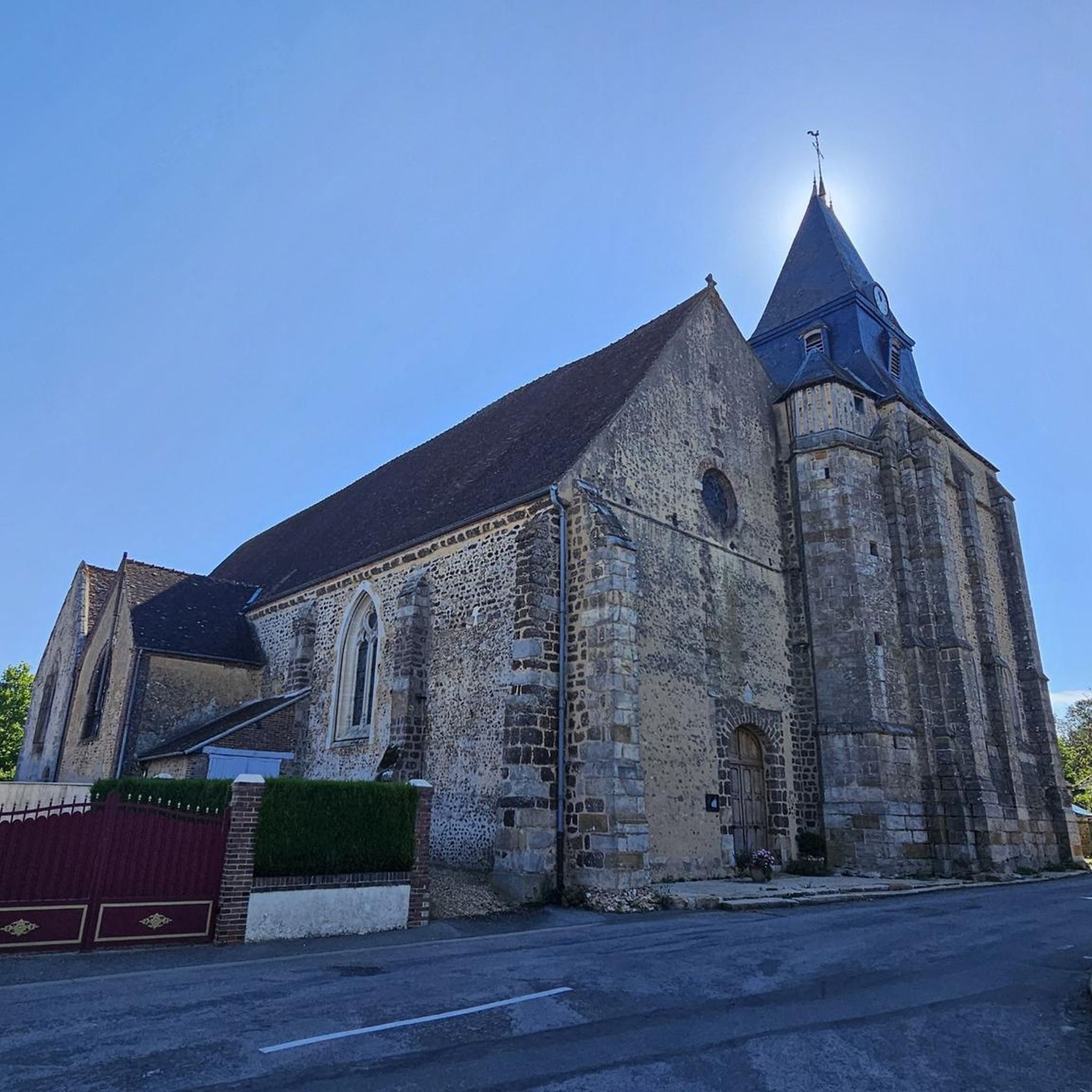
Mesnil-Thomas에 위치한 Saint-Barthélemy 교회는 Mesnil-Thomas 지자체에 자리한 종교 기념물입니다. 이 예배 장소는 많은 시골 교회와 마찬가지로 지역의 영적, 공동체 생활에서 중심적인 역할을 합니다. 이 교회의 건축과 역사는 Centre-Val de Loire 지역의 종교적 전통을 반영하지만, 이용 가능한 자료에는 건축 시기나 양식적 특징이 명시되어 있지 않습니다. Centre-Val de Loire의 시골 지역에서 Saint-Barthélemy와 같은 본당 교회는 주민들의 모임 장소 역할을 했으며, 공동 생활의 중요한 시점인 일요일 미사, 종교 축제, 사회 행사를 기념했습니다. 이 건물들은 종종 마을 조직의 중심이었으며 신앙과 공동체 결속력을 모두 상징했습니다. 상세한 역사적 데이터가 부족하여 이 교회의 특정 특징을 추적하기는 어렵지만, 그 존재 자체만으로도 이 지역의 종교 유산의 중요성을 증명합니다.
0
0
Of Romanesque foundation, the church of Saint-Maurice-lès-Charencey, dedicated to Saint Maurice, was remodeled at the end of the Middle Ages and then extensively renovated in the 19th century. It consists of a nave of four bays ending in a semicircular apse. This nave constitutes the oldest part of the building onto which several elements were grafted to the north. The building is indeed flanked on this side by a side aisle opening onto the nave by a series of large arches with a broken profile. This side aisle, the first bay of which serves as the base of the bell tower, opens onto the north arm of a transept of which only this part was built or remains. Its construction probably predates that of the side aisle, as would tend to prove, thanks to the careful examination of the framework, the presence of an old valley ridge, visible under the current roof. During the Restoration, the church's western façade was completely rebuilt; the current bell tower, likely erected in place of an older one, belongs to this same renovation project, which can be dated to 1821 according to an inscription inserted in the gable wall. Finally, a sacristy was built later in the northeast corner of the building, against the apse and the transept arm. Constructed of rubble stone covered in some parts with an old lime render, and in others with a hydraulic binder-based render that was quite unsightly and would eventually deteriorate, it rests on a basement partially uncovered during the work on the western façade. Its current slate roof does not appear to be original: the church was once covered with flat tiles. Several types of bays bear witness to the successive interventions in the building: the choir retains three examples of small, semicircular bays made of Grison stone, two of which were partially walled up during the installation of the great high altar and altarpiece in the choir. The workmanship of the other bays pierced in the south wall, with their broken profiles and brick frames, testifies to 19th-century work. As for the stones and limestone latticework of the large window, of fine quality, with flamboyant tracery that illuminates the north arm of the transept, they show worrying alterations. While the exterior of the church attracts little attention—its unfinished and rather unsightly surroundings contribute to this—the interior presents a rich and interesting decoration. Indeed, the nave is covered by a beautiful, high-volume, paneled timber vault with a broken profile, the entire surface of which is decorated with stencils with highlights of red, blue-gray, and black. The hallmarks and tie beams are carved and painted. Emblazoned engolante heads decorate the central sections of the tie beams. The choir vault features a particularly elaborate blue scrollwork decoration, probably reworked in the 19th century, but of high decorative quality. The choir is occupied by a substantial high altar with a reredos, with three sides, which therefore does not follow the curve of the masonry and conceals the roof posts decorated with Ionic pilasters. The central panel, crowned by a pointed pediment, is framed by side panels with triangular pediments. Niches, pilasters with Corinthian capitals, and obelisks complete this work. The aisle is also covered by a paneled vault decorated with painted red, gray-blue, and black bands, with white festoons and plant motifs. For masonry, framework and roofing work, the Sauvegarde de l’Art français granted a grant of €18,294 in 2001.
0
0

Located 5 km northeast of La Ferté-Vidame, the Saint-Denis de Morvilliers church stands in the very center of the village. The rectory was the abbot of Saint-Père de Chartres, whose monks owned the church from the beginning of the 12th century. Two charters, dated 1126 and 1127, attest to this. This building comprises a single nave ending in a semicircular chevet. A timber-framed bell tower has crowned the western part of the roof since the 18th century. The west portal through which one enters this building is made of gray stone, unfortunately cemented with a decoration of false stones. The south wall is pierced by five narrow bays, probably from the 12th century. Four windows were installed in the 15th century on the north facade. A fifth, now blocked, was pierced in the apse at the same time. Inside, despite alterations, the church retains an exposed rafter frame forming a medieval truss. Curiously independent of the church structure, it rests on two rows of posts along the drip walls. The vault is paneled. The presence of frescoes could be detected under the plasterwork of the north wall. For the restoration of the apse's frame and roof, the Sauvegarde de l'Art Français (French Art Protection Agency) awarded a grant of €16,769 in 2001.
0
0

Église Saint Madeleine is a church where beautiful various statues of Saints, famous and less famous. The reason for so many different statues is that the school of sculpture was established here.
0
0
The church of Rohaire, in Eure et Loir, in the Centre-Val de Loire, is attached to the parish of Saint Laumer du Perche, of the Doyenné des Forêts, in the diocese of Chartres. The church is placed under the protection of Saint Martin.
0
0
보이시 레 페르쉬 주변에서 가장 인기 있는 명소


더 살펴보기
다른 지역의 최고의 로드 사이클링 경로를 살펴보세요.
