サブロンソー周辺のおすすめ交通量の少ないサイクリングルート
4.3
(170)
1,085
ライダー
82
ライド
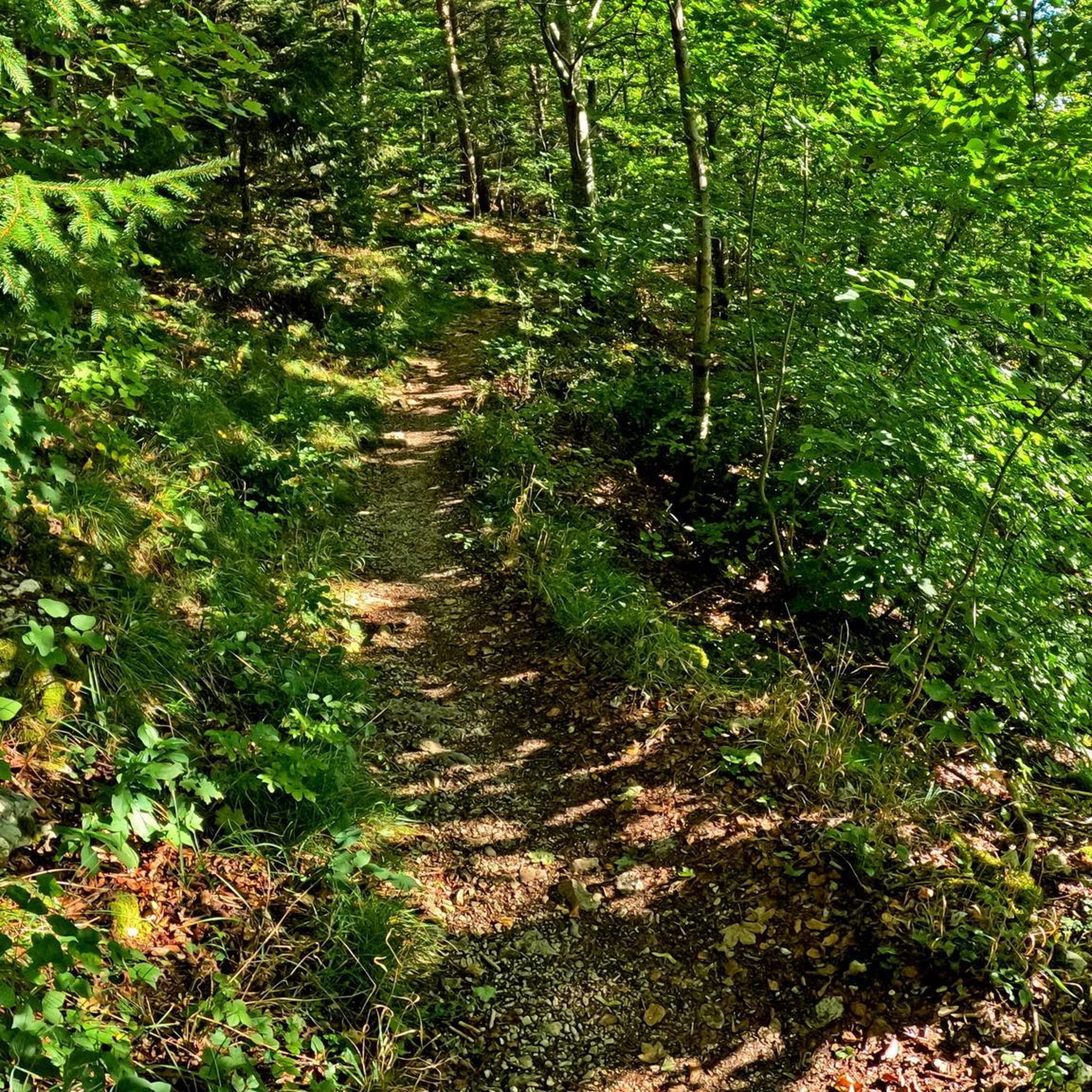
サイクリングルートはサボンソー周辺の交通量が少なく、フランス、ヌーヴェル=アキテーヌ州のセードル川渓谷(Val de Seudre)の静かな田園地帯を走ります。この地域は、鬱蒼とした森、広大な農地、ブドウ畑が混在し、サイクリストに多様な景観を提供します。セードル川河口に近いことから、さらに多くの自然エリアを探検できます。サボンソーが位置するシャラント地域は、村々が点在する起伏のある田園地帯が特徴です。
サボンソー周辺の交通量の少ないサイクリングルート ベストセレクション
- 最も人気のある交通量の少ないサイクリングルートは、ポワント・デギール~リベルー港ループ(ソーゾン発)で、距離12.5マイル(20.2 km)、所要時間1時間22分で、河口近くの景色を楽しめます。
- 地元のサイクリストに人気のもう一つのルートは、モルナック・シュル・セードル市場~マレンヌ水路ループ(ル・トラン・デ・ムーエット~ソーゾン発)で、中程度の難易度で40.2マイル(64.8 km)のコースです。このルートは、多様な農地と魅力的な村々を抜けていきます。
- 地元のサイクリストに愛されているのは、ル・トラン・デ・ムーエット~リベルー港ループ(ル・トラン・デ・ムーエット~ソーゾン発)で、距離13.9マイル(22.3 km)、所要時間約1時間20分で、静かな田園地帯を抜けるルートです。
- サボンソー周辺のサイクリングは、森、ブドウ畑、セードル川河口を含む静かな田園風景が特徴です。このネットワークは、簡単なファミリーライドからより挑戦的な探検まで、さまざまなレベルのサイクリストに対応しています。
- サボンソーのルートは、komootコミュニティから高く評価されており、150件以上のレビューで平均4.2つ星を獲得しています。900人以上のサイクリストがkomootを利用して、サボンソーの多様な地形を探検しています。
最終更新日: 5月 6, 2026
4.5
(12)
69
ライダー
20.2km
01:22
30m
30m
初級者向けバイクライド. あらゆるフィットネスレベルに適しています。 全般的に舗装された状態です。あらゆるスキルレベルに適しています。
4.4
(9)
32
ライダー
中程度の自転車ライド. ある程度のフィットネスレベルが必要です。 全般的に舗装された状態です。あらゆるスキルレベルに適しています。

無料新規登録
3.3
(10)
19
ライダー
初級者向けバイクライド. あらゆるフィットネスレベルに適しています。 全般的に舗装された状態です。あらゆるスキルレベルに適しています。
4.2
(5)
23
ライダー
12.0km
00:52
20m
20m
初級者向けバイクライド. あらゆるフィットネスレベルに適しています。 全般的に舗装された状態です。あらゆるスキルレベルに適しています。
5.0
(2)
12
ライダー
34.0km
02:23
110m
110m
中程度の自転車ライド. ある程度のフィットネスレベルが必要です。 全般的に舗装された状態です。あらゆるスキルレベルに適しています。
さらに多くのルートや他のユーザーのおすすめ情報を確認できます。
無料新規登録
すでにアカウントをお持ちですか?
おすすめのツアーは他のkomootユーザーが実際に経験した何千ものアクティビティに基づいています。
無料アカウントで今日から始めよう
次の冒険が待っています。
ログインまたは登録
サブロンソー周辺で人気

コミュニティからのヒント

The port of Ribérou is a major heritage site in Saujon, bearing witness to a prosperous maritime past linked to the salt and wine trade. Transformed in the 19th century by ambitious works, it has now been reinvented as a place for living, relaxation, and preserving local history. 🛶 Origins and the Middle Ages The port of Ribérou takes its name from the Latin word ripa ("riverbank") or the Occitan word ribèira ("river"). It is located at the head of the Seudre estuary. It existed as early as the 11th century and became an important river and sea port thanks to its strategic position at the head of the estuary, used particularly for the salt trade—then called "white gold"—a highly sought-after product for preserving food. 🚢 Medieval Period and International Trade With the opening of British markets during the reigns of Eleanor of Aquitaine and Henry II Plantagenet, ships laden with wool, salt, wine, and other goods flocked to Ribérou. In the 16th century, the port exported local wines (such as cognac and pineau) throughout Europe. In 1577, during the Wars of Religion, the port was a strategic site: troops were stationed there, and battles took place. 🏗️ Decline, Reconstruction, and the 19th Century The estuary gradually silted up, making navigation difficult. By 1691, only smaller vessels could dock there. During the French Revolution, the sale of the tidal mill, which helped remove sediment, worsened the silting, leading to the port's decline. A modernization project began in 1822, but it wasn't until 1839 that an ambitious program was launched under the impetus of Jules Dufaure—a native of Saujon and Minister of Public Works—with the construction of sturdy quays, slipways, a lock bridge (marking the boundary between fresh and salt water), and reception facilities. In 1842, the work was completed, and the main quay was named Quai Dufaure in honor of this political support. 📉 Gradual Decline and Modernization The arrival of the railway in 1876 and the persistent problems of silting led to a decline in the port's traditional commercial activity, already facing competition from other transport networks. In the 20th century, the port gradually lost its economic importance but remained active for traditional fishing and became a place for pleasure boating, leisure, and local culture. Urban and tourism development projects (particularly in 2011–2012) modernized the port while preserving its historical charm. 🌊 Today The port of Ribérou is now a small fishing and pleasure port, much appreciated for its walks along the Seudre River, water sports (canoeing, kayaking, paddleboarding, etc.), and seasonal events.
0
0


The church suffered little damage during the Hundred Years' War and the Wars of Religion. From the end of the 18th century, maintenance work was undertaken mainly inside the church. In 1822, the reconstruction of the bell tower framework began, followed in 1852 by the restoration of the west facade. A further restoration took place around 1860, and the sacristy was enlarged by the construction of a semicircular annex extending the Romanesque apse. Beginning in 1880, a roof repair campaign began, and a new belfry was installed in the bell tower. From 1890 to 1900, the cemetery surrounding the church was moved to the "Fief des Rentes," and the former burial site was transformed into a public square. Starting in 1926, the choir roof was replaced and the bell tower was made watertight. In 1971, the work program included the renovation of the exterior walls, the demolition of the false apse and the sacristy that concealed the apse of the south transept. In 1990, the main door was replaced with oak leaves, the stones were repointed, and the collapsed arch keystone was reinstalled. In the 2000s, the municipality repaired the mechanism of the two belfry bells, and the building was illuminated and maintenance work was carried out.
0
0
The Church of Our Lady of Corme-Écluse, the seat of a former Benedictine priory of the Abbey of the Ladies of Saintes, was donated around 1104 by Ramnulfus Focaudi (Bishop of Saintes between 1083 and 1106) to the Royal Abbey of Saint-Jean-d'Angély "so that he might always enjoy it and possess it in perpetuity." This abbey was thus responsible for the reconstruction of the sanctuary in the mid-12th century in the Romanesque style. A plaque affixed to the south wall of the nave contains a few historical snippets, still legible: 1200, the Benedictines completed the construction and adorned the church with an oak statue of the Blessed Virgin; 1327, the Abbot of Saint-Jean-d'Angely and an envoy of Pope John XXII prayed before the venerated image; In 1628, a pilgrimage was established to venerate the statue; In 1733, the statue was mutilated. The desecrator was punished. The church's plan is a slightly asymmetrical Latin cross (the north arm of the transept is longer than the south arm). The nave consists of two bays covered by pointed barrel vaults. It is lit by three symbolic windows rebuilt in the 13th century. A transverse arch separates the nave from the transept, whose crossing, under the bell tower, is covered by a cupola on squinches. The south arm of the transept opens onto an apse with a semi-dome vault. However, the north arm, rebuilt in the 17th century in the Romanesque style, is slightly longer than the south arm, and is designed on a rectangular plan without an apse. This arm has a portal with columns and toric rollers. After passing the triumphal arch, the choir begins with a straight bay covered with a semi-circular barrel vault and ends with a semi-circular vaulted arch.
0
0
Upon arriving in Corme-Écluse, it's only natural to stop at the church square, the heart of the Cormillon village. On this square, facing the town hall, stands the Church of Notre-Dame. Walk around it to admire the architectural details characteristic of the 12th-century Saintonge Romanesque style. The church was the seat of a former Benedictine priory of the Abbey of the Ladies of Saintes. The sculpted decoration of the Abbey of the Ladies certainly inspired that of the church of Corme-Écluse. This was often the case; mother abbeys were taken as examples by the priories that depended on them in terms of architecture and sculpture. In some cases, it is even assumed that the sponsors, artists, or craftsmen were the same people or at least from the same circle, sometimes descendants. Since the 13th century, the monument has been the destination of numerous pilgrimages that continue to this day. The pilgrimage takes place on the third Sunday of July in the convent gardens, followed by a procession to the Church of Our Lady.
0
0


よくある質問
サヴロンソー周辺には、交通量の少ないサイクリングルートがいくつありますか?
サヴロンソー周辺には、70以上の専用の交通量の少ないサイクリングルートがあり、サイクリストに幅広い選択肢を提供しています。これらのルートは難易度が異なり、多くは簡単なライドに適しています。
サヴロンソー近郊の交通量の少ないサイクリングルートでは、どのような風景が期待できますか?
サヴロンソー周辺の交通量の少ないルートは、多様で静かな田園地帯を横断します。シャラント地方特有の、鬱蒼とした森、広大な農耕地、絵のように美しいブドウ畑をサイクリングします。シュドル川河口に近いことも、ユニークな自然探訪の機会を提供します。
サヴロンソーには、家族向けの交通量の少ないサイクリングルートはありますか?
はい、サヴロンソーおよびシャラント地方全体には、家族向けのサイクリングオプションがたくさんあります。多くのルートは、村や自然の中をゆったりと走るように設計されており、50以上の簡単なルートが利用可能です。これらのルートは勾配が少なく、あらゆる年齢層に適しています。
サヴロンソーで交通量の少ないサイクリングを楽しむのに最適な時期はいつですか?
シャラント地方の晴れた気候により、サヴロンソーでのサイクリングには春と秋が理想的です。これらの季節は、通常、穏やかで快適な気候で、夏の強い日差しや冬の寒さを避けながら、ブドウ畑や田園地帯を探索するのに最適です。
交通量の少ないサイクリングルート沿いには、注目すべきランドマークやアトラクションはありますか?
はい、いくつかのルートは重要なランドマークを通過します。例えば、12世紀にさかのぼる歴史的なサヴロンソー修道院は著名な特徴であり、しばしば出発点となります。また、リベルー港、モルナック・シュル・シュドルの湿地帯、そしてモルナック・シュル・シュドルにある魅力的なサン・ピエール教会などのハイライトを発見することもできます。
サヴロンソーの交通量の少ないサイクリングルートの駐車場はどこにありますか?
駐車場は通常、サヴロンソー修道院近くなど、サイクリングルートの主要な出発点にあります。多くのルートは、村の公共駐車場施設にも接続しており、トレイルへのアクセスが便利です。
これらの交通量の少ないルートでブドウ畑をサイクリングできますか?
もちろんです。サヴロンソー周辺地域は、IGP「シャラント」ワイン、ピノー・デ・シャラント、コニャックを生産するブドウ栽培で知られています。多くの交通量の少ないルートは、これらの絵のように美しいブドウ畑の間を縫うように走り、ユニークな文化的および感覚的な体験を提供します。
サヴロンソーの交通量の少ないサイクリングルートについて、他のサイクリストはどのように評価していますか?
komootコミュニティは、サヴロンソーでのサイクリング体験を高く評価しており、平均スコアは4.18つ星です。レビューでは、ルートの静けさ、美しく変化に富んだ風景、そして交通から離れて地域の文化遺産を探索できる機会がしばしば称賛されています。
円形の交通量の少ないサイクリングルートはありますか?
はい、サヴロンソー周辺の交通量の少ないルートの多くは円形のループとして設計されており、同じ場所からライドを開始して終了することができます。例として、地元の風景を巡る中程度のライドを提供する、ル・グアからのサヴロンソー修道院 – ピュリロンジュ巡回ルートがあります。
より長く、より挑戦的な交通量の少ないサイクリングルートのオプションはありますか?
多くのルートは簡単ですが、経験豊富なサイクリスト向けに中程度および一部の難しいオプションもあります。この地域のシャラント・ツアーのようなより大きなネットワークへの接続性は、個々のループを超えて、低交通量の道路をしばしば組み込んだ、拡張されたツアーの可能性を提供します。
公共交通機関でこれらの交通量の少ないサイクリングルートにアクセスできますか?
サヴロンソーは田舎町ですが、一部の地域の公共交通機関は近くの大きな町に接続している可能性があります。しかし、特に人里離れた交通量の少ないルートの特定のトレイルヘッドへの直接アクセスには、自家用車の方が便利な場合が多いです。ルート近くの村への接続については、地域のバスの時刻表を確認してください。
サヴロンソーの交通量の少ないサイクリングルートの近くに、食事や宿泊施設はありますか?
サヴロンソーとその周辺の村には、軽食や宿泊施設のさまざまなオプションがあります。屋外席のある地元のレストランやカフェ、そしてサイクリスト向けのバイクフレンドリーなホテルやジート(バカンス用貸別荘)があり、多くの場合、安全な自転車保管施設を提供しています。
サブロンソーでのの人気観光スポット

komootモバイルアプリでインスピレーションを得よう


さらに探索
他の地域の最高のサイクリングルートを見てみましょう。
