ムソンビリエのおすすめライド
4.6
(19)
272
ライダー
79
ライド
Moussonvilliers周辺のロードサイクリングは、起伏のある地形が特徴のペルシュ地域自然公園内で、変化に富んだ地形を提供します。標高は185メートルから259メートルまであり、景観全体にわたる上り坂と下り坂のミックスを楽しめます。サイクリストは、小さく曲がりくねった田舎道、緑豊かな田園地帯、そして鬱蒼とした森を走ることが期待できます。この地域は、さまざまな体力レベルのサイクリストに多様なライディング体験を提供します。
Moussonvilliers周辺の最高のロードサイクリングルート
- 最も人気のあるロードサイクリングルートは、ラ・シャペル・フォルタン発、イトン川岸のサン・ピエール教会~洗濯小屋ループで、距離44.1マイル(70.9 km)、所要時間3時間8分です。このルートは、村や自然景観を通り抜けながら、変化に富んだ地形をカバーしています。
- 地元のロードサイクリストにもう一つ人気のルートは、シェンヌブラン発、サン・シモン城🏰✨⚜️~フェルテ・ヴィダム城ループで、中程度の難易度で43.5マイル(70.0 km)のコースです。このトレイルは、歴史的な城を結ぶ景色の良い道を通り抜けます。
- 地元のロードサイクリストに人気のもう一つのルートは、ラ・シャペル・フォルタン発、シェノンセ城~ラ・ランド・シュル・ユール市庁舎ループで、距離39.0マイル(62.7 km)、所要時間約2時間31分です。このトレイルは、変化に富んだ自然景観を通り抜けます。
- Moussonvilliers周辺のロードサイクリングは、起伏のある地形、小さく曲がりくねった田舎道、そして緑豊かな田園地帯が特徴です。このネットワークは、簡単なライドから起伏の変化があるより挑戦的なルートまで、さまざまなレベルのオプションを提供します。
- Moussonvilliersのルートは、komootコミュニティから平均4.6つ星(10件以上のレビュー)と高く評価されています。200人以上のロードサイクリストがkomootを利用して、Moussonvilliersの多様な地形を探索しています。
最終更新日: 5月 4, 2026
5.0
(1)
29
ライダー
20.9km
01:19
80m
80m
初級者向けロードバイクライド. あらゆるフィットネスレベルに適しています。 全般的に舗装状態が良好で走行しやすい道です。
15
ライダー
70.9km
03:08
310m
310m
中程度のロードライド. ある程度のフィットネスレベルが必要です。 全般的に舗装状態が良好で走行しやすい道です。

無料新規登録
4.0
(2)
11
ライダー
68.7km
02:51
340m
340m
中程度のロードライド. ある程度のフィットネスレベルが必要です。 全般的に舗装状態が良好で走行しやすい道です。
9
ライダー
62.8km
02:31
320m
320m
中程度のロードライド. ある程度のフィットネスレベルが必要です。 全般的に舗装状態が良好で走行しやすい道です。
6
ライダー
40.6km
01:41
210m
210m
初級者向けロードバイクライド. あらゆるフィットネスレベルに適しています。 全般的に舗装状態が良好で走行しやすい道です。
さらに多くのルートや他のユーザーのおすすめ情報を確認できます。
無料新規登録
すでにアカウントをお持ちですか?
おすすめのツアーは他のkomootユーザーが実際に経験した何千ものアクティビティに基づいています。
無料アカウントで今日から始めよう
次の冒険が待っています。
ログインまたは登録


コミュニティからのヒント

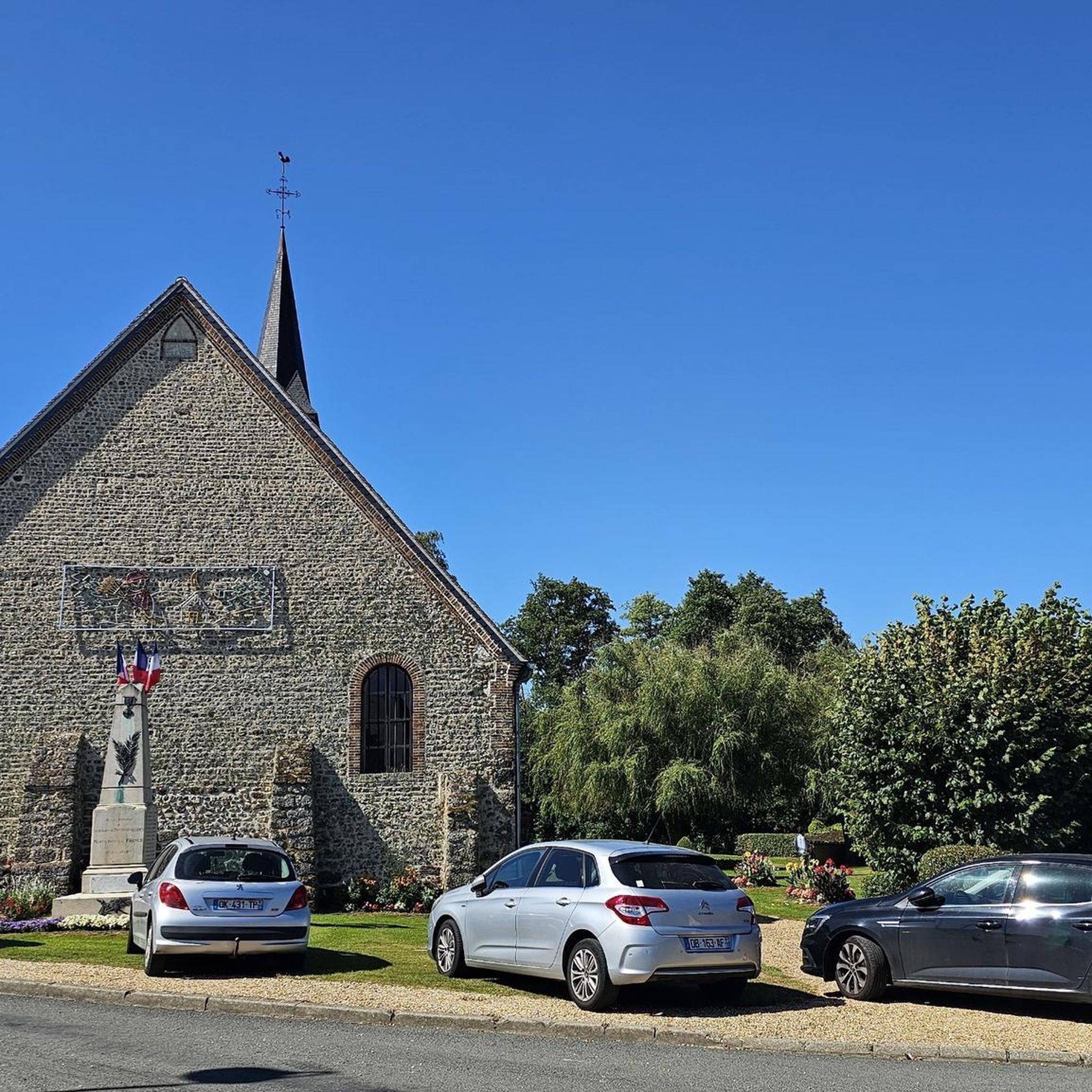
The church of Cintray has been listed as a historical monument since June 15, 1920. This building contributes to the beauty of the Eure landscapes and the richness of France's heritage. Over the centuries, the buildings that have been grafted or agglomerated in the surrounding area have been built within the framework of a social structure: the parish. These buildings constitute references in terms of local architecture, because they are often made with local materials: tiles or slates (from the 19th century), stones (flint, Grison, Seine Valley, sandstone, etc.), bricks or cob, lime plaster and nearby sand or earth. This gives colors that often range from beige to brown or red, and volumes perfectly suited to the Normandy climate (roof slopes, etc.). These churches have been the subject of specific analysis because their surroundings are not completely urbanized. The empty spaces or breathing spaces nearby help preserve their setting. The site of the church is very interesting because, located between the Iton and the very refined village square, it offers, to the south, large visual openings onto the monument. These spaces, little or not urbanized, must be preserved.
0
0
Located 5 km northeast of La Ferté-Vidame, the Saint-Denis de Morvilliers church stands in the very center of the village. The rectory was the abbot of Saint-Père de Chartres, whose monks owned the church from the beginning of the 12th century. Two charters, dated 1126 and 1127, attest to this. This building comprises a single nave ending in a semicircular chevet. A timber-framed bell tower has crowned the western part of the roof since the 18th century. The west portal through which one enters this building is made of gray stone, unfortunately cemented with a decoration of false stones. The south wall is pierced by five narrow bays, probably from the 12th century. Four windows were installed in the 15th century on the north facade. A fifth, now blocked, was pierced in the apse at the same time. Inside, despite alterations, the church retains an exposed rafter frame forming a medieval truss. Curiously independent of the church structure, it rests on two rows of posts along the drip walls. The vault is paneled. The presence of frescoes could be detected under the plasterwork of the north wall. For the restoration of the apse's frame and roof, the Sauvegarde de l'Art Français (French Art Protection Agency) awarded a grant of €16,769 in 2001.
0
0
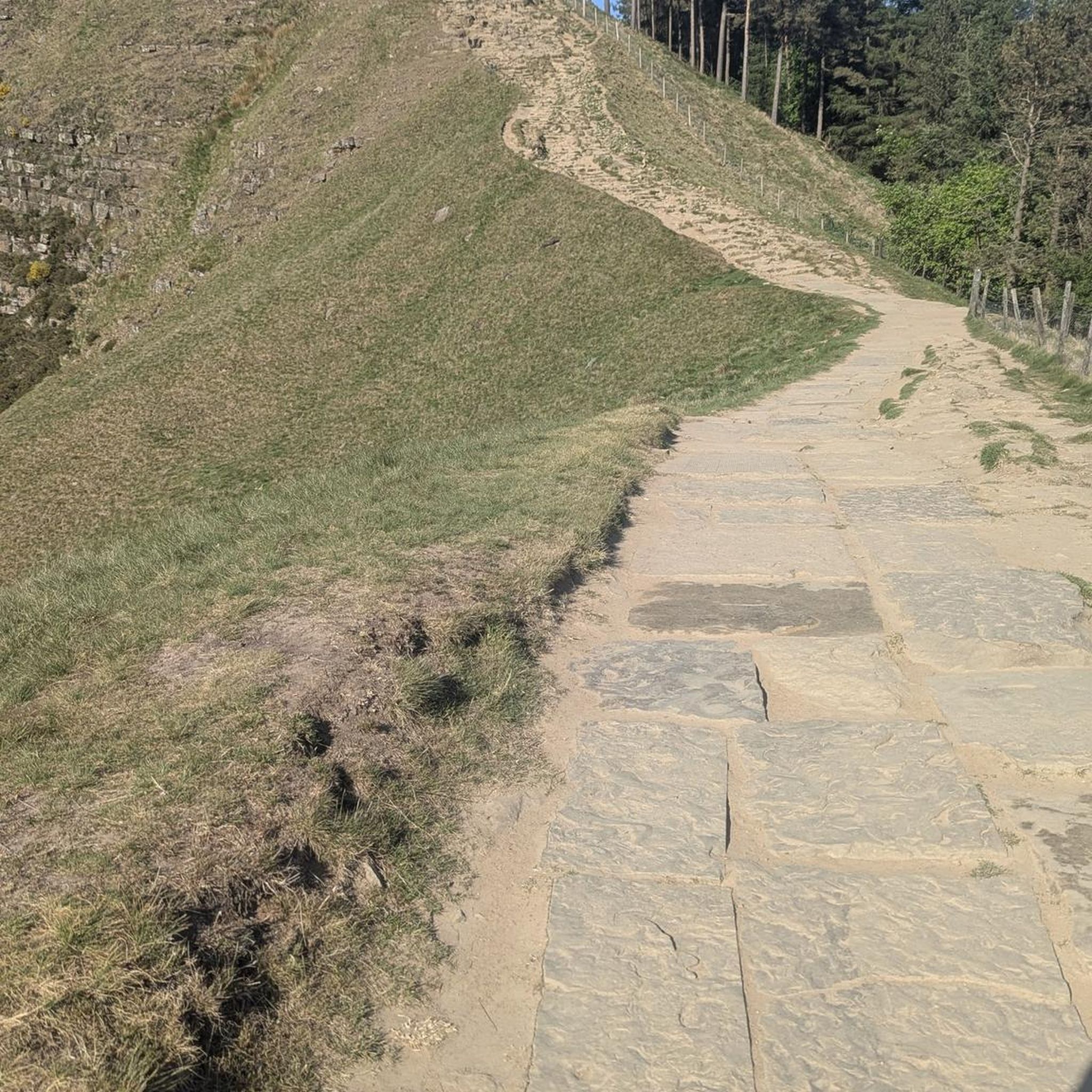
very beautiful section of greenway in very good condition and shaded thanks to a beautiful forest.
0
0

Église Saint Madeleine is a church where beautiful various statues of Saints, famous and less famous. The reason for so many different statues is that the school of sculpture was established here.
0
0
The church of Rohaire, in Eure et Loir, in the Centre-Val de Loire, is attached to the parish of Saint Laumer du Perche, of the Doyenné des Forêts, in the diocese of Chartres. The church is placed under the protection of Saint Martin.
0
0
With a very simple plan, with its tiled nave and its small slate bell tower on the ridge, the church surrounded by its cemetery, set back from the road, overlooks the countryside planted with trees. The river is nearby, and its flowing water evokes that of the baptism of Jesus in the Jordan, as soon as we see the statue of the patron, Saint John the Baptist, in the choir. His arm raised towards the sky reminds us of his preaching in the desert of Palestine: "Prepare for the coming of the Messiah...". On the thin banner attached to his staff are written the words: "Ecce Agnus Dei", by which he already announced that he saw in Jesus the victim freely offering himself as a sacrifice for the Redemption of all men. Placed on the ground against the wall, a 17th century painting. depicts Jesus immersed up to his knees in the waters of the river, leaning with his hands crossed on his chest to receive the baptism of penance from the hand of John kneeling on the bank. We see “the Spirit descending on him like a dove” and we recall the words of John reported in the Gospel: “I am not worthy to bow down at his feet… I have baptized you in water; he will baptize you in the Holy Spirit.” Beside him, the angel wearing Jesus’ clothes turns his face towards a young child whom he guides with a hand placed on his shoulder, as if to teach him the profound meaning of baptism. Above the arch through which the nave opens onto the choir, the group of Christ on the cross surrounded by Mary and Saint John the Evangelist is a fine example of 16th century religious sculpture, faithful to traditional iconography. Similarly, at the back of the nave is the charming naive statue of Saint Fiacre: this young monk from Ireland loved to cultivate the vegetable garden of his monastery, near Meaux. Patron saint of gardeners, he holds his spade, and in the Perche region he was also invoked to cure various illnesses. More unique in style, the large Renaissance chest serving as a central altar was the former “work bench of the factory” reserved for the administrators of the parish’s resources and expenses. Let us admire the skill and imagination of the cabinetmaker who carved this series of full-length figures in oak under the arcades separated by “terms” inspired by Roman antiquity. Their distinctive attributes make us recognize Saints Christine, Barbara, Madeleine and Catherine on the front, and on the sides Saints Peter and Paul on the right, John the Baptist and Bartholomew on the left. Their silhouettes are more reminiscent of fairy tale characters…
0
0
Church with a brick bell tower built between 1890 and 1898
0
0
It probably dates back to the end of the 10th century, but the current building is much more recent. The portal dates from 1770 and the side aisle from 1556. There is a rich statuary from the first half of the 16th century as well as two stained glass windows from the 14th and 16th centuries and a carved wooden balustrade from the 17th century offered by Duke Louis de Saint-Simon.
0
0
ムソンビリエでのの人気観光スポット

komootモバイルアプリでインスピレーションを得よう


さらに探索
他の地域の最高のロードサイクリングルートを見てみましょう。
