하벨란지 최고의 사이클링 경로
4.7
(76)
518
자전거 타는 사람
74
라이딩
하벨란지 최고의 사이클링 경로를 따라 지역을 둘러볼까요? 하벨란지에서 가장 멋진 자전거 라이딩 장소 중에서 가장 마음에 드는 라이딩을 선택해보세요.
마지막 업데이트: 10월 14, 2026
4.5
(6)
34
자전거 타는 사람
49.0km
03:13
580m
580m
어려운 자전거 타기. 우수한 체력 필요. 대부분 포장된 지면. 실력과 관계없이 누구나 갈 수 있음.
5.0
(2)
30
자전거 타는 사람
39.6km
02:38
510m
510m
어려운 자전거 타기. 우수한 체력 필요. 대부분 포장된 지면. 실력과 관계없이 누구나 갈 수 있음.

4.4
(5)
33
자전거 타는 사람
17.4km
01:02
110m
110m
초급용 자전거 라이딩. 모든 체력 수준에 적합. 대부분 포장된 지면. 실력과 관계없이 누구나 갈 수 있음.
4.6
(5)
24
자전거 타는 사람
42.7km
02:36
390m
390m
보통 자전거 타기. 좋은 체력 필요. 대부분 포장된 지면. 실력과 관계없이 누구나 갈 수 있음.
4.7
(7)
28
자전거 타는 사람
36.7km
02:16
340m
340m
보통 자전거 타기. 좋은 체력 필요. 대부분 포장된 지면. 실력과 관계없이 누구나 갈 수 있음.
더 다양한 경로와 다른 탐험가들의 추천을 살펴보세요.
이미 komoot 계정이 있나요?
투어 추천은 다른 사람들이 komoot에서 완료한 수천 개의 활동을 바탕으로 구성되어 있습니다.
오늘 무료 계정으로 시작하세요
다음 모험이 기다리고 있어요.


커뮤니티 팁

Today, the castle is part of the Radhadesh estate, which also includes a more recent residential center and several even more recent agricultural buildings. Openbaar Kunstbezit Vlaanderen (Flanders Public Art Agency) calls it a spiritual community, where the new residents have thoroughly restored the castle and transformed it into a true spiritual oasis where you can explore the colorful culture of Indian traditions. Specifically, the International Society for Krishna Consciousness (formerly the Hare Krishna movement) has a base and residential community there. There's also a vegan restaurant, a shop, a museum of sacred art (MOSA), and you can take a paid tour. The temple is accessible without payment. There's also a 2.8-kilometer "spiritual" walking trail. More at https://www.okv.be/museum/radhadesh-kasteel-van-petite-somme I'm not mentioning the domain's website because of a virus alert on my computer.
7
0
Built in 1888 and now in its neo-Gothic style, the castle served as a field hospital during the First World War, where the Jourda family cared for wounded and also sheltered local residents whose homes had been destroyed. During the Second World War, it housed American soldiers during the Rundstedt Offensive. From 1946 onwards, it became a holiday center, a school for people with intellectual disabilities, a youth hostel, a campsite, and a hotel-restaurant, all under the initiative of mayors Jean Andrieu of Herstal and Denis Deghaye of Oupeye. After the initiative's bankruptcy, a Brussels real estate agent, Serge Frankovich, bought the property in 1975, leaving it vacant for five years and plundering it. The Hare Krishna movement then purchased it and turned it into the Radhadesh estate. Sources: - https://www.castles.nl/petite-somme-castle - https://www.burchten-kastelen.be/provincies/luxemburg/002%20Kasteel%20van%20Petite%20Somme/Kasteel%20van%20Petite%20Somme.html - https://nl.wikipedia.org/wiki/Petite-Somme
7
0
Since 1980, the castle of Petite-Somme has housed a temple of the Hare Krishna movement, which today operates as the International Society for Krishna Consciousness. The dilapidated castle, of course, has a longer history. The current castle is also not the original and dates from 1888. The first mention of a castle on this site dates back to the eleventh century, when a certain Gozélonde Montaigu owned it. He was also the first Count of Montaigu. The County of Montaigu was quite influential for a time. It included the County of Duras in the Sint-Truiden region, the County of Clermont-sous-Huy, the Lordship of Jodoigne, and the village of Marcourt. The Counts of Montaigu were also vice-patrons of the Abbey of Sint-Truiden. Ecclesiastically, it belonged to the diocese of Liège. The castle was reportedly donated to the Abbey of Saint Hubert by the wife of Gozélon de Montaigu as penance for his husband's alleged plundering of the abbey's property. In the fourteenth century, a certain Jean de Bohême was said to have owned it, adding a tower to the castle, which became part of Luxembourg's defensive line. In 1461, the castle became the property of the de Hamal family, a Dutch-Belgian noble family that also appears in the histories of several Limburg villages and lordships (including 's Herenelderen, Grevenbroek, and the land of Vogelsanck). The de Hamal family held the lordship and castle of Petite Somme until 1774. Several noble families then succeeded one another. First came Albert Joseph de Favereau, born in 1750. De Favereau demolished the house that had served as the Hamal family's residence and built a brick manor house on its foundations. The new castle remained in the family's possession until 1877. Other sources claim that the demolition was carried out by the Count de Vaux, Aimable-Alexis de Jourda. What is certain is that the de Favereau family building was also demolished by a certain Louise Marie Eulalie, a relative of Baron Victor Albert de Favereau. And whatever the exact details are: it is certain that the current neo-Gothic castle stood there in 1888. Sources: - https://www.castles.nl/petite-somme-castle - https://www.burchten-kastelen.be/provincies/luxemburg/002%20Kasteel%20van%20Petite%20Somme/Kasteel%20van%20Petite%20Somme.html - https://nl.wikipedia.org/wiki/Petite-Somme
7
0

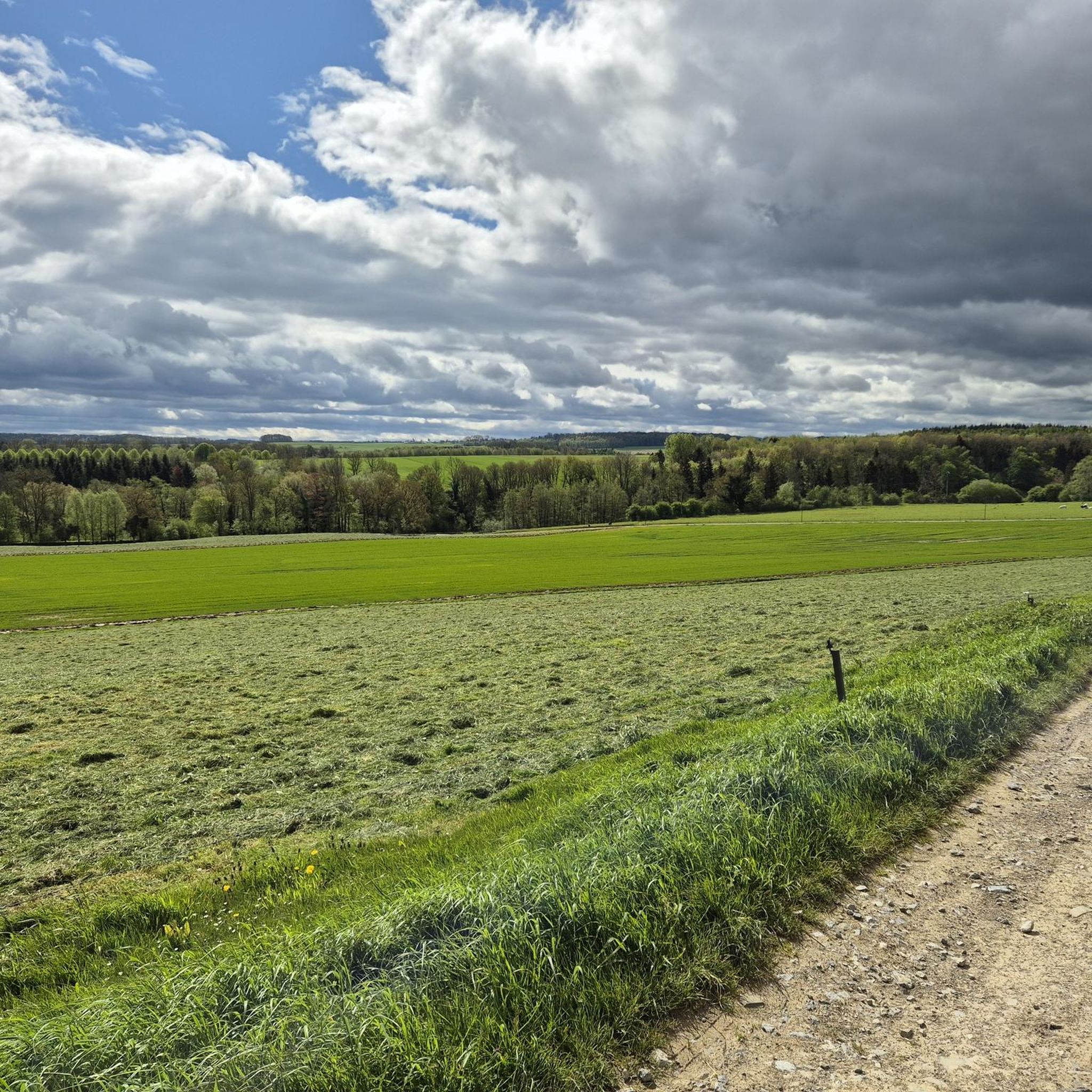
Beautiful place, it feels like you've stumbled upon an English estate. Yet, you're driving right through it on the public road.
0
0
Beautiful chapel at the castle/estate. It's private, so it's not open to the public. It's being restored. It's said to have been built with perfectly cut stones on site and without the use of cement or mortar. Thanks to its perfect construction techniques, the crypt is said to remain bone dry after all this time, even though it lies below the waterline.
0
0

Be careful if it has rained a lot... otherwise great
1
0

Bormenville station is a former Belgian railway stop on line 126, from Statte to Ciney, located in the hamlet of Bormenville in the municipality of Havelange, in the province of Namur in the Walloon Region.
1
1
하벨란지 주변에서 가장 인기 있는 명소


더 살펴보기
다른 지역의 최고의 자전거 경로를 살펴보세요.
