9의 칼메인보스가지 명소 & 주요 장소
칼메인보스에는 둘러볼 만한 장소가 많답니다. 하이킹 또는 사이클링을 좋아한다면 칼메인보스에 숨겨진 9
가지 보석을 만날 수 있을 거예요. 이 지역의 주요 명소를 살펴보면서 다음 모험을 계획해보세요.
마지막 업데이트: 8월 31, 2026
크라케엘듄 자연 보호구역
하이라이트 • 자연
번역자 Google •
팁에 의해


이런 장소를 발견하려면 지금 가입하세요
최고의 싱글 트랙, 봉우리 및 다양한 흥미로운 야외 장소에 대한 추천을 받아보세요.
무료 회원 가입
스테이징 씨 - 보포르
하이라이트 • 기념물
번역자 Google •
팁에 의해

세라핀 드퀴트 흉상
하이라이트 • 기념물
번역자 Google •
팁에 의해
Calmeynbos 트레일
하이라이트 • 트레일
번역자 Google •
팁에 의해

무료로 가입하여 칼메인보스 주변의 더 많은 명소를 발견하세요.
무료 회원 가입
이미 komoot 계정이 있나요?
오늘 무료 계정으로 시작하세요
다음 모험이 기다리고 있어요.
로그인 또는 가입하기

커뮤니티 팁

St. Peter's Church was the first church in De Panne, built in the late 1870s on land donated by the Calmeyn-Bortier family. The church was intended for the residents of the hamlet of De Panne (formerly also called Josephdorp and Kerckepanne). History: In 1877, when De Panne was still a fishing hamlet of Adinkerke, the Calmeyn-Bortier family added a chapel to De Panne. The tower was added in 1936, when the church had long since moved away from the center of the municipality due to the construction of the Dumont district. Deconsecrated church becomes Library of the future: St. Peter's Church De Panne will become the library of the future in De Panne. The library of the future is an open, multifunctional space that can easily be adapted. With acoustic curtains, bookcases on casters, modular table systems, and rotating shelves, the space can be flexibly divided or expanded. The reading café will have its own dedicated space just outside the church. By doubling the perimeter of the existing choir with a new volume, the building unfolds like a fan to its surroundings – a generous and inviting gesture. The library will be housed in the main volume of the church. Thanks to the openness of the space, it not only offers space for reading and studying but also lends itself to multipurpose use.
3
0
Staging Sea is a total work of art: an interplay between the landscape, the lanterns, and the pavilion with a fountain. The work is as changeable as the sea in color and light. The fountain visualizes the tidal range of the Belgian coast, which is a full five meters. It therefore has both a natural and a high-tech quality. The proximity of the sea is announced; it itself is not (yet) visible from this location. Two of the pavilion's twelve panels are open, allowing visitors to sit down. In this way, the work is not only an ode to the sea but also a comment on human impact on nature. A common thread in Filip Vervaet's oeuvre is the appropriation and the malleability of nature. Source: https://www.dekust.be/beaufort-staging-sea
4
0

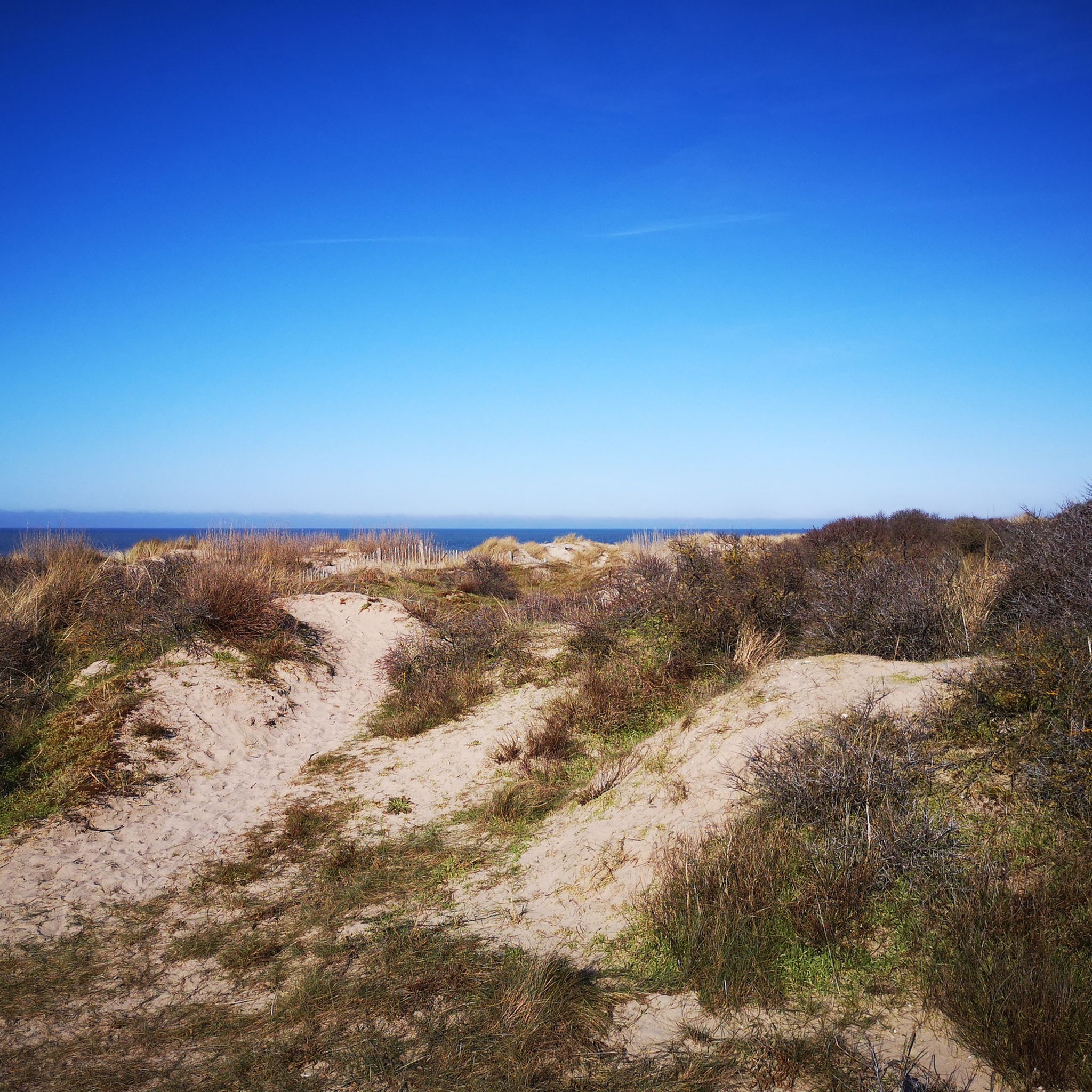
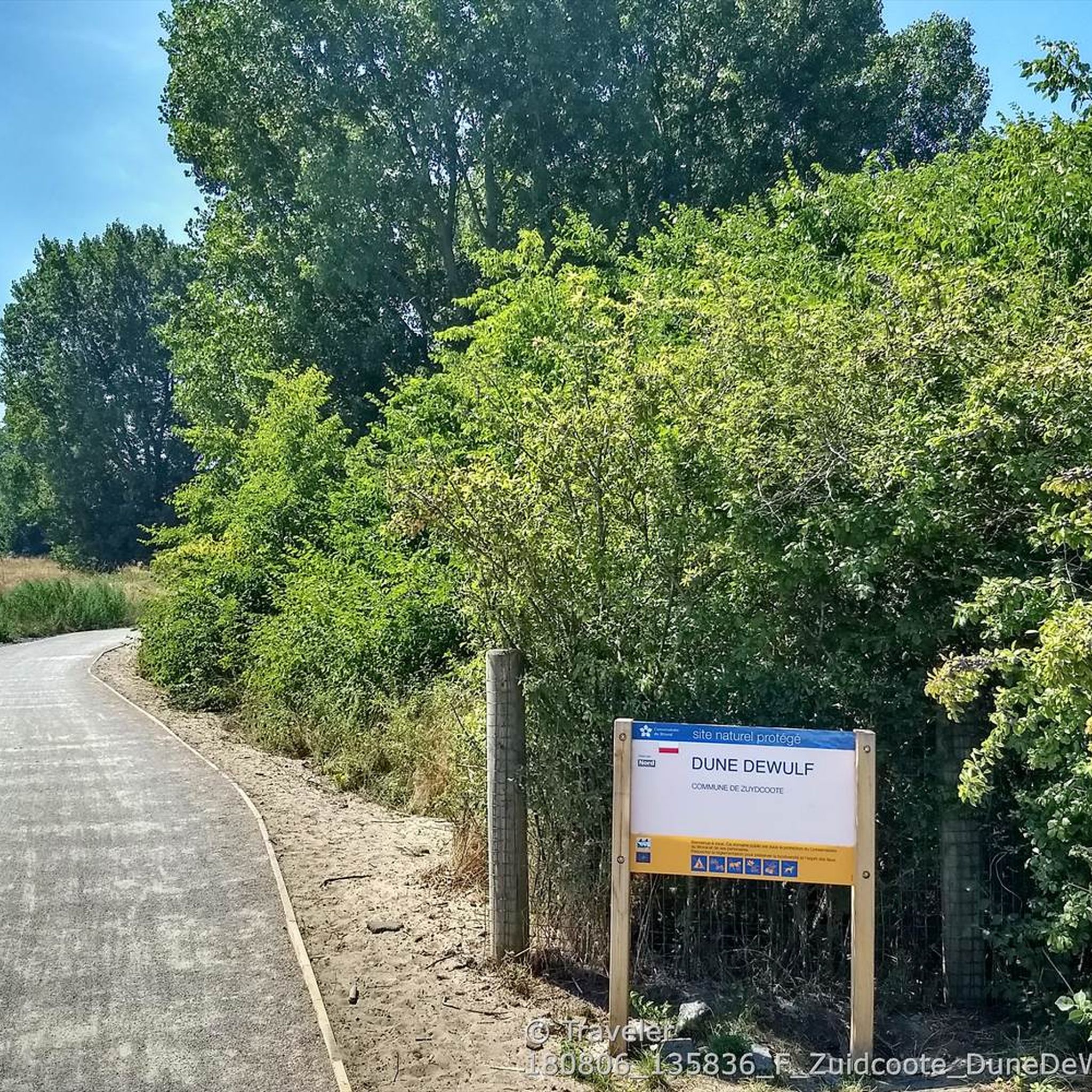
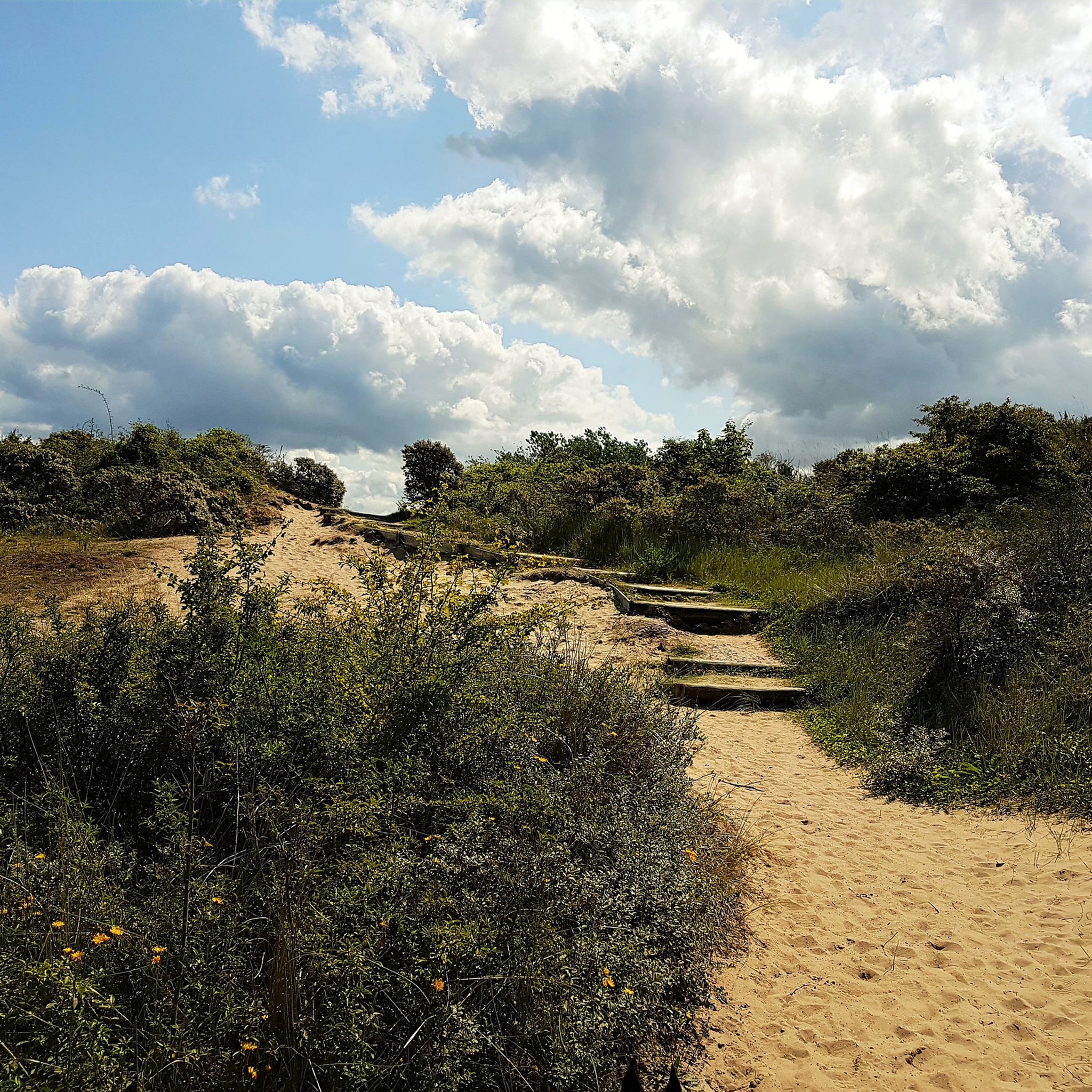
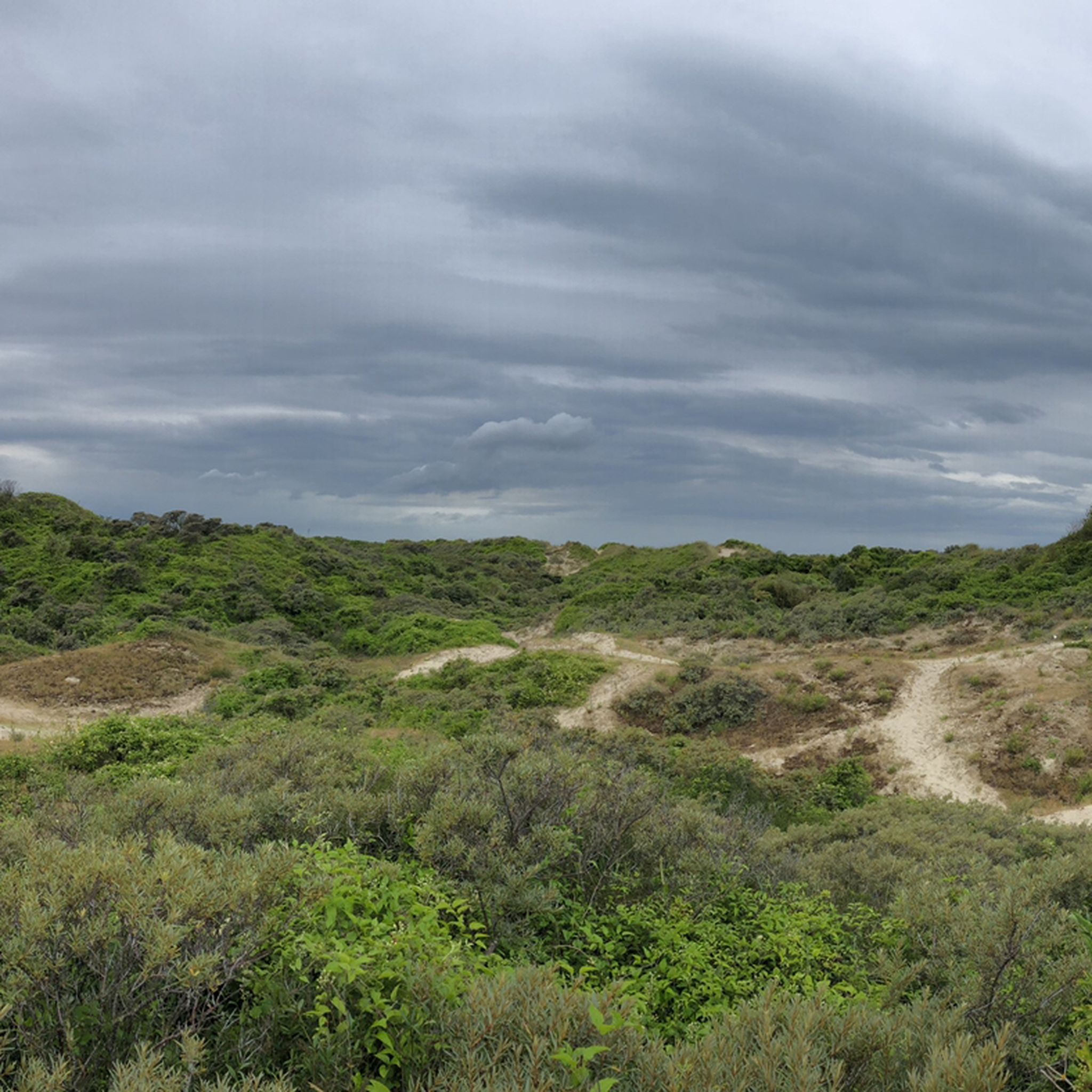
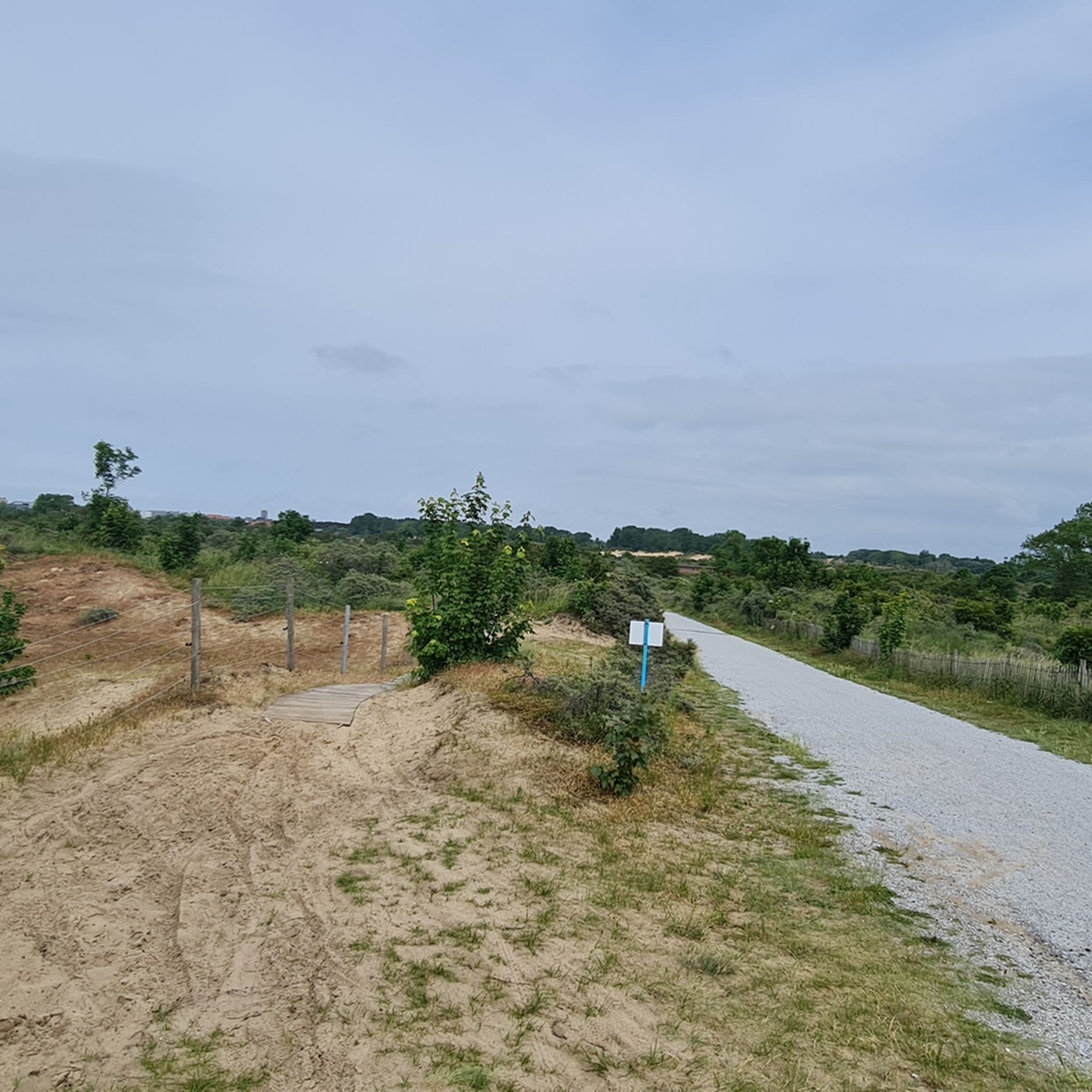
Nature reserve. You're pretty much alone here.
3
0
St. Peter's Church was the first church in De Panne and was built in the late 1870s on behalf of the Calmeyn-Bortier family on land donated by them. The church was intended for the residents of the hamlet of De Panne (formerly also called Josephdorp and Kerckepanne). HISTORY In 1877, when De Panne was still a fishing hamlet of Adinkerke, De Panne received an additional chapel thanks to the Calmeyn – Bortier family. Arthur Verhaegen is the architect on duty. Around 1891, Hortense Calmeyn, the unmarried daughter of Jozef Calmeyn and Emilie Bortier, commissioned the four-bay neo-Gothic St. Peter's Church to be expanded into a full-fledged church. The tower was added in 1936, when the church was no longer in the center of the community due to the construction of the Dumont district. Source: https://www.depanne.be/nl/sint-pieterskerk
4
0
When it was created at the end of the 19th century, St. Peter's Church was surrounded by dunes. In 2024, the church square will undergo a transformation: the church will become a library, the stone square will make way for a dune landscape. Seven lanterns with blue-green glass balls now decorate this place, a reference to the strange painting Paysage aux lanternes (1958) by Paul Delvaux. Staging Sea is a total work of art: an interplay between the landscape, the lanterns and the pavilion with a fountain. The work is changeable like the sea in terms of color and light. The fountain makes the tidal difference on the Belgian coast, which is no less than five meters, visible. So it has both something natural and something high-tech. The proximity of the sea is announced; she herself cannot (yet) be seen from this location. Two of the pavilion's twelve panels are open to allow visitors to take a seat. In this way, the work is not only an ode to the sea, but also a comment on the human impact on nature. A common thread in Filip Vervaet's oeuvre is the appropriation and feasibility of nature. Source: https://www.triennalebeaufort.be/nl/beaufort-staging-sea
5
0

Together with the IJzermonding and the Zwin, the Krakeelduinen are part of the Natura 2000 area Dune Areas. After WWII the dunes were used as a water extraction area, but nowadays the dune area is being restored to its natural glory. You will now find Scottish Blackface sheep grazing the area and since the concrete has been removed the sand can flow freely again.
3
0

Seraphyn Dequidt was born on January 3, 1858 in Oeren near Veurne. In 1881, one year before his priestly ordination, he was appointed as a teacher at his former secondary school, the Episcopal College of the Immaculate Conception in Veurne. In 1893 he heads the Sint-Leo College in Bruges and, as a writer and poet, befriends Guido Gezelle. Due to his poor health, he was ordained on February 6, 1906 as a priest of the Sint-Pietersparochie in De Panne. Already during the first contacts he hears what is troubling the population, the construction of Panne-Schuilhaven. Seraphyn Dequidt invites his childhood friend Professor Emiel Vliebergh to De Panne during the Holy Week and he expresses in an article what people are concerned about; text appeared in May issue 1906 of Dietsche Warande en Belfort and used the same year by H.J. Helleputte in a plea before the Chamber of Representatives. The socially engaged Seraphyn is very popular with the fishermen. Under the pseudonym Elmo, he realistically describes the life of the fishermen in various articles in the 'Vlaamsche Zeevisscher'. Despite his failing health, he is their fervent advocate for a safe haven. But on July 1, 1911, priest Seraphyn Dequidt dies. Initially, the intention is only to build a shelter; a port where larger fishing boats can moor without the full infrastructure and associated industry of a real port. Those more modern barges would eventually replace the potholes that stranded and were lifted back at the next high tide. A technical committee is set up, study trips are organised, reports are written. Three designs for a real harbor see the light at the end of 1908… The years pass. And then it's war. For a detailed account, see source. Period 1900-1914 Dating July 1911 (Main) municipality The Panne, The Panne Source of information BAUWENS JACQUES, Pannese fishermen once dreamed of their 'own' harbour!, Written in Het Zand, Berquin Hans, Antilope, 2007, oral source
6
0
It is a three-aisled brick oriented hall church in neo-Gothic style, with the naves all under a saddle roof. The tower was built against the north aisle in the northwest. This tower has buttresses and is crowned by four corner towers and an octagonal spire. The church space is vaulted by wooden pointed barrel vaults. The furniture is neo-Gothic. There is a 16th century painting, the Descent from the Cross, copied after Rogier Van der Weyden.
7
0


더 살펴보기
찾고 있는 하이라이트를 아직 못 찾으셨나요? 다른 지역의 주요 명소 가이드를 확인해보세요:
