올모스 데 오제다 주변 최고의 교통량 없는 자전거 라이딩 코스
4.0
(2)
20
자전거 타는 사람
4
라이딩
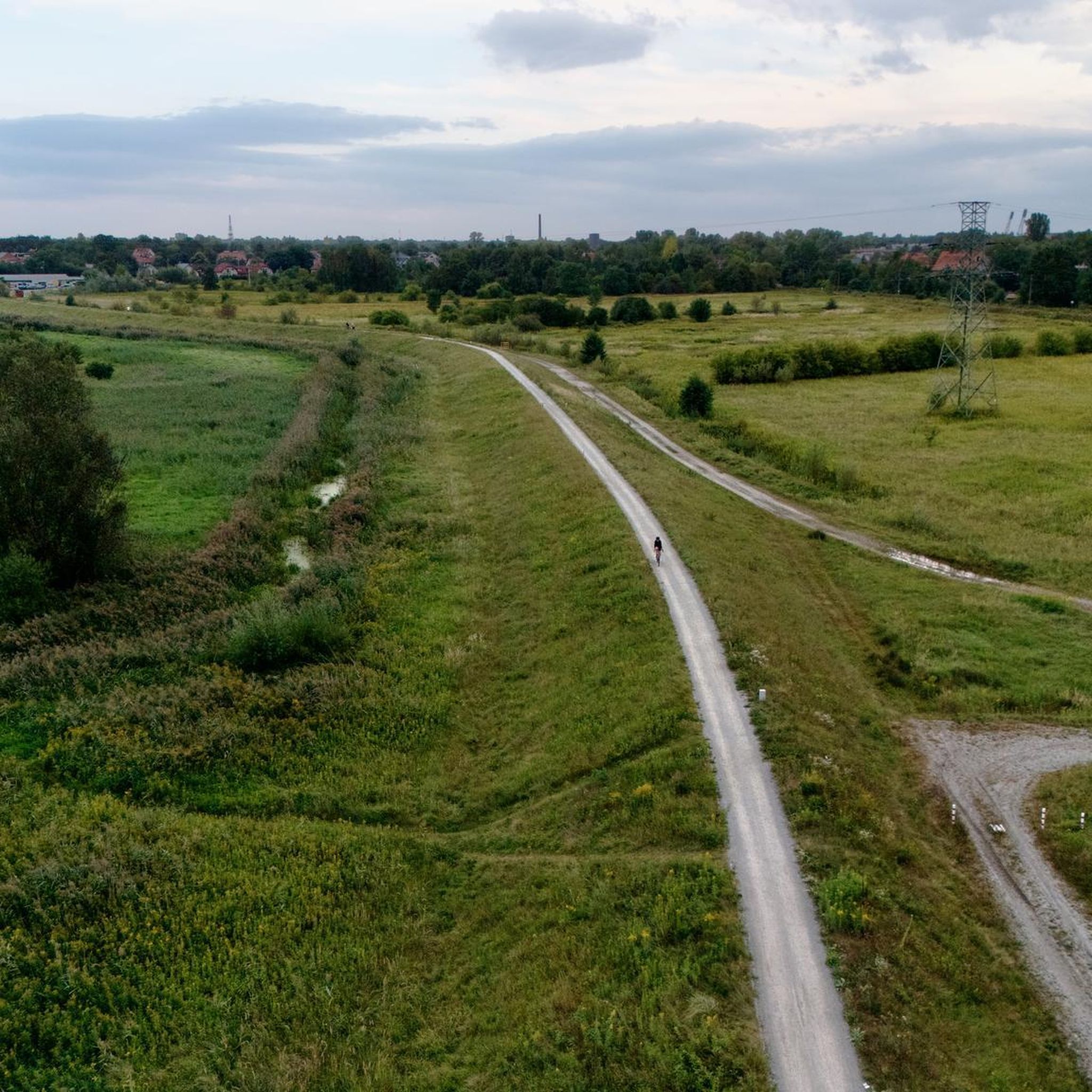
그래블 바이크 라이딩은 "Tierras de Campos" 평원과 산악 지역인 "Montaña Palentina" 사이의 전환 지대에 위치한 Olmos De Ojeda 주변에서 다양한 지형을 제공합니다. 이 지역은 비포장 도로와 통행량이 적은 지방 도로 네트워크를 갖추고 있어 조용한 그래블 로드 Olmos De Ojeda에 이상적입니다. 사이클리스트는 평평한 농경 평원, 구불구불한 강 계곡, 더 어려운 산악 구간을 탐색할 수 있으며, Burejo 강과 Tarabás 강은 푸른 초원에 기여합니다. 이 지역은 단단한 흙길부터 시골길까지 Olmos de Ojeda 사이클링을 위한 다양한 지형을 제공합니다.
Olmos De Ojeda 주변 교통량이 적은…
마지막 업데이트: 10월 14, 2026
4.0
(1)
6
자전거 타는 사람
42.3km
03:10
560m
560m
어려운 자갈길 타기. 우수한 체력 필요. 대부분 포장된 지면. 실력과 관계없이 누구나 갈 수 있음.
2
자전거 타는 사람
어려운 자갈길 타기. 우수한 체력 필요. 대부분 포장된 지면. 실력과 관계없이 누구나 갈 수 있음.

5
자전거 타는 사람
27.7km
01:41
180m
180m
보통 자갈길 타기. 좋은 체력 필요. 대부분 포장된 지면. 실력과 관계없이 누구나 갈 수 있음.
3
자전거 타는 사람
40.2km
02:58
530m
530m
어려운 자갈길 타기. 우수한 체력 필요. 투어 중 자전거를 끌고 가야 하는 구간이 있을 수 있음.
4.0
(1)
4
자전거 타는 사람
64.6km
04:15
730m
730m
어려운 자갈길 타기. 우수한 체력 필요. 대부분 포장된 지면. 실력과 관계없이 누구나 갈 수 있음.
투어 추천은 다른 사람들이 komoot에서 완료한 수천 개의 활동을 바탕으로 구성되어 있습니다.
오늘 무료 계정으로 시작하세요
다음 모험이 기다리고 있어요.
올모스 데 오제다 주변 인기 장소

커뮤니티 팁

팔렌시아 산맥 입구에 모든 편의 시설을 갖춘 마을. 문화 및 자연적으로 볼거리와 즐길 거리가 많습니다.
0
0

세르베라 데 피수에르가(Cervera de Pisuerga)의 아름다운 목조 현수교.
0
0
도로와 평행하고 레케하다 댐이 보이는 아름다운 길입니다.
0
0

How hard would life be in those 8th, 9th and 10th centuries? Hope... a small hermitage dug into a rock and the tomb? as close as possible to the altar, as close as possible to Christ, when the end of the world and the resurrection of the dead arrived. It... overwhelms me.
1
0

Stage 2. Cervera de Pisuerga/Alar del Rey 72 kilometers. 920 positive meters. The second day has common sections with the previous stage and a small road connection. The first kilometers are known and it is a mental help to overcome the Peña Umoma slope from Vado in the opposite direction. The exit from Cervera through the old town is comfortable and pleasant. And almost without pedaling we enter Vado, connect with the red milestones and begin the cycling adventure through the fields of the Valdeados plain. In reality, only the last kilometer is hard, we overcome the panoramic hill and stop at the La Estación viewpoint, always contemplating the magnificent rocky backdrop of the Curavacas peak in the background. In Dehesa de Montejo, the Perazancas de Ojeda alternative detour leaves and a new route begins through the towns and rural landscapes of La Ojeda. The rural road has a good surface and without stopping we reach Colmenares de Ojeda. The entrance to the church of San Fructuoso is fantastic, it has three arches with a cross vault and a Romanesque portico. The jewel is a baptismal font from the 12th century kept inside, one of the best of the Palencia Romanesque, it is a sandstone rock font carved with high reliefs of religious scenes and ceremonies. The towns are small, people barely appear on the streets, and it is surprising to find so much artistic wealth in each rural center. The path does not have slopes as hard as the previous day, it is still a constant ups and downs through holm oak mountains, fallow lands and agricultural meadows but without slopes of five per hour. The valley of the Fuente de los Moros stream is delicious, the bicycles glide over the crops to Pisón de Ojeda. The church of San Pelayo dominates the town's plain from a hill, preserving the Romanesque apse from the 13th century. And then comes the hardest slope of the day, although it has a lot of uncomfortable gravel, it is short and immediately a new plateau appears with views and the descent to Montoto de Ojeda. The church is also on the hill of the town and we went straight up, shortcutting the milestones of the Natural Trail. The best part of the temple is the apse, from the 12th century, inside it has capitals and wall paintings. The portico is Cistercian from the 13th century, it is a temple that has more content than meets the eye. The route continues along the gravel road, jumps over the mountain through a plain of crops and descends to Perazancas de Ojeda. The parish church has a beautiful Romanesque doorway with three archivolts on carved capitals, from the 12th century. And at the exit of the town is the hermitage of San Pelayo, with interesting mural paintings from the 12th century and a portico with a semicircular arch on Mozarabic capitals, a valuable artistic complex declared a National Monument in 1931. The red milestone posts continue towards the connection with the Coal Route of Cok and Cozuelos de Ojeda, returning directly towards Alar del Rey. The route leaves the Nature Trail for now and continues along the road towards Olmos de Ojeda. Before arriving, pass by the Monastery of Santa Eufemia, former residence of kings, princes and nobles, it is one of the most valuable monumental complexes of the Palencia Romanesque, it was declared a Historic-Artistic Monument in 1931 and can be visited on weekends. The price of the visit is four euros per person. In Olmos de Ojeda the red indications appear again and shortly after the Payo de Ojeda variant appears. The town is on a hill along a lonely rural road of bowling alleys and boulders. The church is outside the hamlet, it has a walk of acacias and a beautiful doorway composed of a pointed arch and an archivolt, inside it houses a Romanesque baptismal font with carved ornaments. The route returns along the same path to the Olmos de Ojeda intersection and turns to the right to visit the last enclaves of the gravel journey through the Romanesque of Palencia. The first town is Moarves de Ojeda, which has one of the most precious jewels of the Palencia rural Romanesque in the façade of the church of San Juan Bautista, declared a Historic-Artistic Monument in 1931. The entrance has an elegant portico with five semicircular archivolts on capitals decorated with great detail and artistic level. The cake goes to the upper frieze, presided over by a Pantocrator surrounded by the tetramorphs and the twelve apostles, a marvel of Romanesque sculpture that especially attracts attention being in a small town in the Palencia wasteland. The attraction may also be due to the reddish color of the stone or the careful details of the sculptures. Inside it has a Romanesque baptismal font.
0
0
The visit to the neighborhoods of San Pedro and Santa María is worth it for the heritage and landscapes but it has a price on the legs, you have to climb Monte de la Ruya again to connect with the main itinerary and overcome the infernal slope that We saw before the detour, which also has a trap because after a short descent there is another similar section to a hill, the prize is fantastic views of the Palentina Mountain. The road enters the meadows and mountains of La Ojeda again and there is a fun stretch, climbing the GPS average for several kilometers until Dehesa de Montejo, where the detour for the Perazancas variant comes out on the left. The route continues to the right, crosses the Cervera de Pisuerga road and climbs the slope of Peña Umoma to a hill that finally marks the entrance to the Pisuerga valley through the beautiful valley of Valdeados. The descent ends in Vado, it is noon, time for a snack but there is no bar or grocery store. Cervera is three kilometers away but it is the place where we plan to finish the stage and we decided to continue and spend the afternoon with the energy bars. The path continues along the charming bank of the Pisuerga River, favorable terrain, river landscape, good climate and change of environment. On the route there are yellow arrows of the Camino Olvidado or Camino de la Montaña, a Camino de Santiago very popular in the 12th and 13th centuries, starting from Bilbao, running along the southern slope of the Cantabrian Mountains and connecting with the Camino Francés in El Bierzo. In Barcenilla de Pisuerga, the milestones of the Natural Trail cross the Pisuerga River via a pedestrian walkway and change course, beginning the climb through the Mudá valley until the connection with the GR-1. The climb begins in Rueda de Pisuerga, the route passes by the church of San Cristóbal, which preserves the Romanesque doorway from the 12th century, and continues through Vallespinoso de Cervera to San Cebrián de Mudá, a town with a mining tradition and the last town on the Natural Trail of the Palentine Romanesque. In the square there are some wagons from the mining era, when the Cok Coal Route was the main economic channel of the valley. The church of San Cornelio and San Cipriano is on a hill, is Romanesque from the 13th century and was declared a Site of Cultural Interest in 1993. The climb to the Historical Trail passes through the European Bison Interpretation Center, runs through a mountain oak grove and ends at a small hill below the imposing Valdecebollas (2,143 m), entrance to the La Pernía valley and the upper Pisuerga. The views are stunning. The end of the stage is Cervera de Pisuerga, with accommodation, camping and complete services. The final stretch to complete a great day of gravel cycling continues through the Castillería valley and at the Estalaya crossroads, where the climb to the Verdeña Fossil Forest is, a path leaves on the left that leads to Vañes off the road. In this section it is important to have the track downloaded because there are no milestones on the route. You must continue along the road for about 500 meters towards Cervera and at the fork of the road take a detour to the left towards Rabanal de los Caballeros and Valdasornín. The rest of the way follows the road that goes down to the urban complex of Cervera de Pisuerga.
0
0

The Church of the Assumption, located in Barrio de Santa María, is an outstanding example of the Romanesque in the Palencia Mountain. Built in the 16th century on the remains of a 12th-century Romanesque church, it preserves elements such as the apse and the nave of the Gospel.
2
0
Perapertú, located in the Mudá Valley, in the Palencia Mountain, offers a spectacular environment to enjoy nature and the mountains. Its town center has ashlar constructions and a church dedicated to San Quirico and Santa Juliana.
1
0
자주 묻는 질문
올모스 데 오헤다 주변에 교통량이 없는 자갈길 자전거 코스는 몇 개가 있나요?
이 가이드에는 올모스 데 오헤다 주변의 도전적인 교통량 없는 자갈길 자전거 코스 세 개가 소개되어 있으며, 자동차로부터 벗어나 조용하고 몰입감 있는 사이클링 경험을 추구하는 분들에게 완벽합니다. 이 코스들은 이 지역의 다양한 풍경 속으로 진정한 탈출을 선사합니다.
올모스 데 오헤다의 자갈길에서는 어떤 종류의 지형을 예상할 수 있나요?
올모스 데 오헤다 주변의 지형은 '티에라스 데 캄포스' 평원과 '몬타냐 팔렌티나' 산악 지역 사이에 위치한 점을 반영하여 상당히 다양합니다. 다져진 흙길, 시골길, 교통량이 적은 국도의 혼합을 예상할 수 있습니다. 코스에는 구불구불한 강 계곡, 부레호 강과 타라바스 강을 따라 펼쳐진 푸른 초원, 그리고 산악 지역에 가까워질수록 더 도전적인 구간이 포함될 수 있습니다.
이 지역에 교통량 없는 순환 자갈길 코스가 있나요?
네, 이 가이드에 소개된 모든 코스는 순환형으로, 같은 장소에서 시작하고 끝낼 수 있어 왔던 길을 되돌아갈 필요가 없습니다. 예를 들어, 세르베라 데 피수에르가 – 살리나스 데 피수에르가 다리 루프와 세르베라 데 피수에르가 – 에르미타 데 산타 에울랄리아 루프 모두 세르베라 데 피수에르가에서 시작하고 끝나 편리한 왕복 코스를 제공합니다.
이 교통량 없는 자갈길 코스를 따라 볼 수 있는 주목할 만한 랜드마크나 관심 지점이 있나요?
이 지역은 자연의 아름다움과 로마네스크 양식의 유산이 풍부합니다. 라이딩을 하면서 살리나스 데 피수에르가 다리와 같은 역사적인 구조물을 볼 수 있습니다. 이 지역은 또한 잘 보존된 로마네스크 양식의 교회와 수도원으로 유명하며, 멋진 자연 배경 속에서 스페인의 풍부한 역사에 대한 통찰력을 제공합니다.
교통량 없는 자갈길 코스가 초보자나 가족에게 적합한가요?
이 가이드에 나열된 코스는 거리와 고도 상승 때문에 모두 어려움 등급으로 평가되어 경험이 풍부한 그래블 바이크 라이더에게 더 적합합니다. 교통량이 없다는 점은 좋지만, 초보자나 가족에게는 오르막과 전체적인 길이가 도전적일 수 있습니다. 하지만 팔렌시아 주의 더 넓은 지역에는 카날 데 카스티야를 따라 있는 구간과 같이 모든 사이클링 수준에 더 적합한 완만한 구간도 있습니다.
올모스 데 오헤다에서 그래블 바이크를 타기 가장 좋은 시기는 언제인가요?
올모스 데 오헤다의 다양한 풍경은 일년 중 대부분 즐길 수 있습니다. 봄에는 푸르른 녹음, 가을에는 생생한 색감과 함께 봄과 가을이 그래블 바이크를 타기에 가장 쾌적한 온도를 제공합니다. 여름은 더울 수 있으며, 겨울에는 특히 높은 산악 지역에서 더 추운 날씨가 찾아올 수 있습니다.
올모스 데 오헤다 근처에 그래블 바이크로 탐험할 수 있는 자연 공원이나 보호 구역이 있나요?
올모스 데 오헤다는 멋진 몬타냐 팔렌티나 근처에 위치해 있으며, 푸엔테스 카리오나스와 푸엔테 코브레 자연 공원과 같은 지역을 포함합니다. 이 가이드의 특정 루트가 이 공원들로 직접 들어가지 않을 수도 있지만, 쿠라바카스와 같은 멋진 봉우리를 포함한 이 지역의 자연의 아름다움은 훌륭한 배경을 제공하며 적합한 그래블 트랙에서 추가 탐험할 기회를 제공합니다.
교통량이 적은 그래블 바이크 트레일의 주차는 어디서 찾을 수 있나요?
순환 투어의 편리한 출발점이 되는 세르베라 데 피수르가에서 시작하는 많은 루트는 일반적으로 마을 중심지 안이나 근처에 주차 옵션을 제공합니다. 선택한 출발 마을에서 현지 주차 가능 여부를 확인하는 것이 좋습니다.
교통량이 적은 그래블 트레일 근처에서 식음료를 찾을 수 있나요?
올모스 데 오헤다와 세르베라 데 피수르가와 같은 주변 마을은 시골 지역이지만, 주요 정착지에서는 일반적으로 레스토랑이나 카페와 같은 작은 현지 업소를 찾을 수 있습니다. 특히 아길라르 저수지 – 살리나스 데 피수르가 다리 루프와 같이 서비스가 드물 수 있는 긴 루트에서는 충분한 물과 간식을 휴대하는 것이 항상 좋습니다.
올모스 데 오헤다에서의 그래블 바이크 경험이 독특한 이유는 무엇인가요?
올모스 데 오헤다에서의 그래블 바이크 경험의 독특한 매력은 진정성 있고 고요한 시골 환경과 다양한 풍경에 있습니다. 광활한 평원부터 구불구불한 강 계곡, 그리고 거친 몬타냐 팔렌티나의 모습까지, 모두 조용하고 교통량이 적은 루트에서 경험하게 될 것입니다. 이 지역의 풍부한 로마네스크 유산 또한 야외 모험에 문화적 차원을 더하여 진정으로 몰입감 있는 경험을 선사합니다.
올모스 데 오제다 주변에서 가장 인기 있는 명소


더 살펴보기
다른 지역의 최고의 그래블 라이딩를 살펴보세요.
