3의 마이와일러가지 명소 & 주요 장소
마이와일러에는 둘러볼 만한 장소가 많답니다. 하이킹 또는 사이클링을 좋아한다면 마이와일러에 숨겨진 3
가지 보석을 만날 수 있을 거예요. 이 지역의 주요 명소를 살펴보면서 다음 모험을 계획해보세요.
마지막 업데이트: 11월 1, 2026


이런 장소를 발견하려면 지금 가입하세요
최고의 싱글 트랙, 봉우리 및 다양한 흥미로운 야외 장소에 대한 추천을 받아보세요.
Ouvrage de l'Einseling – 마지노선 벙커 36 Castelberg
하이라이트 • 역사적 장소
For those who would like to know more about the Maginot Line: de.wikipedia.org/wiki/Liste_der_Ouvrages_der_Maginot-Linie
번역자 Google •
팁에 의해


Gieneringen 십자가
하이라이트 • 기타
이 십자가는 3조각으로 부서졌으나 2004년에 복원됨
번역문 보기
팁에 의해
오늘 무료 계정으로 시작하세요
다음 모험이 기다리고 있어요.




커뮤니티 팁

18세기 정의 십자가, 1999년 Nied 근처 "Gieneringerberg"라는 곳에서 발견됨 이 십자가는 3조각으로 부서졌으나 2004년에 복원됨
0
0
The Story of the Russian Grave in the Guessling-Hemering Forest The following story recounts dramatic events that occurred during a war that has left its mark on the minds of our fellow citizens for generations. This story takes place in the Guessling Forest towards the end of 1944; let us remember that such serious events are not exceptional in wartime. According to some accounts, there was a chain of solidarity among escaped Russian soldiers through the region's forests, starting in Munster and passing through the Guessling Forest to Arriance. At that time, five Russian soldiers, prisoners of war and escapees from a German camp, had taken refuge in the Guessling Forest. The five soldiers had dug a hiding place near a small water source. The presence of these men did not escape the notice of a remarkable man from our village, Mr. Théodore Freese, a forest ranger in the Guessling-Boustroff sector. These escapees, having grown accustomed to his presence, trusted him and befriended him. In return, he often provided them with food. According to the correspondence of a Russian journalist written after the war, it appears that the forest ranger also provided them with weapons for their defense. But as time passed and the war drew to a close, these escapees became reckless… It is clear that the presence of these Russians did not escape the notice of other passersby in this sector of the forest. Following a serious incident, the German soldiers organized a massive raid on the places where they suspected they would find traces of these Russian soldiers. Unfortunately, it was at this moment that one of the five soldiers from the Guessling Forest chose to go and fetch water from the spring, and, by bad luck, he was spotted by the German soldiers who had surrounded the area. The Russian soldier, seeing himself discovered, took refuge in the higher-up hiding place, believing himself safe from the Germans. The German soldiers, having followed him, had no trouble killing the five men on the spot by throwing grenades into the hiding place. They remained buried in the same spot until 1978, when an official Russian delegation came to dig them up. The remains of these five Russian soldiers were transported and buried in the Niederbronn-les-Bains cemetery in Alsace, where 15,000 German soldiers who died during the last war are also buried. The chronology of this story is based on numerous testimonies from the inhabitants of our village. The men we just mentioned were filled with a feeling that led them to believe that nothing more could happen to them. Indeed, in 1944, the imminent end of the war seemed obvious to many people. The end of this story was confirmed to us by many residents of our town who also fed these Russian soldiers and who had witnessed their recklessness. Entire families in our village were thus put in danger. We cannot tell the story of the Russian soldiers' grave without mentioning the forest ranger to whom we owe the testimony of certain events that were unknown to our citizens. Mr. Théodore Freese, to whom we wish to pay this special tribute, was very discreet at the time and was well aware that carelessness could be fatal, as he constantly risked his life for this network of escaped Russian soldiers. Having been informed that the German authorities had discovered his connections with Russian soldiers, he was only just able to escape arrest. After the war, he received numerous tributes from former escaped Russian prisoners who, by letter or in the Moscow press, cited him as a key and trusted figure during this sad period of the war. In one of these letters, a former prisoner thanked him for his services and cited in the same letter the names of the five Russian soldiers killed: Wasili Chniniu, Petr Krawschenko, Petr Schanka, Semen Grinevo, and Echim Muhin. He particularly wanted to thank the following people from our village: Muller Charles, Muller Joséphine, Hullar Jacques, Hullar Henriette, Bintz Charles, Doller Eugénie, Krauser Isidore, Posson Clémentine, Jacob Nicolas, Klein Georges, Turck Cécile, and Zint Auguste. Here is an excerpt from another letter from a former Russian soldier written in 1967 to Théodore Freese: "In the most difficult days for us, you, a true patriot of France, provided us with immense help by supplying us with provisions, weapons, and ammunition. And all this under the conditions of the German occupation of Lorraine. It was a heroic feat, dear comrade Théo! We remember it with deep gratitude."
0
0
The Einseling fortification is a single-block fortified structure of the Maginot Line located in the fortified sector of Faulquemont, between the communes of Bambiderstroff and Longeville-lès-Saint-Avold. Its name comes from the Finselingerberg hill on which it is built. When it was projected by the CORF in the 1930s, the army used old German maps where the Gothic script annotations were misinterpreted: the F in Finseling was transformed into an E.
1
0


The Maginot Line: The French Wall | ARTE https://youtu.be/Bvtxa08ysgc For those who would like to know more about the Maginot Line: de.wikipedia.org/wiki/Liste_der_Ouvrages_der_Maginot-Linie
1
0

Panoramic view of the Lorraine plateau. Picnic area
1
0

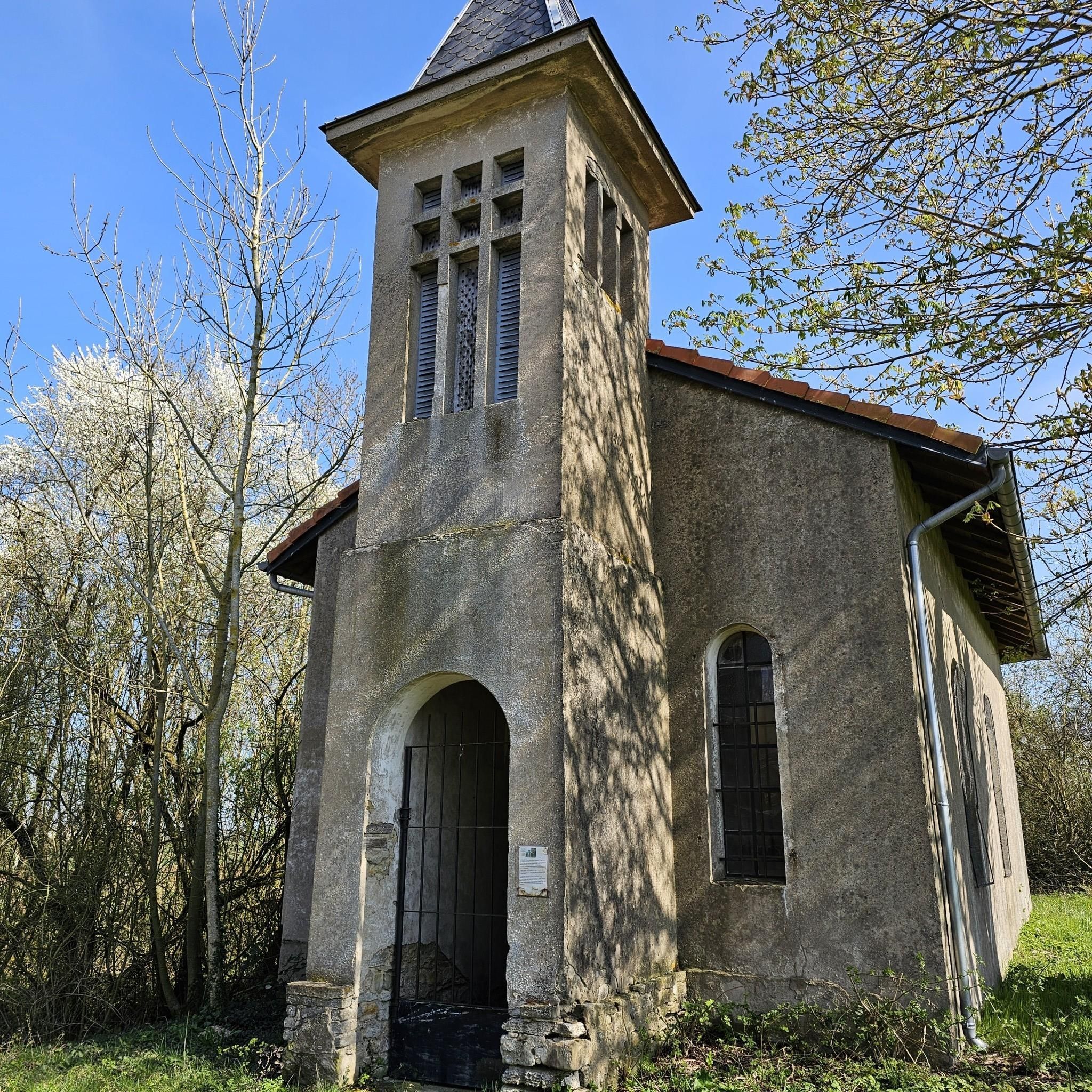
Mount Saint Pierre, also known as "Haut Saint Pierre" or "côte 325", is 30 minutes from Metz, near the town of Villers-Stoncourt. The name comes from the small chapel that is on the top of the hill, next to a small cemetery. In good weather you can enjoy a beautiful all-round view from here and look to the south-east as far as the Vosges (Donon).
0
0


더 살펴보기
찾고 있는 하이라이트를 아직 못 찾으셨나요? 다른 지역의 주요 명소 가이드를 확인해보세요:
