11의 Bustelo가지 명소 & 주요 장소
Bustelo에는 둘러볼 만한 장소가 많답니다. 하이킹 또는 사이클링을 좋아한다면 Bustelo에 숨겨진 11
가지 보석을 만날 수 있을 거예요. 이 지역의 주요 명소를 살펴보면서 다음 모험을 계획해보세요.
마지막 업데이트: 9월 7, 2026
베스탄사 강을 따라가는 길
하이라이트 (구간) • 트레일
번역자 Google •
팁에 의해

베스탄사강 위의 다리
하이라이트 • 다리
번역자 Google •
팁에 의해
이런 장소를 발견하려면 지금 가입하세요
최고의 싱글 트랙, 봉우리 및 다양한 흥미로운 야외 장소에 대한 추천을 받아보세요.
Nossa Senhora da Oliveira
하이라이트 • 종교적 장소
번역자 Google •
팁에 의해

포르타스 데 몬테무루
하이라이트 • 산악 고개
번역자 Google •
팁에 의해
카브룸 천연 수영장
하이라이트 • 호수
번역자 Google •
팁에 의해

무료로 가입하여 Bustelo의 더 많은 명소를 발견하세요.
이미 komoot 계정이 있나요?
오늘 무료 계정으로 시작하세요
다음 모험이 기다리고 있어요.
Bustelo 주변 인기 장소

커뮤니티 팁

We have incredible things throughout this country.
0
0

At Portas de Montemuro, the landscape stretches out without limits. Here, tables and benches invite you to take a break and enjoy the view, while the national road 321, popular with cyclists, marks the 1,215 metres of altitude. The highest peak of the Montemuro mountain range, at 1,381 metres, is nearby, to the east. Nearby, the ruins of the Wall of Portas de Montemuro preserve echoes of a distant past. Mentioned in the Inquiries of 1258, they reveal traces of an ancient fortified settlement from the Iron Age, possibly linked to the Castro culture. Later, the site was reused by the Romans and, at the time of the Reconquista, by D. Afonso Henriques, the first king of Portugal.
0
0

very beautiful landscape with a good park3 to have a snack..worth visiting
0
0
At Portas de Montemuro, the landscape stretches out without limits. Here, tables and benches invite you to take a break and enjoy the view, while the national road 321, popular with cyclists, marks the 1,215 metres of altitude. The highest peak of the Montemuro mountain range, at 1,381 metres, is nearby, to the east. Nearby, the ruins of the Wall of Portas de Montemuro preserve echoes of a distant past. Mentioned in the Inquiries of 1258, they reveal traces of an ancient fortified settlement from the Iron Age, possibly linked to the Castro culture. Later, the site was reused by the Romans and, at the time of the Reconquista, by D. Afonso Henriques, the first king of Portugal.
1
0
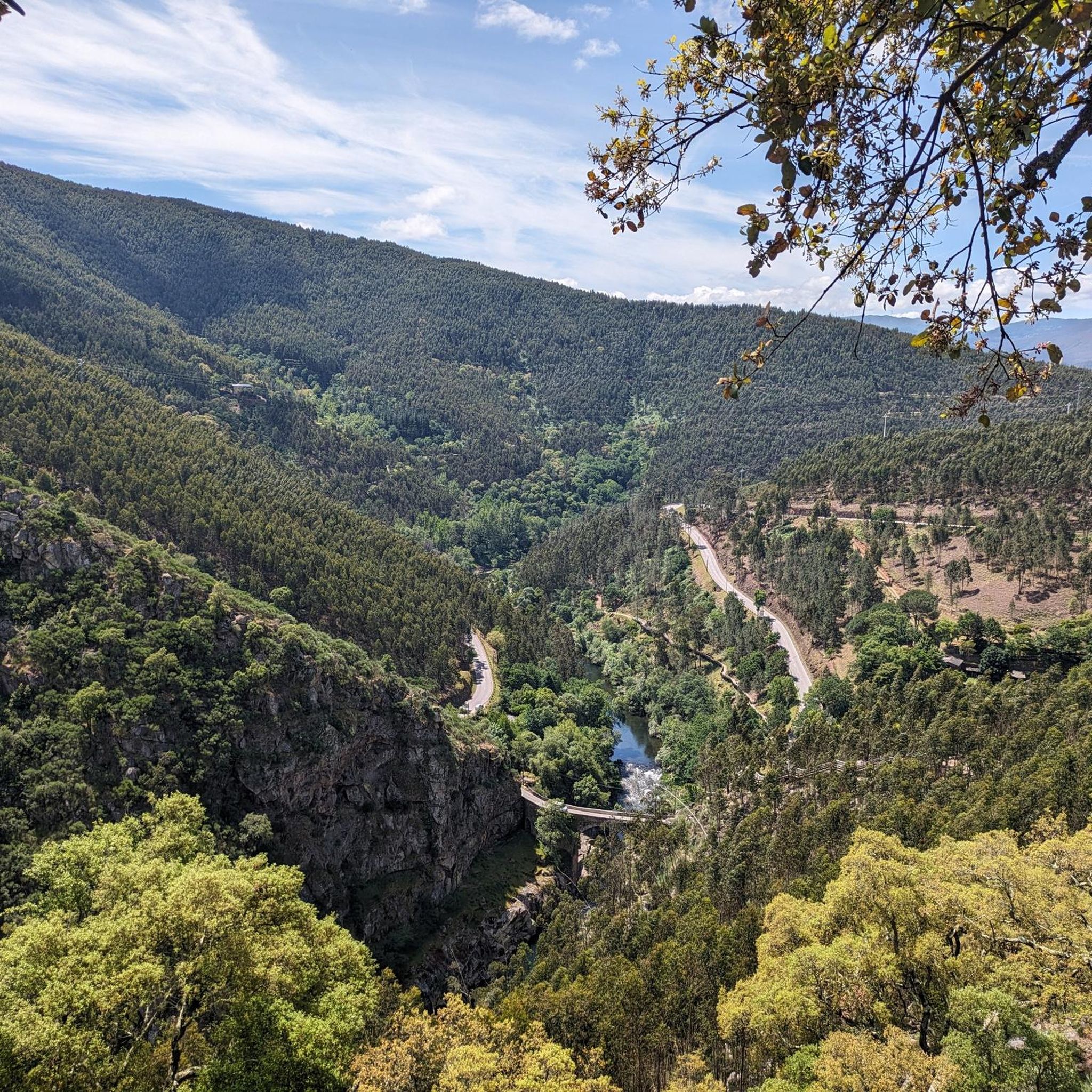
This is one of the many bridges that span the Bestança River, each inviting you to pause and take in the verdant serenity and the hypnotic murmur of the crystal-clear waters. Some, like the Soutela Bridge, date back to the Middle Ages, while others, more recent, blend harmoniously into the landscape. Whether ancient or modern, they all share one thing in common: breathtaking views.
1
0
This path descends through the valley of the River Bestança along one of the old roads that lead to the Prado area. The Bestança rises at Portas de Montemuro and flows into the Douro: 13.5 kilometres of crystal-clear water, it is one of the purest rivers in Europe. Its ecological balance sustains otters, trout and genets, while since ancient times, mills scattered throughout the valley have used its waters to grind cereals, especially corn, preserving a valuable rural heritage.
1
0

A beautiful discovery on the edge of the EN222. Easily accessible natural pools with fresh running water (so-called wells). On foot it is possible to advance up the river to a waterfall. There is a picnic area nearby and a drinking fountain in the parking lot on the opposite side of the road.
2
0
Bustelo에서 가장 인기 있는 경로
Bustelo에서 가장 인기 있는 명소


더 살펴보기
찾고 있는 하이라이트를 아직 못 찾으셨나요? 다른 지역의 주요 명소 가이드를 확인해보세요:
