베르 앙 드루아 주변 최고의 그래블 라이딩 코스
16
자전거 타는 사람
5
라이딩
베르 앙 드루아 주변의 엄선된 그래블 라이딩 코스에서 거친 라이딩의 매력을 경험하세요. 도전정신을 자극하는 업힐 코스이든 아름다운 풍경 트레일이든, 베르 앙 드루아 주변 최고의 그래블 라이딩 경로를 살펴보세요.
마지막 업데이트: 9월 6, 2026
5
자전거 타는 사람
42.7km
03:19
280m
280m
어려운 자갈길 타기. 좋은 체력 필요. 투어 중 자전거를 끌고 가야 하는 구간이 있을 수 있음.
5
자전거 타는 사람
35.8km
02:36
310m
310m
보통 자갈길 타기. 좋은 체력 필요. 대부분 포장된 지면. 실력과 관계없이 누구나 갈 수 있음.

3
자전거 타는 사람
28.9km
01:48
210m
210m
보통 자갈길 타기. 좋은 체력 필요. 대부분 포장된 지면. 실력과 관계없이 누구나 갈 수 있음.
1
자전거 타는 사람
38.6km
02:19
160m
160m
보통 자갈길 타기. 좋은 체력 필요. 대부분 포장된 지면. 실력과 관계없이 누구나 갈 수 있음.
1
자전거 타는 사람
23.3km
01:28
210m
210m
보통 자갈길 타기. 좋은 체력 필요. 대부분 포장된 지면. 실력과 관계없이 누구나 갈 수 있음.
투어 추천은 다른 사람들이 komoot에서 완료한 수천 개의 활동을 바탕으로 구성되어 있습니다.
오늘 무료 계정으로 시작하세요
다음 모험이 기다리고 있어요.



커뮤니티 팁


Abondant is located in the Eure Valley, in the immediate vicinity of the Dreux national forest and the important Château de Sourches, which was extensively transformed in the 19th century, and whose grounds were designed by the Duchênes. It appears that the extensive work carried out on the church in the 16th and 18th centuries was due to the generosity of this family. The current Saint-Pierre church succeeds a 12th-century building that was under the control of the canons of Saint-Étienne de Dreux and later the monks of Notre-Dame du Bec. Thanks to parish registers, the dates of its construction are precisely known: in 1508, the roof frame was raised; in 1516, construction continued thanks to donations from Pierre de Guerry, then lord of Abondant; in 1548, the erection of a 60-meter bell tower, which was topped with a cross in 1549. The dedication ceremony by the Bishop of Meaux did not take place until 1604. In the same year, a brotherhood of Charity was created under the patronage of Saint Sebastian and Saint Barbara, which remained
0
0
The Church of Saint-Pierre stands in the middle of the village, surrounded by the former cemetery area, which has been transformed into a grassy mound. On the north side, it is dominated by a large three-story stone bell tower. The western façade is preceded by a very rustic enclosed porch. The church consists of a single nave extended by a choir and a five-sided apse. The chapel, which occupies the base of the bell tower to the north, and the south chapel form a false transept. The church is built of flint rubble; the quoins, bands, cornices, and buttresses are made of sandstone. The interior of the building is covered with beautiful wainscoting, with battens, entirely redone based on the original layout above the nave. The radiating wainscoting of the apse is highlighted with a black geometric decoration painted on either side of the battens. The sculpted beams of the roof structure were preserved and placed on the new beams. The 18th-century waxed wooden high altar is decorated with a Crucifixion embroidered on fabric, possibly replacing a painting. The statues of Saint Peter and Saint Paul were placed in the niches to the left and right of the central altarpiece. The church has enclosed wooden pews that have been restored. When the pews were removed, gravestones were unearthed in the floor; they were photographed and drawn. A stone statue with a separated body and head was discovered in the thickness of a wall: it is Saint Peter wearing the papal tiara. During World War II, the bombing of a train stopped at the station destroyed the stained-glass windows, which were of varying value; however, one of them, dating from the 16th century, was listed. In 1948, the Bernard Campin workshop in Chartres was hired to renovate all the windows, in the style of the 1930s. Drainage work, masonry, timber framing, and roofing were carried out throughout the building, the most significant of which was the restoration of the paneled vault. The Sauvegarde de l'Art Français (French National Art Protection Agency) awarded €10,000 in grants in 2005.
0
0

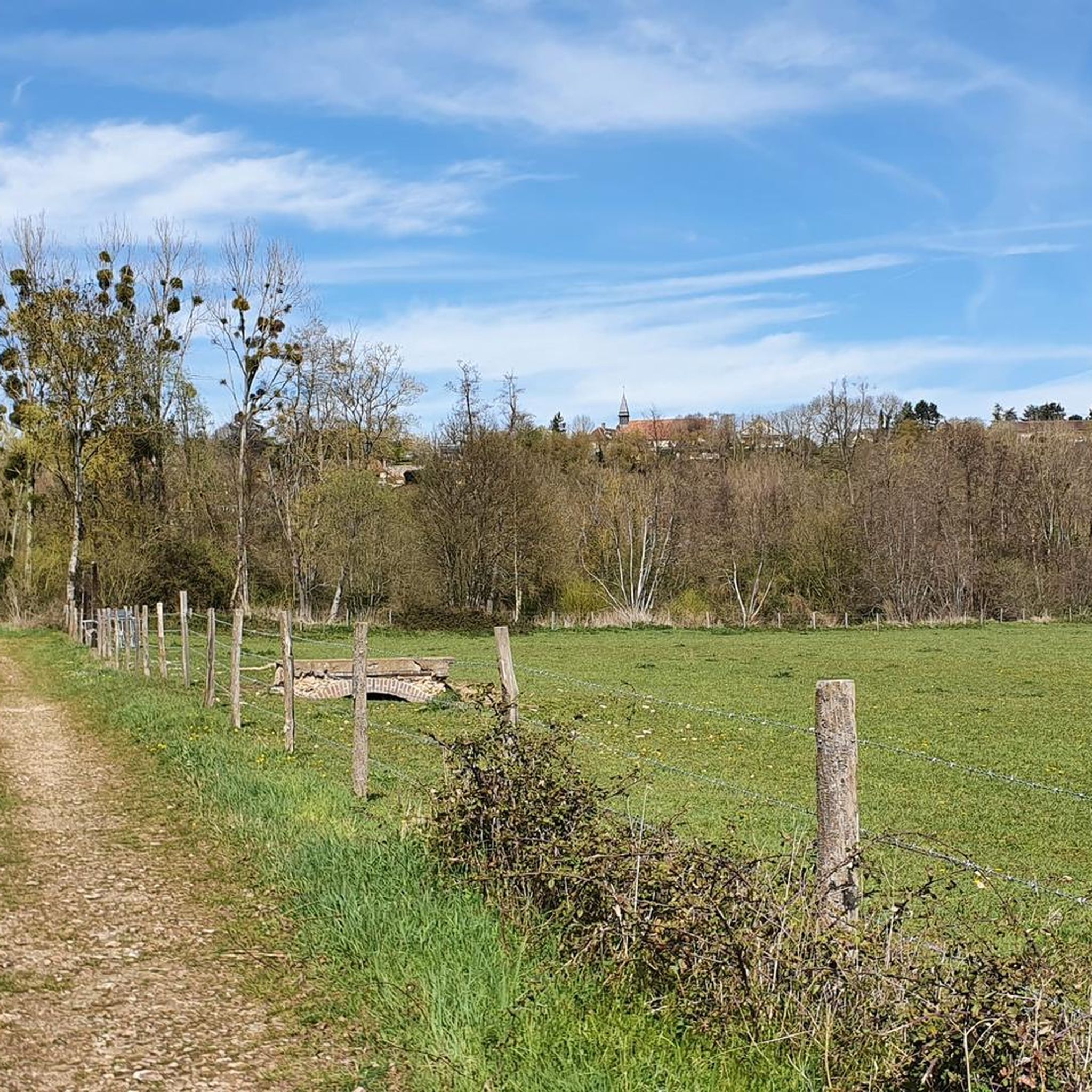
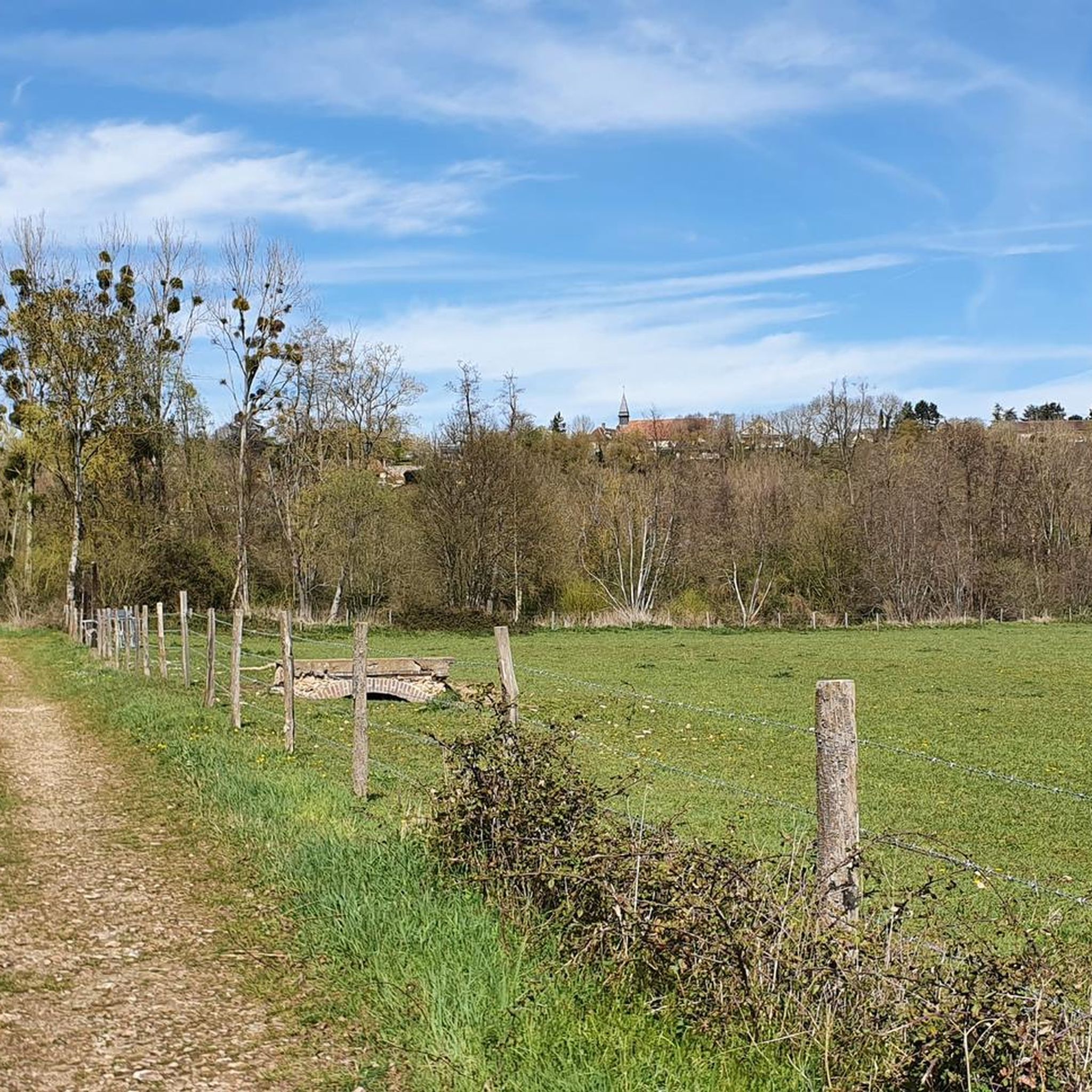
Travel the Eure Valley from Montreuil to Fermaincourt for a scenic ride along quiet country roads. The route passes through charming villages, lush green meadows and peaceful stretches of the Eure River. You'll enjoy gentle slopes that make the ride enjoyable and relaxing, with plenty of places to stop and admire the picturesque countryside.
2
0
Saint-Pierre Church. The village is spread out over the Douze valley. The church, of large dimensions, is composed of two chronologically distinct parts: a Romanesque nave and, on the other hand, a false transept and a 16th century choir. Although the nave is not vaulted, it is supported by three almost flat buttresses which divide it into three "bays". The oldest parts of the construction seem to be the western part of the nave and a portion of the herringbone wall. The hypothesis of the Drouais and Thimerais Archaeology Society would be that the choir and the south chapel date from the 15th century and the north chapel from the 16th century. According to the Archaeological Society of Eure-et-Loir, all the transformations date from the 16th century: we would be inclined to agree with this latter opinion, given the size of the south chapel and the coherence of the whole of the eastern part of the church, particularly highlighted by the presence of a vigorous dripstone cordon that underlines the base of the building, structuring the elevation all around the chevet and the two chapels. The two chapels forming a transept are lit by two large windows: those of the south chapel are in a pointed arch, divided by a tracery into two lancets and a polylobed arch, perhaps traced during a later restoration. Three sculpted buttresses support this elevation, two were placed at the corners, the third between the two windows that light the chapel to the south. The applique of the west wall of the south chapel is very neat. The upper part of the south gable wall has been rebuilt, but the base in the lower part is also carefully dressed. The chevet built in fine stone is also supported by elegant buttresses. However, it is the chapel built symmetrically to the north that appears to be the most refined by the quality of its limestone with live joints, by the design of the buttresses and the tracery of the large windows. On the north side, the "door of the dead" communicating with the cemetery, was pierced on the west wall of the chapel. It is surmounted by a pediment, the jambs are decorated with pilasters, not protruding. It is certainly a seigneurial chapel. We enter the church by the west door under an 18th century porch covered with a beautiful frame. The door is also old. At the entrance to the church, we find ourselves under the stool of the frame spire. There may be remains of ancient decorations under the whitewash of the nave. A beam of glory separates the nave from the choir: it is a complete polychrome wooden ensemble, Christ on the cross surrounded by the Virgin Mary and Saint John and below, the Virgin of Pity. The work bench has been preserved. Inside the north chapel, we can see at the corners bundles of ribbed vaults which seem to be waiting for a vault which may have collapsed, or, more likely, which was never erected. In the south wall is embedded a pile whose capital, with an angel's head, bears the barely legible date of 1514. The high altar, from the 18th century, in carved wood, has been preserved in place; the painting of the altarpiece represents the denial of Saint Peter. The fragments of stained glass from the 16th century were removed during the work. The church preserves a wooden Education of the Virgin, split, a Saint Peter, a Saint George, a Saint Sebastian, a naïve Saint Eligius. The Sauvegarde de l’Art français granted aid of €5,000 in 2005 for drainage, masonry and framework repairs and tile roofing.
0
0


Small Norman town located in the confines of Eure! Special geographical location located at the intersection of 3 departments and 3 regions. The church located there is the Saint-Pierre church.
0
0
베르 앙 드루아 주변에서 가장 인기 있는 명소


더 살펴보기
다른 지역의 최고의 그래블 라이딩를 살펴보세요.
