20의 휘트본가지 명소 & 주요 장소
휘트본에는 둘러볼 만한 장소가 많답니다. 하이킹 또는 사이클링을 좋아한다면 휘트본에 숨겨진 20
가지 보석을 만날 수 있을 거예요. 이 지역의 주요 명소를 살펴보면서 다음 모험을 계획해보세요.
마지막 업데이트: 9월 8, 2026

테이블 힐 (375m)
하이라이트 • 자연 기념물
팁에 의해

이런 장소를 발견하려면 지금 가입하세요
최고의 싱글 트랙, 봉우리 및 다양한 흥미로운 야외 장소에 대한 추천을 받아보세요.
Sugarloaf Hill
하이라이트 • 자연 기념물
팁에 의해

노스 말번 시계탑과 탱크
하이라이트 • 역사적 장소
팁에 의해

로즈 뱅크 가든과 버저드 조각상
하이라이트 • 구조물
팁에 의해
무료로 가입하여 휘트본 주변의 더 많은 명소를 발견하세요.
이미 komoot 계정이 있나요?
오늘 무료 계정으로 시작하세요
다음 모험이 기다리고 있어요.
커뮤니티 팁

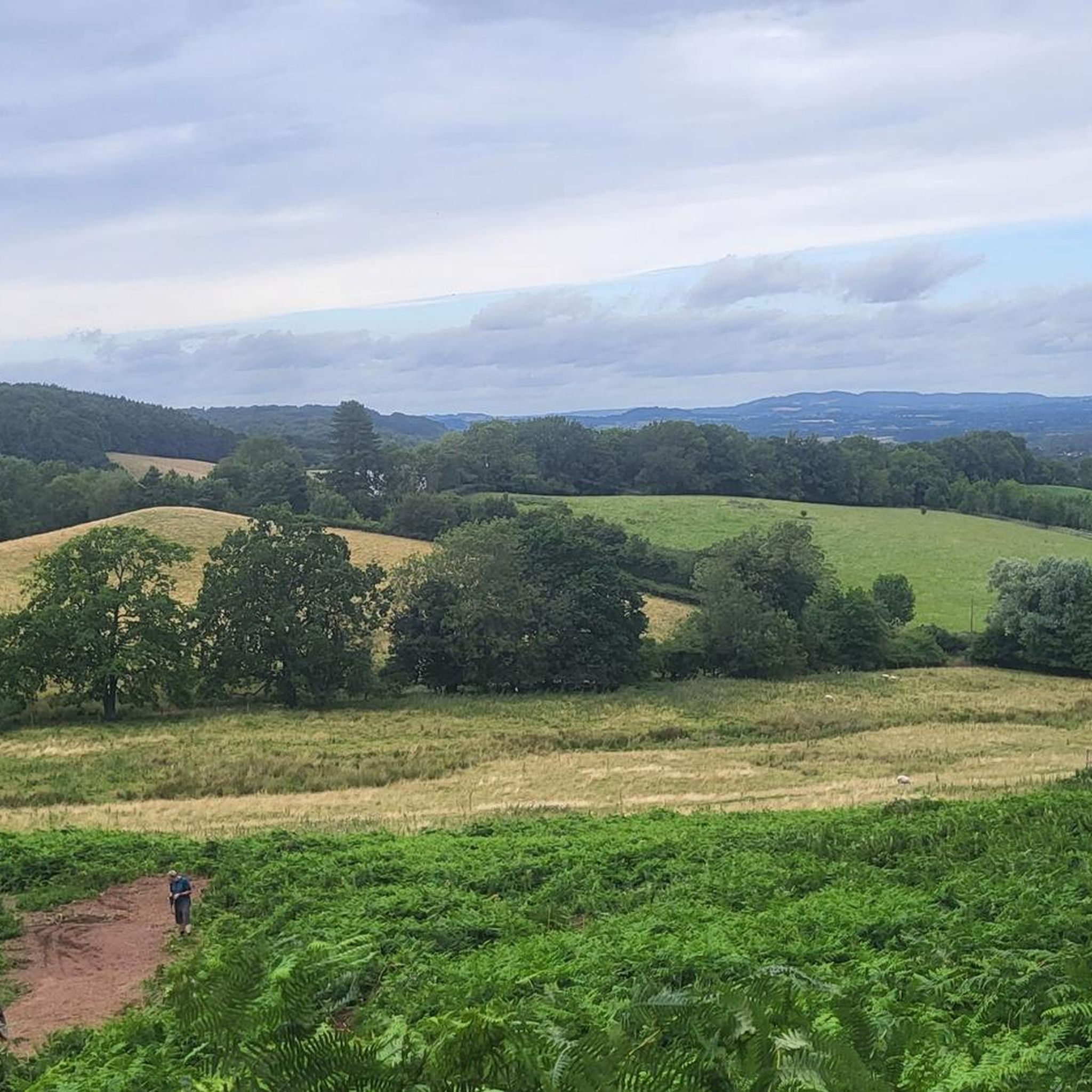
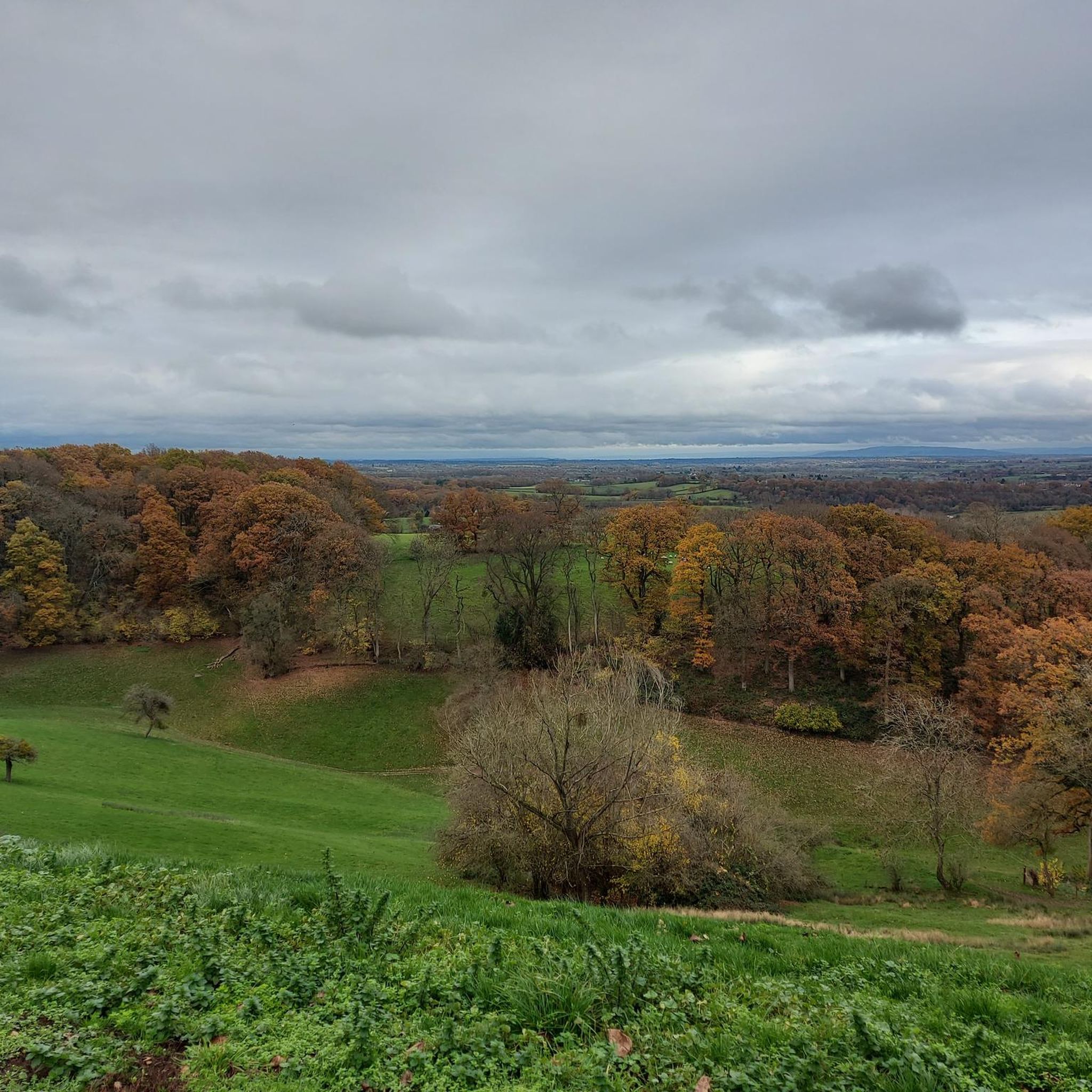
North Hill is a very good viewpoint - but this image was taken on the way up to Table Hill, which is next to North HIll.
0
0
Sugar Loaf hill is to be recommended, but unfortunately the hill in the centre of this picture is North Hill. Sugar Loaf Hill is on the extreme left of the picture, just about in shot.
0
0
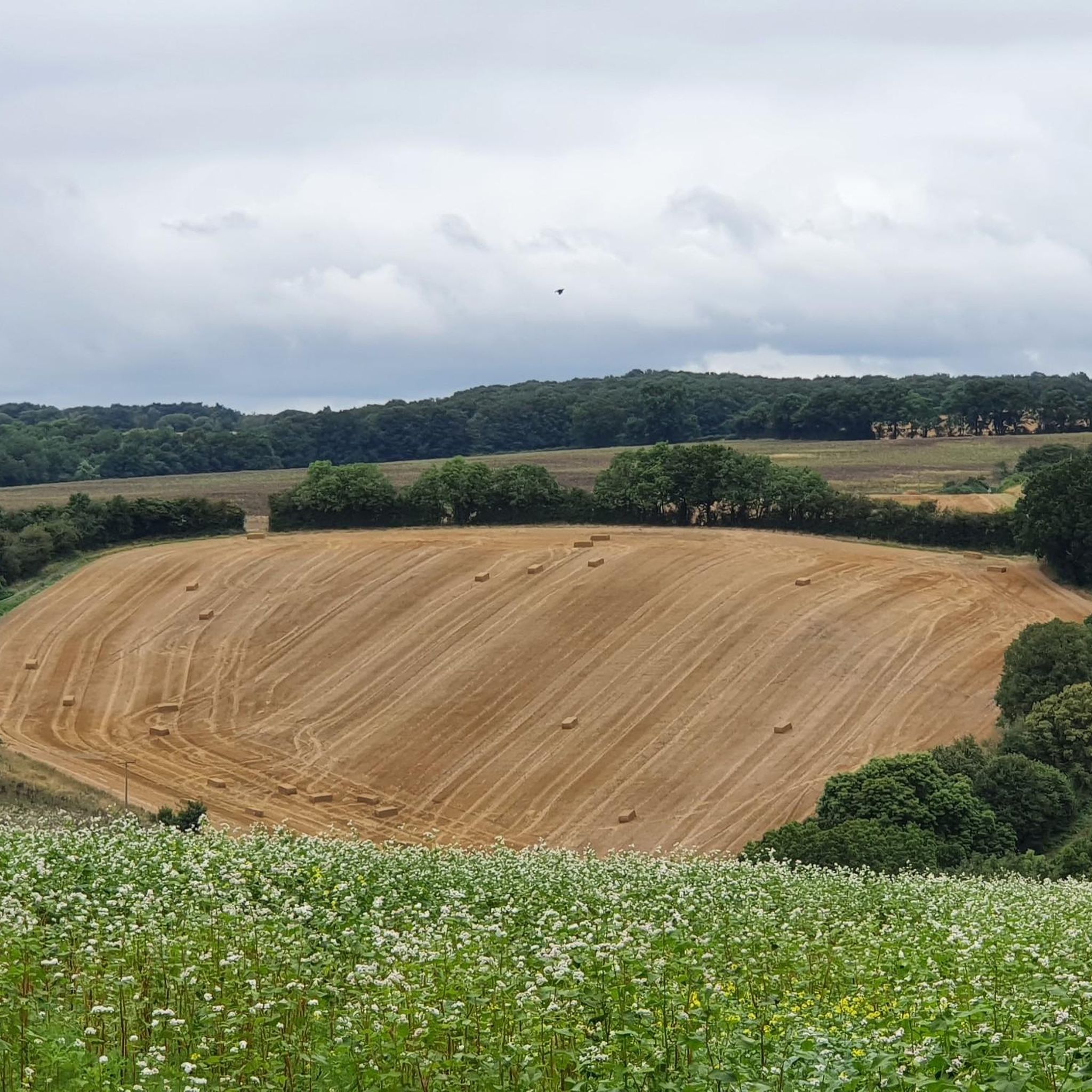
Between North Hill and The Beacon (and Sugar Loaf Hill) this flat topped hill can get overlooked, but it does afford great views of the Beacon, and is photogenic in it's own right when covered in snow.
0
0

North Hill is the second highest point of the range of Malvern Hills that runs about 13 kilometres (8.1 mi) north-south along the Herefordshire-Worcestershire border, although North Hill lies entirely within Worcestershire. It has an elevation of 397 metres (1,302 ft), making it the highest point of the Worcestershire Way. The eastern flank of the hill lies directly behind Worcester road in Great Malvern from where its summit is a brisk 15 – 20 minutes steep walk from the town centre via St Ann's road and Happy Valley. A path from the car park in North Malvern follows the lower contour of North Hill to Happy Valley and St. Ann's Well. Although the flint route from North Wales to Wessex lay to the north of Malvern, there is some evidence to suggest that traders passed over the Malvern Hills. Parts of an arrowhead, scraper and flint flakes have been discovered between the North Hill and Table Hill. A 19th-century guide book describes both a collapsed burial mound on North Hill named the Giant's Grave and a tump on Table Hill. These tumuli may have been connected to the Dobunni settlement in Mathon. A track that runs along North Hill was known as the "Pyx Path" and was used by the priest from Worcestershire when bringing Sacrament to the hermits that lived in Malvern in the 11th Century. It was also referred to as the "Pixie Path", as it was believed to be used by fairies. The Lodge spring can be found at the foot of North Hill, off Worcester road. The ornamental fountain has a small spout and basin that is similar in design to those at St Ann's Well.
1
0
Table Hill is situated in the range of Malvern Hills that runs about 13 kilometres (8 mi) north-south along the Herefordshire - Worcestershire border. It lies between North Hill and Sugarloaf Hill and has an elevation of 373 metres (1,224 ft). Although the flint route from North Wales to Wessex lay to the north of Malvern, there is some evidence to suggest that traders passed over the Malvern Hills. Parts of an arrowhead, a scraper and flint flakes have been discovered between North Hill and Table Hill. A 19th-century guidebook describes a collapsed burial mound on North Hill, named the Giant's Grave, and a tump on Table Hill. These tumuli may have been connected to the Dobunni settlement in Mathon: Upon the Table Hill, you will perceive the figure of a large table, from which the name is derived. In the centre is a cross, of the same size as that by the Giant's Grave, upon North Hill. Source: Wikipedia
0
0
Sugarloaf Hill lies between the Worcestershire Beacon and North Hill in the range of Malvern Hills that runs about 13 kilometres (8 mi) north-south along the Herefordshire - Worcestershire border. The summit of Sugarloaf Hill is 368 metres (1,207 ft) above sea level and is a popular peak usually passed by walkers hiking between the Worcestershire Beacon and North Hill — respectively the highest and second highest Malvern Hills summits.
0
0

Enjoy another excellent view from the top of Sugarloaf Hill, a 368m hilltop located in the beautiful Malvern Hills in Worcestershire.
1
0
Malvern's greatest problem in the nineteenth century was a lack of available water as millions of gallons of the limpid fluid ran annually to waste. The answer, although expensive, was to build tanks to store water when supply exceeded demand, such as overnight and in wet weather. The stored water could be used to buffer against dwindling supplies when demand exceeded supply. The little Morris tank and spout built in 1835 was insufficient, so in the following year Charles paid just over 300 pounds for a 50,000-gallon tank. It was built by local builder George McCann, and kept 63 workmen in employment for three months. When completed Charles Morris feted his 63 workmen with a dinner at the Foley Arms. An exploratory visit into the tank on 2001 confirmed the dimensions of the tank to be 15.600m long, 3.170m wide, 3.170m from the floor to the vault and 4 m from the floor to the top. A quick calculation shows that at best the tank held 43.5 thousand gallons, so it wasn't quite what Morris had anticipated. The plaque on the North Malvern Tank reads: 'The inhabitants of North Malvern have placed this stone to record that these tanks were erected at the sole expense of Charles Morris Jn Esq. of Portman Square London in 1835 and 1836 - Ye young and aged poor pray that the blessings of God may be abundantly poured unto him who has here poured abundant blessings on you.' Access to the public spout was across the grass until 1865, when the North Malvern Road was constructed. The spout was deliberately low down to prevent people putting huge barrels under it and taking away vast quantities at a time. A bucket was about all that could be used because the water was only to be used for domestic purposes, not for brewing or other trades, or filling up traction engines. The water was much too good for that and would have been much prized in metropolitan and industrial areas. It was described as 'bright and pleasant to taste, almost free from organic impurity, and very soft. After Charles Morris' death his sister paid for the upkeep of the tanks but the Local Board announced on the 1 June 1867 that with her approval they would take over the management and maintenance of the tanks. '..the Board, as the local authority, had the right to take the management of all fountains, tanks and wells, for the use of the public, to themselves'. They took over the responsibility in 1867 and that's when the complaints began. The Board received a complaint that the tap had been broken on the tanks and the water had 'been misused' - particularly by brewers. It was suggested that a notice be placed on the tank saying that people not living in the district had no right to the water. Despite these restrictions the tank rarely held enough water so the inhabitants frequently had to walk the half mile to the Cowleigh Spout for their water. Conservation measures were introduced and the Surveyor put up a notice at the Tank prohibiting the use of water except for domestic use. The width of the gates was also reduced to prevent barrel laden carts from driving in to collect large quantities of water. These feeble attempts to prevent wastage were followed by yet another, when it was later decided to lock the gate and the tap at the Morris Tank from 9pm to 6am to stop water being taken away by people who lived outside the area. The chief reason for the shortage was the inadequate size of the tank; other reasons were the use of water for purposes other than those authorised, and the Commissioners' tendency to neglect the facilities. In 1867 Mr.Wink of North Malvern Hotel complained that the Tank was not in a proper state of order so the local people were suffering a water shortage and in 1870 pounds 30 was spent repairing the Tank conduit so that the water ran into the reservoir and not into the ground. In 1872 the Local Board finally addressed the main reason for the town's water shortage and a one million gallon tank was constructed about 150 ft further up the hill above and behind the Clock Tower. The building works interfered with the flow of water to the Tank, which was reduced to a trickle and taken by the building contractor. The residents had once again to toil down to Cowleigh Spout for their water. To add indignation to injury, the following month the inhabitants could not use the flow that became available at the Tank because it was discoloured and unfit for domestic use. They watched 3,000 - 4,000 gallons a day being wasted. The disruption was caused by the contractors working on the new reservoir and the water was passing through a clay layer before entering the Tank. It was decided to clean out the Tank and install a pipe leading directly from the spring to the Tank. The pipe was duly laid. The work took almost a year. The residents were badly off all round; no-one wanted to lodge in the area any more because of the noise of the stone blasting for the works and the local boys were frequently endangering their lives by playing on the site, particularly on the new stone crusher. Worse was to come. When the new North Malvern Reservoir was completed many local people had meters installed to receive the new town supply, thereby having to pay for what was once free. Those who could not afford this luxury continued to use the free water from the tap in the enclosure under the porch at the Morris Tank. Some people could not take advantage of nature's bounty for other reasons. 'An iron ladle with a strong chain might be attached to the tank at North Malvern, to enable thirsty souls to refresh themselves,' grumbled a visitor seeking health and refreshment in the town, also complaining about the rotting sheep's carcass above the North Malvern Tank. Just a few years later it was a human body which was discovered in the vicinity. The route from the Morris Tank to the reservoir was steep, rocky and dangerous and there was no handrail to prevent walkers from falling over the precipice. In October 1886 a body, badly cut about the face and head, was found at the foot of the rocks, just above the Clock Tower Tank. The unfortunate fellow was William Seabrook, aged 30, from Watford, who until two weeks earlier had been employed as a waiter at the Abbey Hotel. An empty brandy bottle nearby suggests that he died after drowning his sorrows at becoming unemployed. The flow from the North Malvern spouts was entirely dependent upon rainfall; in the disastrous drought of 1887 the supply during May measured 1 gallon every 15 - 30 minutes, and by the second week in June the Clock Tower tank failed completely and did not produce another drop until November. Once again the North Malvern residents - the poorer ones who could not afford mains water - were forced to trek down to the Cowleigh Spout, though the inconvenience was minimised by a certain community spirit. Mrs Bruton, 'a poor widow' in the neighbourhood, had a good pump of excellent water which she gave freely to her neighbours; in Malvern, such well-blessed people were selling their liquid silver at 2 buckets a penny! Mr Mander made an analysis of the reservoir water in 1895: "From the public tap a sample was collected and found excellent. Perfectly bright and pleasant to taste, almost free from organic impurity, and very soft." Although the Clock Tower Tank was not quite as important as in the past it still had its uses. In 1883 permission was granted to Rev F.H. Cope to use the Tank yard once a week for drill for the children of the North Malvern National School. How best to care for the vicinity of the Tank was also being considered and it was decided to improve the enclosure surrounding the Tank. In 1886 a new facility was added when Mr F G Staples-Brown of West Malvern was given permission to erect, at his own expense, a dogs' drinking trough at the Clock Tower Tank. By the summer of 1904 the North Malvern Tank was neglected and a suggestion was made to tidy up the area and install a canopied seat to the rear of the tank. Morris' installation is now redundant and the cathedral like tank immediately behind the clock lies empty. It is entered by a manhole on the level area behind the Clock tower. In the early 21st century Heritage Lottery Funding enabled restoration of the fabric of the buildings, the spout to be restored with new gates across the alcove at the foot of the tower and water to be reinstated at the spout. There was some controversy regarding the gates to the spout alcove. In spite of objections, the Malvern Hills District Council Committee approved a design that was described by one Local District Councillor as reminiscent of Tolkein and Lord of the Rings. Being a grade II listed 19th century building that one objector described as muscular, geometric and industrial, many felt that the wavy lines interspersed with spirals was inappropriate as part of a project to conserve a building of this nature. Overall however the HLF monies gave the structure a welcomed restoration and enhancement. The Tank Clocks - In 1843 a clock tower was added by Morris, the mechanism striking the hours for the benefit of the local inhabitants. The clock was mounted in the space now occupied by the circular tablet which bears an inscription dated 1901. The clock clearly gave trouble as the local paper records in 1869: 'The Tank Clock. The inhabitants of North Malvern complain that the clock scarcely ever indicates anything approaching correct time by day or night; and that it is sometimes stopped for the greater part of a week. The philanthropic gentleman by whom it was erected, intended that it should be of service to the people, and so it might be; but whether it has got out of repair, or been neglected by the party to whose charge it has been committed, the instrument has been for sometime worse than useless, by greatly misleading the neighbourhood.' The Local Board anticipated a 25 pounds bill for repairs but in July Mr Ashfield of North Malvern informed the Board that a man he knew had offered to regulate the Tank Clock for 25 shillings - one twentieth of the anticipated cost! Adhering to Red Tape the offer was turned down because the gentleman had not made a proper tender for the work. The work must have been completed as there were no more complaints! In March 1901 the dilapidated state of the clock was brought to the attention of the Urban District Council. It was decided to replace it with a new one and the owner, Mr C W Dyson Perrins, gave his consent for it to be gas illuminated. (The fittings were still in situ although not working in the 1990s.) John Smith & Sons of Derby supplied a 4-dial, hour-striking clock for 88 pounds 14s which by May was installed and working smoothly. A further 90 pounds was spent on installation and the new, much enlarged terracotta tower. Although the inscription on this extension reads, 'This clock was erected in the first year of the reign of his most Gracious Majesty King Edward VII by the Urban Council, H E Dixey Chairman 1901' it was originally intended as a functional local requirement rather than a commemorative artifact. The present clock is a flatbed clock powered by weights and incorporates a chiming mechanism. The light was extinguished during the Second World War and in July 1946 was relit by gas, although electricity was being installed increasingly in new buildings. The clock was maintained by the local council and kept good time until it was recently restored with HLF monies to its supposed 1869 condition. In July 2006 the local newspaper reported that 'the restoration of North Malvern Clock Tower is complete, as it now has four time-telling faces.' The Tank and Clock Tower at North Malvern is a grade II listed building. Source: malvernwaters.com
0
0
휘트본 주변에서 가장 인기 있는 경로
휘트본 주변에서 가장 인기 있는 명소


더 살펴보기
찾고 있는 하이라이트를 아직 못 찾으셨나요? 다른 지역의 주요 명소 가이드를 확인해보세요:
