알라스카주 최고의 워킹 & 하이킹 경로
4.7
(45)
226
등산객
24
하이킹
정확한 경로를 찾는 것이 때로는 어렵지만 알라스카주에서 하이킹을 하면 다양한 경치를 마음껏 감상할 수 있답니다. 알라스카주에서 가장 멋진 하이킹과 워킹 중에서 마음에 드는 활동을 시작해보세요.
마지막 업데이트: 10월 16, 2026
4.5
(8)
69
등산객
5.49km
01:25
20m
20m
초급용 하이킹. 모든 체력 수준에 적합. 실력과 관계없이 누구나 쉽게 갈 수 있는 길.
4.6
(5)
30
등산객
4.79km
01:13
10m
10m
초급용 하이킹. 모든 체력 수준에 적합. 실력과 관계없이 누구나 쉽게 갈 수 있는 길.

5.0
(2)
5
등산객
8.47km
02:19
130m
130m
보통 하이킹. 좋은 체력 필요. 실력과 관계없이 누구나 쉽게 갈 수 있는 길.
5.0
(1)
4
등산객
5.83km
01:30
20m
20m
초급용 하이킹. 모든 체력 수준에 적합. 실력과 관계없이 누구나 쉽게 갈 수 있는 길.
16
등산객
3.06km
00:48
20m
20m
초급용 하이킹. 모든 체력 수준에 적합. 실력과 관계없이 누구나 쉽게 갈 수 있는 길.
더 다양한 경로와 다른 탐험가들의 추천을 살펴보세요.
이미 komoot 계정이 있나요?
투어 추천은 다른 사람들이 komoot에서 완료한 수천 개의 활동을 바탕으로 구성되어 있습니다.
오늘 무료 계정으로 시작하세요
다음 모험이 기다리고 있어요.
알라스카주 주변 인기 장소
커뮤니티 팁

Lovers of old stones and countryside: go for it!! Possibility to shorten or increase the size of the circuit easily. At sunrise, a treat!!
0
0

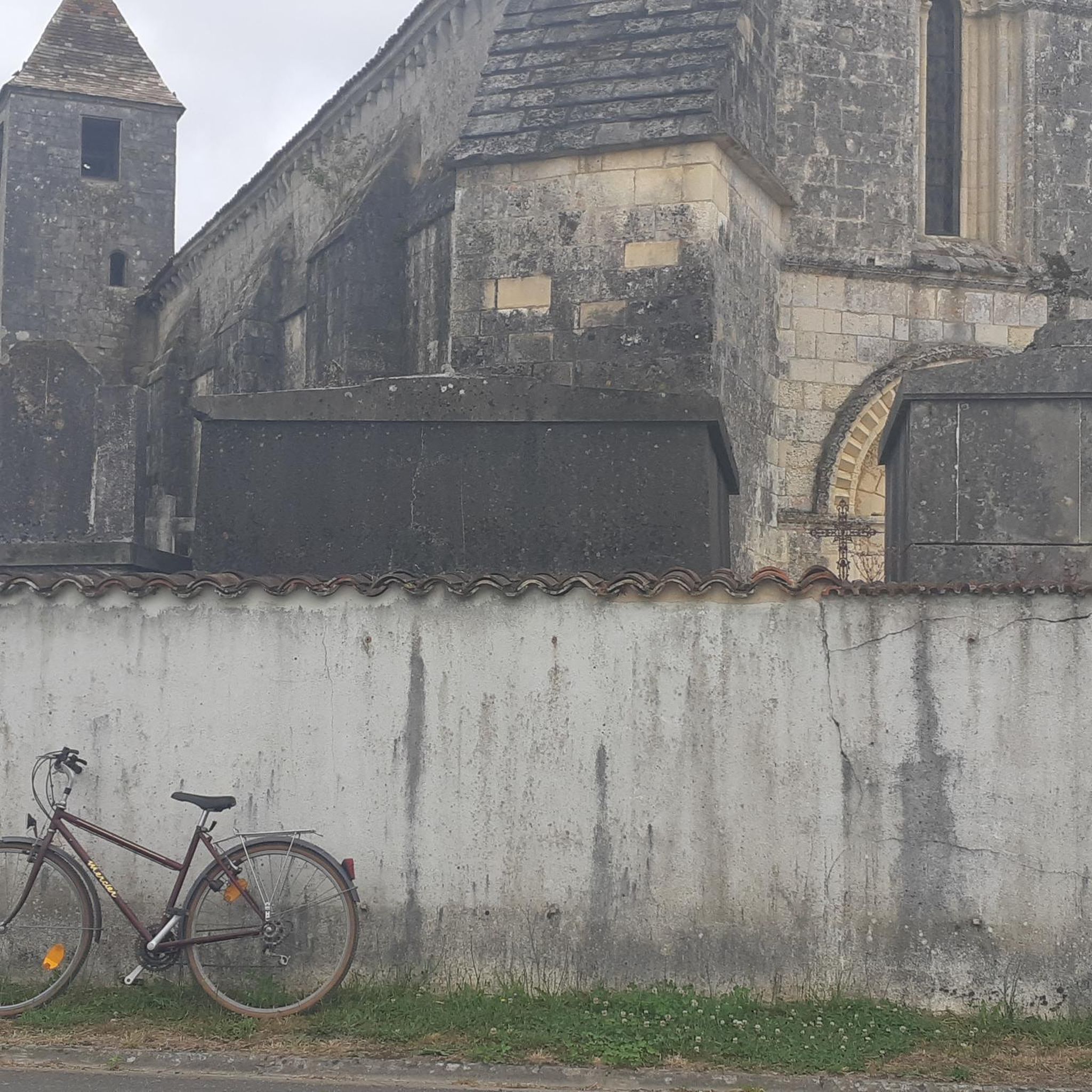
In the 15th century, this town was called Mirambel l'Artaud or Artault, a name borne by its lords from the 11th century to the 13th century. Froissart designates it under the name of Mirabel. An act of June 1645 designates this parish under the name of St Sébastien-les-Mirambeaux. This populous town, which had become the capital of the canton, presented the singular exception that, for the spiritual, it depended on Petit-Niort, whose church had become the parish center of the two localities. This state of affairs dates back to the beginning of the 17th century, when the church of St Martin was called upon to replace that of St Sebastian, which had just been completely destroyed; it has finally ceased in recent times. From the 11th century, Mirambeau had a church dedicated to St Sebastian, from Narbonne, martyred in Rome, under Diocletian, in the year 288 of the Christian era, as mentioned in the charter of the abbey of St Savinien, near Lyon, dated from the year 1062. In the 11th, 15th, 16th and 17th centuries, the priory of St-Sébastien de Mirambeau was still at the presentation of the abbot of St-Savinien de Lyon. One sees opposite the gate of the castle, while going up to the district called the City, a stone cross which indicates, one says, the site or was the church of St-Sebastien. In addition, there is between Civrac and the town, on the edge of the chemin d'Allas, the site of a chapel which formerly belonged to a commandery (this is still the name of the neighboring hamlet). - to be the so-called chapel of the Way, in the parish of St-Sébastien, according to the pouillé of 1746, and which was at the presentation of the diocesan bishop. Assisted by the generosity of the Countess Duchâtel, Mirambeau undertook the construction of a chapel, which was completed at the end of 1856. This building, too cramped, with modern forms, and without religious character, consists of a nave of 33 m long, 9 wide, with semi-circular apse and side chapels. They are dedicated to the Blessed Virgin and to the Sacred Heart. The chapel on the left was later rebuilt, with painting in the Byzantine style and ossuary, by the Duchâtel family, whose particular burial place it is. A basket-handle ceiling conceals an elegant framework in the nave. A porch of six steps leads to the main door of the chapel, which is surmounted by a slender quadrangular bell tower, and whose spire is covered with slates. This chapel occupies the very site of the former house of the Récollets de Mirambeau, We see in the church of Mirambeau, a crucifixion of Our Lady, a recent gift from the government, and an Immaculate Conception of Our Lady, a copy, it is said, of a painting by the famous Spanish painter Murillo. Plus a stone baptismal font, sculpted with art, and coming from the old chapel of the Récollets. While the title of canton cure was conferred on Mirambeau, Petit-Niort became a desserte, or third class cure, although this small population group does not even today have the title of commune.
0
0
In 1073, the castle already exists; the first known lord was Guillaume de la Rochandry at the beginning of the 12th century. The 1449 inscription on the castle attests to its reconstruction following the destruction caused by the Hundred Years War. In 1505, Jean de Sainte-Maure, lord of Jonzac, founded the Carmelite monastery on the remains of an old chapel dedicated to Saint Nicolas. The cloister was built in 1657. The young Louis XIV, the Queen Mother and Mazarin stayed at the castle in 1659. The castle remained at Sainte-Maure until the end of the 17th century, then passed through marriage to Espardes de Lussan, which transformed the fortress in beautiful stately home with neat ornamentation and guard until the Revolution. Currently the north wing of the castle houses the buildings of the Town Hall (restored in the 19th century), and the south wing, those of the sub-prefecture. The cloister was restored between 1976 and 1978, and now houses a cultural center, with exhibition halls and an archaeological museum. The towers, postern and fountain in the basement date from the 12th century. Of the old feudal castle, only the postern and an isolated tower remain, connected to the main body by a large hall. The moat in front of the drawbridge was filled was filled in the 19th century. It was reopened at the beginning of the 21st century. The imposing gatehouse is marked 1549 and therefore dates from the 16th century, a period of work including the north-west tower, while the south-west tower, of a smaller diameter, is from the 17th century. The towers flanking the postern have retained their defenses. At each, the loopholes have been retained or enlarged. Stone stairs serve each floor and access the walkway. This passage seems to have been discovered, as evidenced by the gargoyles. The crenellation includes machicolations with archers in the middle of the merlons. The slate roofs are high pepperboxes on the towers, and a curious set with two sides connecting two pepperboxes for the gatehouse The fountain located in the basement of the sub-prefecture, has a niche and a niche frame decorated with sculptures imitating stalactites. Carved mask. The fountain was probably built by Léon de Sainte-Maure, Count of Jonzac, who enlarged and embellished the castle in the middle of the 12th century. In a former courtyard of the castle, a theater was built in the 19th century. It is a round building with approximately 300 seats.
0
0
The Seugne crosses a single department, in this case that of Charente-Maritime, watering thirty-six communes and seven cantons. The Seugne has its source in the canton of Montlieu-la-Garde, then crosses the cantons of Montendre, Jonzac, Saint-Genis-de-Saintonge, Pons, Gémozac and, finally, confluences in the canton of Saintes-Est. The Seugne has eighteen tributaries or referenced arms. The old forms of the name Seugne are flumen Soenna around 1100, Sonye in 1280, la Soyngna in 1322, la Soyngnhe in 1354, aqua Soynnie in 1363, Souaigne in 1494. The current pronunciations, Seugne and Souègne, are based on a medieval form Soïgne, which the scribes of the 13th and 14th centuries had difficulty transcribing. According to Duguet, a more recent spelling, Seuigne was misread and interpreted Sévigne in the 19th century.
0
0

A young church: Notre-Dame de l'Assomption (19th century). But a good landmark. To the east of the church is the mayor's office. There is a pilgrim temple there.
0
0
The 8-hectare park is open to the public. The large 5-star hotel is part of Relais & Châteaux, which owns 500 houses worldwide.
0
0
알라스카주 주변에서 가장 인기 있는 명소


더 살펴보기
다른 지역의 최고의 하이킹를 살펴보세요.
