헤니넬 최고의 사이클링 경로
4.5
(242)
2,089
자전거 타는 사람
245
라이딩
헤니넬 최고의 사이클링 경로를 따라 지역을 둘러볼까요? 헤니넬에서 가장 멋진 자전거 라이딩 장소 중에서 가장 마음에 드는 라이딩을 선택해보세요.
마지막 업데이트: 7월 29, 2026
32
자전거 타는 사람
34.3km
02:47
290m
290m
보통 자전거 타기. 좋은 체력 필요. 대부분 포장된 지면. 실력과 관계없이 누구나 갈 수 있음.
10
자전거 타는 사람
16.6km
01:14
100m
110m
초급용 자전거 라이딩. 모든 체력 수준에 적합. 대부분 포장된 지면. 실력과 관계없이 누구나 갈 수 있음.

무료 회원 가입
4
자전거 타는 사람
17.5km
01:04
110m
110m
초급용 자전거 라이딩. 모든 체력 수준에 적합. 대부분 포장된 지면. 실력과 관계없이 누구나 갈 수 있음.
6
자전거 타는 사람
36.8km
03:00
280m
280m
어려운 자전거 타기. 좋은 체력 필요. 투어 중 자전거를 끌고 가야 하는 구간이 있을 수 있음.
4.0
(1)
3
자전거 타는 사람
23.7km
01:24
140m
140m
초급용 자전거 라이딩. 모든 체력 수준에 적합. 대부분 포장된 지면. 실력과 관계없이 누구나 갈 수 있음.
더 다양한 경로와 다른 탐험가들의 추천을 살펴보세요.
무료 회원 가입
이미 komoot 계정이 있나요?
투어 추천은 다른 사람들이 komoot에서 완료한 수천 개의 활동을 바탕으로 구성되어 있습니다.
오늘 무료 계정으로 시작하세요
다음 모험이 기다리고 있어요.
로그인 또는 가입하기



커뮤니티 팁

This small farming village has a rich history and is known for its two Commonwealth War Graves Commission cemeteries from the First World War. The village has a church, a castle, and a range of amenities including bars, a supermarket, a chemist and a post office. Many residents commute to nearby towns such as Arras and Bapaume for work.
9
0
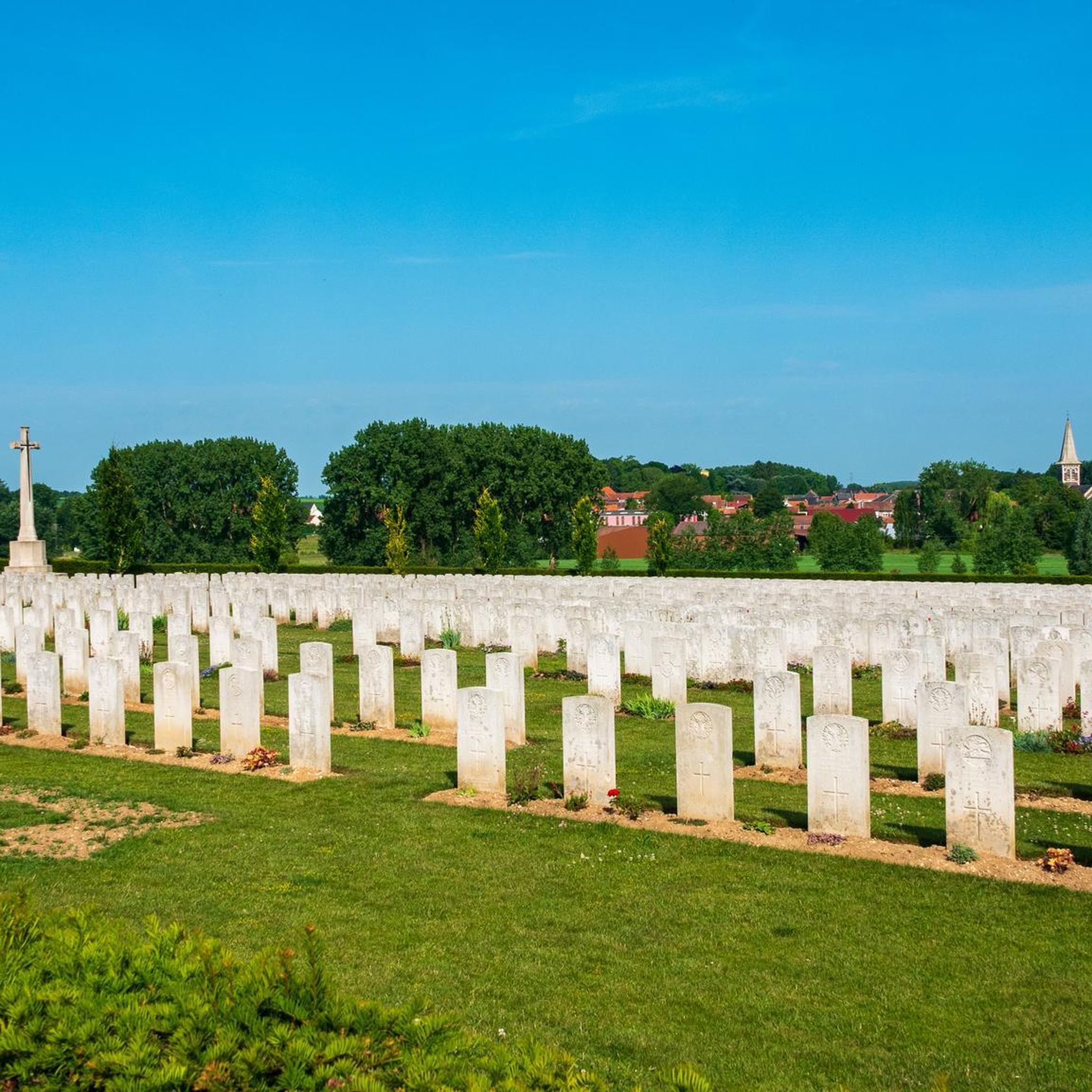
The 21st Division captured Héninel on 12 April 1917 and advanced eastwards on the two following days. The 33rd Division then took over the attack. These two divisions are largely represented in the cemetery. In April 1918 this ground was lost, and the eleven German graves in Plot I, Rows D and E, were made when the cemetery was in German hands. After the Armistice, graves were brought in from a wide area round Héninel. The cemetery now contains 307 Commonwealth burials of the First World War, 104 of them unidentified. The cemetery was designed by Sir Edwin Lutyens.
8
0
Wancourt was captured on 12 April 1917 after very heavy fighting and the advance was continued on the following days. The cemetery, called at first Cojeul Valley Cemetery, or River Road Cemetery, was opened about ten days later; it was used until October 1918, but was in German hands from March 1918 until 26 August, when the Canadian Corps recaptured Wancourt. At the Armistice, the cemetery contained 410 graves, but was very greatly increased in the following years when graves were brought in from a number of small cemeteries and isolated positions on the battlefields south-east of Arras. The cemetery now contains 1936 burials and commemorations of the First World War. 829 of the burials are unidentified but there are special memorials to 76 casualties known or believed to be buried among them, and to 20 who were buried in Signal Trench Cemetery whose graves were destroyed in later battles.
9
0
Bapaume was one of the war objectives in the Battle of the Somme. In 1916, Bapaume was one of the towns considered by the Allies as strategic objectives in the Battle of the Somme. Bapaume was occupied by the Germans on 26 September 1914 and then by the British on 17 March 1917. The town hall was destroyed on 25 March by a delayed action mine left by the Germans, killing 24 people, including Australian soldiers and two French MPs. On 24 March 1918, the Germans retook the town. In 1918, the Second Battle of Bapaume, from 21 August to 3 September, was part of the second phase of the Battle of Amiens, the British and Commonwealth attack that marked the turning point in the First World War on the Western Front and the beginning of the Allies' Hundred Days Offensive. Improved armoured support and artillery bombardments weakened once impregnable positions and helped Allied troops to blow holes in trenches. On 29 August, after heavy fighting, the New Zealand Division occupied Bapaume, having broken through the very strong trench system at Le Transloy-Loupart with the British 5th Infantry Division and taken many other strong points around the border.
6
0
Favreuil is a village 23 km south of Arras. The church of St. Georges, rebuilt with most of the commune, after the First World War. There is also a cemetery of the Commonwealth War Graves Commission. And there is a war memorial in memory of the victims of the First World War, called Monument à Favreuil. The monument is located on the Place de la Mairie in Favreuil and was erected in 1925
5
0
Mory Street Military Cemetery is a British military cemetery located in Saint-Léger, Pas-de-Calais. The cemetery was laid out in 1917 and designed by William Cowlishaw. It commemorates 66 First World War soldiers, 5 of whom are unidentified. The cemetery has a square plan with a semi-circular projection containing the Cross of Sacrifice.
8
0
Places of Interest The church of St.Leger, rebuilt, as was the whole village, after the First World War. The Commonwealth War Graves Commission cemetery. The village was situated in an area that was heavily fought over during the war. There are several military cemeteries in the area, including the Heninel-Croisilles Road Cemetery, where many soldiers who fought near Saint-Léger are buried. An interesting anecdote is that Saint-Léger and the surrounding villages changed hands several times during the war between the Allies and the German troops. This caused much destruction and suffering among the local population.
9
0

Reflection on the course for fallen tommies 💮
0
0
헤니넬 주변에서 가장 인기 있는 명소


더 살펴보기
다른 지역의 최고의 자전거 경로를 살펴보세요.
