カダバルのおすすめMTBライド
4.6
(22)
354
ライダー
40
ライド
カダバル周辺には魅力的なマウンテンバイクルートがいくつもありますが、冒険を始めるにはその場所とルートを把握する必要があります。ここでは、komootが提供するカダバル周辺でのマウンテンバイクルートのコレクション全体を評価して選び抜いた、人気ルートをご紹介します。各ライドの詳細をぜひご覧ください。
最終更新日: 11月 7, 2026
15
ライダー
34.0km
02:49
490m
500m
中程度のマウンテンバイクライド. ある程度のフィットネスレベルが必要です。
8
ライダー
59.4km
04:56
910m
910m
難しいマウンテンバイクライド. 標準以上のフィットネスレベルが必要です。

4.7
(3)
5
ライダー
31.3km
02:18
500m
500m
難しいマウンテンバイクライド. ある程度のフィットネスレベルが必要です。 高度なライディングスキルが必要です。ツアーの一部で自転車を押して歩く必要があるかもしれません。
5.0
(1)
2
ライダー
33.5km
02:56
740m
740m
中程度のマウンテンバイクライド. ある程度のフィットネスレベルが必要です。
4.0
(1)
5
ライダー
51.5km
05:05
1,260m
1,260m
難しいマウンテンバイクライド. 標準以上のフィットネスレベルが必要です。 高度なライディングスキルが必要です。
さらに多くのルートや他のユーザーのおすすめ情報を確認できます。
すでにアカウントをお持ちですか?
おすすめのツアーは他のkomootユーザーが実際に経験した何千ものアクティビティに基づいています。
無料アカウントで今日から始めよう
次の冒険が待っています。
コミュニティからのヒント


Using only the natural power of the wind as the driving force, the heavy millstones are moved, and for example, grain kernels are ground into flour (grain mills) or olives are pressed into oil (oil mills). Miguel de Cervantes (1547 to 1616) also created a literary monument to the ancient tradition of windmills: the most famous character of the author, considered Spain's national poet, whose work can certainly be appreciated as world literature: "Don Quixote," also known as the "Knight of the Sorrowful Countenance." He is always accompanied by his loyal squire Sancho Panza, and in one of the highly imaginatively narrated episodes, he engages in a – naturally hopeless – battle against windmills, in which he believes he recognizes four-armed giants.
0
0

Along the Caminho da Meia Encosta you will find three old Forest Ranger's Houses. All of them were renovated a few years ago, and then left abandoned. Unfortunately, vandalism took over.
2
0
The Caminho da Meia Encosta runs along the southern side of the Serra de Montejunto and is suitable for cycling in both directions, although the east-west route is predominantly uphill. The terrain is quite uneven in some sections and you can expect to find some loose stones. The views over the southern side of the Serra de Montejunto are superb.
3
0
The area of the springs, on the Ota River, was once a leisure area for the local population, including the local bathing area in the summer. This site remained natural for a long time after the EPAL was installed, but at a certain point, the intensification of agriculture with the use of chemical fertilizers and pesticides, intensive livestock farming, and urban sewage made the flow from upstream a polluting threat to EPAL's water intakes, and EPAL paved several dozen meters of the river course near the site where it is installed with reinforced concrete.
1
0
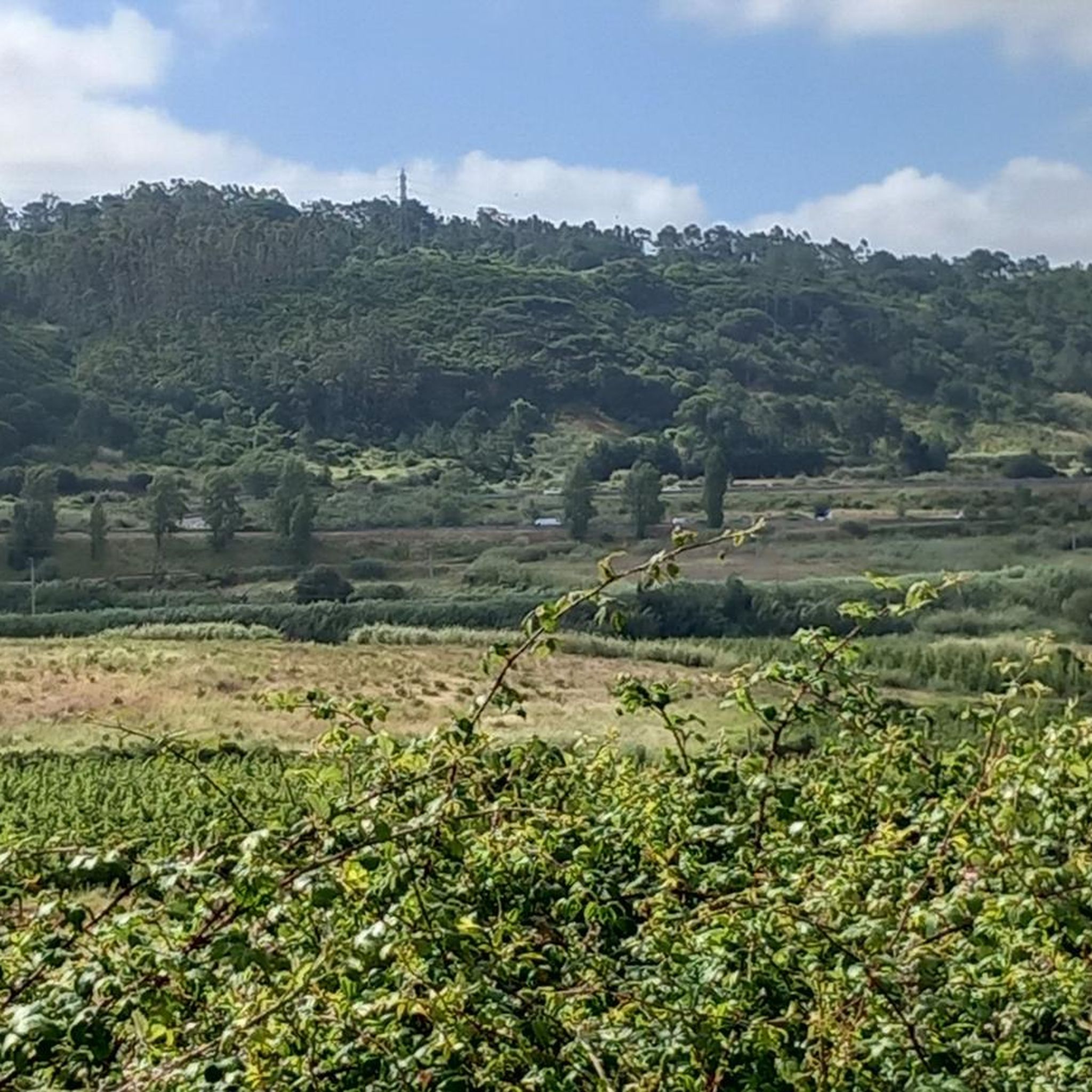
At this location at the top of the Serra de Montejunto, also known as "Torre" due to the various antennas that were installed there, is the Chapel of Our Lady of the Snows, which may have been built in the 13th century and remodelled and expanded during the 16th century and later. Inside, the altars covered with 17th century tiles and the altarpiece of the main altar, from the 18th century, stand out. Next to the Chapel of Our Lady of the Snows, are the ruins of what is considered to be the first Dominican Convent in Portugal, built in the 12th century and abandoned after the extinction of the religious orders, and is currently in ruins. Also nearby are the ruins of the Royal Ice Factory, classified as a National Monument. Here, in the 18th century, the Dominican monks took advantage of the climatic and geological conditions and opened large tanks connected by narrow passages, one part for the production of ice and the other for its preparation, storage and conservation. The ice was later transported to Lisbon, to supply the court and the café at Terreiro do Paço, later known as Martinho da Arcada (Fernando Pessoa's Café)
2
0
Road that connects the village of Abrigada to the Serra de Montejunto, crossing one of the most beautiful sections of the Serra de Montejunto. A steep route but worth the effort.
2
0
The origins of the Ermida Bridge possibly date back to the end of the 15th century. A Royal Road passed through here, which was intended to connect the river port of Vila Nova da Rainha and Caldas da Rainha. It was the route of the royal and court routes since D. João II, and was also frequently used by D. João V and D. Carlos. All that remains of this 15th century Royal Road is the emblematic Ermida Bridge, a work of art structured and built in dressed stone and its sumptuous Romanesque arch, or round arch. Due to its total lack of conservation and because it has to support loads (heavy agricultural machinery) for which it was not designed, it is currently at risk of collapse, and its passage is even closed.
1
0
カダバルでのの人気観光スポット

komootモバイルアプリでインスピレーションを得よう


さらに探索
他の地域の最高のMTBトレイルを見てみましょう。
