ロッドのおすすめライド
4.3
(28)
425
ライダー
57
ライド
ロッド周辺でのロードバイクライドをお考えですか?komootはロッド周辺のあらゆるロードバイクライドを評価し、人気ルートを厳選しました。ロッド周辺の各ロードバイクルートの詳細をご覧になり、自分に合ったルートを見つけてください。
最終更新日: 9月 16, 2026
4.5
(10)
57
ライダー
31.4km
01:22
130m
130m
初級者向けロードバイクライド. あらゆるフィットネスレベルに適しています。 全般的に舗装状態が良好で走行しやすい道です。
4.8
(4)
56
ライダー
63.5km
02:50
420m
420m
中程度のロードライド. ある程度のフィットネスレベルが必要です。 全般的に舗装状態が良好で走行しやすい道です。

4.3
(3)
32
ライダー
48.2km
02:25
540m
540m
中程度のロードライド. ある程度のフィットネスレベルが必要です。 ツアーの一部に、未舗装のため走行が難しい箇所があるかもしれません。
13
ライダー
87.7km
04:21
1,010m
1,010m
難しいロードライド. 標準以上のフィットネスレベルが必要です。 全般的に舗装状態が良好で走行しやすい道です。
21
ライダー
38.4km
01:53
320m
320m
中程度のロードライド. ある程度のフィットネスレベルが必要です。 ツアーの一部に、未舗装のため走行が難しい箇所があるかもしれません。
さらに多くのルートや他のユーザーのおすすめ情報を確認できます。
すでにアカウントをお持ちですか?
おすすめのツアーは他のkomootユーザーが実際に経験した何千ものアクティビティに基づいています。
無料アカウントで今日から始めよう
次の冒険が待っています。


コミュニティからのヒント


St. Martin's Parish Church The history of the parish dates back to the Middle Ages. The first record of such a church is from 1297, but a church certainly existed in Untertraubenbach around the year 1000. This former parish church was destroyed in the Thirty Years' War and subsequently rebuilt on the site of the also-destroyed castle. According to the date inscribed on the west gate, this was in 1719. On Maundy Thursday in 1813, a fire broke out, destroying most of the central and outer parts of the village, including the parish church. Reconstruction began just one year later. Until the 20th century, St. Martin's Parish experienced the turbulent events of history, even suffering the effects of World War II. Renovations were necessary time and again, the most recent taking place in 2002/2003. In 2009, the bell tower was expanded to include two additional bells. Upon entering the church, one is struck by its deliberate simplicity. A simple nave with an adjoining chancel is only enlivened by wall piers, giving the interior an almost medieval character. A barrel vault spans the entire nave. At the center of the chancel stands the high altar, framed by two altar guardians, St. Florian and St. Sebastian. This is a neo-Baroque work from around 1900. At the center is a festively framed painting of Mary, which was brought to Untertraubenbach from the pilgrimage chapel of Streicherröhren in 1718, as it was no longer considered safe there. It is a beautiful copy of the Passau Maria-Hilf painting, which is based on the original by Lucas Cranach. The patron saint of the church, St. Martin, is depicted in the altarpiece. On both sides of the sanctuary are beautifully carved choir stalls, adorned with charming ornamental carvings. Inside the nave, the wooden pulpit is a striking feature. It is a simple piece of woodwork depicting the four Evangelists and the Good Shepherd. The stained-glass windows show St. Michael and John the Baptist on the left and St. Barbara and Thérèse of Lisieux on the right. Source: Excerpts from the church guide for St. Martin's Parish Church in Untertraubenbach
3
0
Wetterfeld Castle Ruins As early as 1118, Gottfried von Wetterfeld appears as an influential ministerialis (unfree knight) of the Diepoldings, the powerful Margraves of Cham and Vohburg. He seems to have maintained good relations with many monasteries, especially Reichenbach Abbey—no wonder, since Abbot Reginboto was his brother. Numerous donations to various monasteries by Gottfried are documented, a widespread practice among knights to secure their salvation. In a donation from 1155, Heinrich is even mentioned as an imperial ministerialis, which demonstrates the family's rapid political rise. In 1179, Karl and Heinrich "de Weterinfeld" appear, after which the family disappears from the historical record. It is not until 1268 that we hear of a Deinhardus, who is now subject to the Bavarian dukes; perhaps they lost their independence with the inheritance of the Hohenstaufen dynasty. From 1283 onward, the Wittelsbachs sent judges to Wetterfeld. Ducal ministeriales from the surrounding area succeeded in office: Hauzendorfer, Katzdorfer, Zenger, and others. In 1322, it was pledged to the Chamerau family. In 1329, Wetterfeld came under the control of the Palatine line of the Wittelsbachs, who also appointed judges. In 1410, it passed to the sub-principality of Neumarkt-Neunburg, with the Degenberger, Nothaft, and Zenger families, among others, serving as administrators. During the Hussite raids of 1428 and 1433, the castle was destroyed and subsequently rebuilt. A unique feature of Wetterfeld is the four "castle guards"—four legally independent building complexes within the castle, which were granted separately—making the ownership situation quite complex. In 1621, during the Thirty Years' War, the Upper Palatinate, including Wetterfeld, came under the rule of Duke Maximilian of Bavaria. Later in the war, Wetterfeld was destroyed twice by the Swedes and subsequently rebuilt. But the castle and its buildings continued to deteriorate, and the administrators increasingly relocated their offices outside the castle. In 1812, the administrative office was moved to Roding, the castle grounds were subdivided, and private houses were built over. Wetterfeld is a moated castle—a branch of the Regen River bordered the complex to the northeast. The still clearly visible, deep, walled moat could be filled with sluice gates in case of attack. Essentially, only the large gate tower, built of rubble stone with corner quoins, remains. Its upper, habitable floors make it a variation of the late medieval residential tower. Source: www.burgenseite.de
1
0

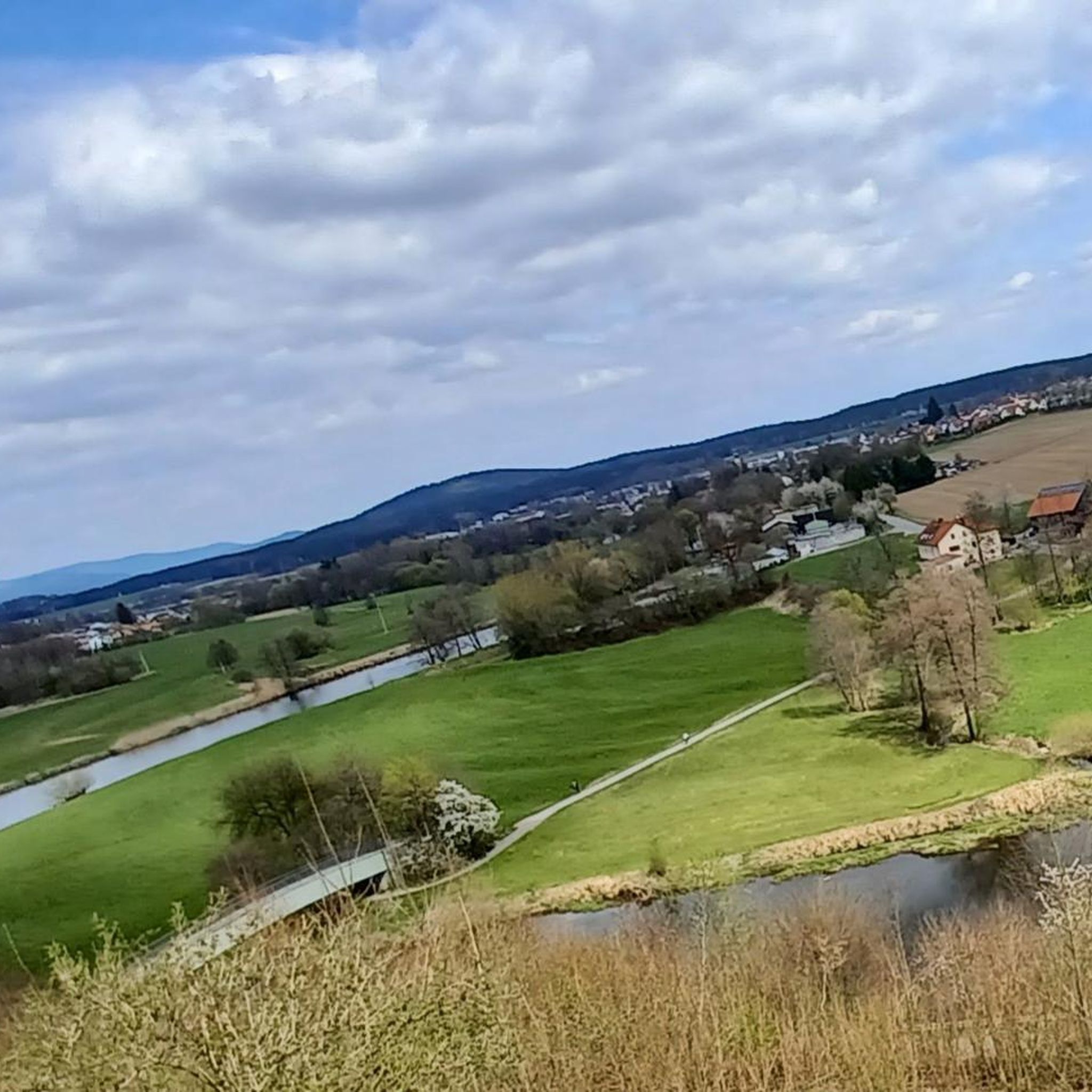
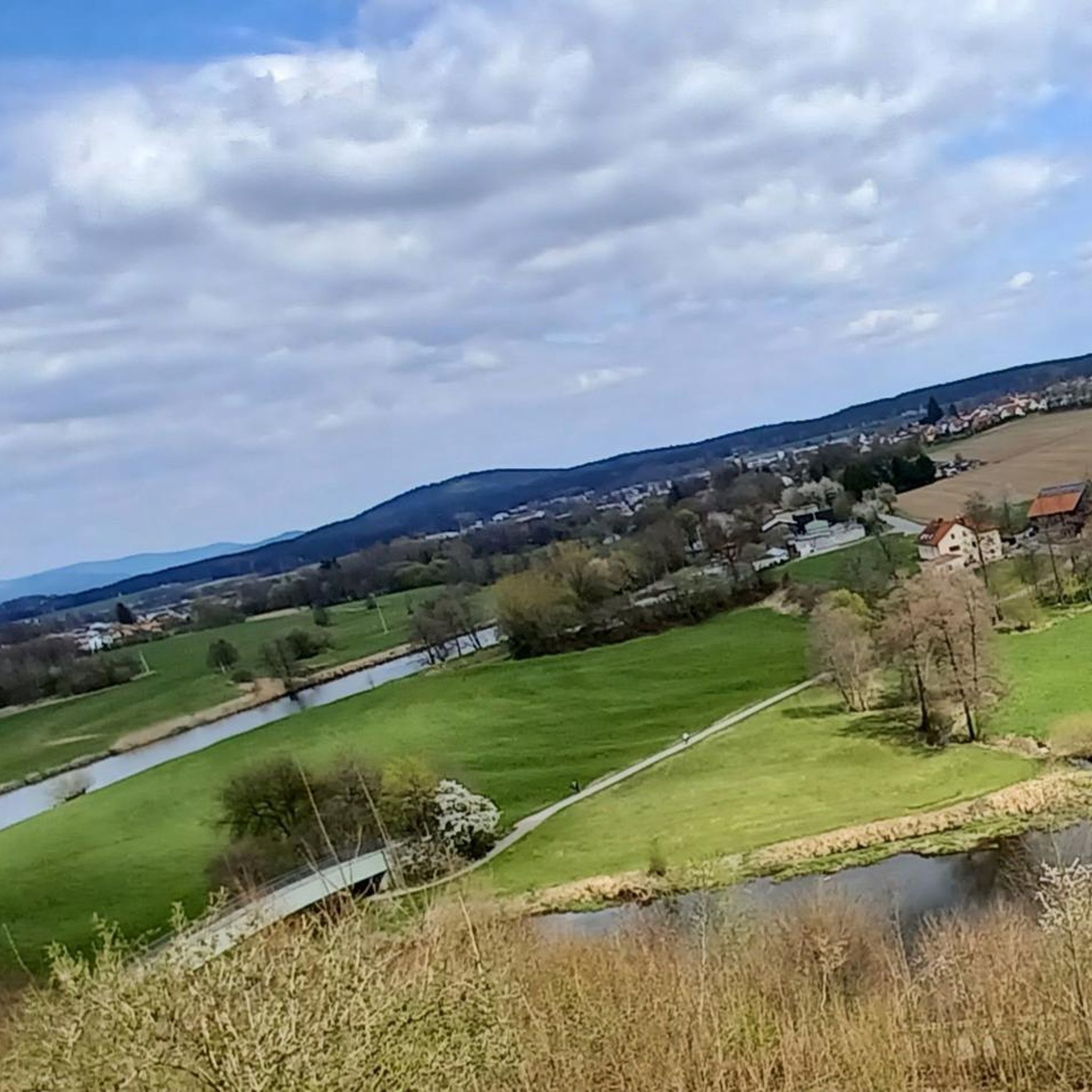
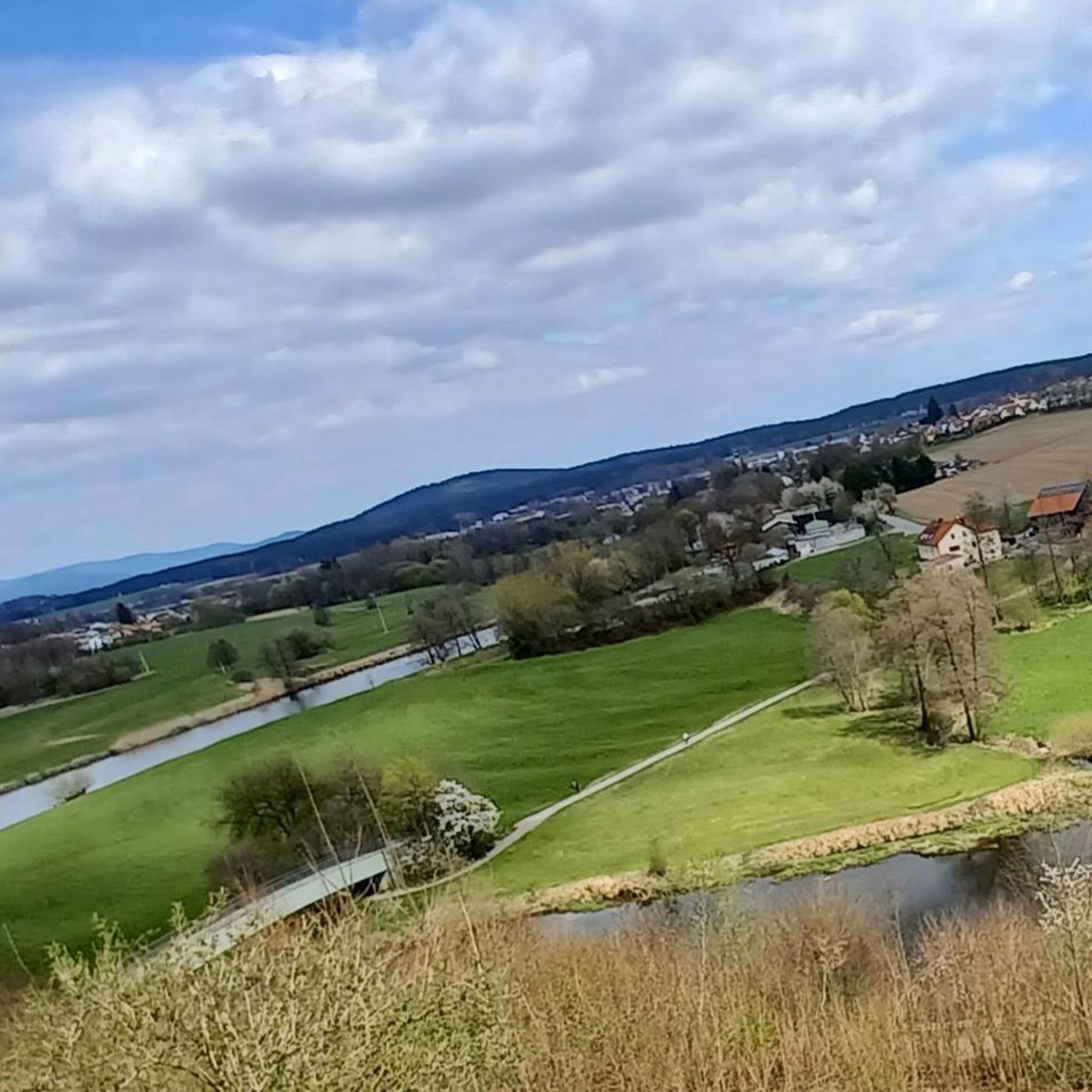
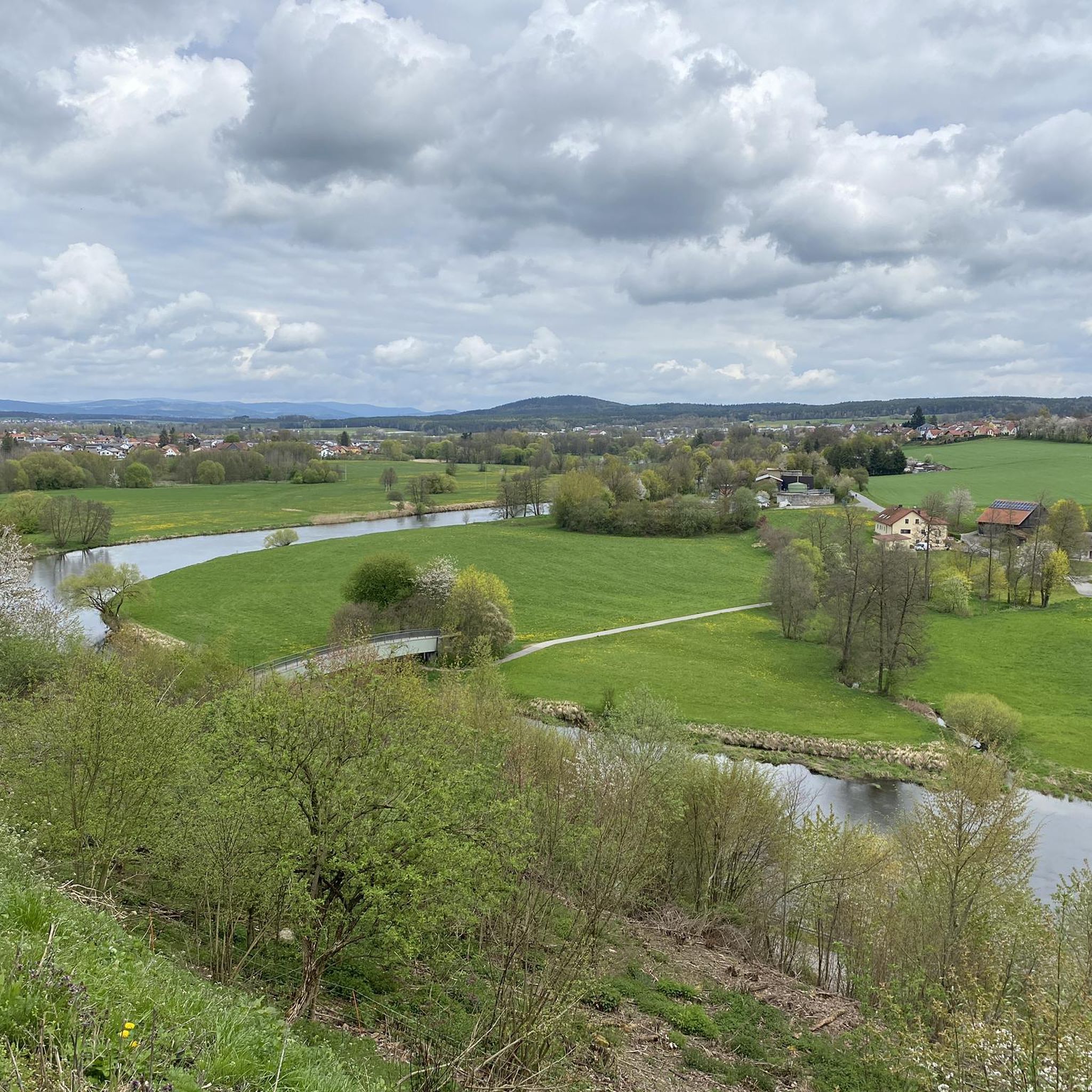
View over the rain to an impressive property
0
0

It is the only one of the original four city gates still standing. It was originally called the Castle Gate, as the Cham Castle stood on the site of the adjacent old building. However, after it lost its former function, an electoral brewery for wheat beer was established here in 1642. Thus, the Castle Gate became popularly known as the "Beer Gate." Its squat shape with its massive round towers and covered pointed arch is reflected in the coat of arms of the city of Cham as a landmark.
5
0


komootモバイルアプリでインスピレーションを得よう


さらに探索
他の地域の最高のロードサイクリングルートを見てみましょう。
